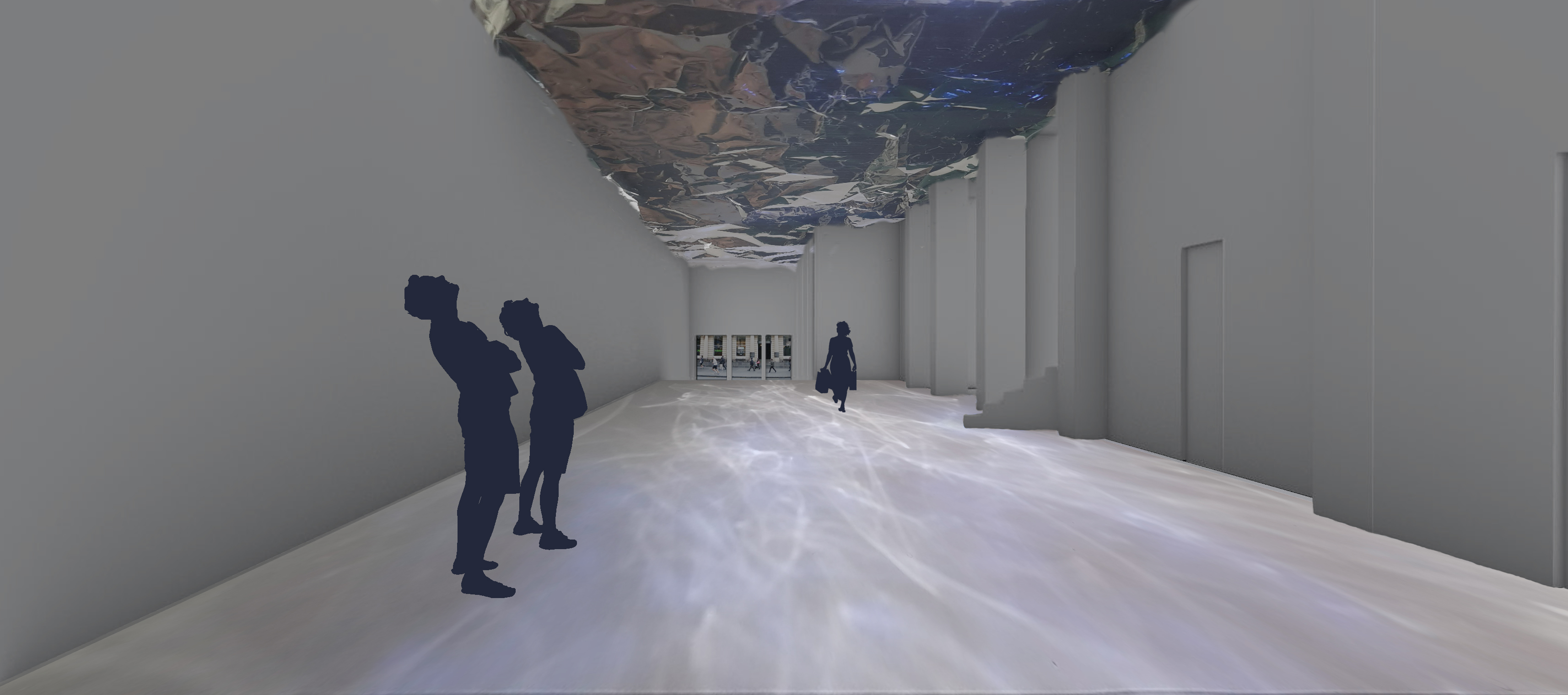
This week we began individual exercises based around exploring and designing a surface for the St Jame Theater foyer space. Based on my previous surface designs, I want to further explore reflection, manipulation and projection of light and shadow. My concept is to have a reflective ceiling with lighting that is projected onto the ceiling creating a similar affect from my previous experiments on the floor.
I have decided that I want to explore the entire foyer space, including the Queen St half that has now been demolished. I have decided that I want the foyer space to act as a public walkway between Queen St and Lorne St. The reason I have chosen this is because I have continuously mentioned and investigated the social behavior and customs in Auckland City and how they have influenced my view and experience of the site. By designing a public walkway, I am able to address, influence, and create social behavior with those who create and enact it. Not only this, but the space acted in this way prior to its closure.
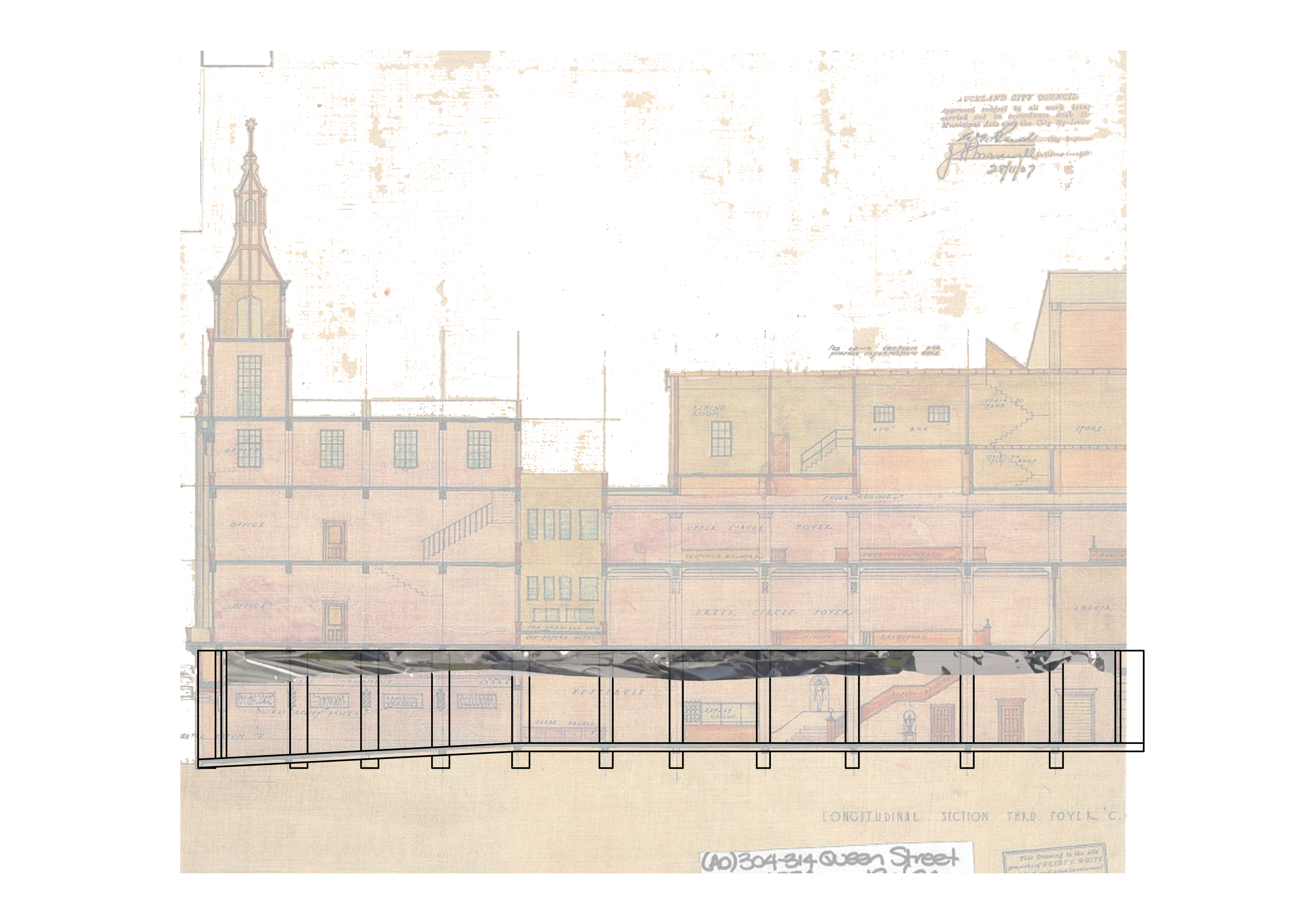
The main social behavior that I have noticed and investigated is this need to look down, avoid eye contact and not interact with the hundreds of people around us if not necessary. My aim in my design is to bring this to peoples’ conscious mind and influence them to change such habits. This is why I have decided to design a surface on the ceiling; to get people to look up. The reflected light is a way to catch the attention of city-goers and encourage their gaze to travel upwards and explore the ceiling surface.
The reflective surface would be shaped to create a volume, like that of my previous surface model. The reason why I have chosen to do this is because I don’t want to create a direct reflection; I want to explore distortion and manipulation of light and image to not only create a more effective projection on the floor that has fluid, moving form, but also to create more interest in the public passing through.
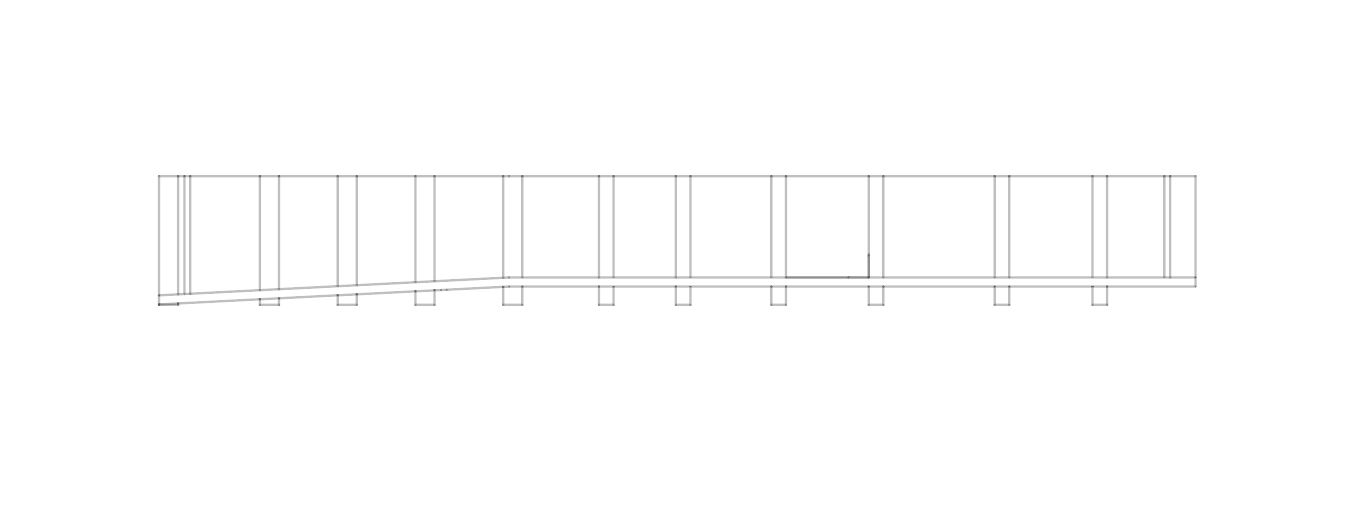
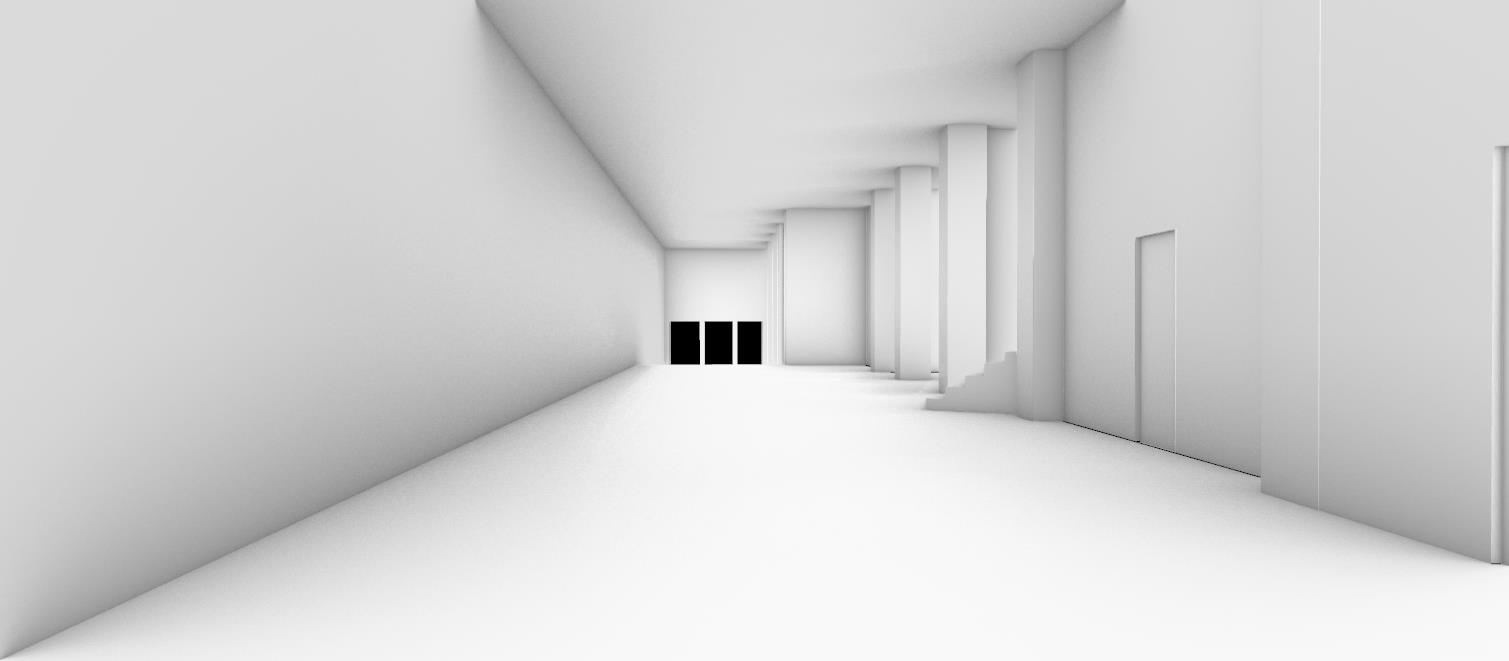
I used Daniel’s base model in Rhino as a starting point. From there I made some alterations. I decided that a plan would not best display my surface idea and location and therefore I focused on getting the line work for a section. After I had finished modelling some further details to help articulate my design and idea, I was able to take the section line work and also a perspective of the space looking from Lorne St entrance towards Queen St entrance. Because this was only an exercise and I don’t have the ability to best get atmospheric perspectives through Rhino, I explored on how I could iterate my design through Photoshop while keeping in mind to make it look as realistic as possible. I used a range of photos of the reflective film, my previous models and the light projected to create an atmospheric perspective from a simple, basic an plain Rhino model. I actually quite enjoyed this technique and found it a lot less tedious, stressful and time consuming than fully rendering in Rhino and found it to be a lot more expressive.
After layering and editing the photos in Photoshop, I created an A3 page and put them together to create my finished surface design.
Below are some of my process work images.
Below is my final A3 surface design page.

I decided to keep the space as it was and not change anything structural because it is acting as a public passageway. Not only this, but I am focusing on one specific surface in this exercise and moving, changing or getting rid of walls doesn’t affect what I am trying to achieve. With this said, I am keeping an open mind as to how I can explore this to best benefit my design further into the design process.
 Spatial Design by Ciara