Week 14: Presentation

Project 3 Presentation
TOP: Plan
BOTTOM: Section AA
TOP: Section BB
BOTTOM: Elevation
Atmospheric Interior Photo and Drawing 1
Atmospheric Interior Photo and Drawing 2
Site Map
Site Map Information
Models
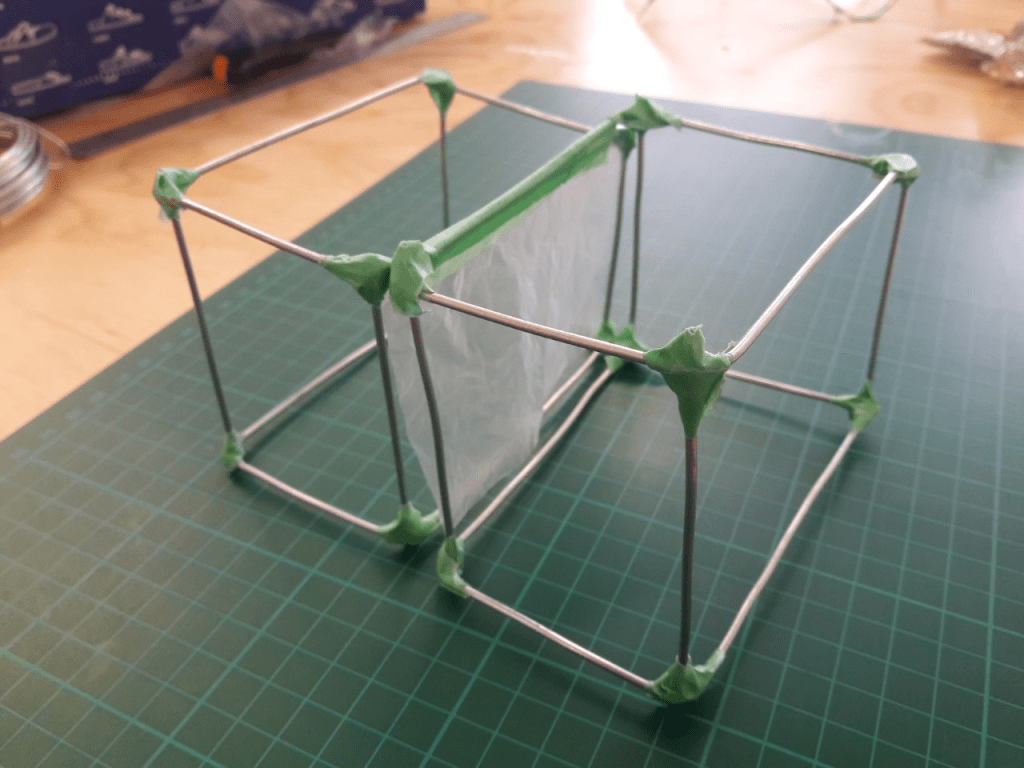
1:20 Sleeping Hammock Model
1:50 Gallery Model

From my presentation, I was able to identify what needed to be improved and worked on in my design. One point highlighted was that I could use the space in the front of the gallery more effectively by designing more into this space. Another point was that the back of the gallery and the entrance were very separate spaces. I think this is due to me designing Project 2 and Project 3 so separately. I believe that to there is always ways to improve and develop ideas and if I were to do so with this design I would create more flow between the back and the front of the gallery and therefore utilise the space better.

I am proud of my final design and how far I have come in the past 3-4 months. I think I have improved immensely on my model making, drawings, design process and ways of thinking in a design context.

Week 12: Site Map

This week I worked on my site map. I wanted my site map to be more formal and explanative of how the site influences my design and what I am focusing on and taking from it. In my site map I investigated the use of the building in which the St Paul St Gallery 3 is located. The Te Ara Poutama building located on Wellesley St is part of the AUT City Campus. it is used by hundreds of students and staff every day. In my site map I wanted to explore how the students and their movement influences and defines the site as well as how the site influences and defines them as it is one of AUT’s oldest buildings.

Week 11: Interior Views

After I finished modelling the 1:50 model of the whole gallery space, I took some interior atmospheric photos. It was here that I was able to capture the experience of the occupants.

From here, I worked on some interior perspective drawings. I really enjoyed drawing from my images and how similar yet different the drawings were. From these I was able to explore the light, transparency and movement captured in the space.

The reason I chose tulle as my material and the reason I made it to drape over the floor was because it was able to flow and be manipulated but it was also stiff enough to hold its form. This drawing allowed me to capture and record the movement within the space visually.

Week 10: Bathroom/Dining Areas

In my previous post, I talked about having my sleeping hammock encroach on the dining and bathroom space although I don’t want the bathroom and kitchen override and take focal point of the space. I decided that having them in hidden away cupboards allowed me to ensure that the space, sleeping hammock and entrance design weren’t compromised. This idea also allowed me to change the space was used. the cupboards are opened and entered through doors which become difficult to open when someone is sleeping.

In the dining cupboard there is a fridge and a table and stools which can be moved into the space. I decided to open the cupboard with one large door because having two would mean that when they are open, the left-hand door would divide the gallery into two spaces. This didn’t work because I wanted to enhance the vulnerability felt by the students as the space is very exposed to the public. There is only a thin, sheer curtain between where the students sleep and the outside world and this almost makes them dependent on the other to feel safe. Dividing these two would take away from this effect.

Dining Area

The bathroom cupboard is more exposed. I wanted to play on the idea that the bathroom is one of the most intimate and personal spaces in our everyday lives. I enhanced this vulnerability by having two outward opening doors that are one meter lower than the ceiling. This means that the sound from the bathroom travels throughout the space. I also enhanced the vulnerability factor by making half of the door a frosted glass. This means that the stranger can see the distorted shape of the other while they are in the bathroom. I made the glass at shoulder height allowing some privacy amongst the vulnerability.

Bathroom Area

Week 10: Stranger Context

I have decided to design for two strange AUT students studying different degrees who live at home. The reason I made this decision was based off my own university experience. Living in East Auckland means that I must travel a long distance into uni and therefore I spend majority of my time in uni in class or working on assessments. I have found it hard to meet new people that are not in my classes. My design is a means of creating relationships with people you would not necessarily meet.

Communication is key in building relationships. The new generation is becoming noticeably lacking in face-to-face communication. This is why I designed my space to force the students to communicate and interact. The textile used in the entrance and sleeping hammock provokes movement, influencing and manipulating the space and the students. This allows the students to communicate through movement. I also plan on designing the hammock in the gallery space where it encroaches on the dining and bathroom space, forcing the students to talk to each other in order to move around and use the space. It will make them dependent on each other. By putting this pressure and uncomfortableness on the students, a relationship can be formed based on the true people they are and their traits, not just the facade we sometimes show.

Week 9: Entrance Development

One point I took from the last part of the project was to explore the material and textile of the entrance and exit. In order to continue the flowing and light yet vulnerable atmosphere, I decided to use a translucent fabric that falls elegantly. The fabric is very responsive to movement which helps in demonstrating the important feature of movement in my design.

After deciding that the space needed a bit of colour, I pushed my design even further. On a second track, I created a curtain of red tulle. The tulle represents the uncomfortableness experienced by the strangers as it is rough and not as flowing as the white transluvent fabric. I chose red because it is a colour associated with ergency and gets the heart reacing. This is a contrast to the soft, flowing white and neutral colours of the rest of the space.

In my redesign of the entrsnce, the white curtain sits perfectly on the floor, creating a sense of serenity and protection whereas the red tulle is longer drooping on the floor. This forces the occupants to move around it.

The tulle also vocalizes movement as it creates defined visible folds. I want the design to not only infuence the occupants but also llow the occupants to influence it and therefore influence eachother.

Week 9: Sleeping Platform Development

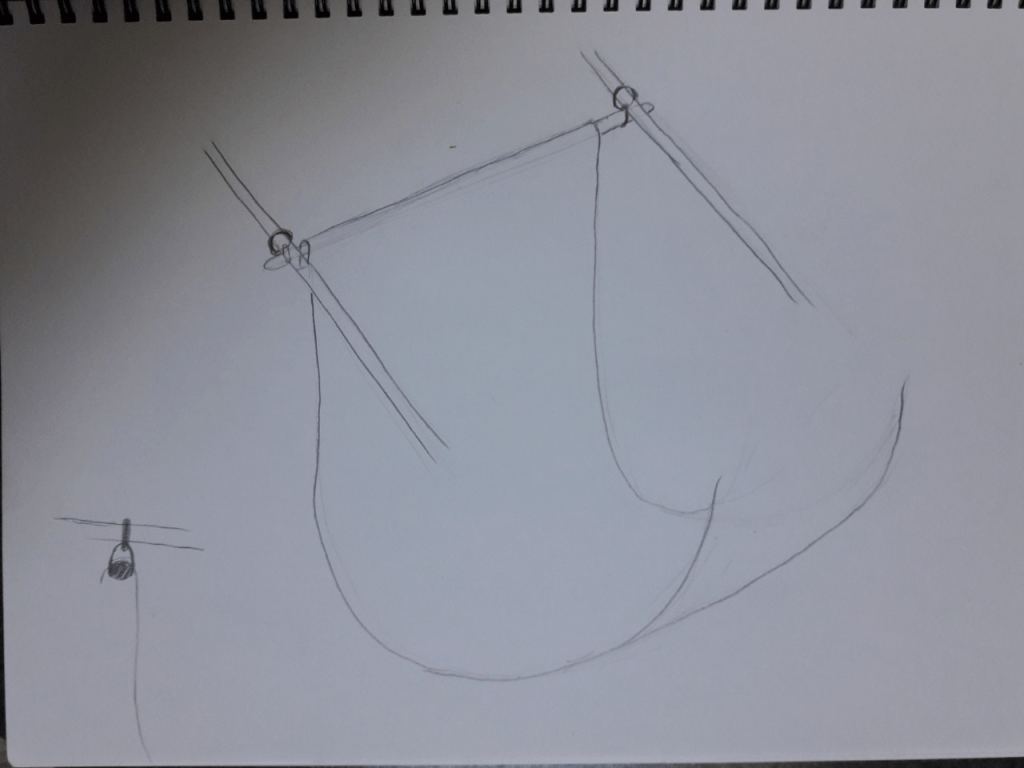
After creating my initial designs for the sleeping platform, I developed the ideas that I thought best created the sense of safety and security but also a sense of exposure and vulnerability (below).

Initial Design

I liked how this design gave the occupant a sense of own personal space and enclosure, but this was challenged by the flowing movement and translucent material. By exposing these strangers to one another in an individual and intimate moment challenges my own views and ideas of comfort and peacefulness. I confront the strangers with the interchanging sense of peace and vulnerability.

From this design I created a few new iterations (below).

These designs ultimately led to my chosen design of a double hammock.