This week we reviewed Part 1 and created our own parameters in which to work with when design our 5 proposals. Below are some diagrams and notes I made to help me organise my thoughts and figure out the most important and interesting ideas about my space. The 300 words is the final result and refined outcome of my exploration through notes and diagrams.


300 WORD PARAMETER STATEMENT
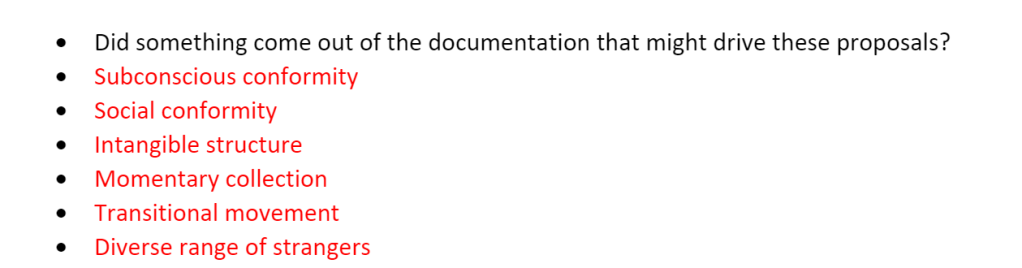
Through my approach to observing and documenting, I have found that I have sole interest in the pedestrians in the space rather than the vehicular drivers or the people passing by. This makes sense when reviewing my original gravitational pull statement where I talked about my interest in the way people interact with the space and each other and the psychology of the space. I have consciously realised that this concept is much more prominent between the crossing pedestrians compared to the drivers or passing people. Although a peripheral factor, these people are more detached from the social space of the crossing due to the barriers created by their positioning and situation.
I am really interested in the roles that the structure of the space and the influence of others play in the way the pedestrians react and interact with both the space and each other. One main concept I want to explore further is the idea of subconscious conformity as a result of the recognisable structure of the space and possibly question at what point does this familiarity become an indicator to no longer conform to those structural rules.
I also want to look at the pedestrians as a group and the social conformity that exists and influences reactions and interactions in the space. I have come to find this momentary collection of a diverse range of strangers quite fascinating. As they collect at the side of the road, they become one entity, each aware and influenced by the other but no acknowledgement made; a temporal community governed by social expectations. For a minute they collect, wait and move together, until the space transitions them from one to many.
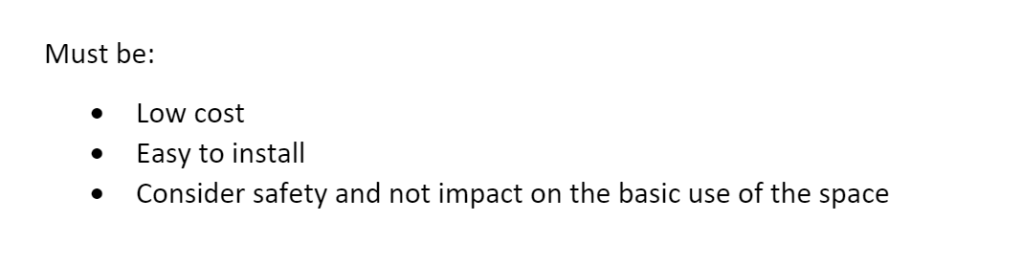
Some considerations to make while designing my proposals include the cost, the ability and ease to install the intervention, and also the safety of the intervention. I must keep in mind that my site involves vehicular and pedestrian traffic, and my intervention must not impose on the function of the space of safely transferring pedestrians across a busy road.
After this, I did some research on some designs/concepts/projects/practitioners that have similar aspects to my own work.
ADRIAN PIPER

https://awarewomenartists.com/en/artiste/adrian-piper/

https://elephant.art/nathan-ma-on-adrian-pipers-catalysis/
JONATHAN MONK
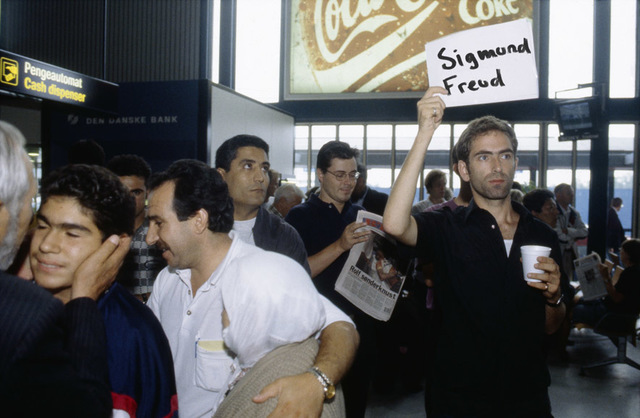
https://www.artsy.net/show/galleri-nicolai-wallner-jonathan-monk-waiting-for-famous-people-1995-1997

https://www.artsy.net/artwork/jonathan-monk-waiting-for-famous-people-wham
What I find fascinating and intriguing about Piper and Monk’s work is the impact and influence it has on other peoples’ reactions and behaviour. Although not aware of it, the people around them encountering their work are part of their work as well, in fact, they are the main focal point of their work; the materiality of their work whether it be a sign or shirt, is only the catalyst or instigator. The application of their interventions disrupt the flow of people, their actions and their expectations. Their work acts as a stationary point in which the flow of people and daily life brushes past.
 Spatial Design by Ciara