Because there were quite a few people in our group that have decided to put their entrance on the south side of the building (Mount St), we decided as a group to cutout a section of the base to allow people to design their entrances. We have kept the cutout so those wanting their entrance on the northside can put the cutout back into place for when they present.
My design explores how the serenity of New Zealand forest can be trickled in and experienced within the space of the bathhouse. I am exploring how to integrate the outside world with the inside by altering the threshold that divides the two. My design focuses on the flow throughout the space and the harmony of movement, emphasising the harmony of mauritanga within the native New Zealand pocket forest. I want to explore the peacefulness of the forest in my design with the experience through sound, sight, movement, smell, temperature in feel. I don’t want to disrupt the flow between the land and the sky with alterations to the surface in the forest, but I want guests to be immersed in the experience of the forest. I want people to understand the meaning of the forest through their experience in the bathhouse. I can’t integrate my bath house design into the forest, so I’ll integrate the forest into my bathhouse. I will do this by using sight, sound, texture and temperature to create the calming, soothing, relaxing and harmonious atmosphere of the forest in my design.
Abstract thumbnail drawings that visually describe my concepts
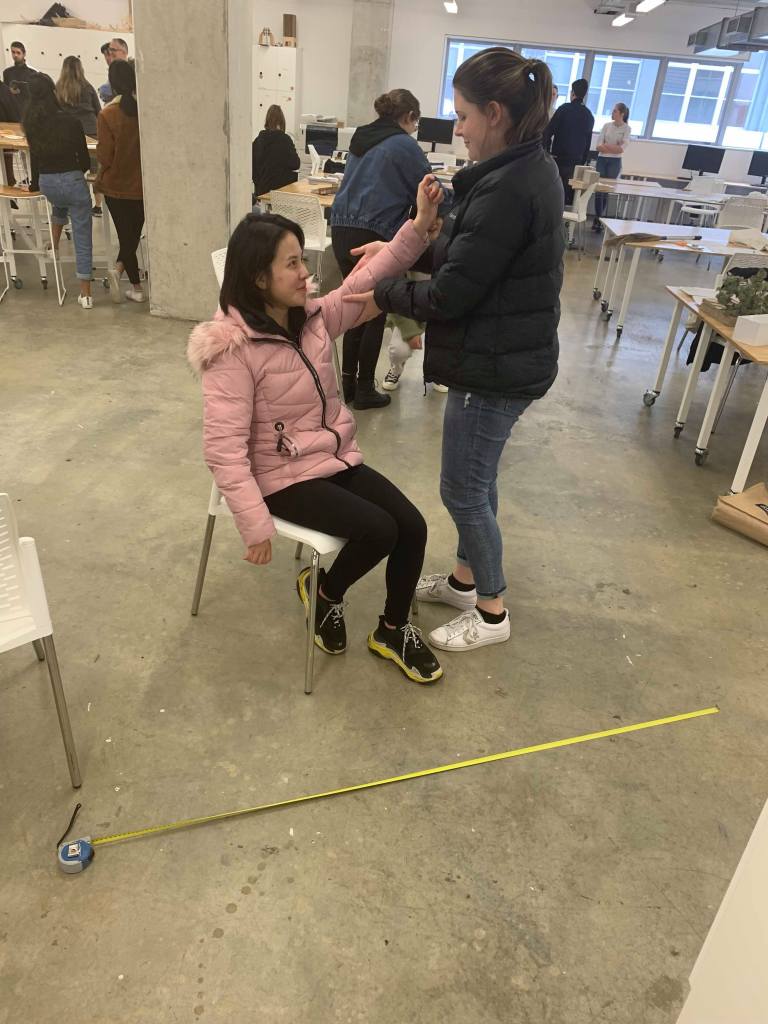
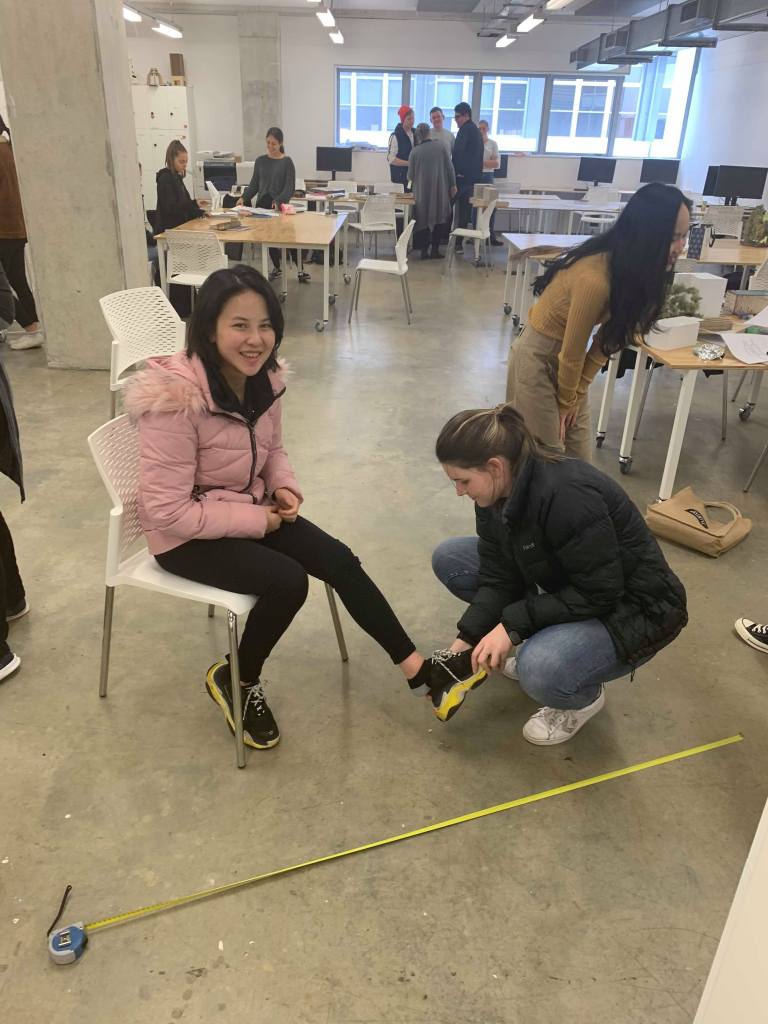
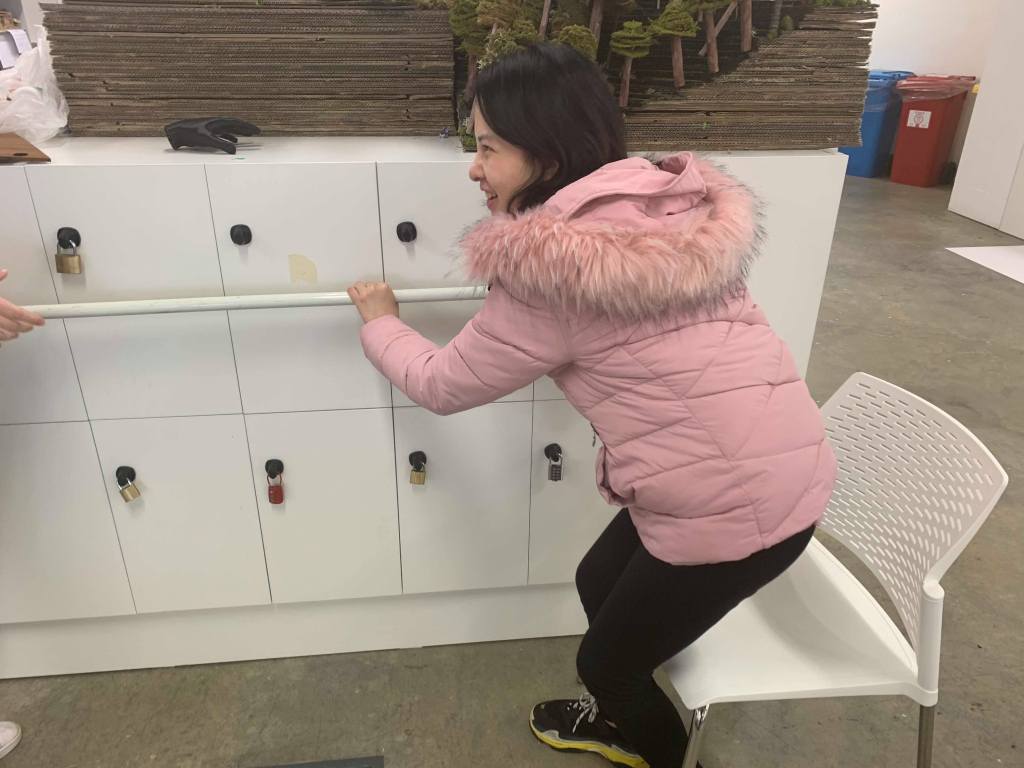
This week we looked more in-depth into how to cater for all people wen designing our bathhouse. We looked at the needs for families with young children. They will need changing tables and enough room to pick up their child in the changing rooms. We also looked at people in wheelchairs. They will need wide enough hallways to move through. They will also need large enough changing rooms so that someone can help them get changed. Another consideration is having railings and low enough lockers for them to put away their belongings.
In class we acted out these scenarios to get a better idea of how we need to cater for people with limitations.
This week I continued developing my model for my bathhouse. I modelled a possible bathroom layout and also lockers for guests to put their belongings. I also made 1:100 people to put in the space so I could get a better understanding of how people will move through the space and whether the space actually works with people in it.
This week I started modelling my own design for the bathhouse. I found that making quick draft models allowed me to get ideas out really quickly and allowed me to change and manipulate my ideas as I went on. I started with one of the most defining design features from my floor plan, the extruding glass boxes. Because this was only a quick model, I modelled the shape of the boxes just to get an idea of how it was going to look. I also modelled the tapering pool that goes into the boxes.
This exercise was also really good in allowing me to see if my model fit into the site model. It was a tight fit so I now know to make my model a little smaller so it can go into the site model a little easier.
This week we finished our group site model. We decided to make our pocket forest in a group because it made it easier for ourselves. We talked amongst ourselves the best way to lay out our forest and this was our end result (below).
This week we looked into toilets, Changing rooms and showers for the bathhouse. It is required for me to supply toilets for guests as well as disability access. I decided that in order to conserve space in the basement, I would make all my toilets and changing rooms in one and make sure they are all functional and large enough to be able to be used by people in wheelchairs. I designed four different scenarios. I decided that 2-3 toilet/changing rooms was enough for the maximum 10 people who can visit my bathhouse. Some of me designs have a shower in them while others don’t. I decided that my falling rain affect can be used as a way to cleanse ones body before and after using the baths. My four designs are shown below.
Design 1
Design 2
Design 3
Design 4
I think I like Design 1 he most because it is the most space efficient. I don’t want the toilets/changing rooms to encroach too much into the bathing space because I want to be able to create an open, free flowing and calming atmosphere and I don’t want it to feel crowded and squashed.
This week we started to look more into our own designs of the bathhouse. I started with a more abstract approach on how I wanted the flow of water to work in the space. I show the pool with the dark horizontal lines fading out. I wanted to show that there was no definite edge to the pool but that it sloped down, gradually becoming deeper. The extrusions out of the north wall are glass boxes. I wanted occupants to feel like they were in the forest and understand and embrace the peace of New Zealand native forest. The glass boxes would be half underground, half above allowing people to enter into them and see the different layers of the forest.
The vertical lines on the right side of the basement represent the direction of the flow of water. I was thinking of maybe having a glass panel along the ceiling and curving down the north wall. There would then be a constant stream of water running over the top of it to allow people to be underneath it and feel like the water I rushing over them. Underneath this would be a refreshment stand.
I was thinking of keeping my entrance on the north side, allowing people to walk through and experience the forest before entering the building. The dotted line right of the entrance is a rain-like effect from the ceiling. I wanted to bring the tranquil affect of the forest into the space with the use of trickling water sound. I was also inspired by the Rain poem by Hone Tuwhare and his beautiful descriptions of the rain. This trail curves around guiding the flow of people through the space. I also liked the idea of having the rain effect as a block rather than a definite wall as it creates a more open and freely moving space.
This week we looked at our site as part of a much larger system. We then visually described this through a site map (below). In my site map I wanted to make note of the volcanic features, waterways and food sources that make up the site. I put emphasis on the Auckland Domain and Albert Park as these are the volcanic features closest to the Dadley building. These are represented by the contoured shapes. I also emphasised the stream that runs below Queen Street. The Dadley building and the land it sits on has history and isn’t just made of what we see now; there is a past to the site and isn’t just created by the urban environment. I showed the flow of the stream to the sea as this would have been a primary food source.





 Spatial Design by Ciara