This week we finished our group site model. We decided to make our pocket forest in a group because it made it easier for ourselves. We talked amongst ourselves the best way to lay out our forest and this was our end result (below).
Category: 2019, Semester 2
This project is the design of a bath house in the basement space of the Dadley Building (AUT Campus) and is influenced by native New Zealand flora and fauna.


Week 4: Toilets, Changing Rooms and Showers
This week we looked into toilets, Changing rooms and showers for the bathhouse. It is required for me to supply toilets for guests as well as disability access. I decided that in order to conserve space in the basement, I would make all my toilets and changing rooms in one and make sure they are all functional and large enough to be able to be used by people in wheelchairs. I designed four different scenarios. I decided that 2-3 toilet/changing rooms was enough for the maximum 10 people who can visit my bathhouse. Some of me designs have a shower in them while others don’t. I decided that my falling rain affect can be used as a way to cleanse ones body before and after using the baths. My four designs are shown below.

Design 1 
Design 2

Design 3 
Design 4
I think I like Design 1 he most because it is the most space efficient. I don’t want the toilets/changing rooms to encroach too much into the bathing space because I want to be able to create an open, free flowing and calming atmosphere and I don’t want it to feel crowded and squashed.
Week 4: Floor Plan
This week we started to look more into our own designs of the bathhouse. I started with a more abstract approach on how I wanted the flow of water to work in the space. I show the pool with the dark horizontal lines fading out. I wanted to show that there was no definite edge to the pool but that it sloped down, gradually becoming deeper. The extrusions out of the north wall are glass boxes. I wanted occupants to feel like they were in the forest and understand and embrace the peace of New Zealand native forest. The glass boxes would be half underground, half above allowing people to enter into them and see the different layers of the forest.
The vertical lines on the right side of the basement represent the direction of the flow of water. I was thinking of maybe having a glass panel along the ceiling and curving down the north wall. There would then be a constant stream of water running over the top of it to allow people to be underneath it and feel like the water I rushing over them. Underneath this would be a refreshment stand.
I was thinking of keeping my entrance on the north side, allowing people to walk through and experience the forest before entering the building. The dotted line right of the entrance is a rain-like effect from the ceiling. I wanted to bring the tranquil affect of the forest into the space with the use of trickling water sound. I was also inspired by the Rain poem by Hone Tuwhare and his beautiful descriptions of the rain. This trail curves around guiding the flow of people through the space. I also liked the idea of having the rain effect as a block rather than a definite wall as it creates a more open and freely moving space.

Week 3: Site Mapping
This week we looked at our site as part of a much larger system. We then visually described this through a site map (below). In my site map I wanted to make note of the volcanic features, waterways and food sources that make up the site. I put emphasis on the Auckland Domain and Albert Park as these are the volcanic features closest to the Dadley building. These are represented by the contoured shapes. I also emphasised the stream that runs below Queen Street. The Dadley building and the land it sits on has history and isn’t just made of what we see now; there is a past to the site and isn’t just created by the urban environment. I showed the flow of the stream to the sea as this would have been a primary food source.

Week 3: Continued Site Model
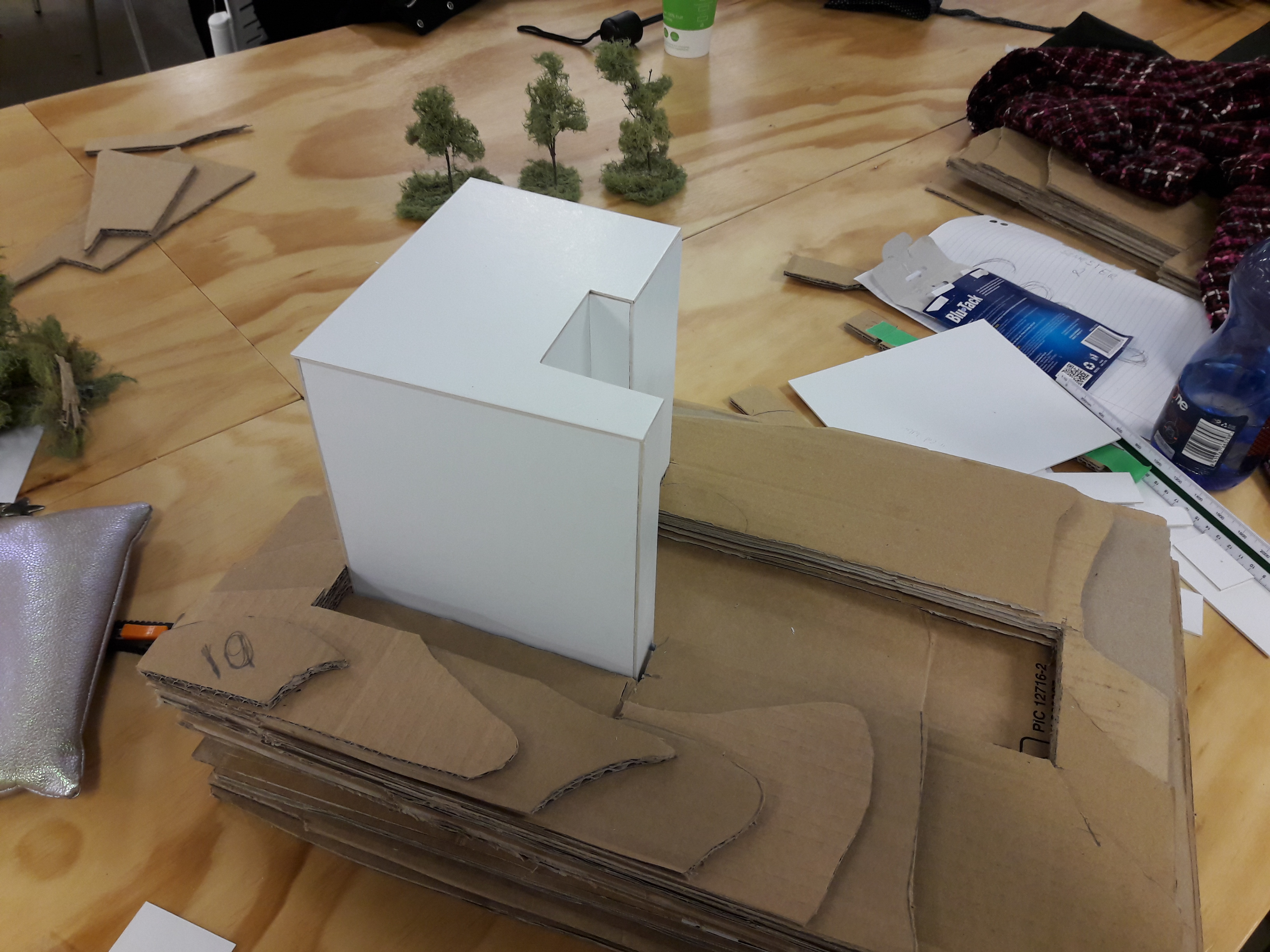
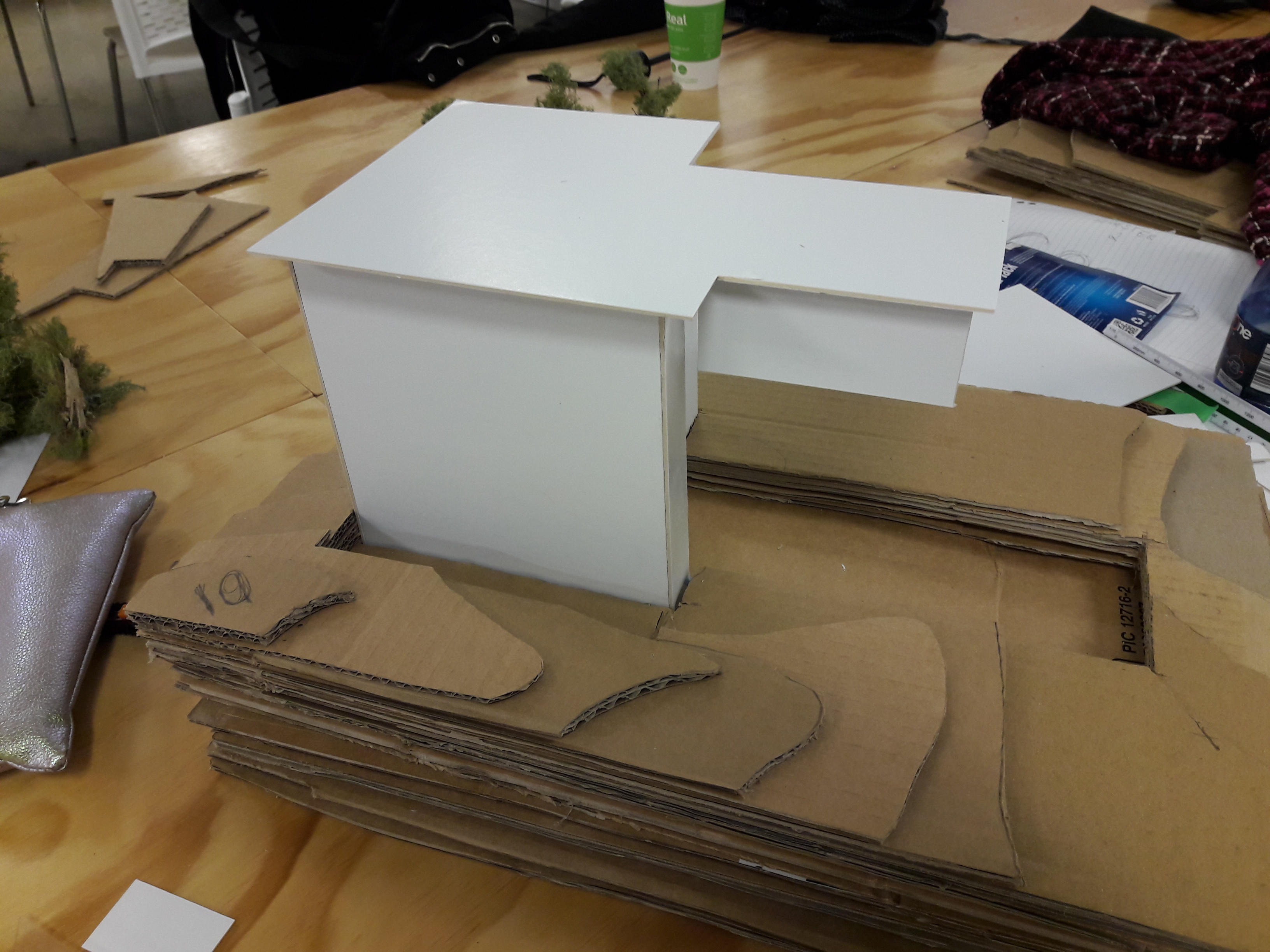
This week my group continued with building the site model. We finished making the permanent parts of the Dadley building (the parts of the building we wont be designing into). Having these parts of the building site model gives our own individual design models more context when we go to present.
The first image (below left) shows the part of the building that is glued to the site model base. This is kept here so that you will be able to see our individual designs in the site model but it will also give it context.
The seond image (below right) shows the removable top level of the Dadley building. This is removable so that it doesn’t block our designs when presenting.
The last image (below center) includes the floors above the basement. This is removable so that it can be placed on top to see the building as a whole as well as so the interior of our designs can be seen.

Week 3: My Ideas of Bathing and Cleansing
My ideas of washing and cleansing are rinsing myself with water. The idea of water running over something gives me the idea of cleansing and washing off. In my bath house, in order to keep the space hygienic, I want to provide a shower in which occupants can wash and cleanse their bodies before and after entering the baths. I decided to create a wall of water separating the entrance from the bathing area. This not only ensures that people cleanse their bodies as they walk through the stream of water but it also creates the calming and tranquil atmosphere I desire to create in the space.
Week 3: Rain Poem

This week we read the poem Rain by Hone Tuwhare (above). What I like about this poem is how Tuwhare describes the rain through his sense but he does it in a way that makes me visualise the rain in a different way.

Above are some abstract drawings I did in response to some of the verses n Tuwhare’s poem. I wanted to capture how I envisioned Tuwhare’s descriptions

making small holes
in the silence
rain”

the pores of my skin
would open to you
and shut”

should know you
by the lick of you
if I were blind”
Week 2: Site Model Base
This week were able to start modelling our group site model wince we were able to retrieve the measurements of the site. We started with the base of site, sculpting out the contours of the land with reused cardboard. From here, we cut into the base, cutting out the shape of the building. We made sure to cut down deep enough to allow us to put pools in the ground where we want to in our own bathhouse designs. We also cut out the width of the overhang of the building into the courtyard space to allow people to design into there if they choose to. This part of the courtyard isn’t a permeable surface meaning that if we design into it, it wont affect break the flow and connection between the land and the sky in the pocket forest.
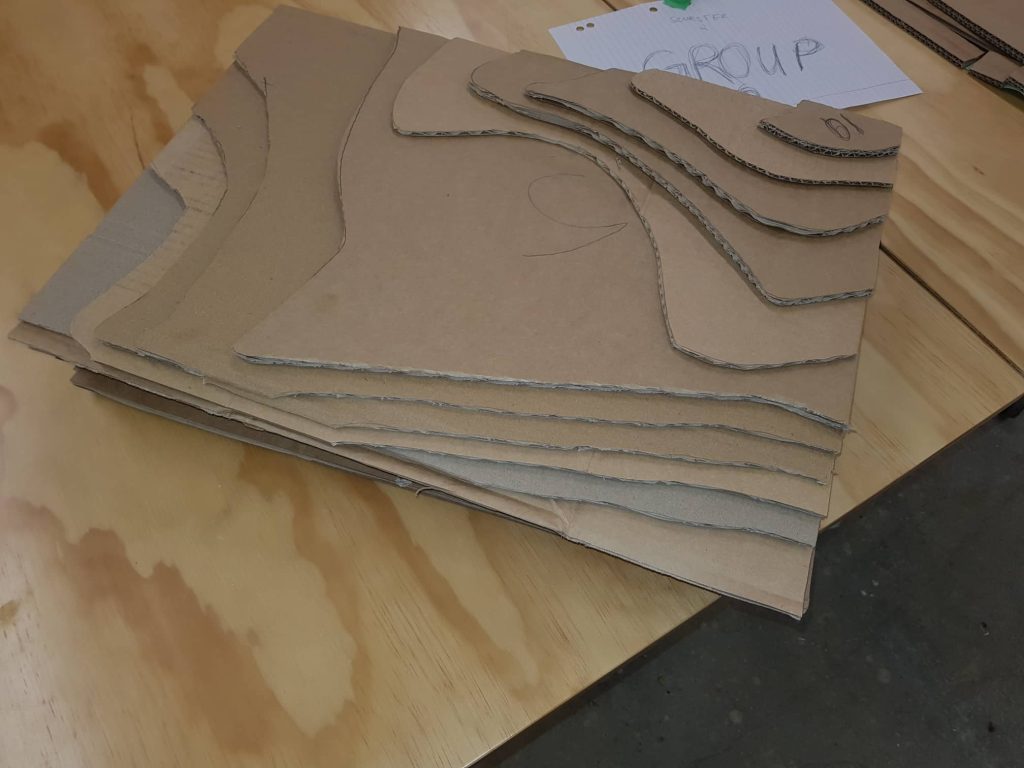


Site Model Base with Building Cutout
Although not shown in the photo, we decided to remove the top two layers of the contours in the courtyard to flatten it out as the courtyard as been flattened out in the process of building the building. If we were to keep this elevation, we would have to source the soil from elsewhere, increasing our carbon footprint in the process.
Week 2: Site Plan
This week we revisited the site to measure both the interior and exterior (below).
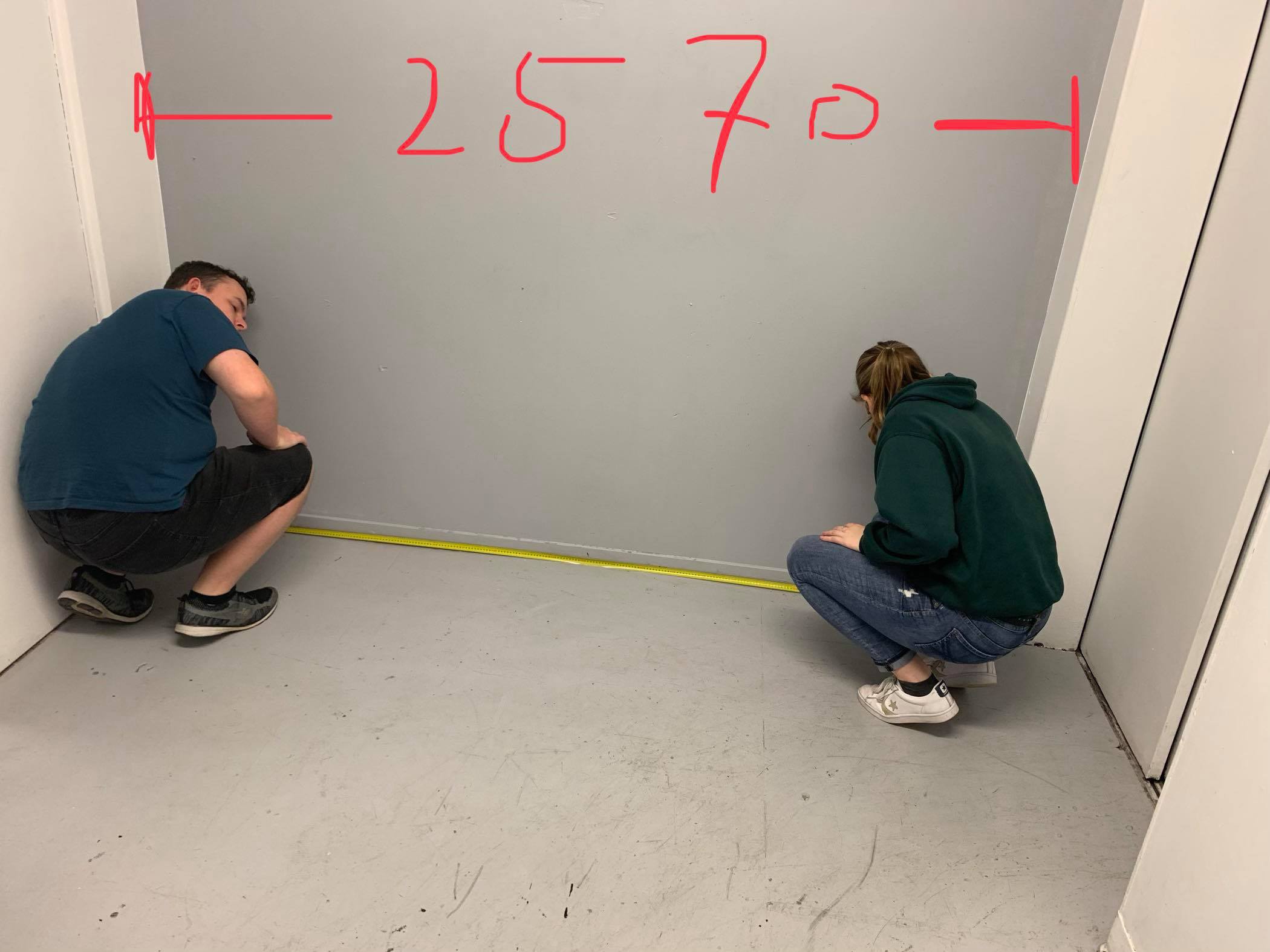
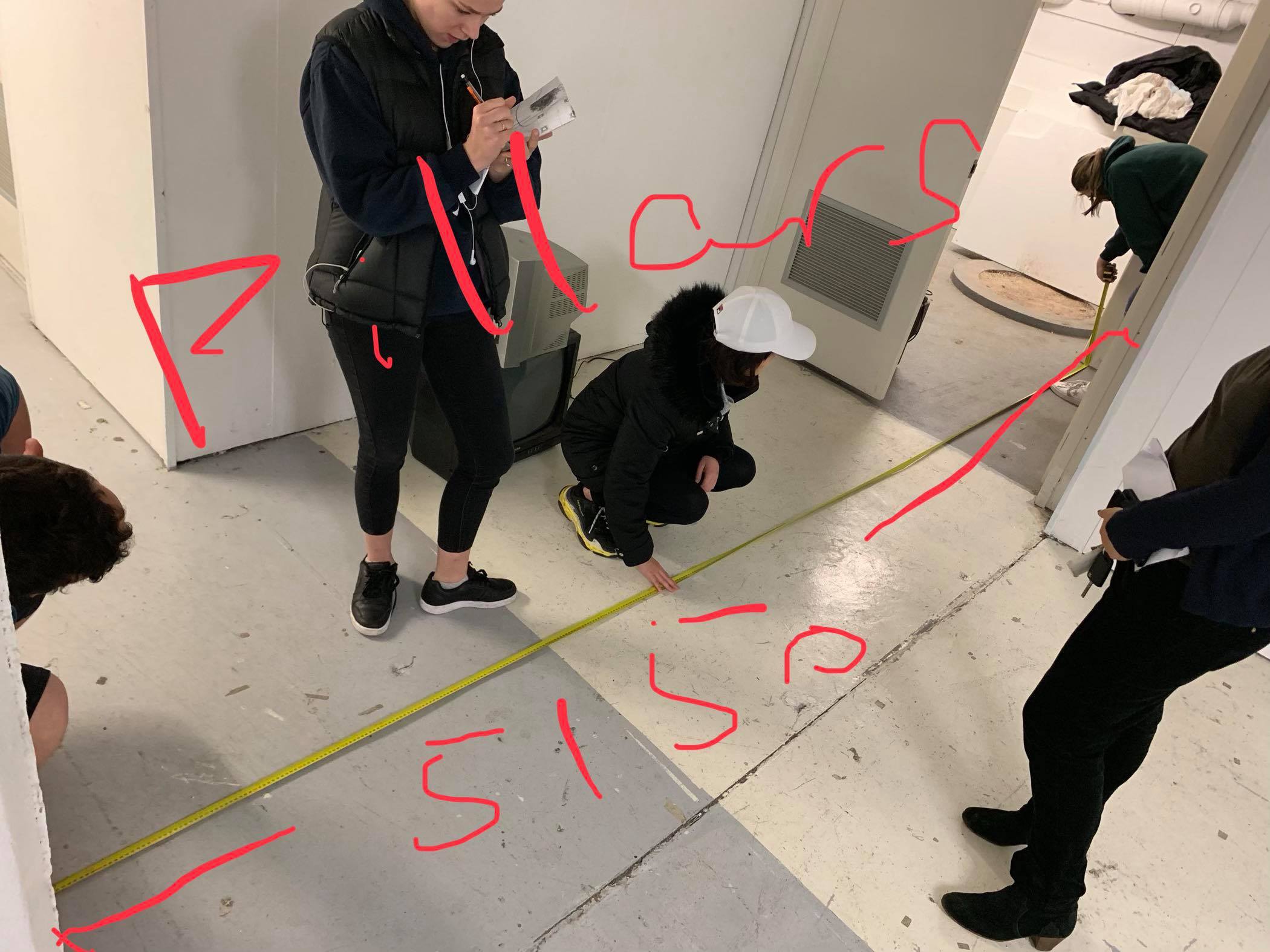
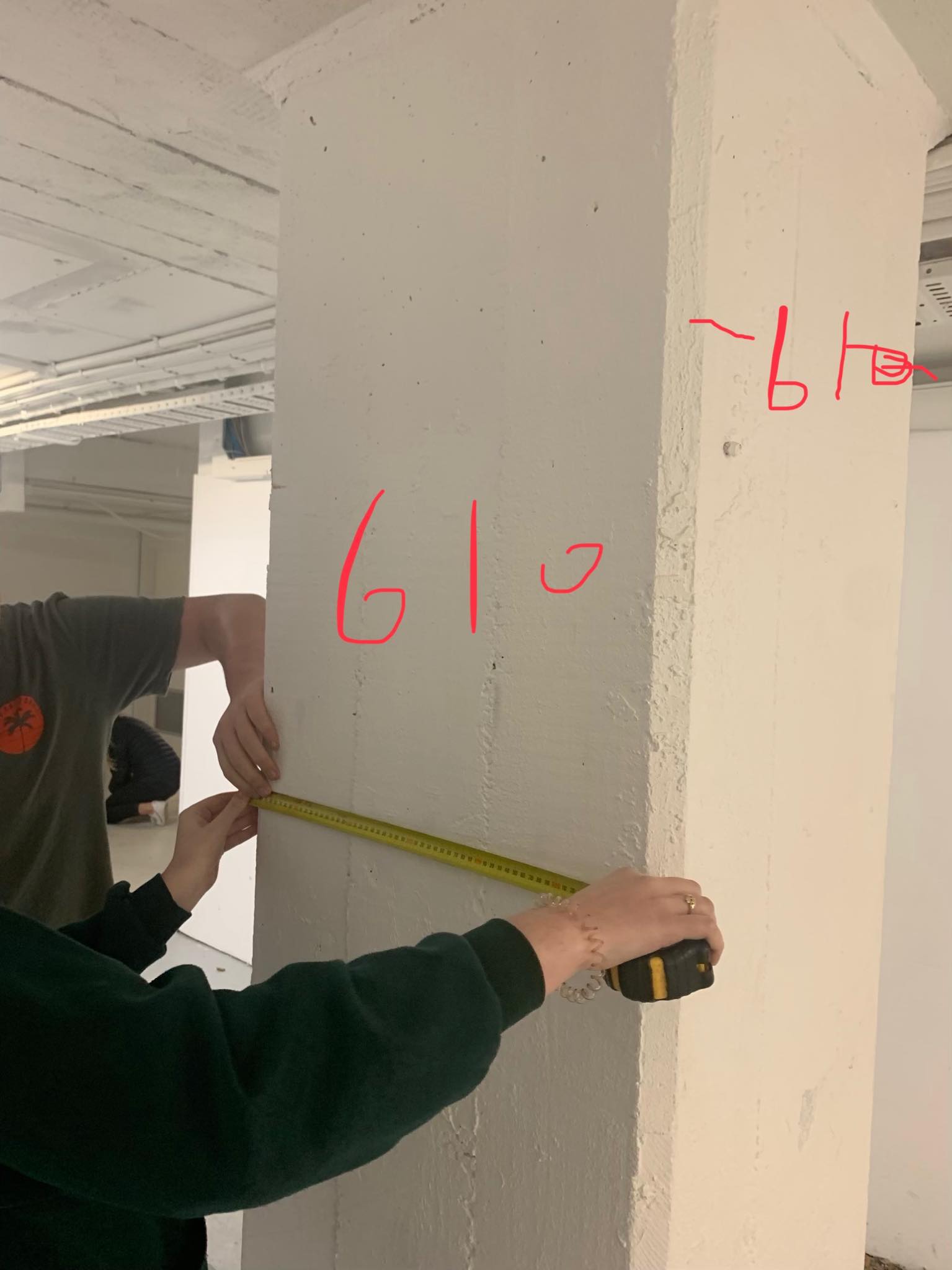
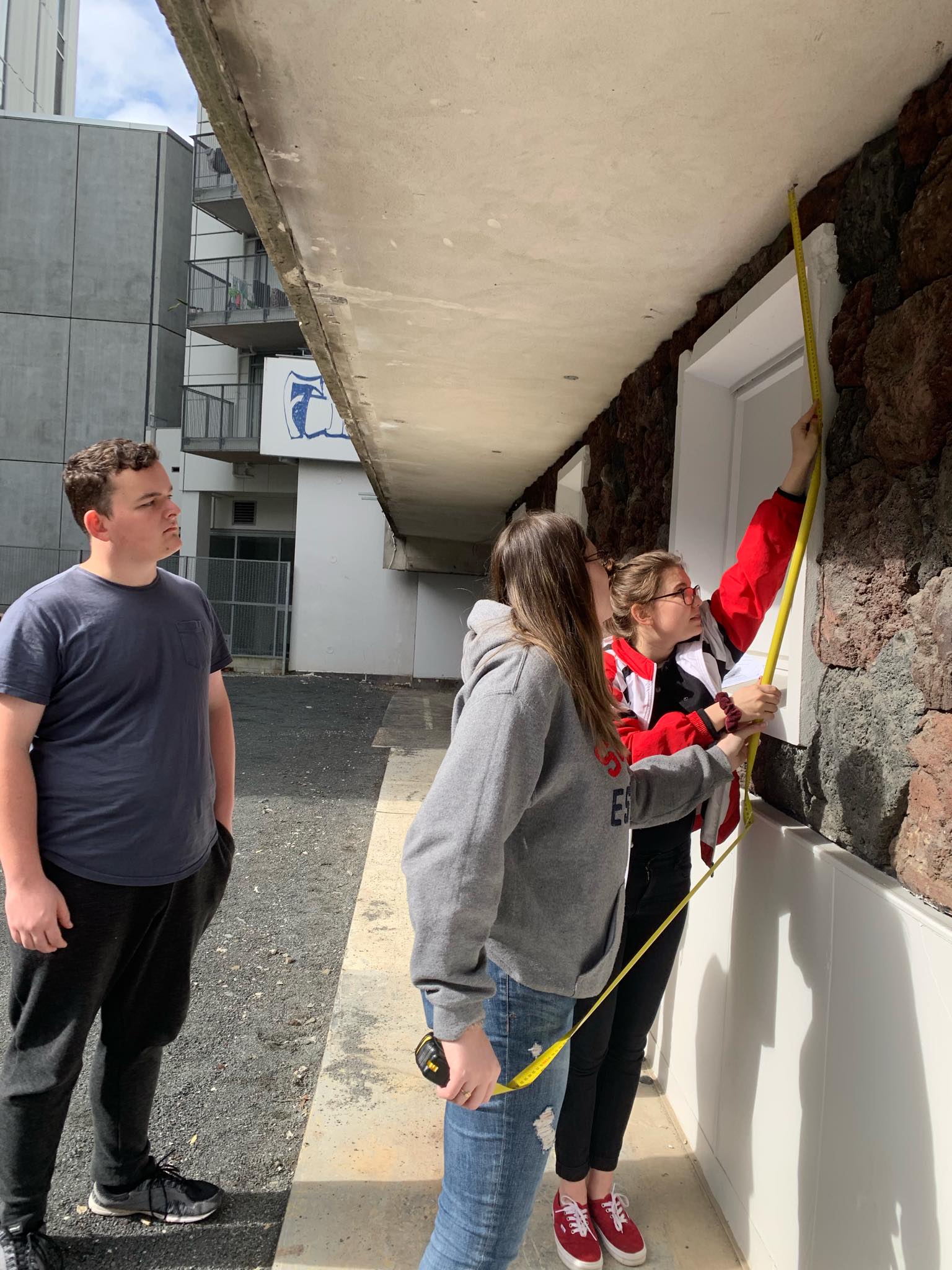
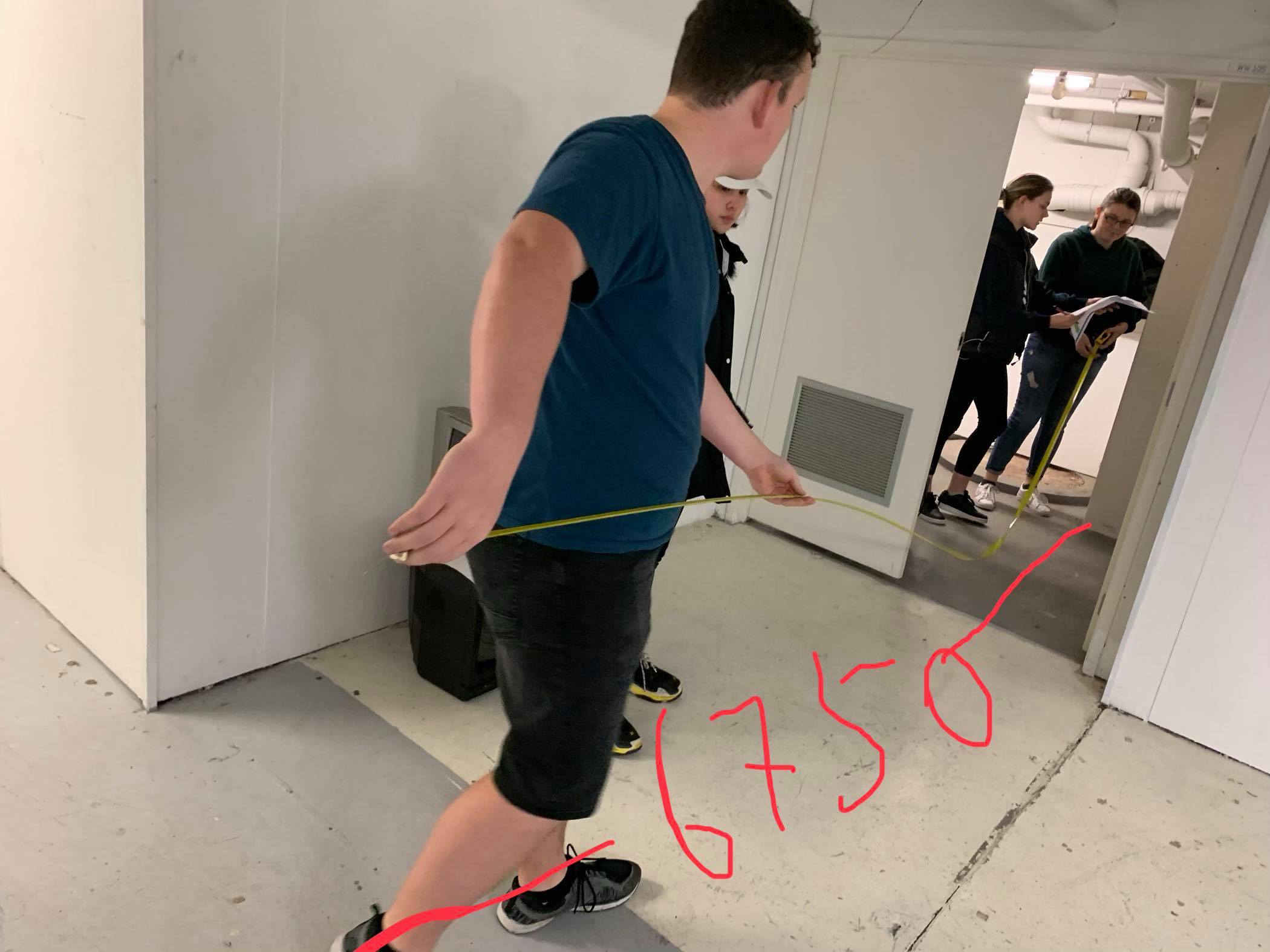
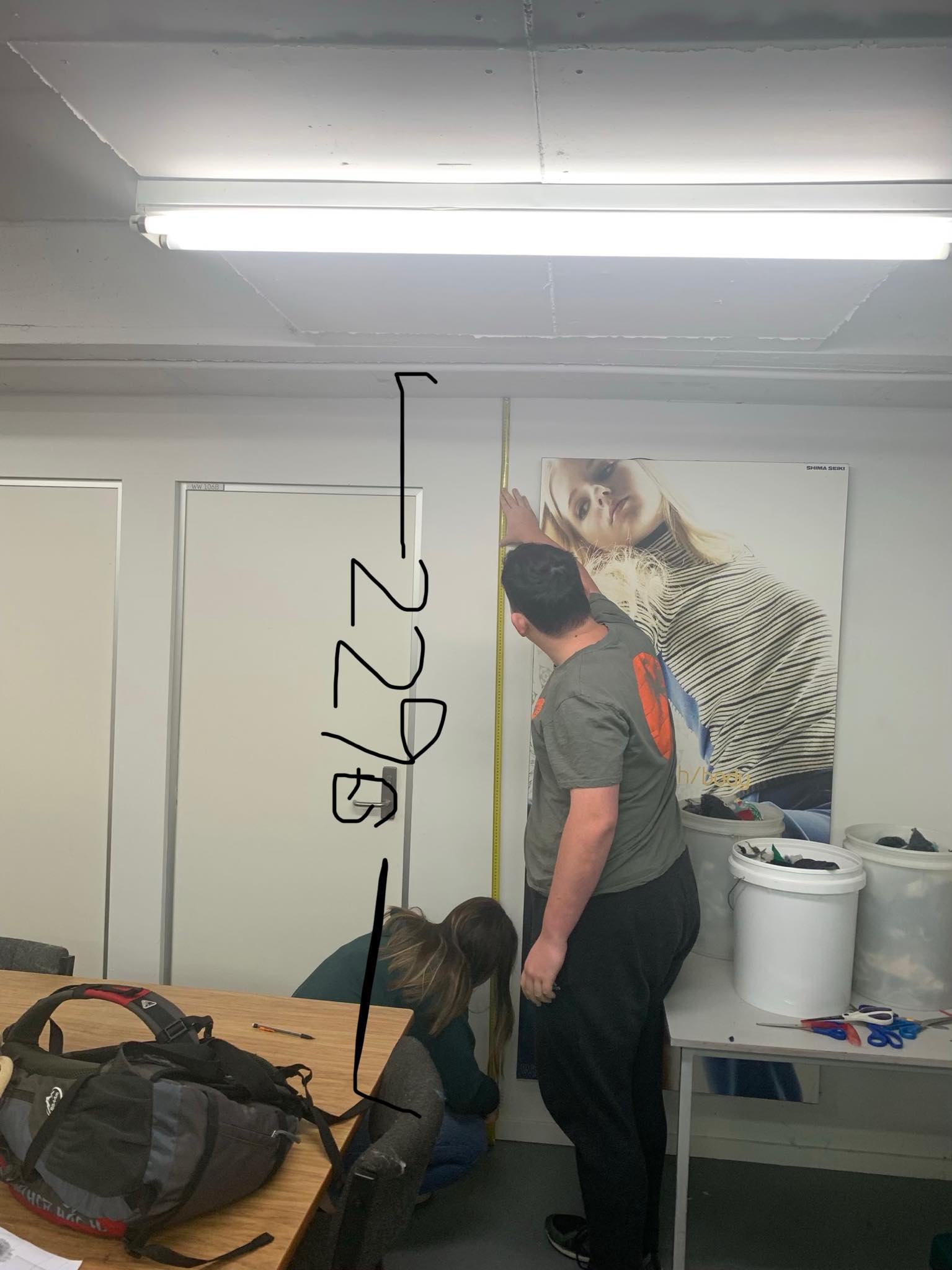
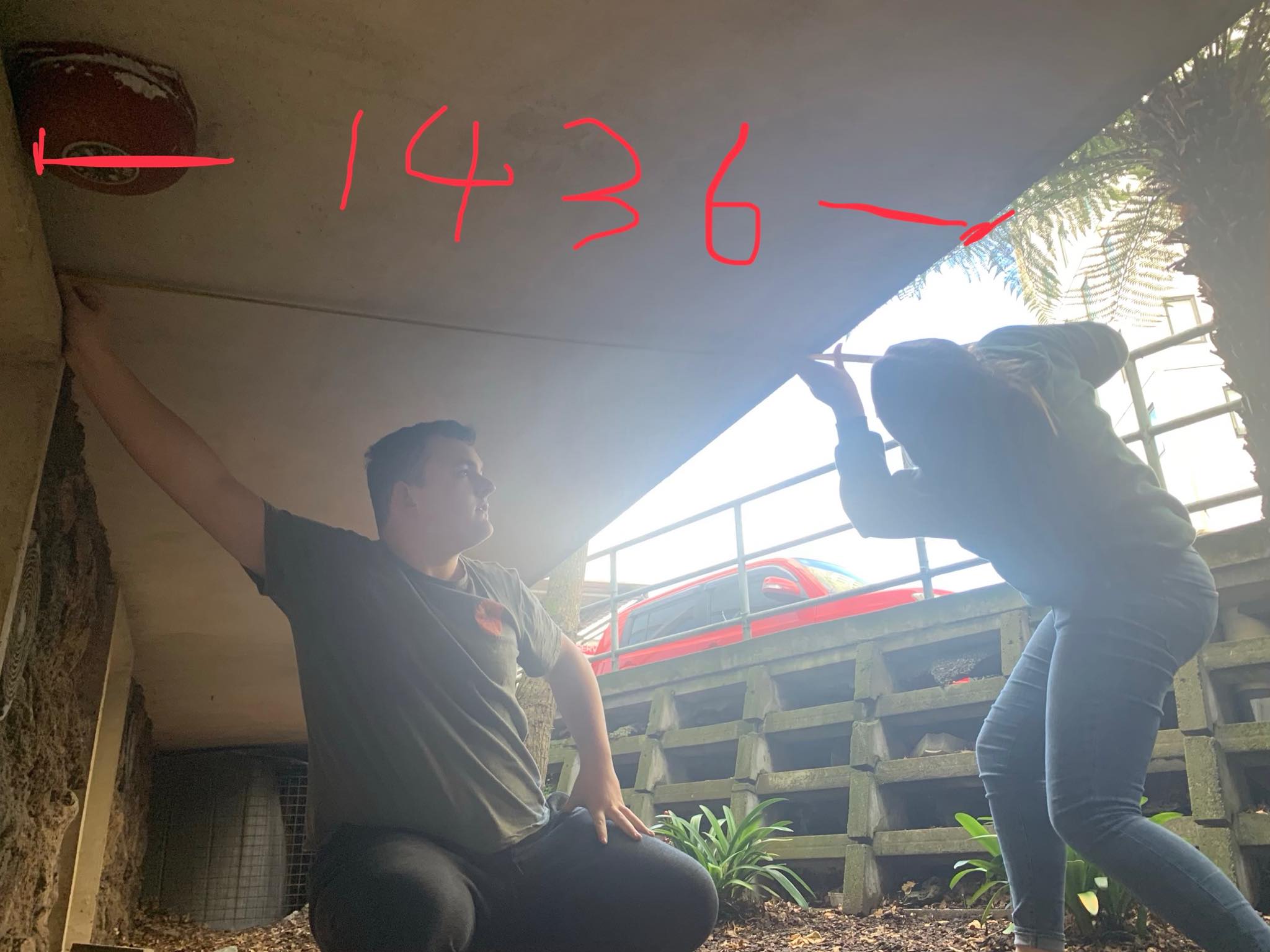
From here, we were able to record our measurements on our site plan. This is really important as we can now come back to the site plan as a reference when designing in the space and making our site model. It is also good to have a more accurate site plan.

We also extended the contours of the site to get a better understanding of the form of the land when we come to make our site model. We used the Auckland Council GeoMaps as a reference point (https://geomapspublic.aucklandcouncil.govt.nz/viewer/index.html).
Week 2: Personal Bathing Experience
One of my most memorable bathing experiences was up north in some natural thermal pools on someones property. The baths consisted of holes dug in the ground that were lined with wooden planks. The water was so dark I couldn’t see my hands under he water. It was an odd and almost uncomfortable experience as it was night and we were surrounded by strangers but by the time we left, we had talked to a gotten to know people we may have never talked to otherwise. Bathing experiences are often a social and in public pools, communal. In my design, I want to look into how I can create social connections within the space. Society has become increasingly private but I want to create a comfortable and calming atmosphere in the space even though it is a communal space. I want to enhance the social connections we often miss living in today’s world.
 Spatial Design by Ciara