Research: NZ Native Flora and Fauna

This week we did some research into the types of native flora and fauna found in the area surrounding our site. We also did some research into what native plants attract different native animals, birds and insects.

We found that trees that would best grow on the site included titoki as they best grow in places sheltered from the wind, rewarewa as they grow best in well-drained soils (our site largely on a slope), porokaiwhiri (Pigeonwood) as they attract birds such as kereru with their fruit (https://teara.govt.nz/en/shrubs-and-small-trees-of-the-forest/page-2), puriri as it has creates a strong mauritanga by supplying food and shelter to many native New Zealand animals and insects like the puriri moth, kawakawa as its leaves providefood for insects and its fruit attract kereru and geckos, and also ti ngahere (cabbage tree). Altough they are rear in the city, they are very common in Grafton Gulley which is very close to our site.

When researching, we also found other native New Zealand tress such as the kohekohe but decided to not include it in our pocket forest as possums love it. Our research has allowed us to understand what trees and plants need to be used in order to create a vibrant and diverse ecosystem that encourages native animals, birds and insects to come to and make the pocket forest their home.

Week 2: Te Aranga Design Principles

This week we looked into the Te Aranga Design Principles and how they can be implemented in our own designs of the bathhouse. These are some of the principles and how I would consider them when designing my bathhouse.

Kotahitanga: This is the idea of unity, cohesion and collaboration. In my design, I want to emphasize the kotahitanga between the outside natural environment of the pocket forest as well and the interior of the bathhouse. I would probably go about this by creating openings into the forest to allow the harmony and peace to flow into the space.

Wairuatanga: This is the idea of being a part of a wider interconnected realm. In my design, I am considering the connection between Papatuanuku (Mother Earth) and Ranginui (Sky Father) by not breaking the connection between the two in my pocket forest. I will ensure that my pocket forest remains a permeable surface allowing the low and connection between Papatuanuku and Ranginui.

Manaakitanga: This is the idea of being hospitable. To ensure good manaakitanga in my design, I will include a refreshments stand as well as offering comfortable facilities such as toilets, showers and private changing rooms.

Kaitiakitanga: This is the idea of conserving the reciprocal relationship between humans and the natural environment. I want to ensure that when I design I design alongside and with the surrounding natural environment (including the pocket forest) and not against it. I will consider my carbon footprint in each of my design choices.

Mauritanga: This is the idea of maintaining life force in order to protect the environment. Important considerations in my design will include drainage and how to go about this without polluting the surrounding environment. I will also look into the best way for the environment to heat the pools if I decide to have heated pools. A really important consideration will be the cleaning chemicals. I will look into how I can keep naturally keep the pools clean and hygienic to avoid using strong chemicals that could hurt the surrounding environment.

Designer Research: Kengo Kuma

Kengo Kuma is a Japanese architect. What peaked my interest in Kuma was his Horai Onsen Bath House (below). I really liked how open the bath was to the surrounding forest. I am wanting to integrate my own pocket forest into my design. I want the interior and exterior of my bathhouse to be one entity. Also, his use of simple and natural materials such as wood helps in integrating the surrounding forest into his design. I like how simple yet effective the design is. 

Kuma, K. (2003). Horai Onsen Bath House. Atami-shi, Shizuoka, Japan.

https://kkaa.co.jp/works/architecture/horai-onsen-bath-house/

Another bath onsen design by Kuma that interested me was his Ginzan Onsen Hot Spring Bath House. What I liked about this design was the atmosphere it created through sensory, especially light. Kuma uses both the natural surroundings and artificial light to form the shadows and reflections that create the open, exposed and modern atmosphere. With this design I am more interested in the light quality and effect rather than the bath itself as this is a defining feature and I also want to experiment with lighting to create a calming atmosphere in my own design.

Kuma, K. (2001). Ginzan Onsen Hot Spring Bath House. Obanazawa-shi, Yamagata, Japan.

https://kkaa.co.jp/works/architecture/ginzan-bath-house/

Research: Bathhouses

There is a large history around bathhouses internationally. Many different cultures have rituals and traditions when it comes to bathing experiences. New Zealand saw its first public bathhouse (the Tepid Baths) in 1860. Bathing was often a public occurrence at this point in history as many people did not have their own baths in their homes. This public style of bathing in New Zealand was a response to the colonization of the country and Western culture being implemented (Dave Pearson Architect Limited. (2008, February). The Tepid Baths, Auckland: A Conservation Plan.).

Turkish baths, known as hammamas, are probably one of the most well known cultural bathing experiences in the modern world. The Turkish hammam became popular in the 7th Century. The purpose for the ritual and experience is “for purifying body and soul” (https://handsonturkish.com/visiting-a-turkish-hammam/). Traditionally, you are bathed by another person. I find it interesting how although this challenges our modern ideas of privacy and intimacy, it is still a popular and common practice by many people. In the hammam you are scrubbed and massaged by an attendant. Because I am designing a public bathhouse, I am definitely interested in looking into the traditions of communal bathing and how it works.

Japanese onsen are the baths of the natural springs thoughout Japan. What intrigues me about the onsen is my knowledge of the health benefits of natural thermal springs. According to BBC Travel “the practice of soaking in these thermal baths for healing, spirituality and rejuvenation stems back to when Buddhism spread to Japan in the 500s.” (http://www.bbc.com/travel/story/20121129-the-origins-of-bathhouse-culture-around-the-world). Because of their natural form, there is a long history behind the onsen. Another interesting thing about the onsen is how physically exposing the tradition is. It is compulsory to experience the onsen in the nude which, similar to the Turkish hammam, challenges the ideas of privacy and intimacy.

One other bathing experience that I found interesting and very different from other cultural bathing rituals was the Native American sweat lodges. The ritual takes place in a dome-like tent or hut where hot rocks are placed in the center. Over the course of the ritual, water is periodically poured onto the rocks creating a steamy atmosphere in the dwelling. The ritual is very spiritual based with offerings made to the spirits throughout. Anthropologist Raymond A Bucko explains in his book The Lakota Ritual of the Sweat Lodge that “the Native American sweat experience, a ceremony expressly and wholly focused on the spiritual, pushes both the body and the mind to its limits. Suffering for the sake of moral strengthening is one important theme that permeates throughout the sweat lodge.” (http://www.bbc.com/travel/story/20121129-the-origins-of-bathhouse-culture-around-the-world). Unlike other cultural bathing experiences, the sweat lodge ritual takes place over several hours in 30 minute intervals.

Something I found interesting and common in many of the bathing ritual was that the bathhouses were experienced by all; all classes and ages are welcome in many of the cultural bathing traditions. They were also all communally experienced as well which challenges the western cultural ideas of bathing privately. From this research, I want to take away the physical, mental and spiritual benefits of bathing and explore how I can implement these larger ideas around bathing (rather than just cleansing the skin) into my own design.

Reading: Shinrin-Yoku (Forest Bathing) and Nature Therapy: A State-of-the-Art Review

This paper Shinrin-Yoku (Forest Bathing) and Nature Therapy: A State-of-the-Art Review from the International Journal of Environmental Research and Public Health, 28th July, 2017 highlights the health benefits of nature. Shinrin-Yoku (also known as Forest Bathing) originates from Japan in the 1980’s when it was realized the health benefits of surrounding yourself and being immersed in nature.

In the paper it is mentioned that Shinrin-Yoku has been known to help prevent a series of physiological and psychological health issues including stress and mood disorders (anxiety and depression), the increase in natural killer/cancer cells (immune system function), ADHD (mental relaxation), hypertension and coronary atery disease (cardiovascular system), respiratory disease and allergies (respiratory system), and it also increases the sense of selflessness and gratitude.

Something I found interesting fro this reading was that although Shinrin-Yoku is only around 35 years old, the practice and knowledge around the health benefits of being immersed within nature goes back thousands of years. The paper mentioned how 2500 years ago, Persian King Cyrus the Great built a lush garden in Persia’s capital city to improve the health of people within the busy city and to create a calming sense. Often it is the old remedies that best heal us and I believe this to be very true in the sense of mental health. We still don’t have a proper grasp on how to deal with mental health and I think that looking back on traditional remedies can often give us a stepping stone towards the answer. We focus too much on moving away from natural remedies we forget to try and understand, improve and use them to our benefit.

This reading has opened my eyes further to the benefits of nature and specifically forest bathing. In my bathhouse design, I want to focus on integrating the calming and peaceful affect into the interior. I also want to focus on making my bathhouse a physically and mentally healing space by using my knowledge from this paper and integrating the forest into the space.

Week 1: Pocket Forest

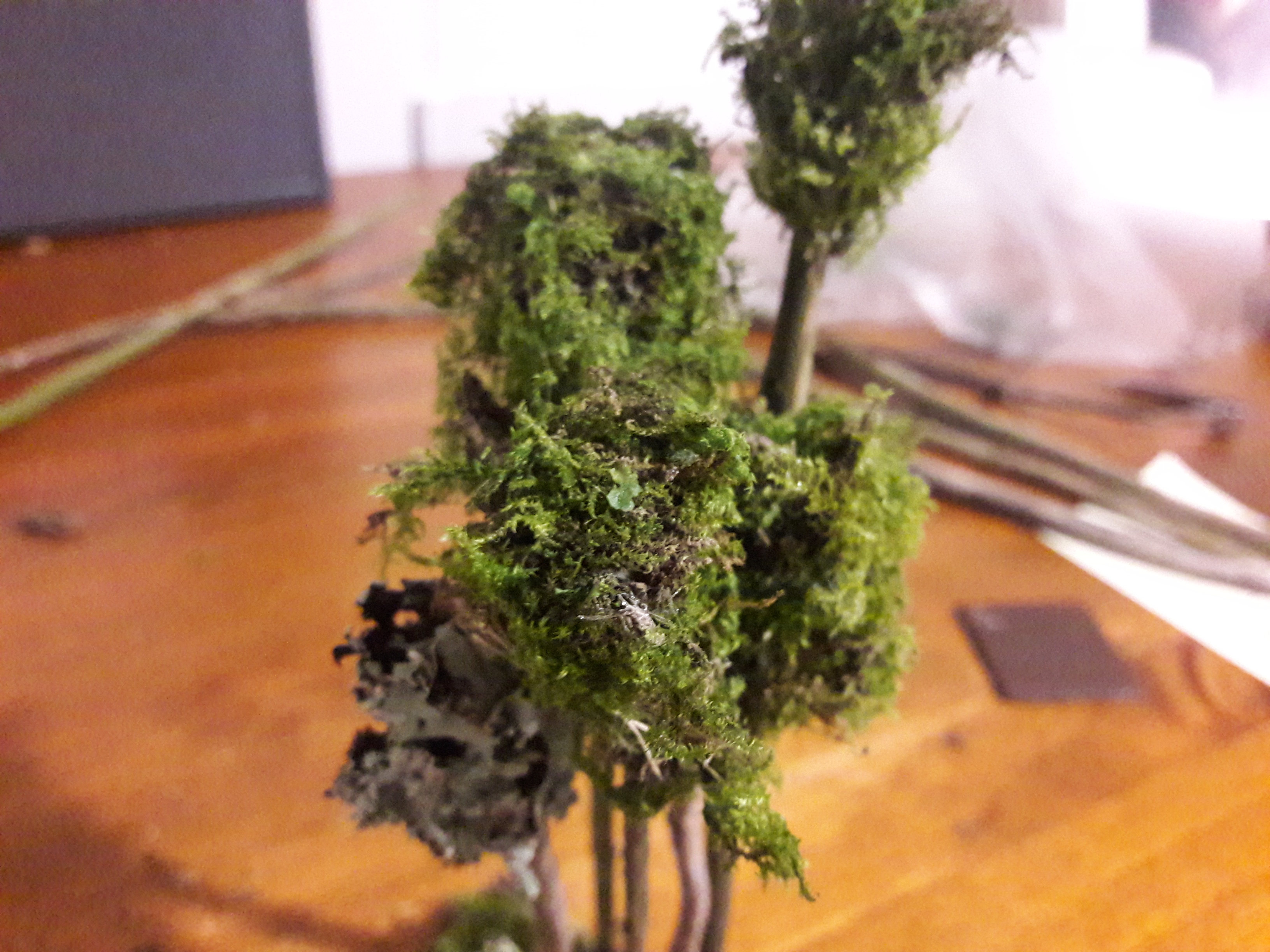
This week I tried creating my own small pocket forest. I wanted to experiment on the best way to attach the trees to the card and the moss to the branches and also what moss, lichen, and branches worked best in creating the effect of a New Zealand native forest.

I found that, although handy, the lichen I collected didn’t give a realistic look to the trees but was better used for shrubs and plant growth on the forest floor. I liked how the moss I used was such a vibrant green but I am not sure how long it will hold its colour.

After looking at other peoples mini pocket forests I was able to learn ways and techniques of making it look more realistic and natural.

Week 1: Site Visit

This week we were introduced to the project and the site in which we will be designing. The Dadley Building, located on Mount Street, was originally built for the Crippled Children’s Society in the 1960’s. The building was used as a health centre in which activities and facilities with health benefits were supplied to challenged children. These facilities included a bathing area in the basement and a sunbathing area on the top floor. When purchased by AUT, the building housed the students and staff of Spatial Design and Textile Design up until 2018 when it was decommissioned for earthquake proofing.

When observing the building, I noticed the constant shift and changing of materials and their wear throughout the space. The contrast, layering and imperfections in the flooring and ground in the courtyard and the ceiling and walls in the basement articulate the history of the space and its development and altercation over time. They are the visual representation and imprint of time on the building.

Semester 2, 2019

This semester we are designing a bath house in the basement and courtyard of the Dadley Building on AUT City campus. When designing this space, we have to consider the importance of New Zealand’s natural forest flora and fauna and how this can be integrated into our designs. I’m excited for this project because it is something different but I am still able to build on knowledge and ideas from last semester as it plays with the idea of the combination of public and intimate moments. I think this project will definitely have its difficulties especially with the space we’re working with but I also think that it gives so many new opportunities to explore as a designer.