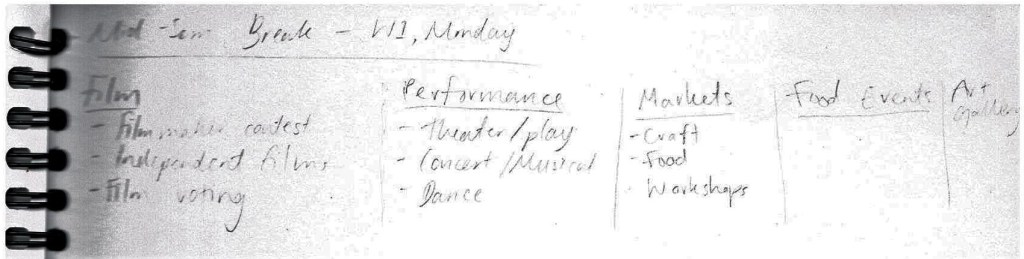
I started mid-sem break by figuring out the type of events I wanted to take place during the week of the installation because it would allow me to be clearer on the type of spaces I would need to create and allow for particular events. Below is a list of categories and ideas I came up with.
I don’t think I will include all of these but it allowed me to think outside of the box. While making the list I thought about somehow using the installation as a gallery space but this is something I need to put more thought into. I am really interested in the film and performance ideas, along with the markets and workshops. I have thought about the food events from the start by including nearby restaurants and bars but this is something I need to put further thought into. I like the idea of designing a versatile and non-constrictive space for creative expression and engagement rather than designing the events myself. I feel like by designing events myself, it takes away creative authority from the people I am designing for. With this said, I definitely don’t want the idea of creativity constricted to a few traditional mediums so food events with be part of the installation period on the terms of creatives themselves.
After this brainstorming, I thought it to be fit to do some research into some local creative communities such as theater and dance companies. I started this research with the idea of curating a list of communities that could be involved but as I did my research I realised even further that my project isn’t about curating creativity, but more about creating the space for it.
This week I also started getting into the habit of meeting with some classmates every couple of days to discuss progress, struggles or uncertainties. One of the points I brought up in one of our conversations was my lack of enthusiasm around colour. I struggle with colour as a defining part of my design and it is always a last decision for me. A suggestion made to me was to look at colour through lighting rather than a part of the materiality of the curtain. I like this idea because it allows flexibility in colour choices and displays and lighting is something I am already beginning to look into as my design will be functioning at night.
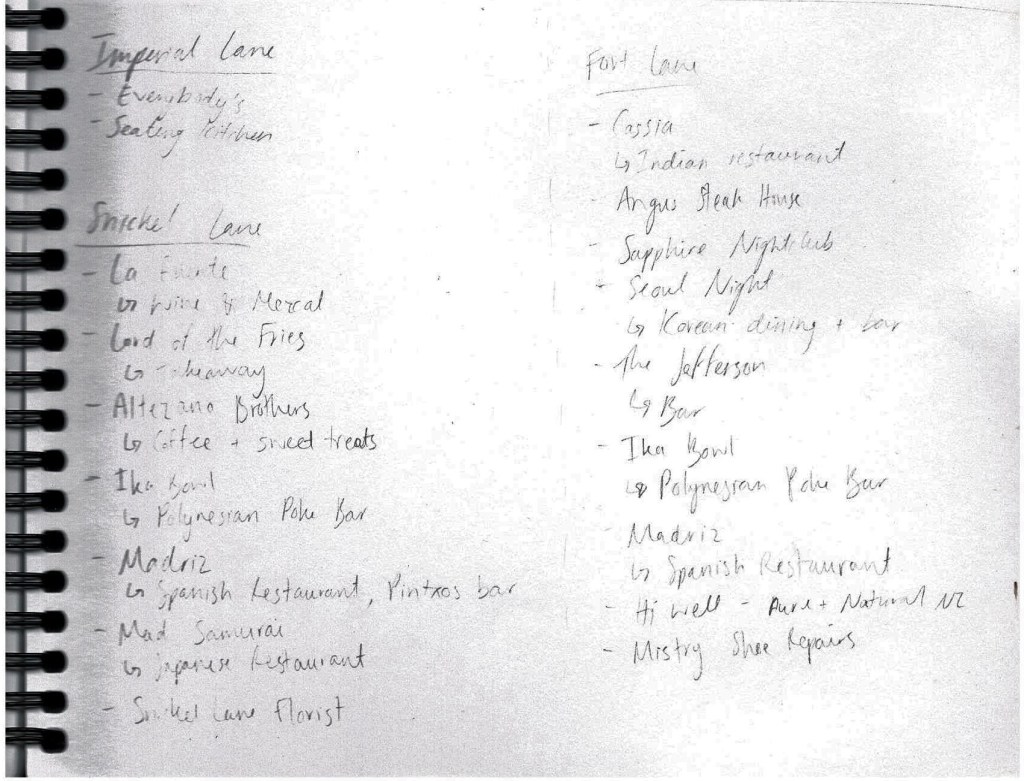
This week I started working on some important secondary elements of my design intervention. I began with some research into the cafe’s, restaurants, bars, and stores in and around Fort Lane. I looked at Fort Lane, Imperial Lane, and Snickel Lane because these are all important intersections within my design and I want to include and consider these stores in my event planning for the space.
My next step with this information is to identify their locations in a map in relation to the positioning of my design, research opening hours and start working a plan of the events I want to take place with this information in mind.
This week I also started some research into seating. Because I have decided to create a theater space as one of the curtain layout states, I have also decided to have seating. I did consider not having seating similar to the Pop-Up Globe performances, but decided that when having events such as film viewings, seating might be more appropriate. I also considered the experience of people in the theater space. One of the reasons I chose fabric was because it visually displays movement and I like how it challenges tradition ideas of thresholds and constraints of space. Having seating will give the audience a better sense of their presence in the space. By being lower to the ground they will notice the organic movement of the curtain against the static pavement, the feet of the public walking past as the curtain will be slightly raised off the ground, the movement of people outside of the curtain as they brush past, altering the space slightly. By becoming more static themselves, the audience experiences the movement around them.
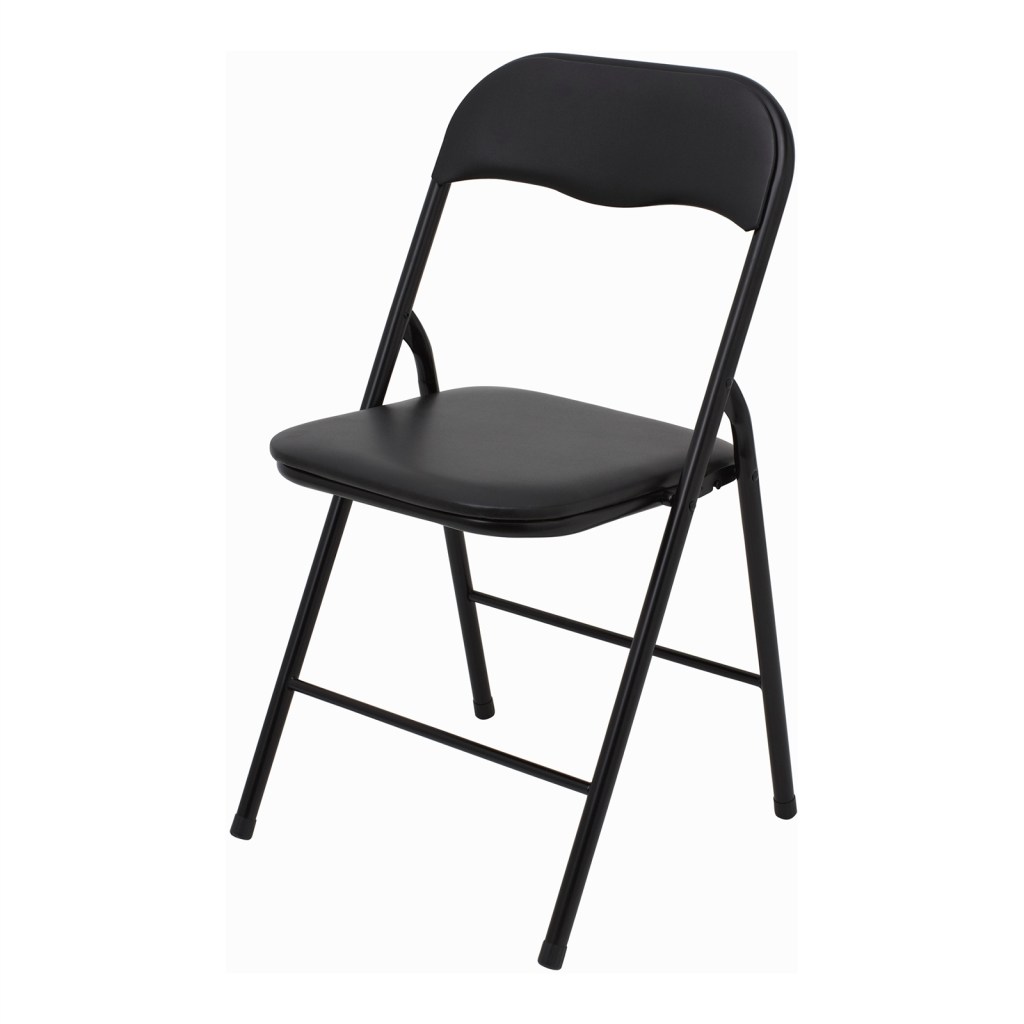
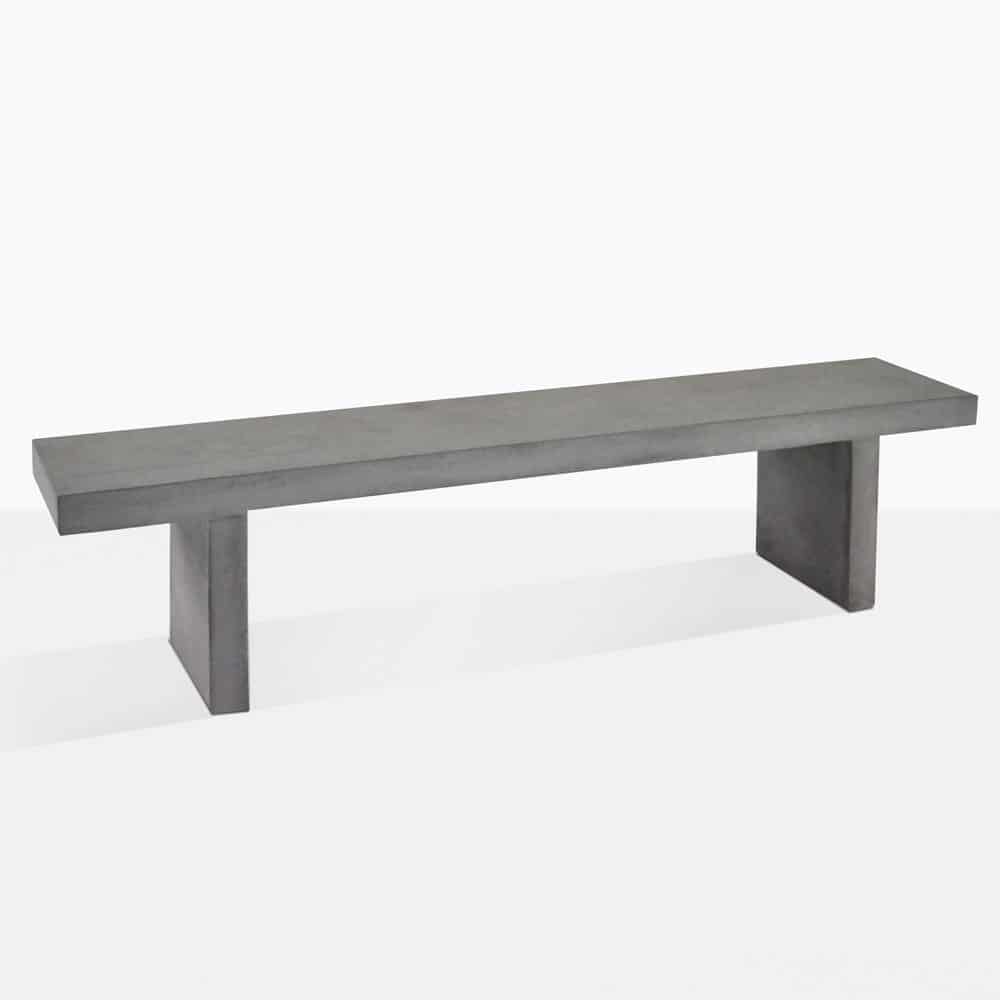
With this said, I began to look at seating options for my theater space. I decided I wanted some that was easy to remove and also easy to store as the theater would only be a temporary space. From this I came up with two options: bench seats and folding chairs.
Having the bench would allow a slightly more communal feeling than singular folding chairs but I began to think about how everyone would be able to see with the benches being all the same height. I then looked at some bleachers.
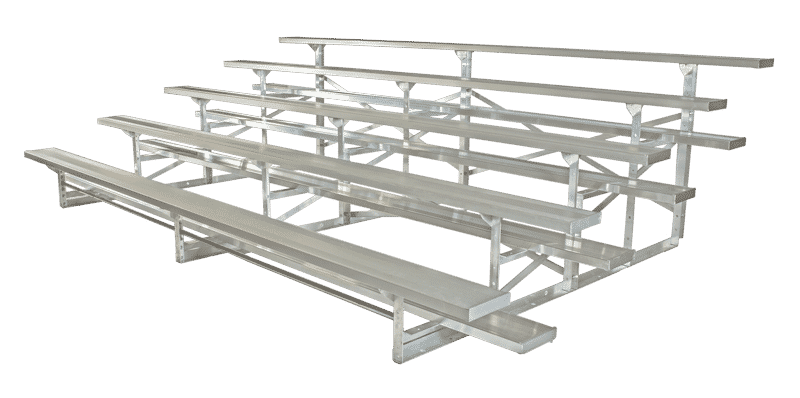
I like this because it creates a vertical incline in the seating and makes it easy to view the stage/screen. Although this works well with the visibility, bleachers do not work well in terms of easy, compactable storage. I took the idea of inclined seating like the bleachers but looked at how I could make this more compactable.
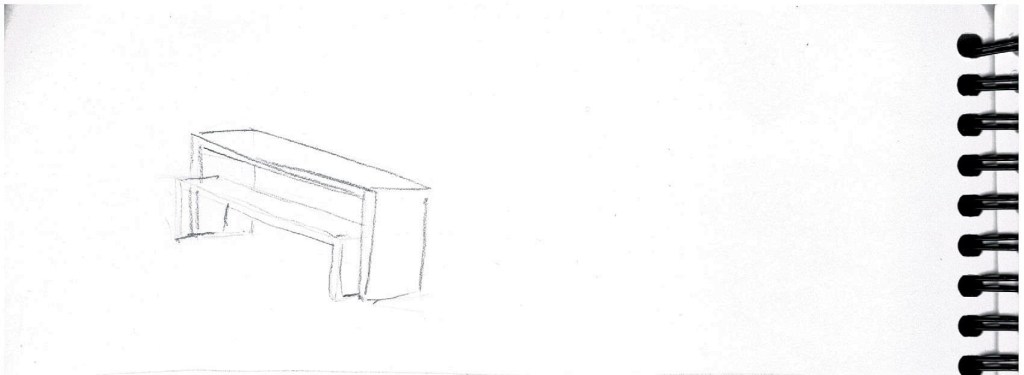
This idea would include a series of multiple heights of benches that could stack within each other for storage. I liked this idea but then I realised that the benches that sit at the back of the theater will be extremely high off the ground and could be impossible or unsafe to try and sit on them. I realised that having height difference in rows wasn’t as important because f the positioning of the theater space and the natural incline of the lane. Because of this, I have decided to stick with folding chairs for the moment as they will be more stable on the cobblestone pavement and they are more compactable for storage. I will review this later on and see if I can come up with some better solutions. I also need to start considering a storage space near the installation as well.
In this weeks one-on-one some points were brought up about consideration of lighting for evening events and the way the curtain will be suspended in the space. These are on my list of things to start looking into, especially the mechanisms behind the suspension of the curtain as this is an important detail in my work.
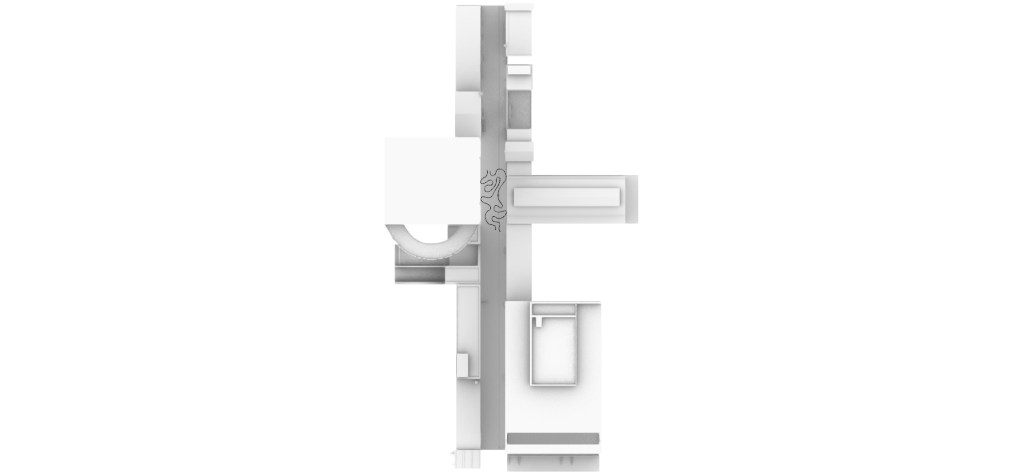
After the initial explorations of curtain layouts for my installation I begun to model the layout digitally on Rhino. By doing this I was able to figure out the layout I wanted in relation to the movement of people through Fort Lane and from Imperial Lane that was to scale and in relationship with the size of the site and people. My initial layout sketches allowed me to generate ideas, whereas digitally modelling the curtain allowed me to be ore purposeful and accurate. I began with line work before extruding it and adding cut-out arch-ways in the curtains.
I decided on using two separate curtains for the design because it created more of an inviting, enticing, and purposeful entrance to the public walking through the lane; it gave a sense of direction for movement. I also decided to create tall curtains. I had been thinking about this from the beginning and it gave the curtains more of a sense of grandeur and performance. Digitally modelling the basic shape and structure of the curtain allowed me to understand the space I was creating from the public’s viewpoint and I realised that because the lane is narrow and tall, a lower set curtain wouldn’t create the sense of extravagance or create as much of a stir or interest in it.
After my one-on-one with Sue this week, I’ve decided my next steps or aspects I need to start exploring are lighting, the track the curtain will sit on, and designing secondary elements such as seating and event layout.
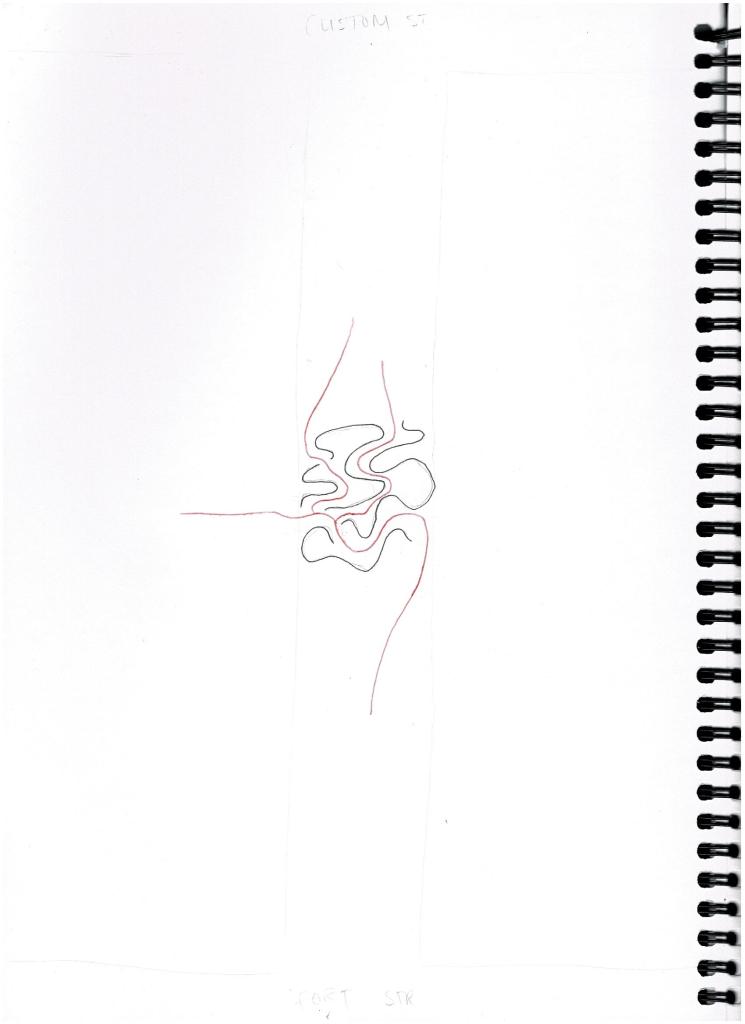
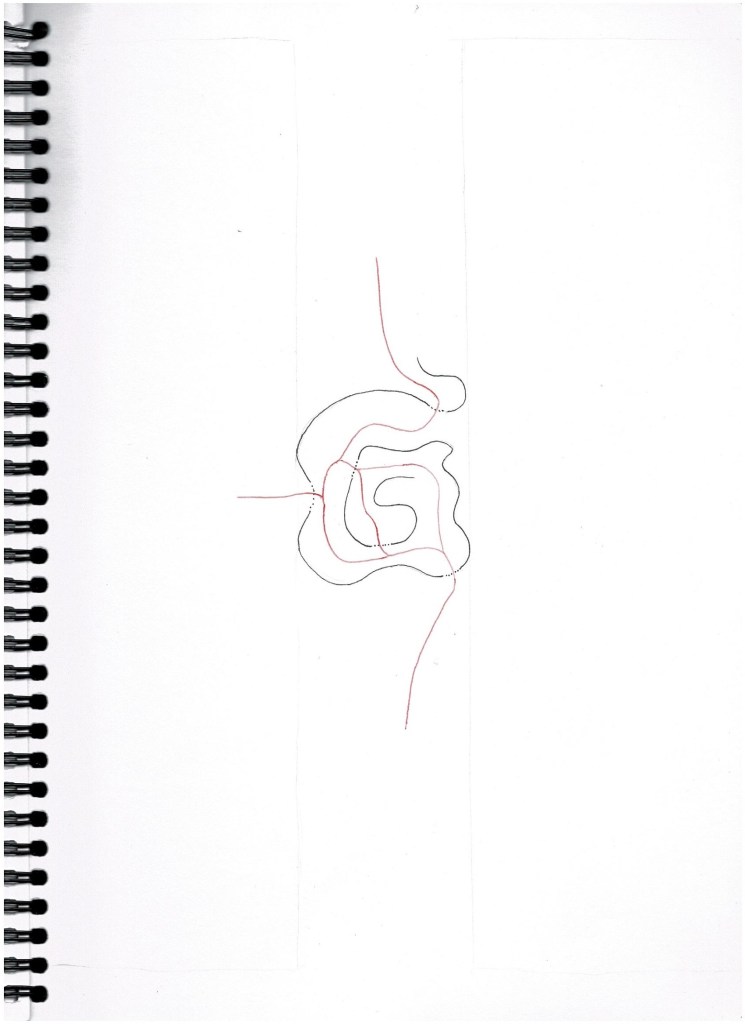
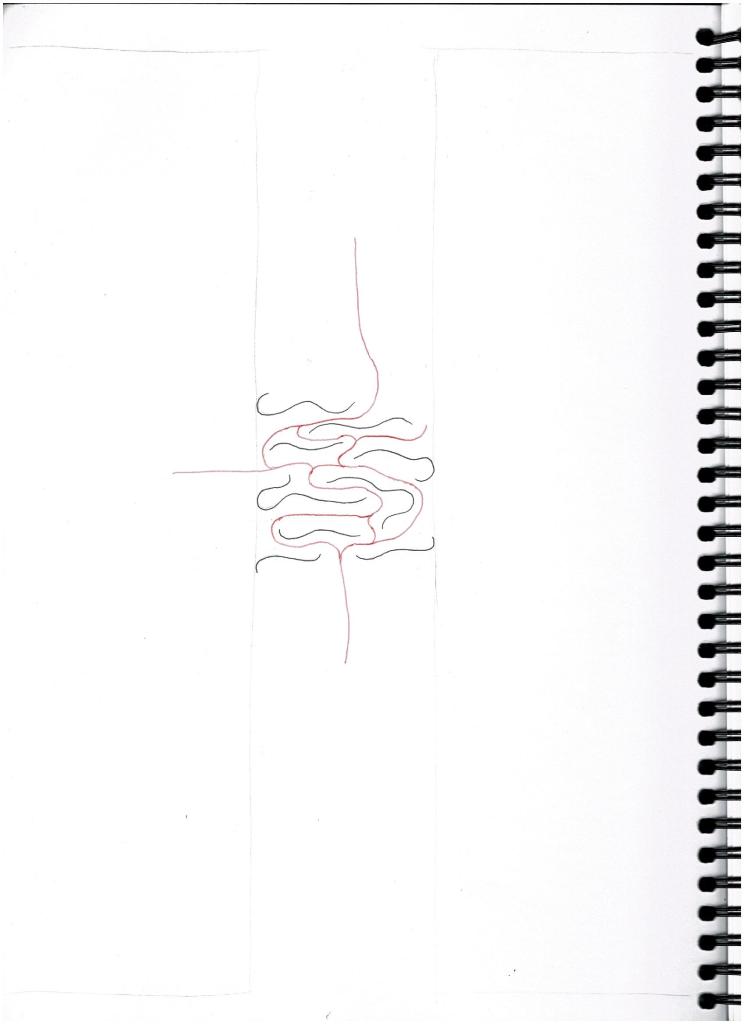
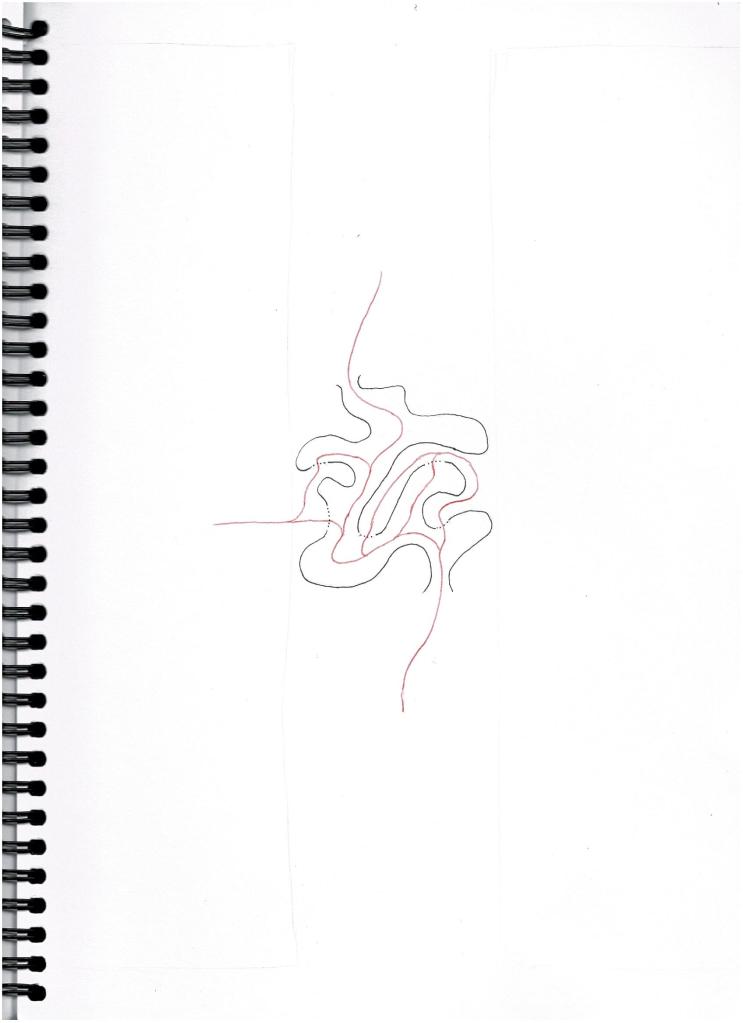
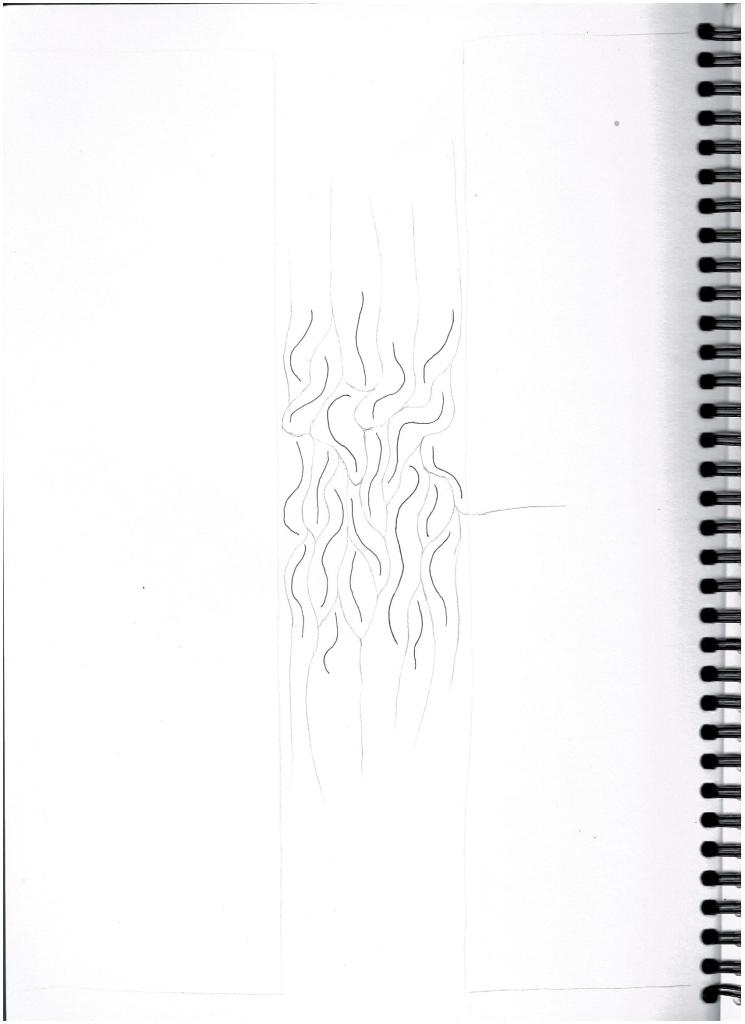
This week I began work on possible plan layouts for the installation curtain in Fort Lane. I started with drawing multiple initial ideas I’ve had, exploring organic lines and shapes as well as the movement of public through different arrangements and numbers of curtains as well as arch perforations to help with flow of movement. Below are some initial ideas I began with. These plan views are orientated with Imperial lane to the left of the layout, with the black lines being the curtains, dotted lines the perforated archways, and red line the movement of people in the space.
1
2
3
4
5
After exploring some different layout ideas through drawing I decided that I didn’t like the idea of more than two curtains (Plans 3 and 5). I quite like the space that plan 2 creates and the movement (isn’t too chaotic but slows the public) but I’m not sure about using only one curtain. I feel like the experience of someone walking down the lane it will create will make the lane seem blocked and inaccessible. I want the installation to be an inviting space for people.
While sketching these ideas, I began to think about the use of the space I was creating. I’ve been thinking about holding different creative events in and around the installation, including the performing arts, but while designing the layout I thought that I could possibly create a space with the curtains for some of these events to take place, like a theater. This is why I think I’m going to use the idea of layout and movement created in plan 4.
Showing a theater/performance space layout with both one and two curtains
My installation design is an articulation of performance through materiality, movement, and form. This idea of moving the curtains from one state to the next creates a performance within itself and articulates the materiality, movement and form of the design in an effective way. This space can be used in the evenings for film viewings, dance performances, theatrical shows, or concerts. I like this idea of altering the space because it plays on the idea of behind-the-scenes work nd what is displayed in a film frame; using the same site and same location, the design is moved, altered, and shifted to create a different space and different experience for the occupant/viewer.
This week we worked on preparing for our pitch. We started with some prompt questions to help us think about the key ideas of our project and what we want to articulate in our pitch. Below are the questions and my answers.
What is the focus of your project in relation to the cinematic spaces brief? My project is based around the idea of fictional space and how film and television create illusions of spaces in relationship to each other and their extension past the frame of a camera. I am also interested in the idea of performance as a means of creating experience for an audience and how film has the ability to create an emotional experience for its viewers.
What do you know about your project, and how are you going to articulate that? I know that conceptually my ideas are based around the illusion and disorientation of fictional space and the impact this and performance have on an audience. In terms of the site, I am interested in the movement of people, specifically pedestrians. Fort Lane acts as a negative space cut out from the surrounding city and it is used in such sense. I want to initiate and activate the site through a performative experiential installation design. My plan is to have a fluid moving curtain like structure suspended above the center of the lane acting as a beacon/focal point for a series of creative expression events over the period of a week. The suspended curtain will activate the site in the sense that it will alter and change the movement and social aspects of the site currently. I am going to articulate my concept with a well planned spoken piece and articulate my physical vision of the project through conceptual sketches and models.
What is your key relation to the site? My key relation to the site is people. I am interested in people as a material and how social customs and expectations alter and are altered by a space. I am interested in the public aspect of the site and how Fort Lane’s purpose as a service lane or a shortcut can be question, challenged or instigated in a different means through the social aspects of the space.
What specific community is your design proposal in service of? My proposal is aimed towards the community of creative minds in Auckland. The project will not only allow the audience to experience and consume creative expressions, it will allow them to take part and express their creativity themselves.
How did your cinematic device document the site? And how did you respond insightfully to those findings? I had an array of cinematic devices but the most successful devices captured the site through illusion and the fictional display of the site. The findings allowed me to look at the power of film in relation to an audience experience and viewpoint and this influenced my further design choices and exploration.
What are the key threshold/scene transitions in your proposal? And how do these relate to cinematic scene transitions? The key thresholds in terms of movement through the space is the point between viewing the installation from the outside while walking down the lane and being immersed within it as you travel through it. This relates to the experience of watching film or television in the sense that you view a film from the outside by hearing about it and reading about it but by watching the film you are immersing yourself in the emotional experience of it.
How does your proposed design activate the site as a public space? To me the site is a negative space, a cut out of the surrounding streets and city. The movement through the space is linear and with the only purpose of travelling from one place to another. My design proposal disrupts and transfers/diverts this movement through changing the path of movement physically while also altering the social dynamics of the space.
_________________
I then spent some time working on a draft pitch during class to get my ideas onto paper (below).
DRAFT PITCH My design project is focused around fictional space and performative qualities through the exploration and alteration of movement, interaction and social customs of the Fort Lane space and its occupants.
Fort Lane acts as a negative space, a cut out (In between space) of the surrounding streets and vertical city and is used in said way with movement almost always linear. Pedestrians and vehicles weaving between one another with the aim of getting from one point to the other with the occasional Fort Lane service destination vehicle encroaching on pedestrian safe space. My design proposal aims to activate the site, altering and disrupting movement and altering social dynamics of interaction.
My design proposition is a large-scale experiential installation piece that is to be suspended in the center of Fort Lane. Relating to the ideas of performance, the installation is to be a large curtain structure that
_________________
I found that making a plan for my slides before writing the pitch gave me more structure and made it easier to link my pitch to the images I’m going to be presenting. I made and order list for the slides and then reworked my pitch to align with it. As I wrote the pitch I reorganised the slides slightly to work better with the flow in the presentation (below).
DRAFT PITCH 2 Ideas/supporting concepts Address/ review cinematic device images Designer research reflection (idea of performance) Designer research (materiality) 5 sketches What the concept/proposal is
KEY WORDS Performative Movement Experience/immerse Invitation Open freedom/breaks down constraints that stop creativity
My design project is focused around fictional space and performative qualities of materiality through the exploration and alteration of movement, interaction and social customs of the Fort Lane space and its occupants.
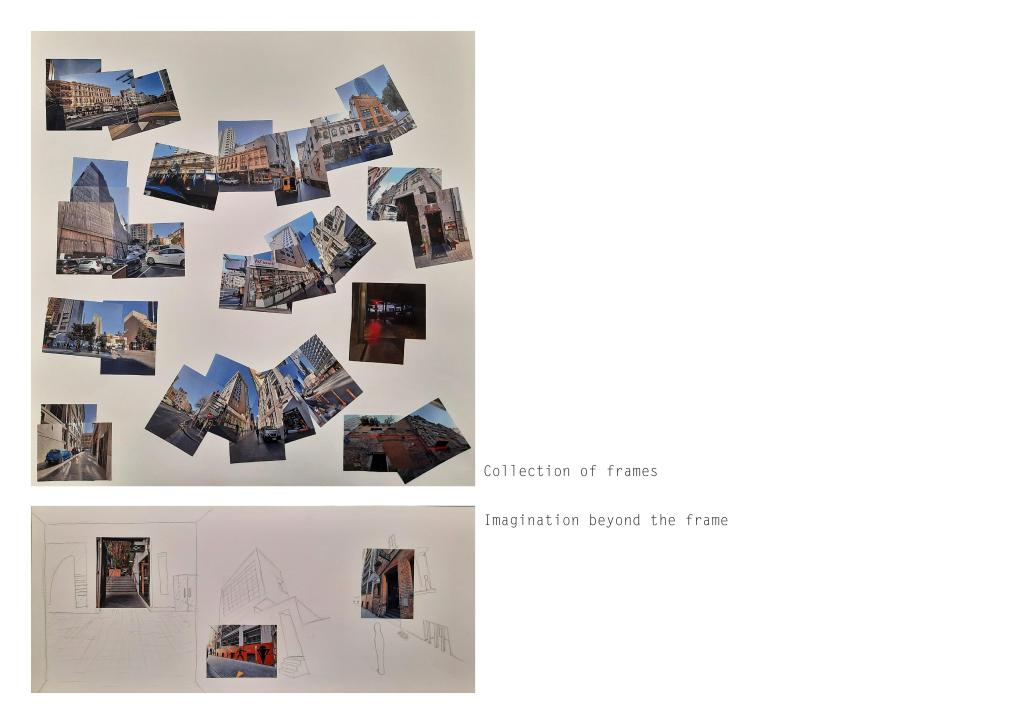
My interest in fictional space relates with the way an audience views cinematic spaces in relationship to each other when reality is often very different. This is the power of illusion and disorientation created by film. These were the ideas I explored in these studies of the site through my cinematic devices here.
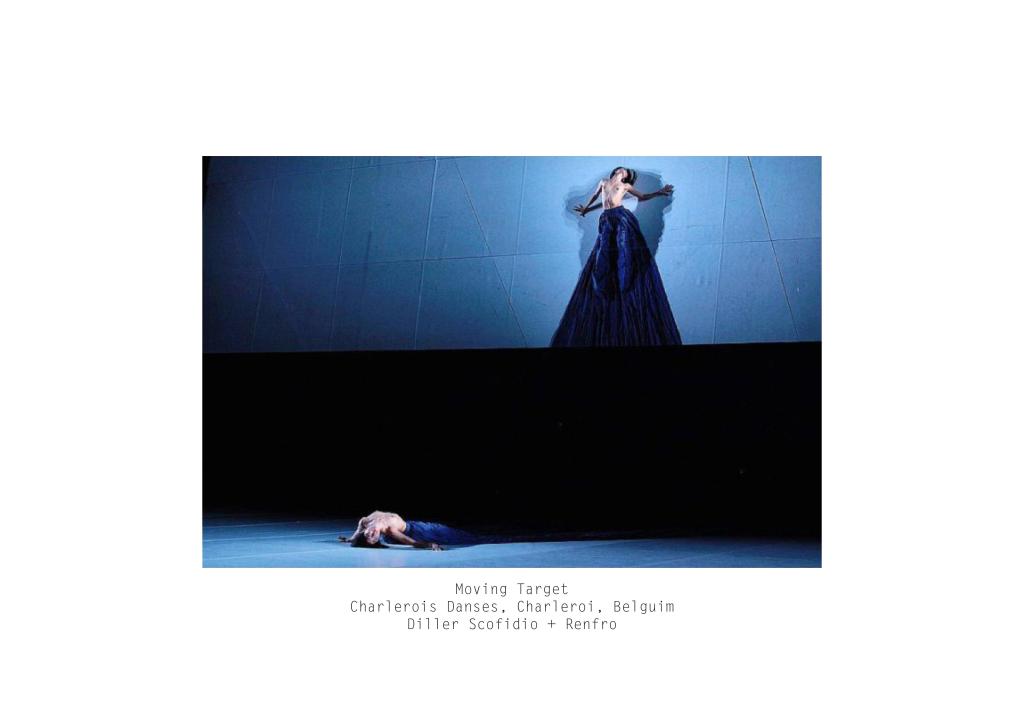
My practice has always been very much focused around the social and sociological aspects of humans in relation to space and people as a material. This is why my project is focused on experiential design that is informed by performative qualities and that challenges and alters human movement and interaction with the space. This performative design by Diller Scofidio and Renfro gaged my interest in performance and expression in alternative form as a means of creating experience.
Ann Hamilton’s practice, specifically these two projects “the event of a thread” and “habitus,” explore the performative qualities of materiality in relation to human interaction, a defining point of my own project. My work also explores the relationship between space and people but also the impact space and design can have on the movement, behaviour, and interaction of people with each other much like the results created by Hamilton’s installations.
My design embodies the idea of performance through materiality and movement and investigates people or public as a catalyst or instigator of physical expressions of interaction and movement. The suspended curtain-like structure aims to activate Fort Lane and disrupt and alter the social movement of people through the space. The design will be the focal point of a series of creative expression events to be held over the period of a week in and around the installation. The aim of the installation and event schedule is to create a space and community that breaks down the intangible constraints that restrict creative flow to support the consumption and production of creative expression. The design proposal also aims to gage interest from the Auckland public in creative communities and encourage expression.
_________________
I then organised my pitch before printing it to allow me to keep track of what to discuss on each slide and when to transition slides (below).
SLIDE 1 My design project is focused around fictional space and performative qualities of materiality through the exploration and alteration of movement, interaction and social customs of the Fort Lane space and its occupants.
SLIDE 2 My interest in fictional space relates with the way an audience views cinematic spaces in relationship to each other when reality is often very different. This is the power of illusion and disorientation created by film. These were the ideas I explored in these studies of the site through my cinematic devices here.
SLIDE 3
SLIDE 4 My practice has always been very much focused around the social and sociological aspects of humans in relation to space and people as a material. This is why my project is focused on experiential design that is informed by performative qualities and that challenges and alters human movement and interaction with the space. This performative design by Diller Scofidio and Renfro gaged my interest in performance and expression in alternative form as a means of creating experience.
SLIDE 5 Ann Hamilton’s practice, specifically these two projects “the event of a thread” and “habitus,” explore the performative qualities of materiality in relation to human interaction, a defining point of my own project. My work also explores the relationship between space and people but also the impact space and design can have on the movement, behaviour, and interaction of people with each other much like the results created by Hamilton’s installations.
SLIDE 6 My design embodies the idea of performance through materiality and movement and investigates people or public as a catalyst or instigator of physical expressions of interaction.
The suspended curtain-like structure aims to activate Fort Lane and disrupt and alter the social movement of people through the space. The design will be the focal point of a series of creative expression events to be held over the period of a week in and around the installation.
The aim of the installation and event schedule is to create a space and community that breaks down the intangible constraints that restrict creative flow to support the consumption and production of creative expression. The design proposal also aims to gage interest from the Auckland public in creative communities and encourage expression without personal judgment.
_________________
I then put together my slides and practiced displaying it on the projector so I would know how it looked when presenting. Below is the final result.
I got some good feedback from my formative presentation, most of which were ideas I had already considered developing/looking further into. suggestions and feedback included starting work on perspectives, plans and sections of the design, further exploring the idea of transparency through materiality which is something I briefly looked at in my surface design exploration, and also exploring materiality on a 1:1 scale in test space. These are all steps I am keen to take and all this feedback will be taken on board.
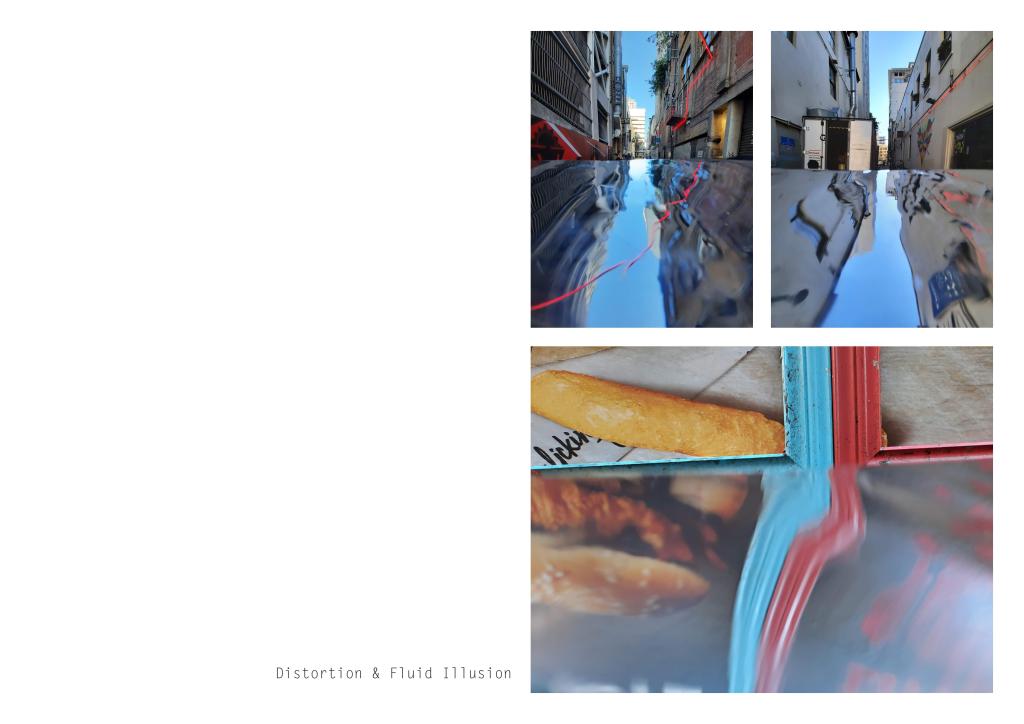
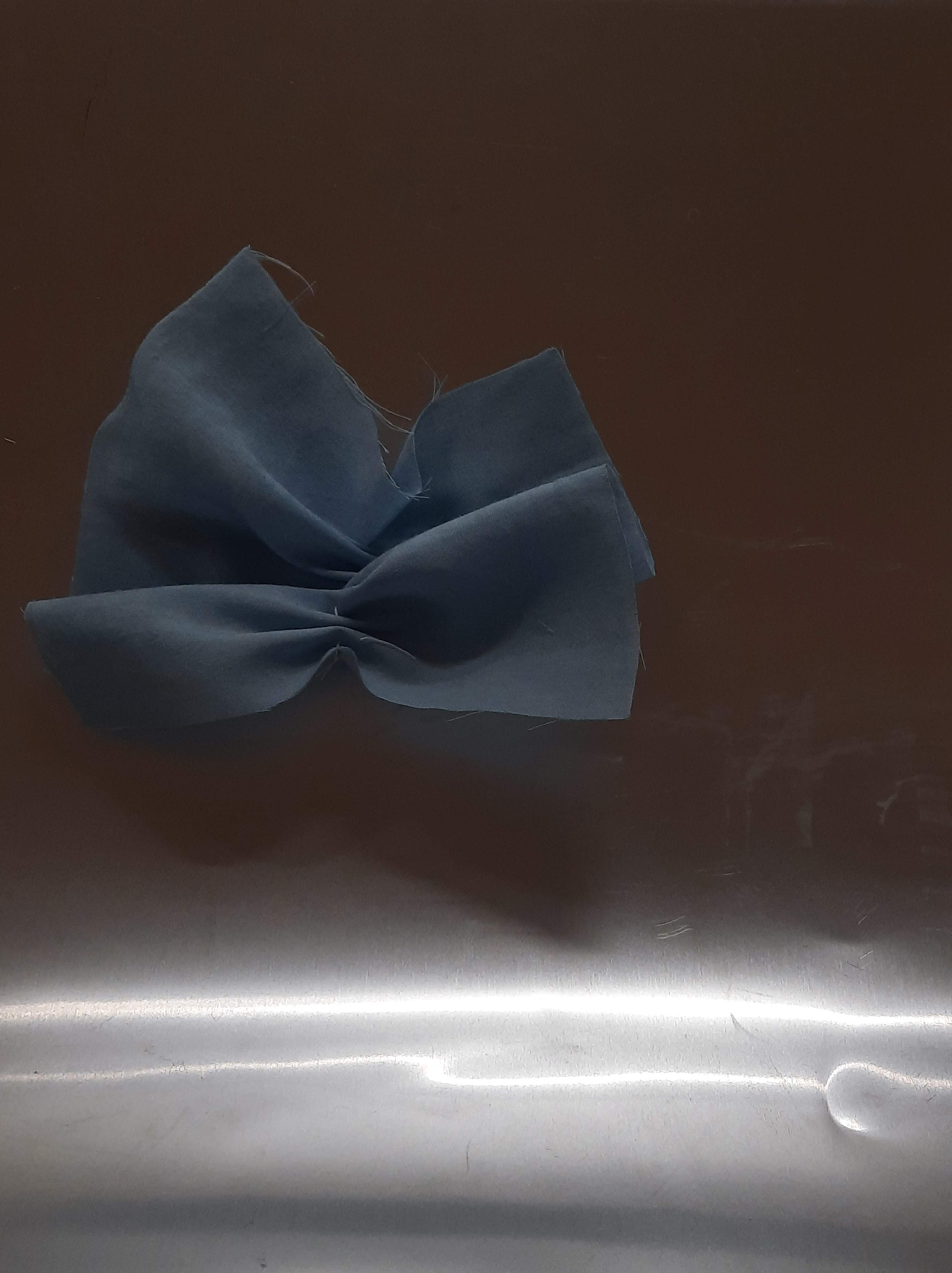
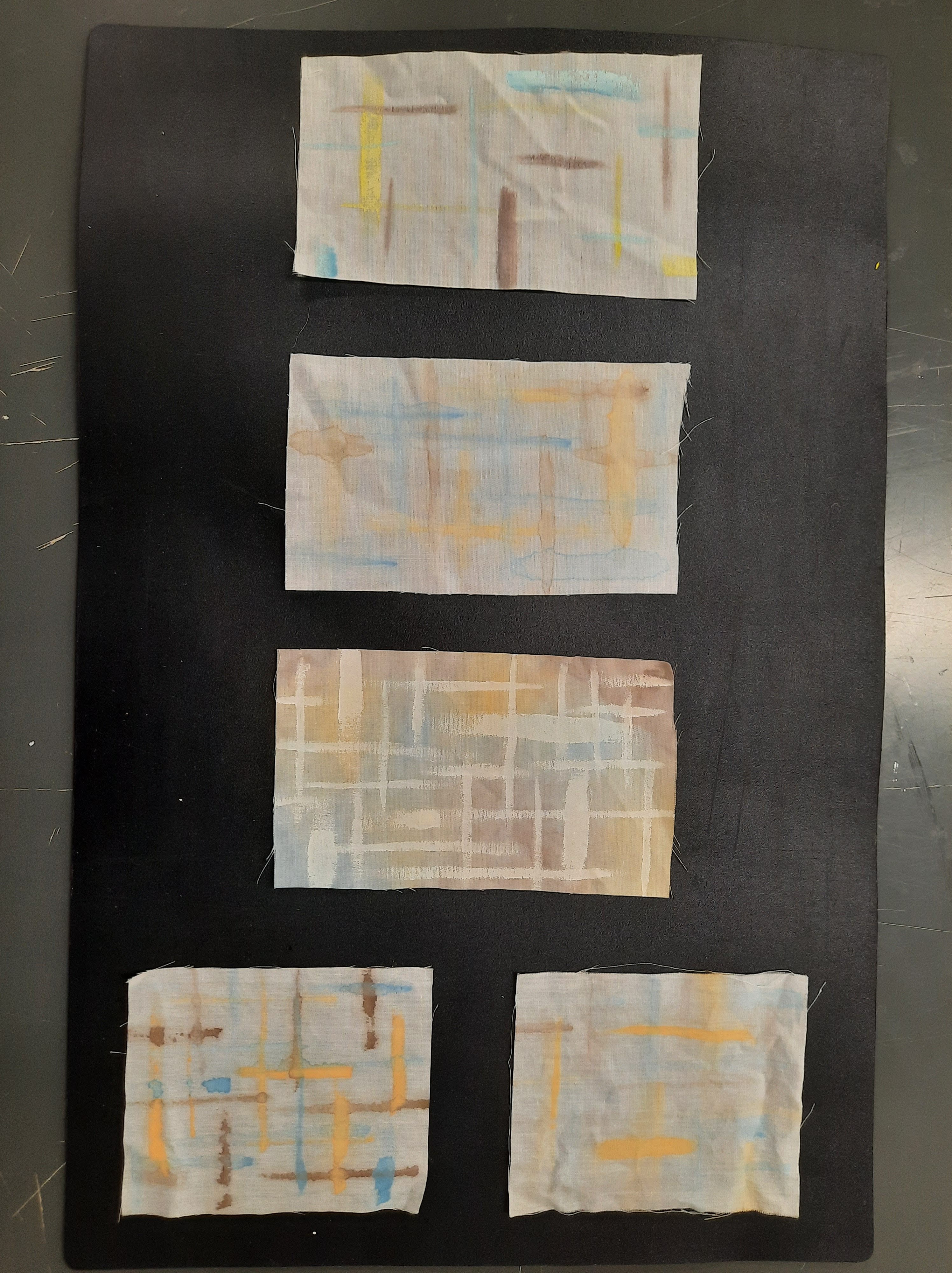
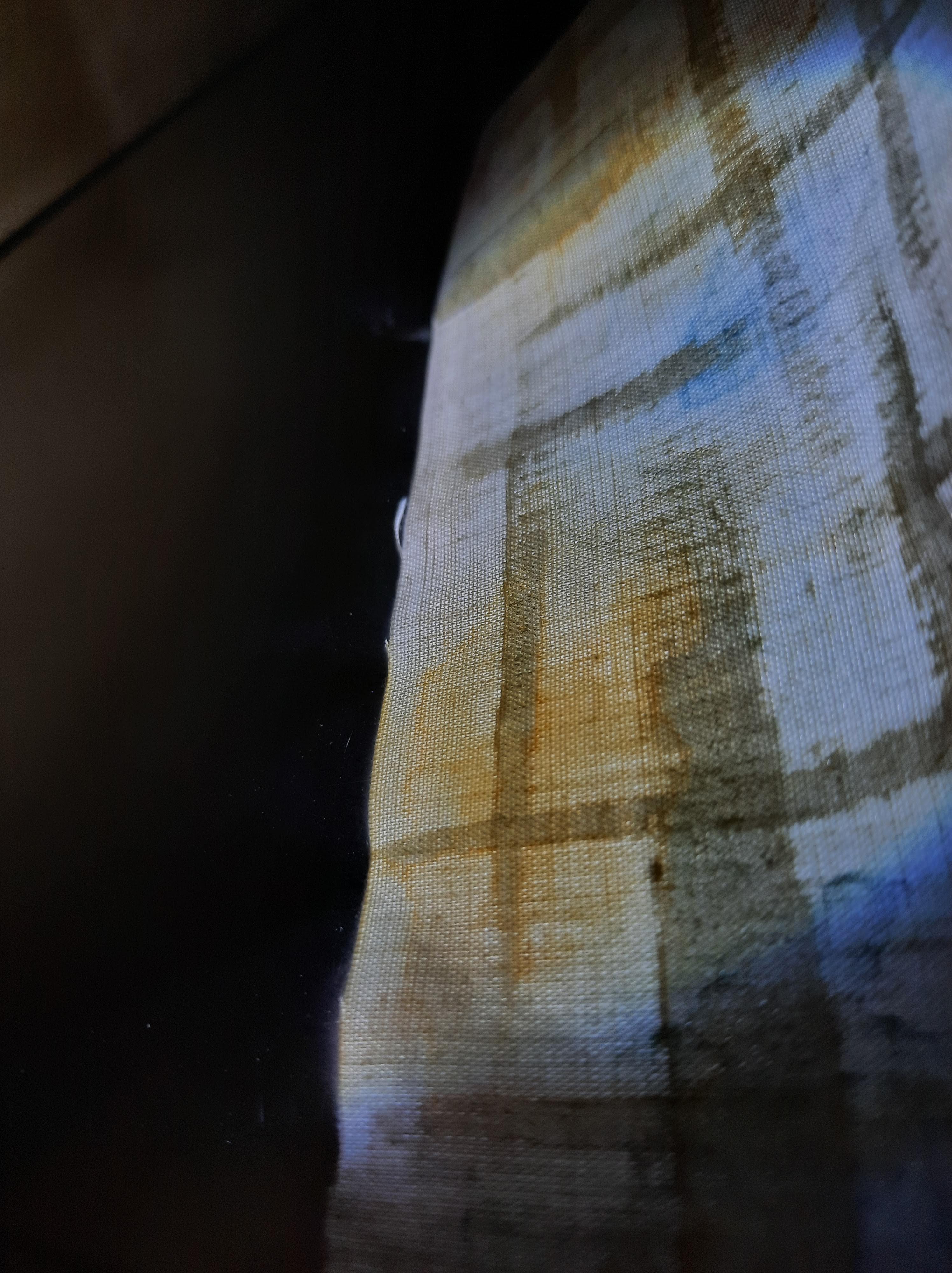
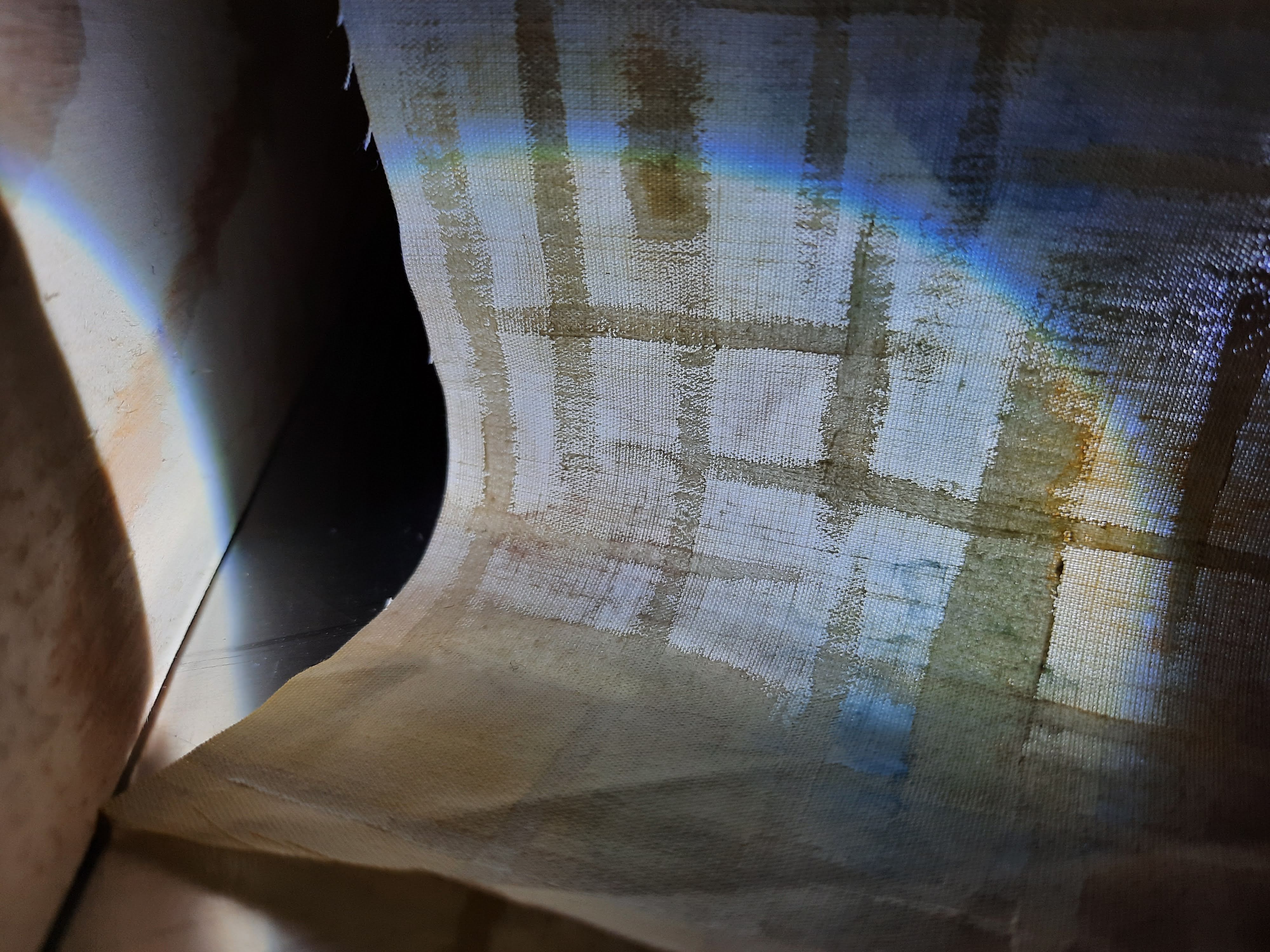
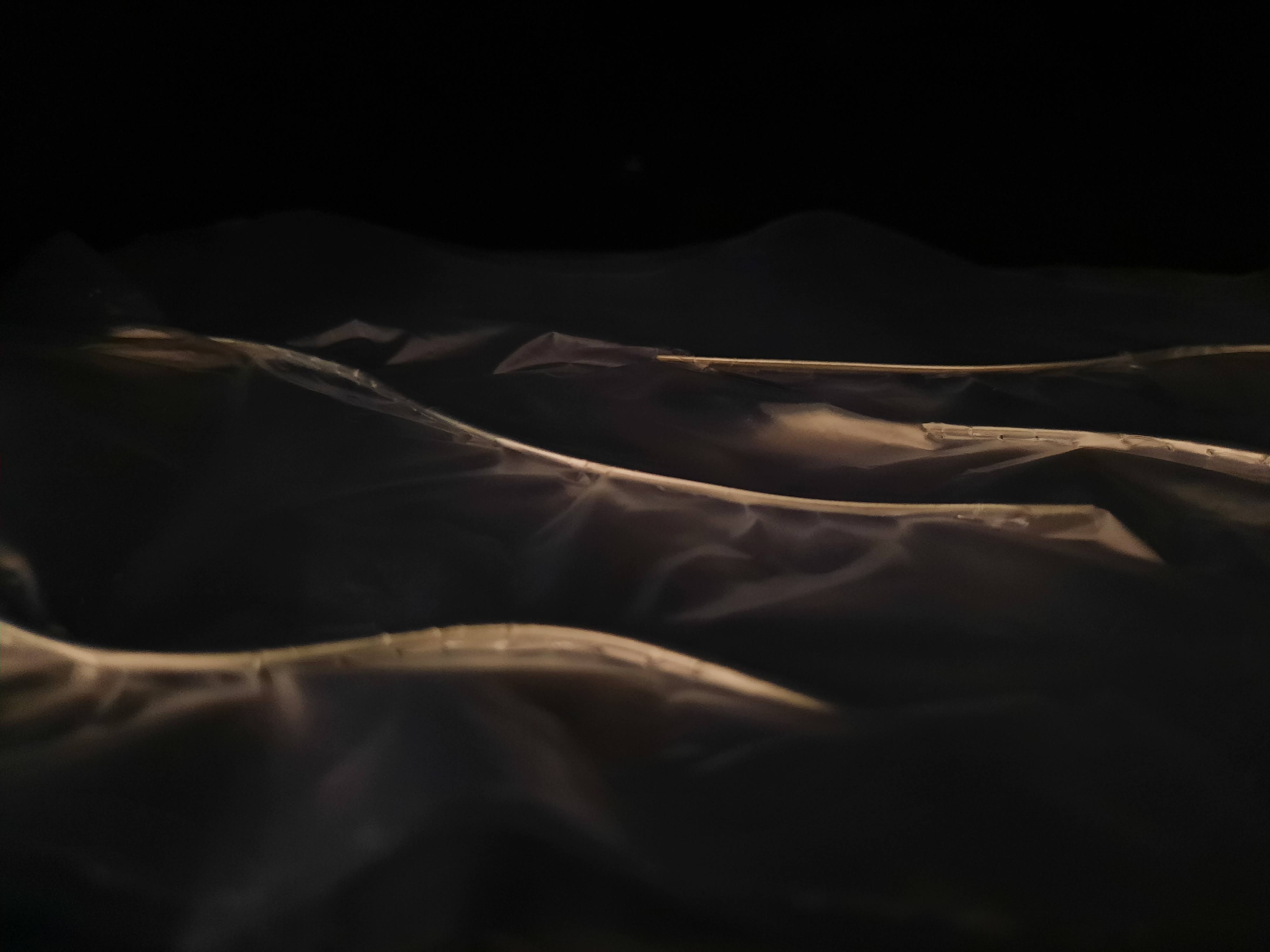
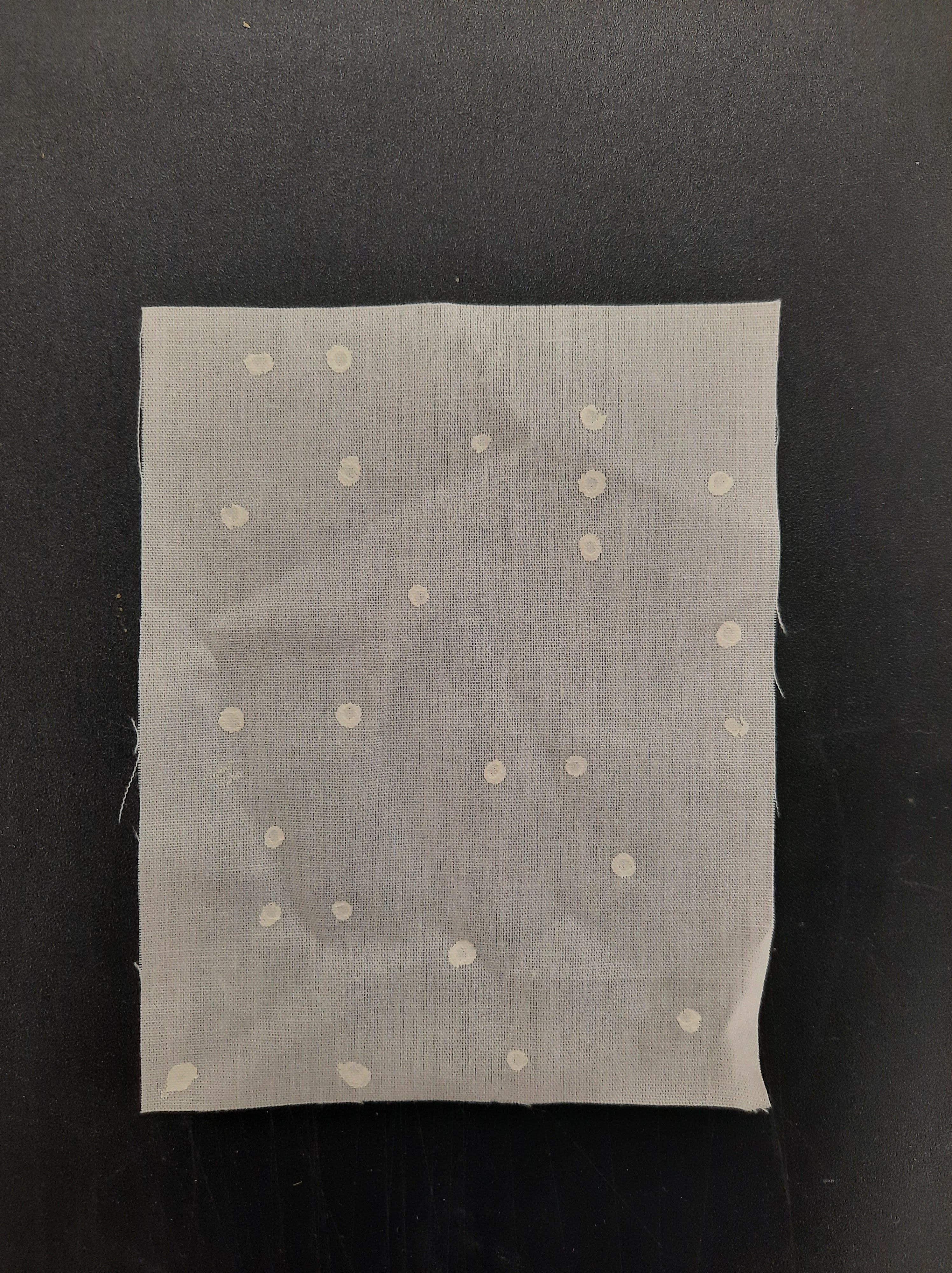
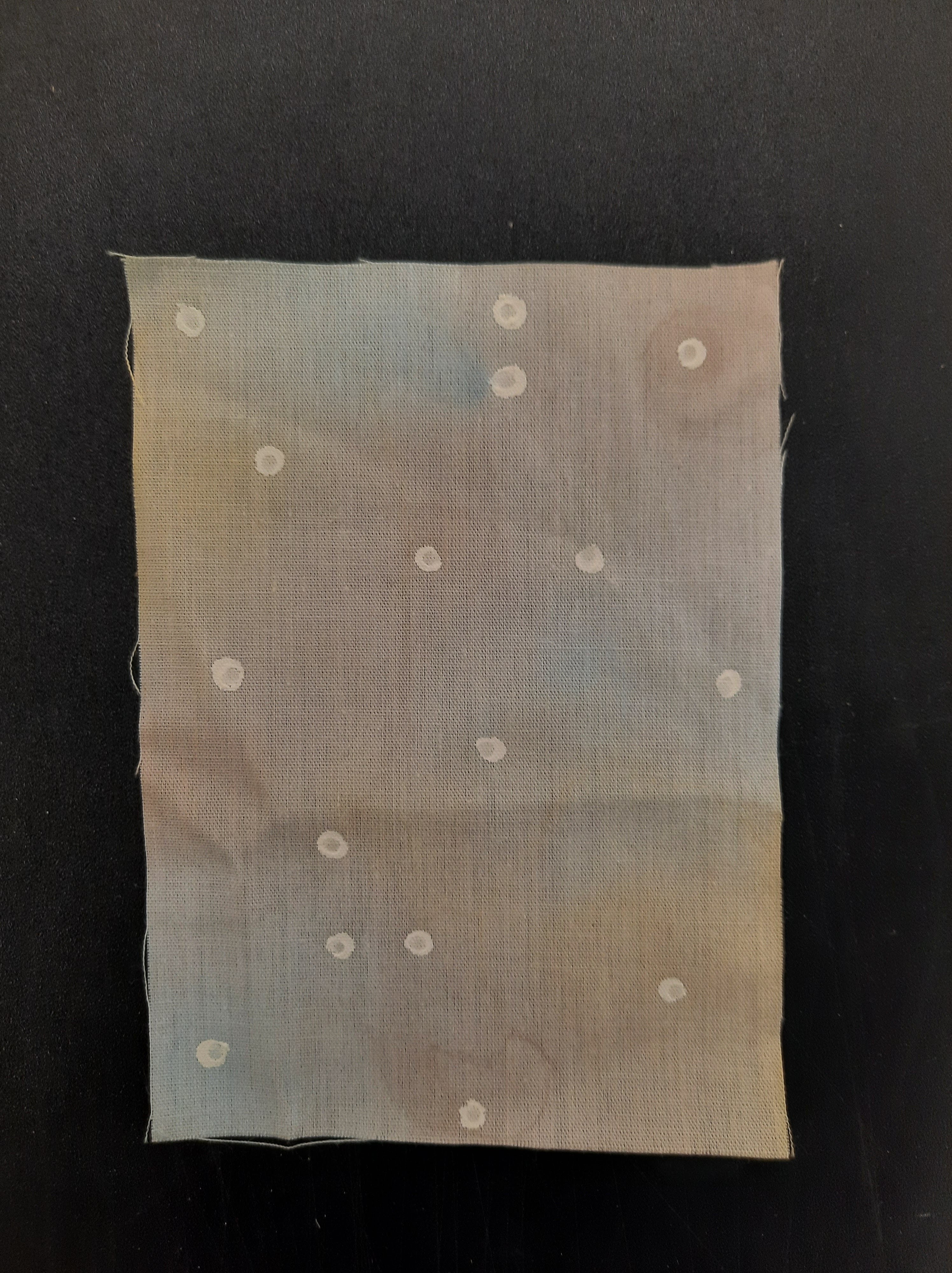
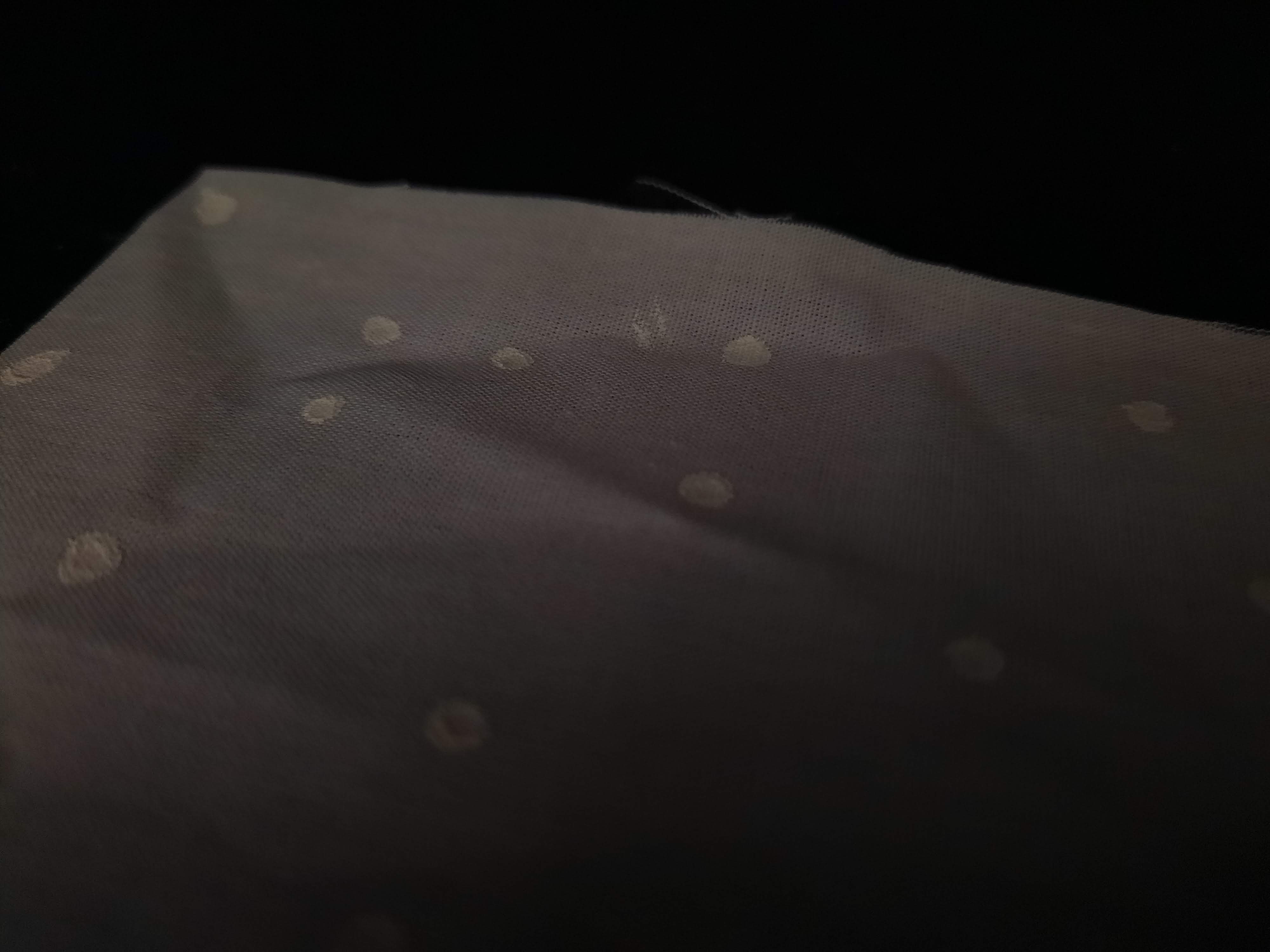
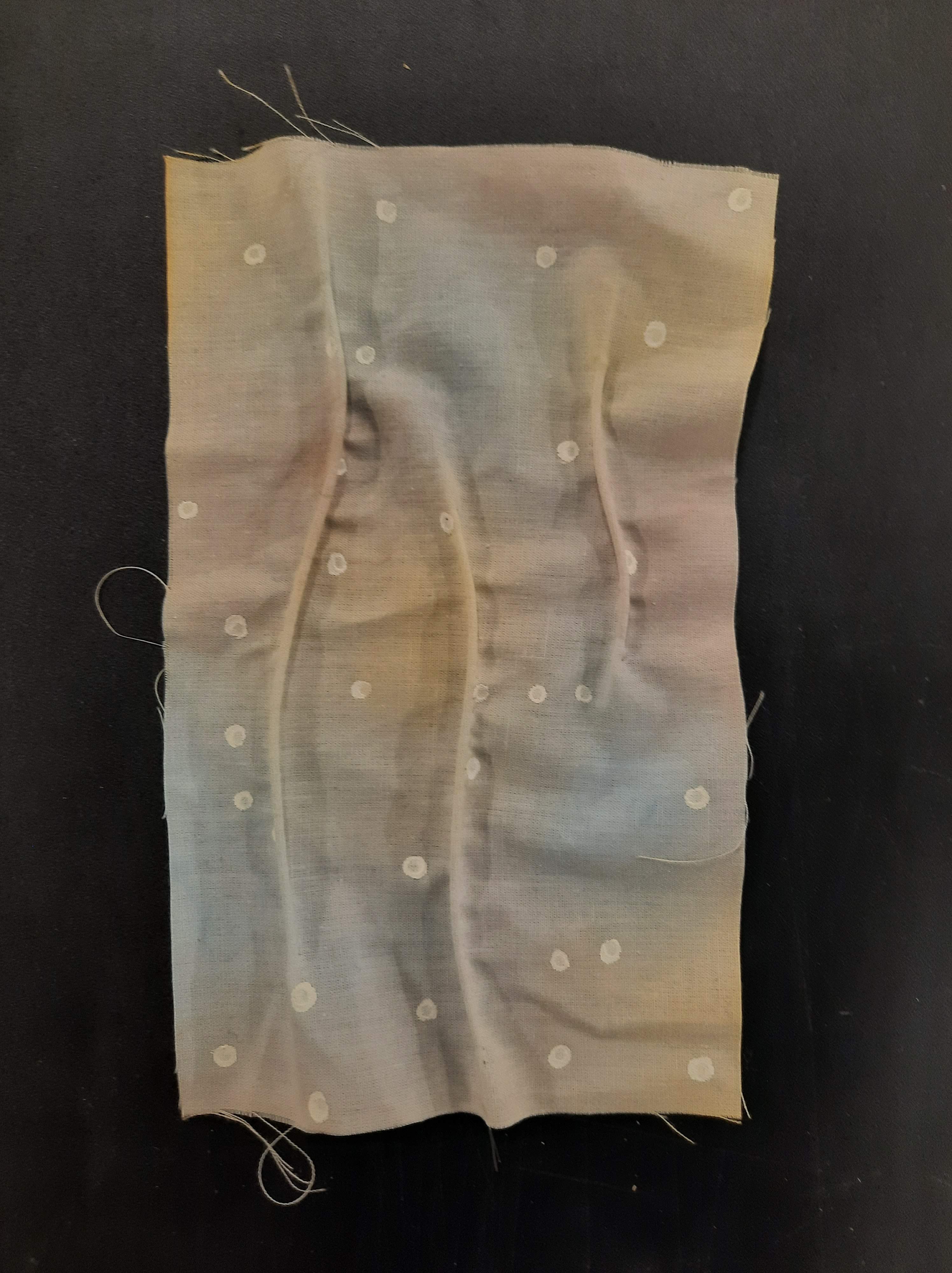
This week we did some surface design explorations. We were only supposed to only do a few but I got a bit carried away. I really liked this exercise because I so many ideas come to me.
This week we presented our work to date through our blogs. It was good to get have some fresh eyes looking at my work to give me some feedback that will allow me to move forward and develop my project. Currently I am thinking of creating an installation that is the center of a series of events to take place over the space of a week. In terms of cinema, I am really interested in the idea of the illusion of fictional space and the effects that has on an audience. I am also really interested in performative qualities and have started to explore this through the performative qualities of fabric, specifically a large scale installation curtain. The idea with the curtain is to alter the movement and interaction of public and space and create a slight sense of disorientation, imitating the audiences idea of fictional space and its relationship to actual film sets.
I got some really good feedback on my blog and project so far. I sometimes struggle to find good examples of designers’ work that has similar ideas or qualities to my own. I got some suggestions to look into including Assemble Studio, Petra Blaisse, and Ann Hamilton.
Because my project is currently looking at fabric materiality, movement, form, and performance, The Cineroleum by Assemble Studio was a suggestion made by my group to look into.
I remember last semester for our Digital Techniques class we looked at Assemble Studio’s work, specifically The Cineroleum. What I really like about this project is not only the form and movement displayed through the curtains surrounding the cinema, but also the human interaction and social aspect of the design. I like how a space has been created with a fluid threshold, unlike solid walls and the impact this has on the movement within and around the space. I also find this idea of exposing the occupants, challenging their ideas of public and private, and creating a slight sense of unease. With the drawing up of the curtains at the end of the film not only changes the physical aspects and layout of the space, but also the social attributes and human experience within the space.
With my own project I am playing with the idea of shifting the layout of the curtain in relationship to the events taking place in the space and further explore the idea of movement and form in relationship to human interaction. Also by altering the space layout, I shift the experience created for occupants, an idea that fascinates me in film making and the behind the scenes work. In film the layout and curation of different sets and scenes creates a difference experience and perception of space for the viewer. The shifting of space through cinematography creates a fictional world that only exists within our minds and often sets aren’t laid out in relationship to each other as they appear on screen. A perfect example of this is sitcoms recorded with a live audience such as Mrs. Brown’s Boys.
With my design i want to capture this idea by using the same space but shifting the layout of the curtain to create a different experience, interpretation, and interaction with the space.
Another designer that was suggested to my to take a look at was Ann Hamilton. I really love Hamilton’s work regardless of the project. I looked at her work briefly in my first year at uni as I was also looking at fabric materiality and movement. Two of her works that I appreciate most and link well to my project are the event of a thread and habitus.
I think what draws me most to her work is that they act as interactive installation pieces, similar to my ideas for the project. I am fascinated by the form, movement, and materiality of her work and how these aspects fluidly evolve with the interaction of people. I also love how the actions of people influence the installation which then influenced the movement and actions of others in the space. The fluid form and movement is very similar to what I’m trying to achieve with my own work and also the emphasis on human interaction with space, design and others as a result of design is something I am interested in in terms of site context.
On other designer that was suggested and is also someone I have done some research on in the past is Petra Blaisse. Blaisse’s work is less organic than Hamilton’s and has more of a structure to it. One particular work of hers that intrigues me is Maison à Bordeaux.
One of the things I like about this work is the movement of the curtains created by the breeze. My design looks at articulating performative qualities and I like how fabric can articulate this through movement and form. I also really like how some of the curtains act as a threshold between the inside and outside and with their transparency, fluidity and movement, they challenge the idea of traditional barriers and create a different experience within the space. Something I am thinking about looking into material, the opacity, and the effects that has on the occupants.
This week we did another site visit as a class. Before the site visit I wrote a script to move someone through the space. I decided because of my focus on fictional space, that I would create a fictional character and write about her movie through the space. Below is my script.
_________________
Rose wasn’t sure if she found the chaos of the city therapeutic or unsettling. She had spent so much time rushing between home and work with only point B in mind that she rarely noticed the rest of the concrete world existing around her. The imperfections and little lights of life that she hadn’t noticed before shone brightly in front of her.
As she crossed Fort Street towards Fort Lane she looked up, noticing how high the buildings scratched the sky above her head. She walked a fraction of the speed of the racing city around her towards the opening of Fort Lane. She stopped and took note of the narrow, long, and engulfing lane which had reminded her of the trench in Finding Nemo. She couldn’t decide if she was more Dory or Marlin in this scenario.
She moved cautiously into the negative space created by the two buildings on either side of her, noticing the arrangement of art and text that was splashed across either wall. She looked down at her feet, the path below her seemed to stretch out ahead of her and the exit at the end seemed to get farther and farther away. That wasn’t real, was it? No, it couldn’t be. That wouldn’t make sense. Maybe it was just the fear of confined spaces that was creeping into Rose’s thoughts.
Rose moved towards the building on her left, standing back to the wall to feel more grounded. She panned up and down the lane noticing the rush of people and cars passing her stationary body. She stepped away from the building behind her and spun around seven times in each direction. She stopped and wandered wearily towards the exit at the other end of the lane. The buildings wavered and above her head and her body lead and her feet followed as she stumbled through the space, disorientated, an illusion before her eyes.
After gaining her sense of balance and direction again, Rose travelled down the lane with more confidence. She weaved between cars and people, zig zagging between the two containing walls of the space before stopping outside Roxy. Rose moved towards the wall to the left of the entrance to the club. She placed her hands on the exposed brick, mapping the texture with her fingertips.
Rose slowly moved away from the wall, making her way wearily to the lowest point of the lane. She stopped in the middle of the lane before looking up; a familiar sight, something she could ground herself with anywhere; a brief moment of relief before she was yanked back to earth with the honk of a car horn.
_________________
I got some good feedback on my script. I was told that it was very different but it made them stop and truly focus on what was required of them, making them read the script a few times.
While I was at the site I explored more of the surrounding interiors, specifically Imperial Lane. I made my way up the spiral staircase inside and noticed the dining space and as I went down stairs again noticed more indepth the dinning setup created just off Fort Lane.
This sparked an idea for my design. I want to create a temporary event space that has a list of scheduled events throughout the space of a week. My idea is to incorporate imperial Lane into a food even that takes place as part of my design. I never noticed the space much before but I really like the idea of using it as part of my design.
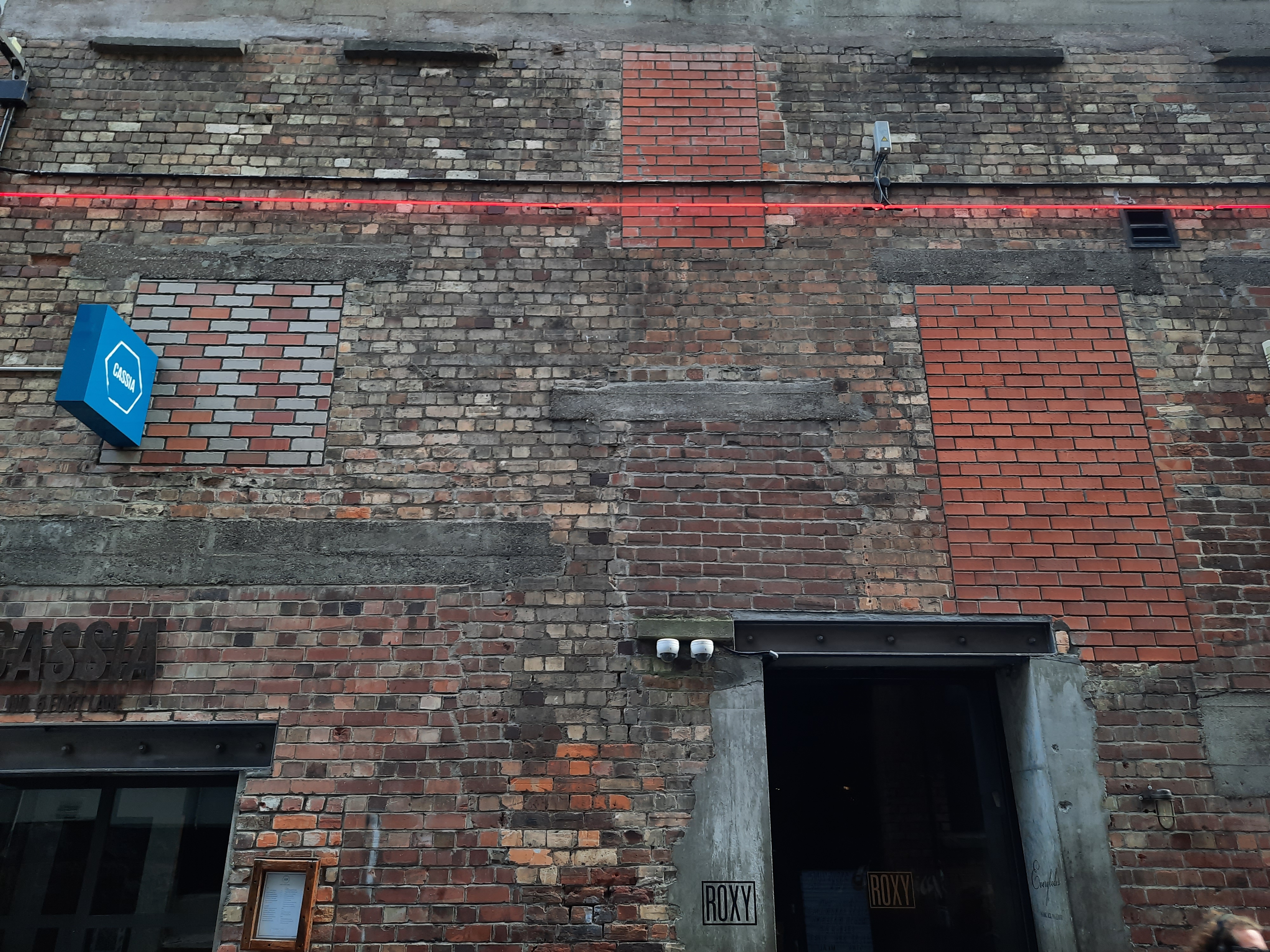
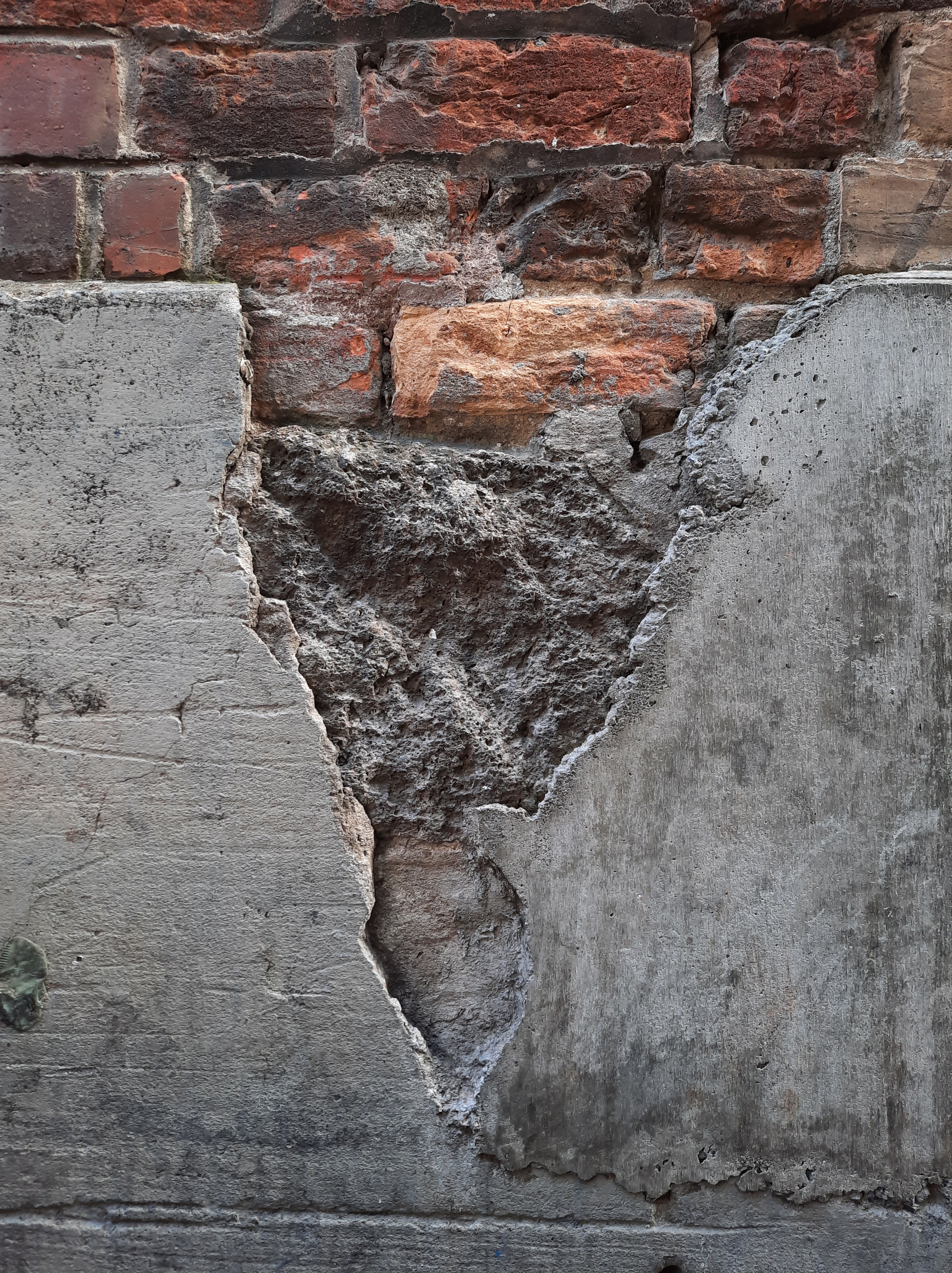
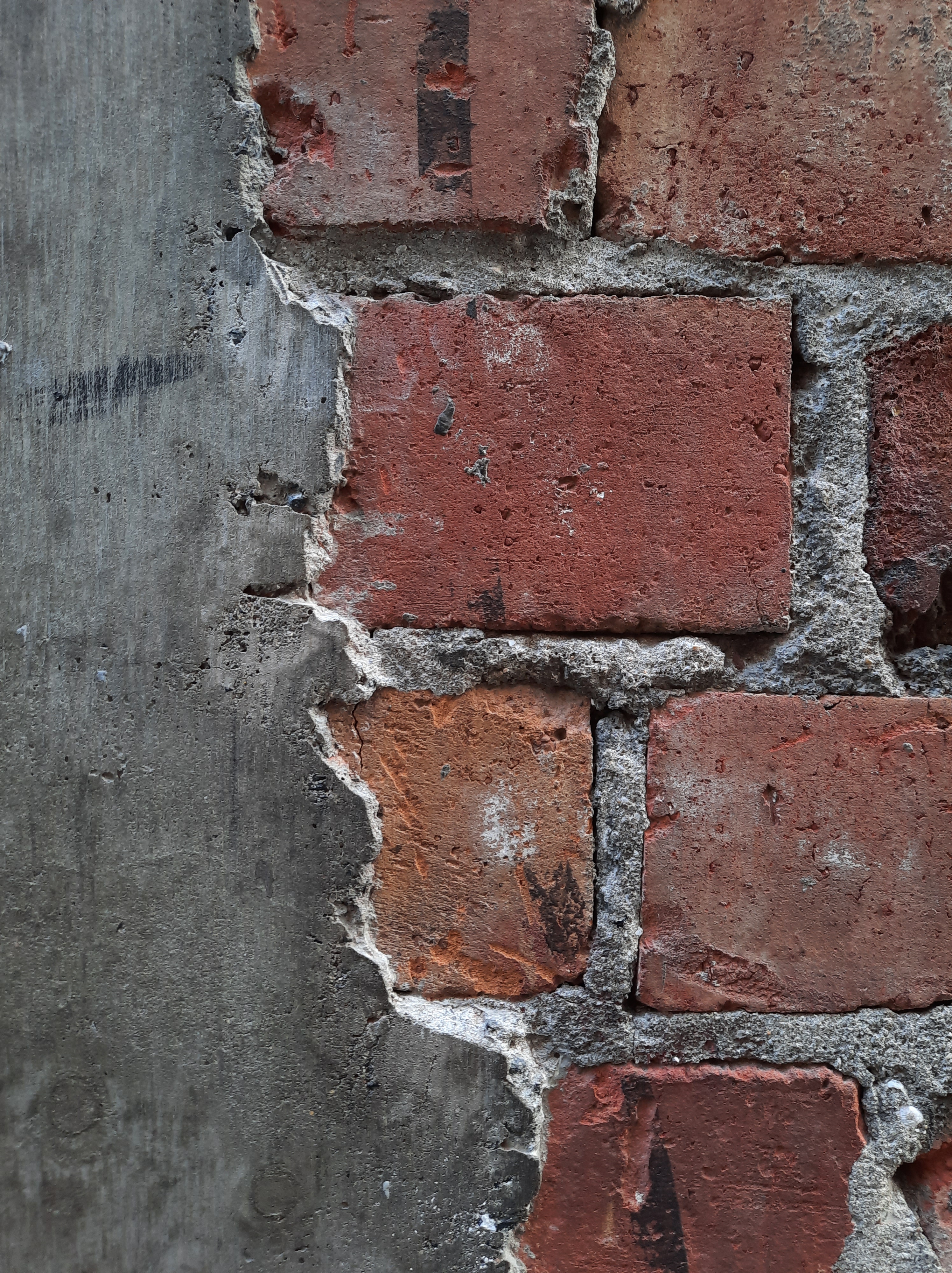
After exploring the space further I took some notes of some measurements and took some photos of an interesting surface in the area of my design (below).
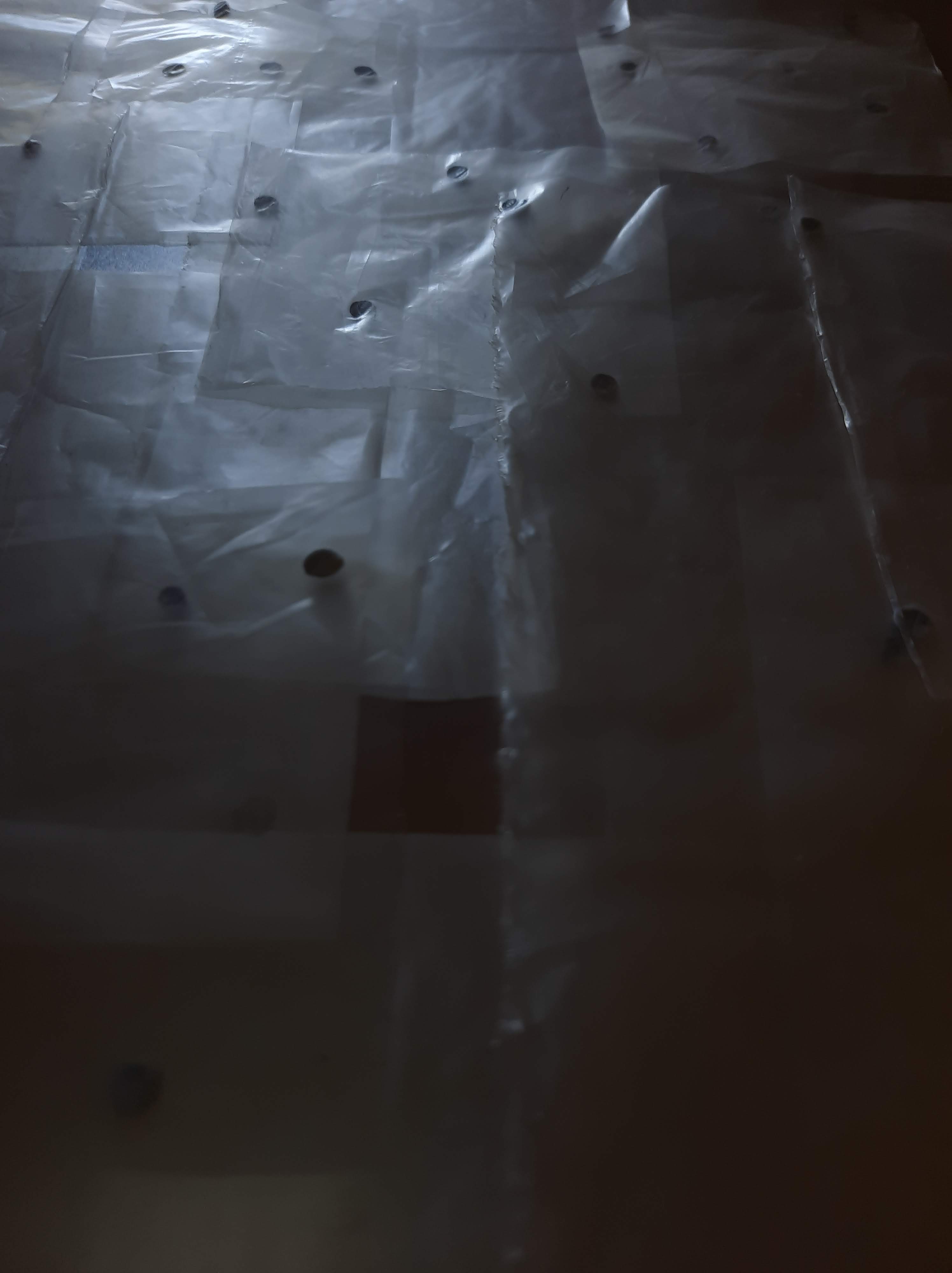
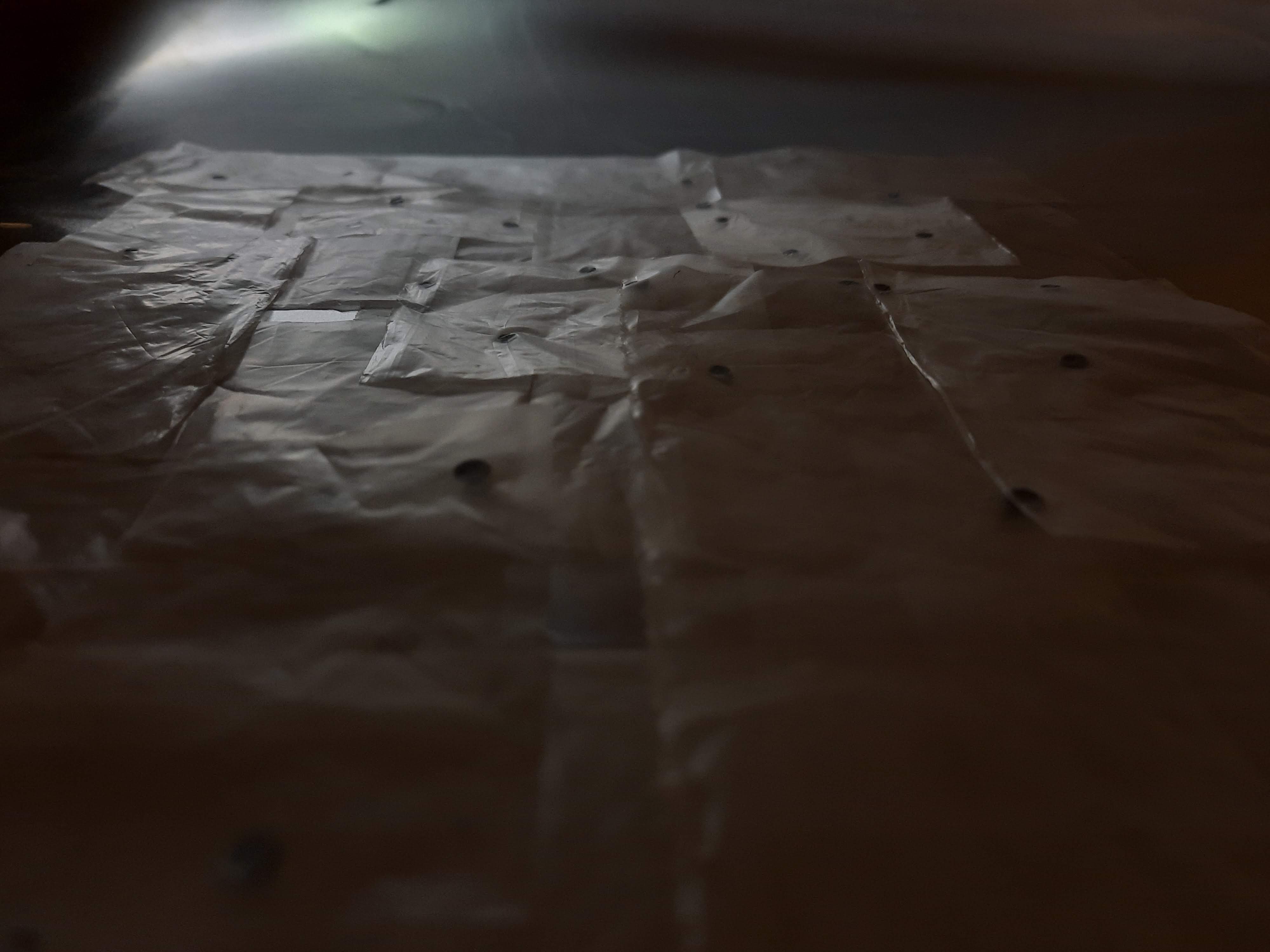
What I found interesting about this brick wall is the patchwork style and the revealing of the brick behind the concrete. The patchwork style brick is similar to my transition model with the patchwork fabric.
This week I came up with a list of temporal vocabulary to use in my design project. I had a variety of ideas and couldn’t decide on a particular set of words so I have included all of them (below).
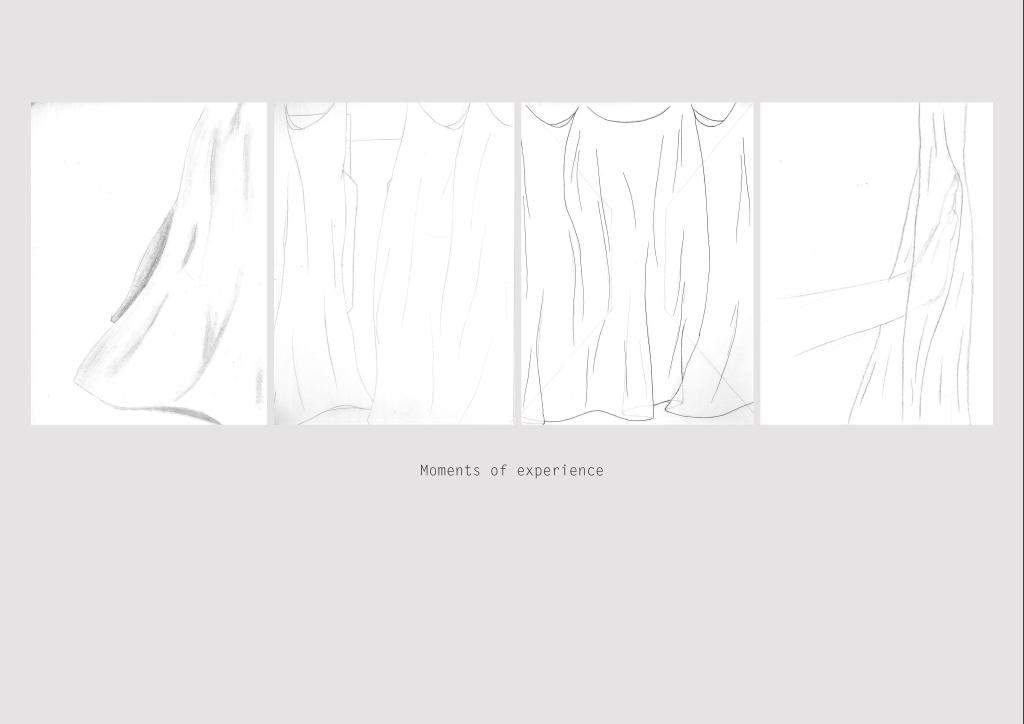
I then did five drawings of what my design might look like. I have been thinking about experience as this is a massive part of my design ideas and design practice and have explored a few moments of this I am starting to imagine in my design.
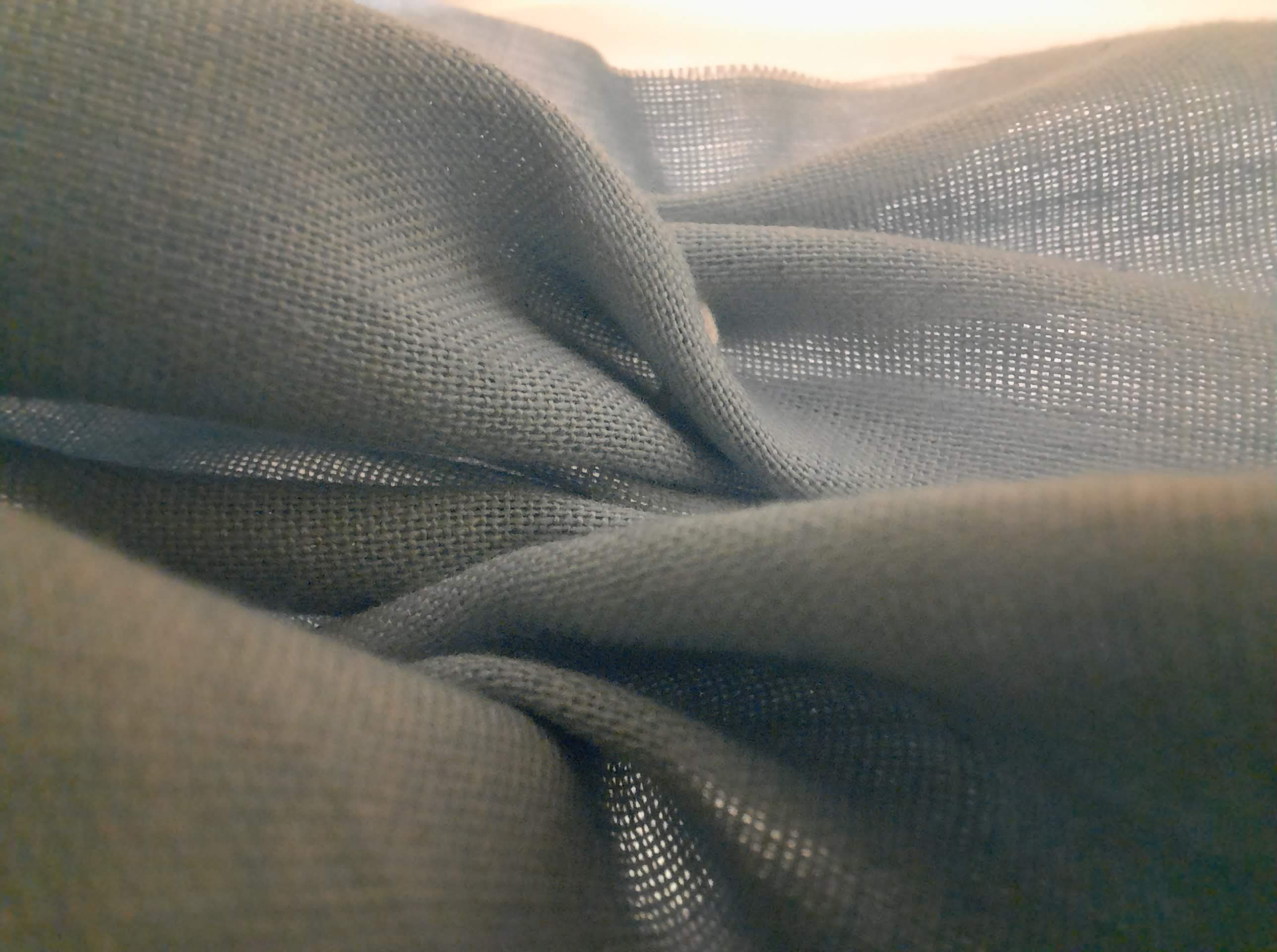
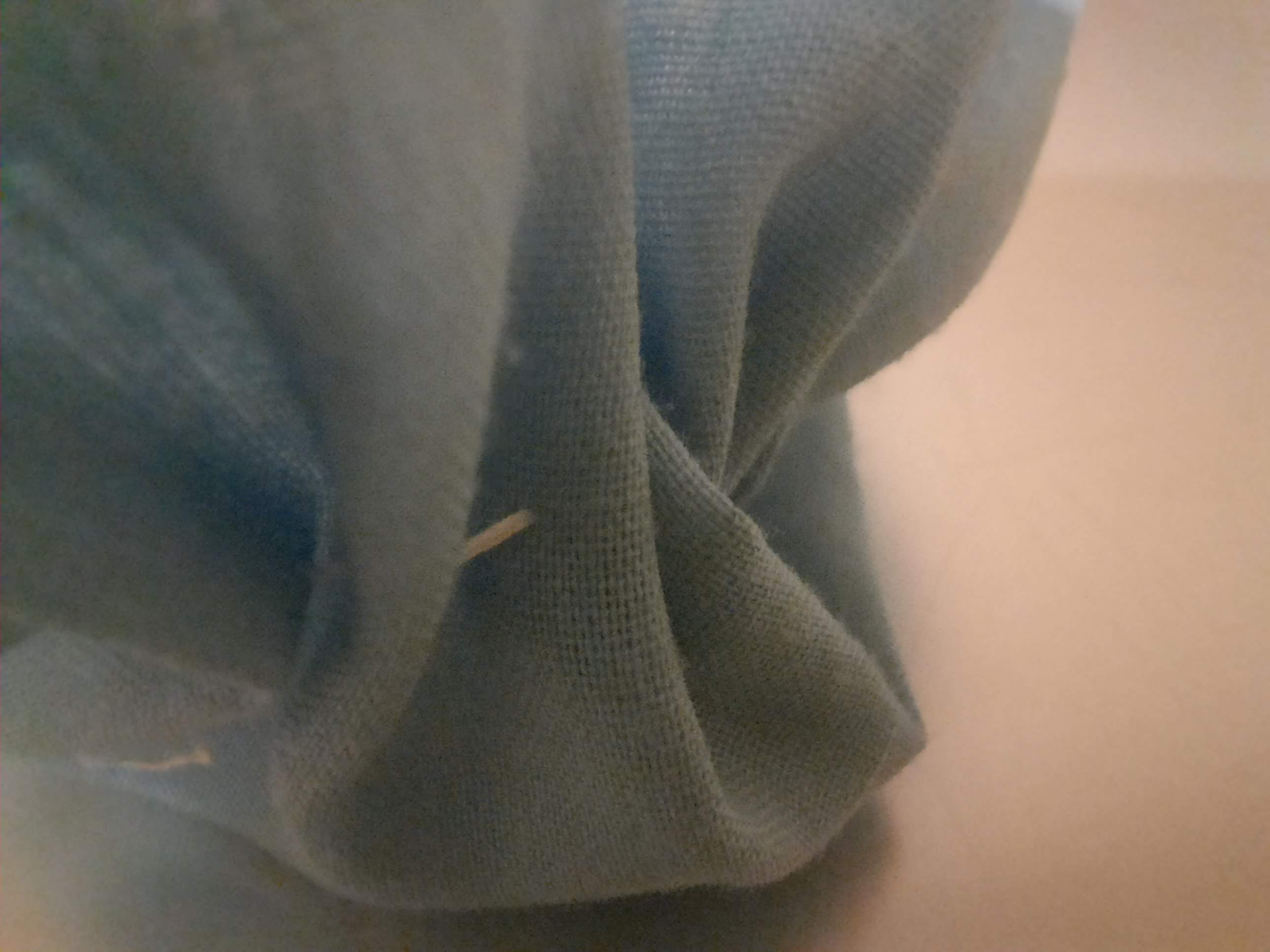
Curtain being blown gently in the wind
Projected image against the floors and walls of the spacePeeping through the curtains down the laneTransparency through the fabricAudience interaction and movement
I dont have a specific itinerary for how the space is going to work or play out over time but I definitely have some ideas of what I want to happen in the site. I wrote a programme for my potential design intervention which explores some ideas I’m starting to look at (below).
When thinking about a specific space in the site to work my design project into, I notice how drawn I am to Fort Lane itself. I am aware of the surroundings of Fort Lane but I am constantly drawn to the Lane and it had been the center of my exploration.
I like the pedestrians factor of Fort Lane and how performative it is in itself, shape-shifting over the period of a day, a week, and the constant activity it invites. I have been thinking about the type of space or intervention I want to design and I am very much drawn to the idea of performance. I have been thinking about designing an installation in the center of Fort Lane that is the host of a series of art events. My thoughts have begun at a suspended curtain like structure in the space that can be released and retracted to allow the movement of vehicles. This would be displayed in accordance to an itinerary of performative and art events including dance and theater performances, food event and markets. The idea is to create a space and event that allows the expression of artistic ideas but also the consuming of art.
I identified 5 key words about my concept so far and explained each of them in 50 words.
Fictional Space I am interested in the way we map and understand fictional spaces in relationship to each other and how through the choice of fictional space, directors can create a fictional world and story in the viewers’ mind. I am intrigued by how film and fictional space allows an audience to exist within it through their minds.
Illusion The illusion of viewing a 2D moving image but being subconsciously immersed within it. The illusion of a fictional space and place that only exists in our heads. In reality, the surroundings and relationships between spaces is different from the world we imagine.
Experience My design practice is centered around people and their minds. I focus a lot of my work on the experience that people have in a space and why. Fort Lane is a path of movement and transport of people as well as a place of gathering for food and entertainment.
Performative I am interested in the performative nature of movement, display and experience. ort Lane has been developed into a space of performance and expression through food, drink, music, cuisine, and experience. Performance is a way to express and experience.
Interactive I believe the traditional ideas of art and design of viewing don’t align with my own design practice. I very much am interested in the experience of space and being immersed within it. I am interested in the interactions between people and design as well as how the interactions between people are define by the space they exist within.










 Spatial Design by Ciara