Week 2: Final Transition Model

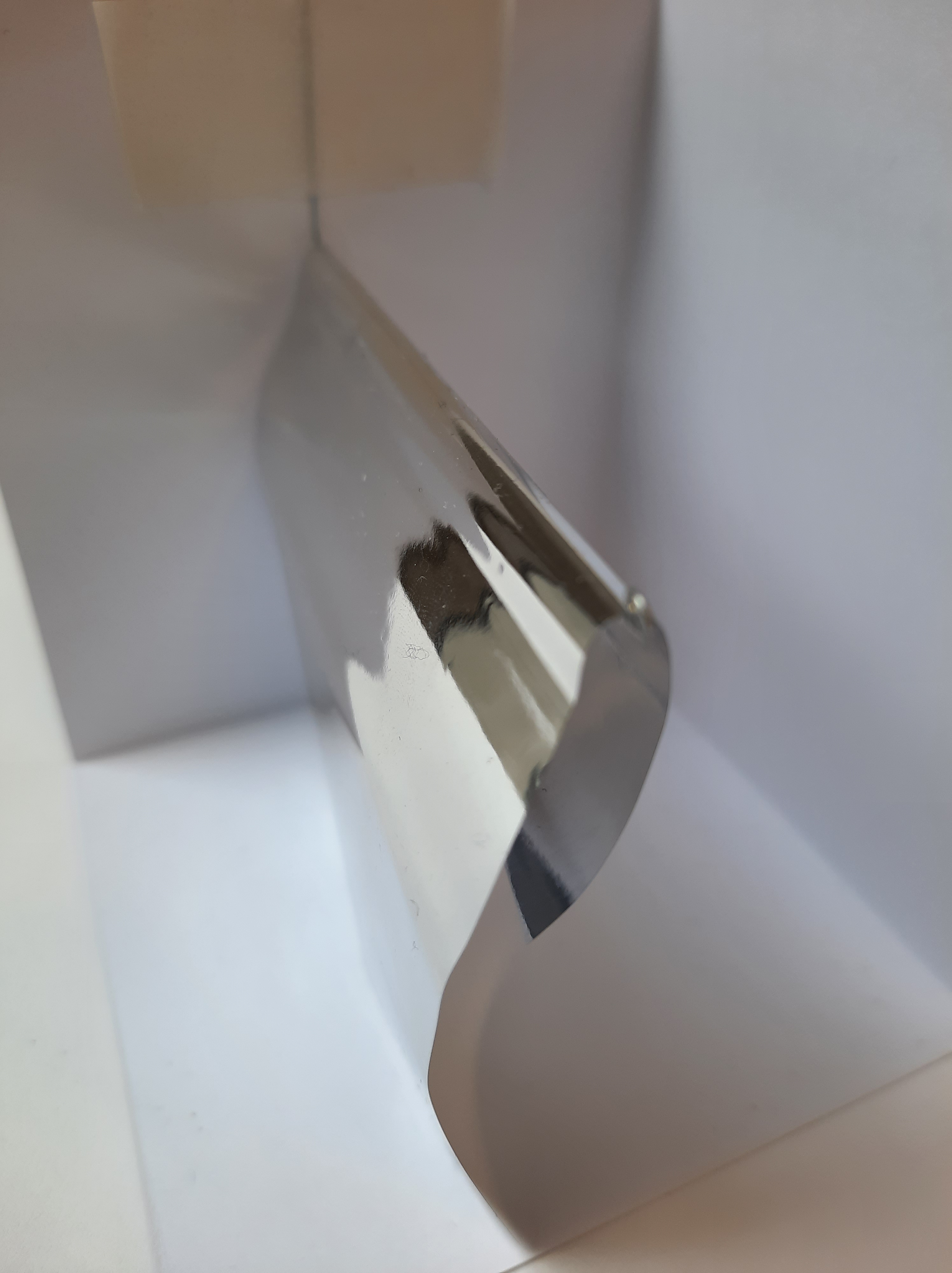
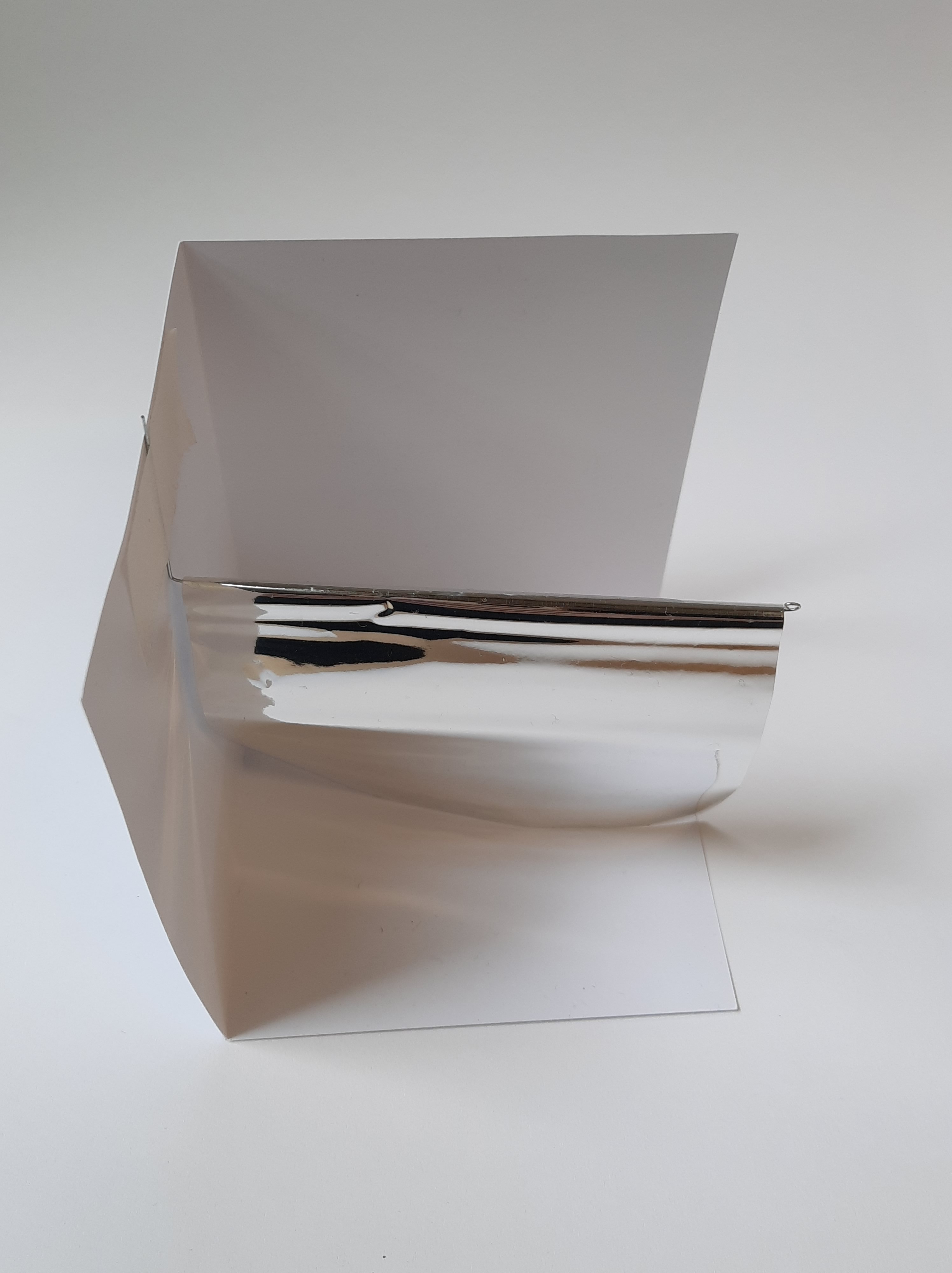
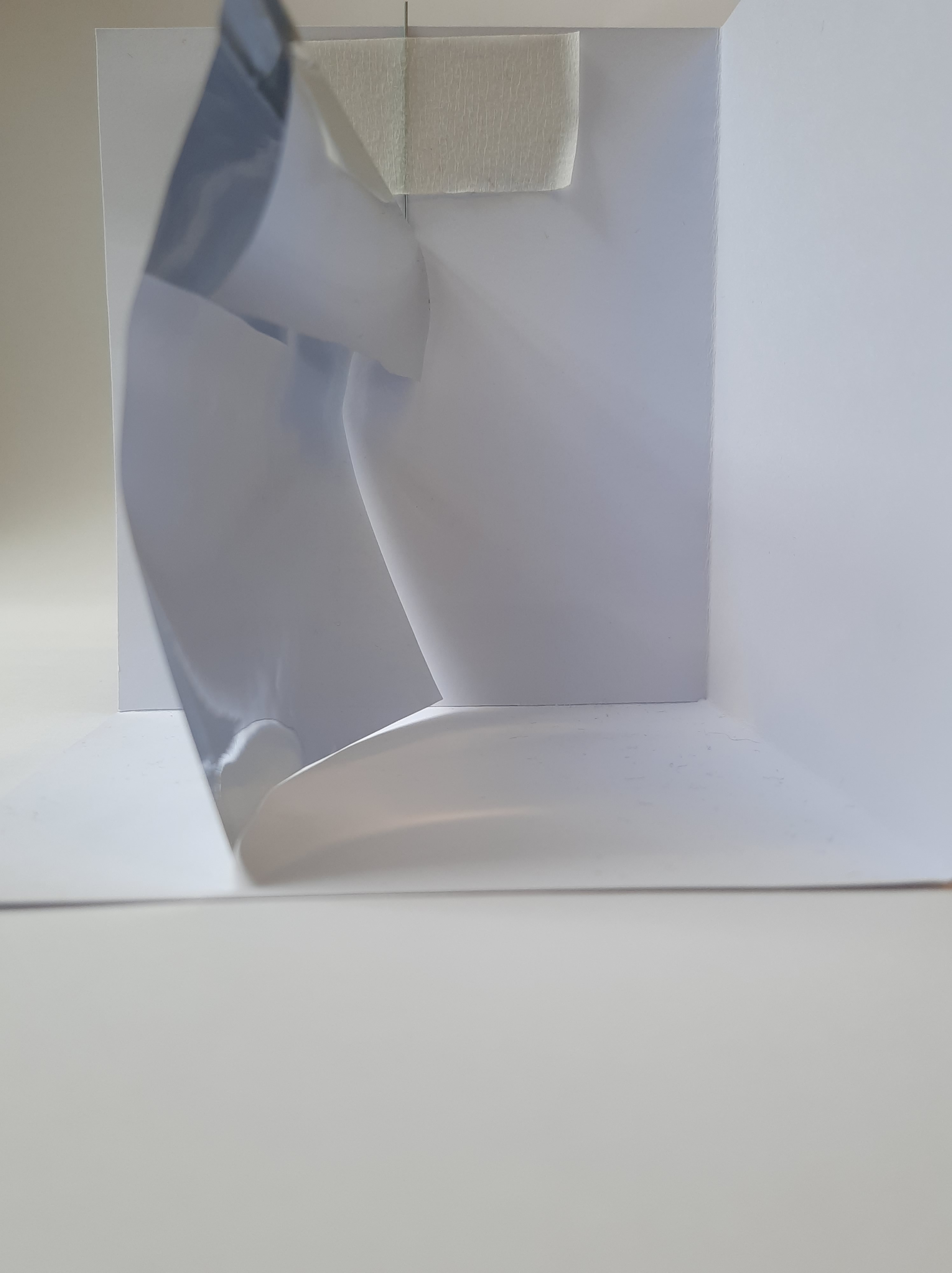
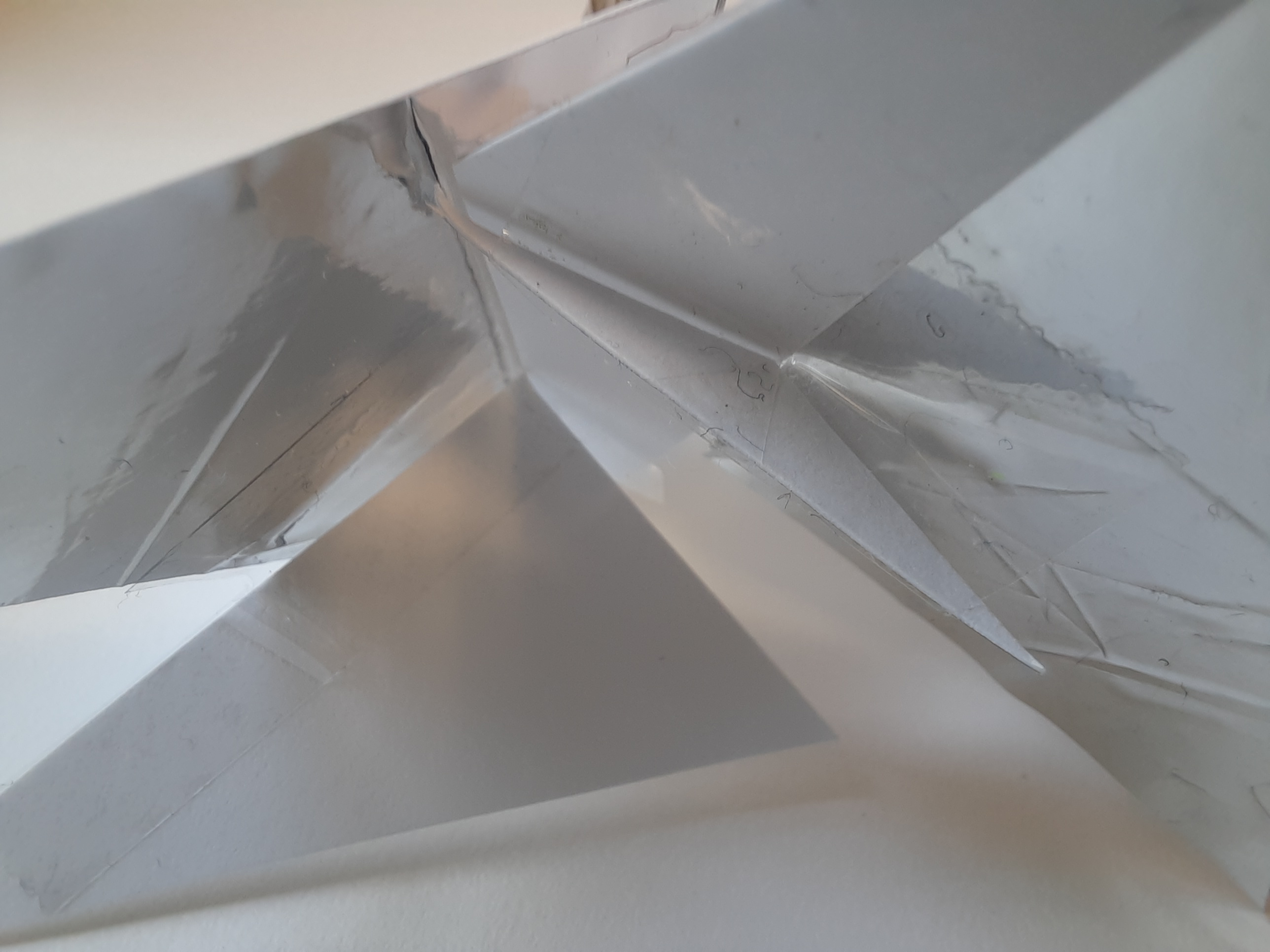
After exploring some ideas with my original transition models, I found there wasn’t anything in particular jumping out at me that inspired me to develop. I really liked the concept of the match cut because of its significance to my ideas of fictional space. The research I conducted helped me solidify my ideas and gain a better understanding of how I want to progress with the project. This is why I used this opportunity to use the same ideas but create a different concept for my final transition model.

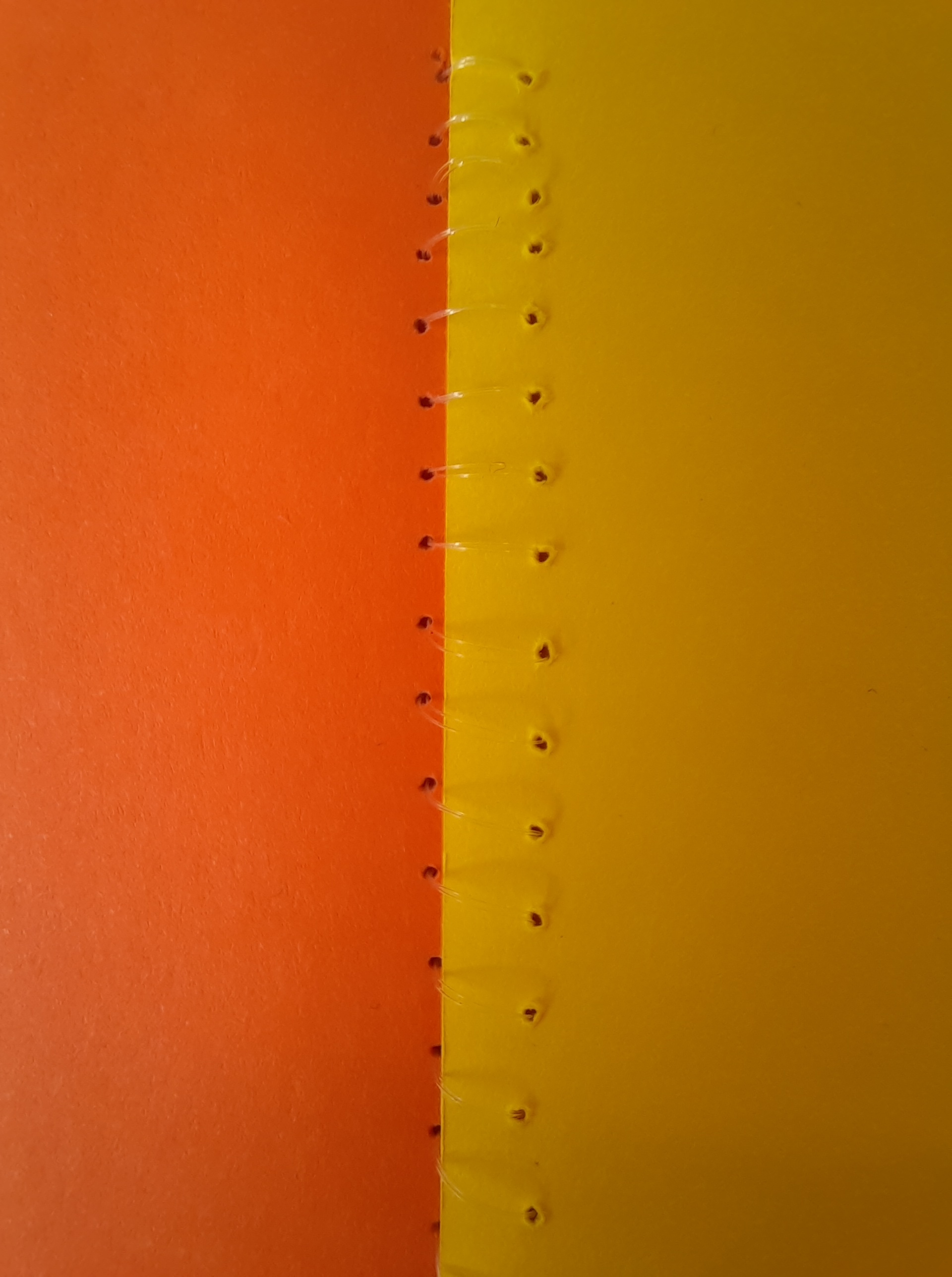
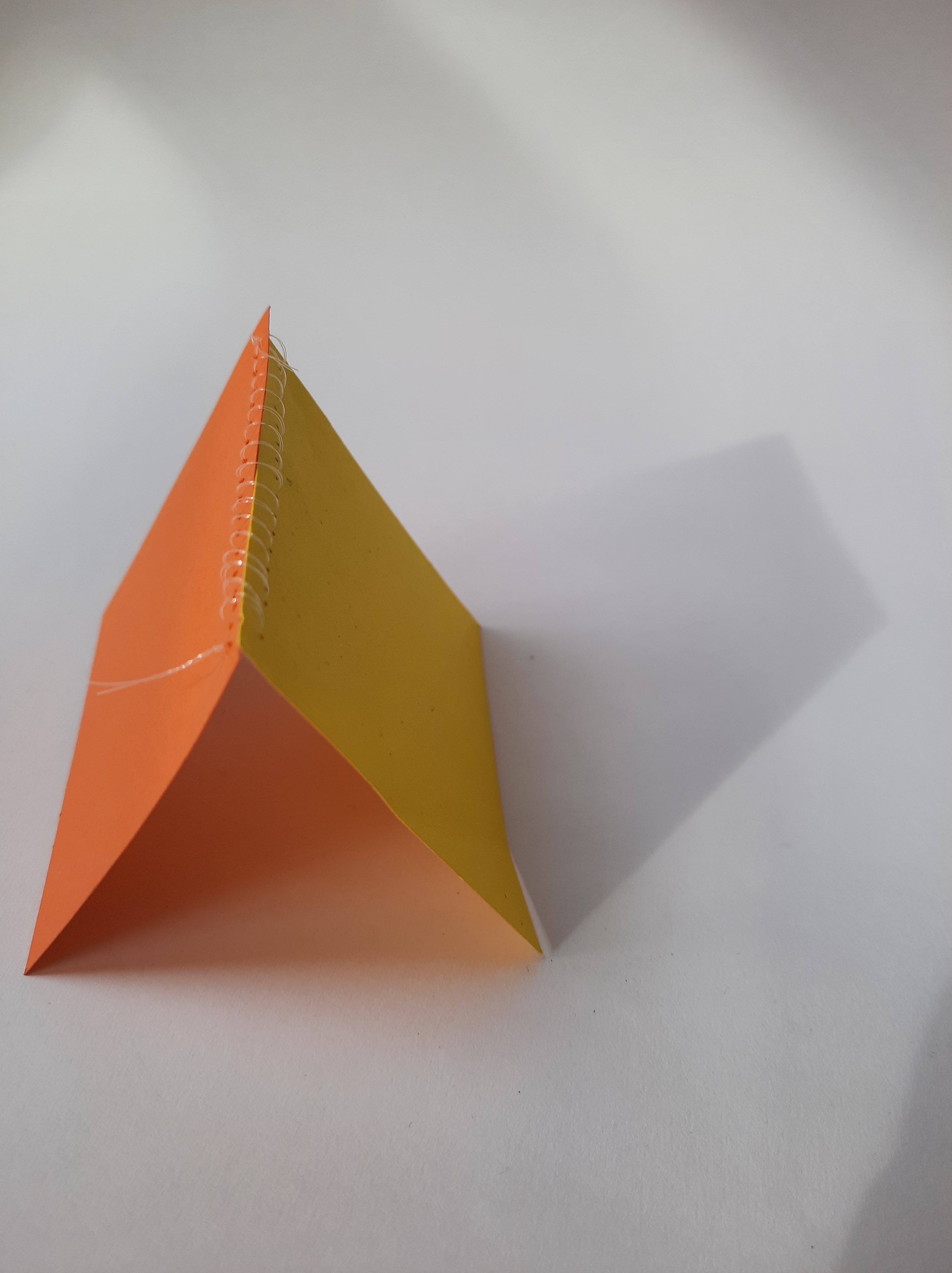
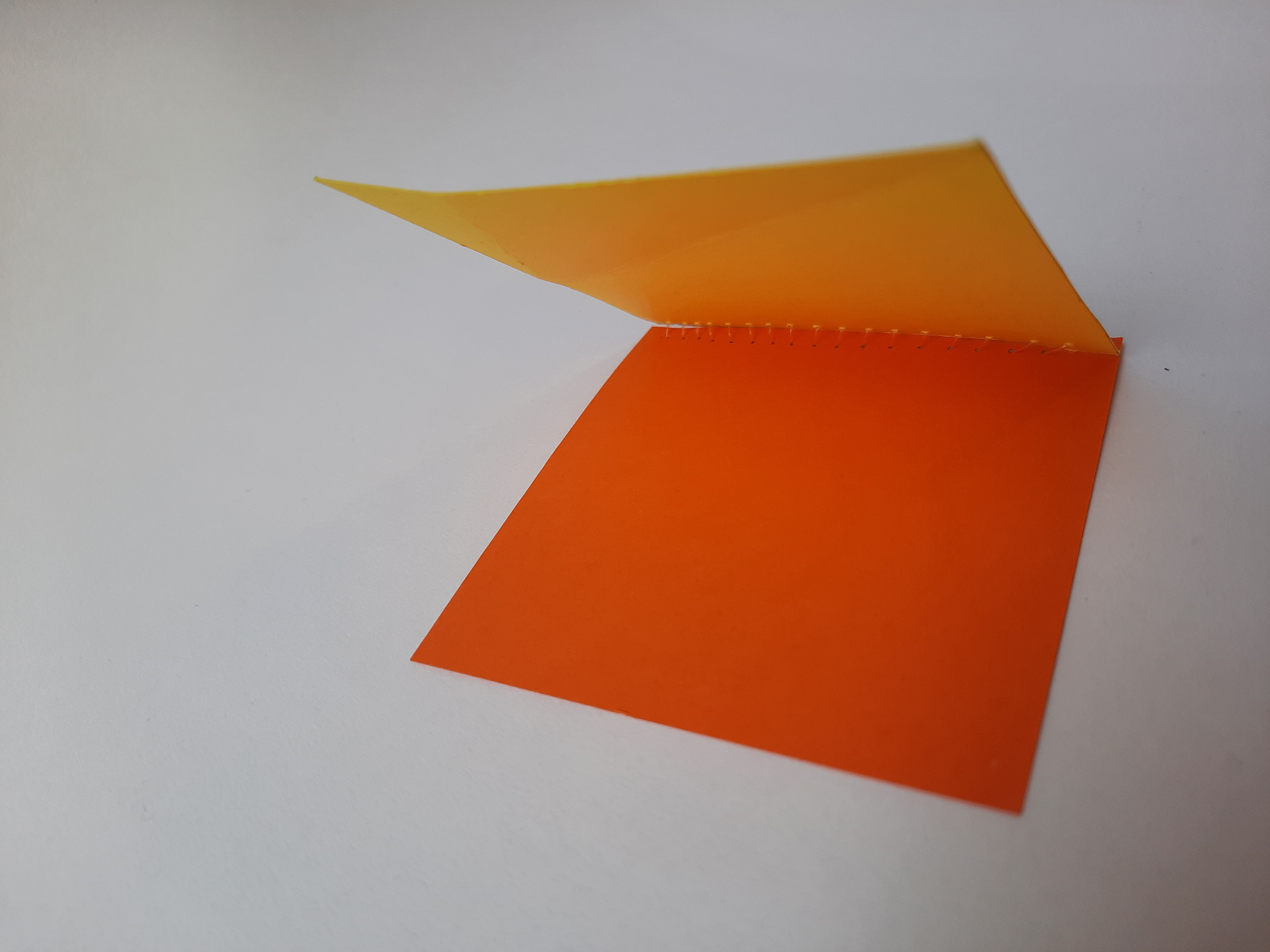
I’ve been intrigued by the idea of performance through movement and image. I’ve been thinking about the performance quality of curtains and fabric with the application of air or movement of other bodies. This is why I decided to experiment with some other model making materials I don’t usually use. I liked how drastic the transitions were in match cuts yet the scenes are stitched together in a way that links them and creates a relationship between them. Slightly inspired by the orange and yellow square cards stitched together with nylon thread, I decided to explore with fabric and stitching. I started drawing down ideas of how I could explore this in model making (below).

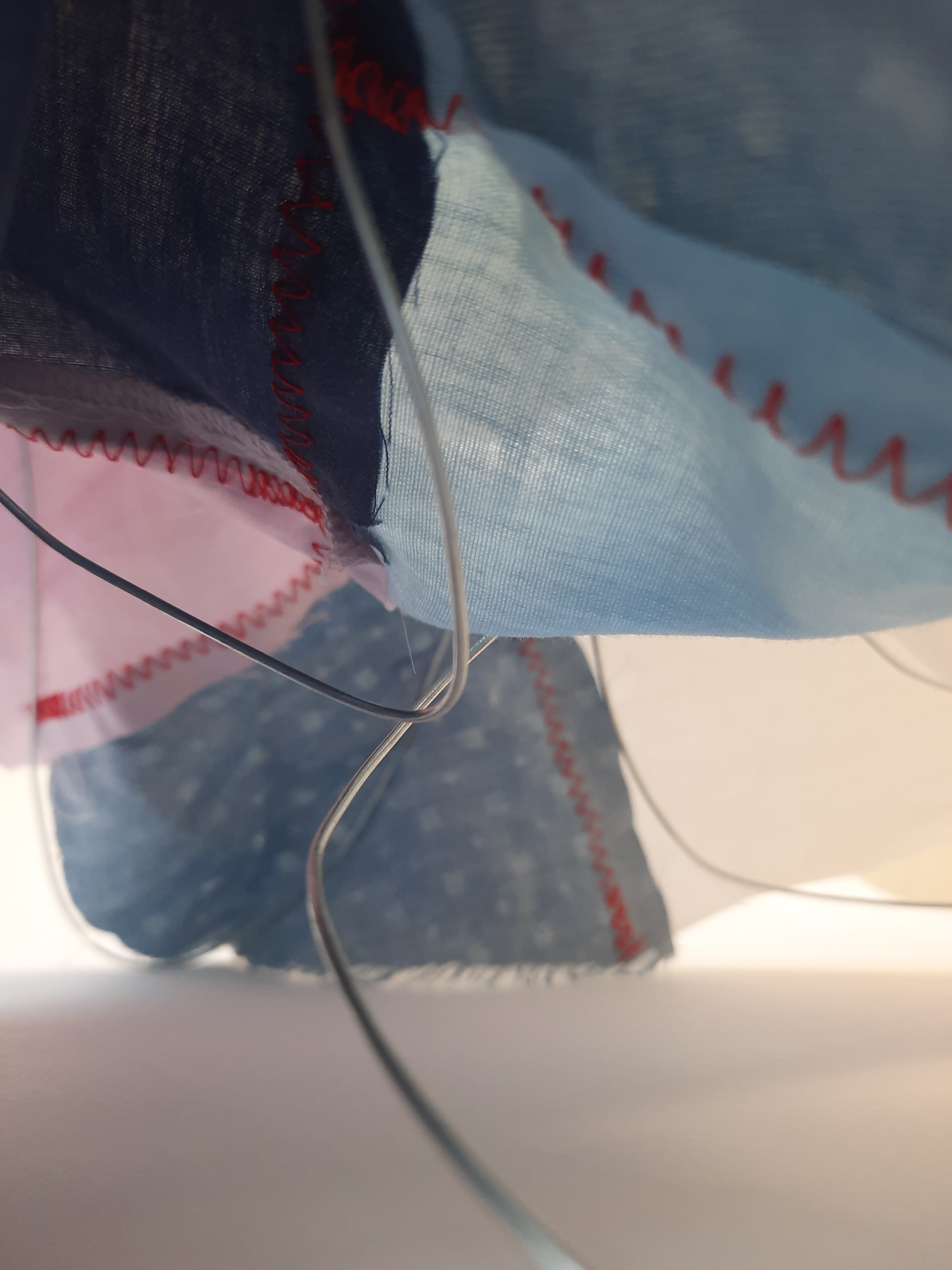
I started by creating the patch work circle (below).

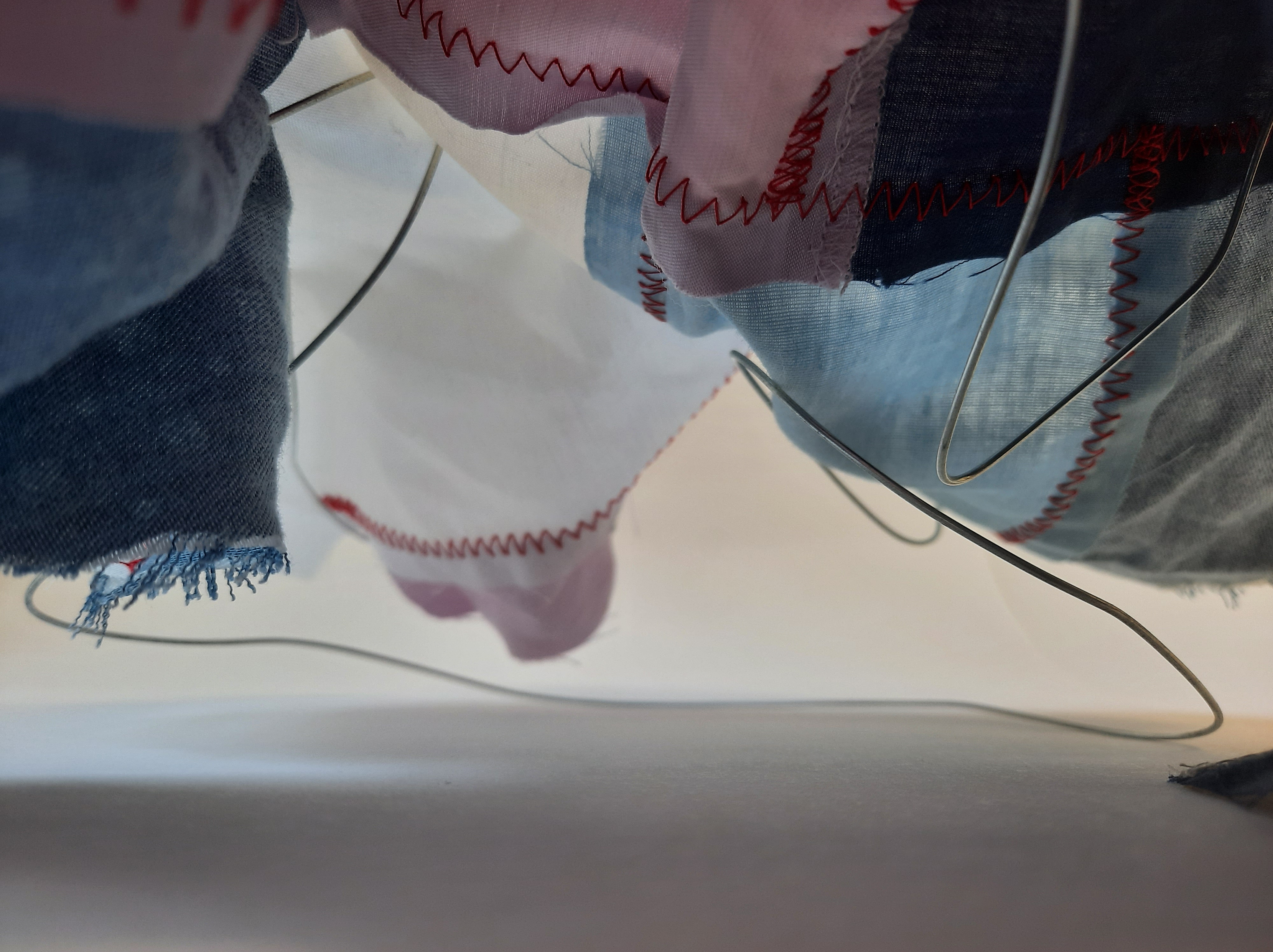
I used scrap fabrics and old pillowcases to cut out rectangular shapes to stitch together. I had originally planned to use a variety of patterns and colors but I decided to stick to a colour theme because it subtly showed a connection between the different patches which represent different scenes. I decided to use a bold contrasting colour to show the directness and sharpness of the transition and I made sure the use a zig zag stitch so that the red thread passed through both fabrics. I decided to leave the edges uneven and not cut out a perfect circle because I felt that it emphasized each patch being separate but by being stitched together in the way it was, made them become one entity.

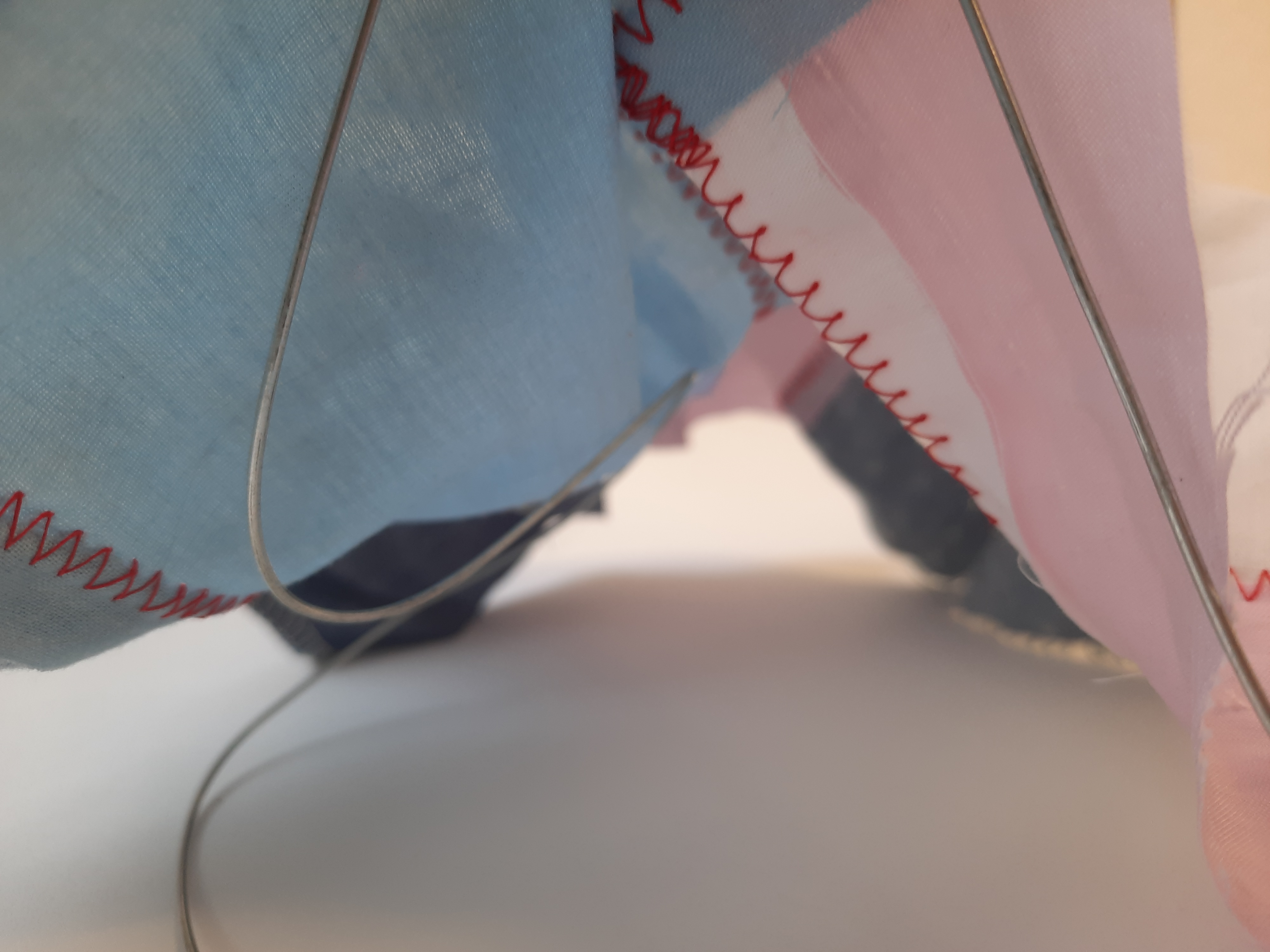
Although I had sketch the idea to create a room like structure with the patchwork and wire, I didn’t execute it because I didn’t like the way it was too structured. I wanted to explore the natural folding and falling of the fabric as it was more performative. I used wire to create a fluid structure for the patchwork fabric to be draped over (below).

After forming the framing, I draped the fabric over and hand stitched it to particular points on the frame with nylon thread.

Week 2: Design and Concept Research

This week while working on my models I also began some research into others design work that interest me and to help guide my next steps and stabilise my ideas. I’ve begun to think about the type of space I want to design and create in the Fort Lane space. I am interested in the immersive state an audience experiences while watching film where they sit in between the threshold of reality and fictional world, where their physical surroundings disappear and they become immersed in the film. It’s almost like being in the film without actually being in the film. I’ve been looking at how I can create this idea within a space, creating a sense of that threshold, being physically in a film. The first idea that came to mind was a pop-up style theater performance. This idea would allow me to mix the ideas of physical and mental immersion of film. I also am quite interested in this idea of performance as a way of immersion of the audience.

After a discussion with Sue about my current ideas, I got some good ideas on some design works that may interest me and broaden my search. First was Withdrawing Room by Diller Scofidio + Renfro (below)

This work for me engages my idea of a temporary pop-up theater space. I am quite interested in people and public being a part of my design and also the contrasting ideas of fictional space between and audience and behind-the-scenes crew members. I like the movement and shifting in this work, specifically the corer beds/sofa. I like how the space exists as the same but is manipulated by the shifting of objects within it.

Another work that I was suggested to look at was and was also done my Diller Scofidio + Renfro was Jet Lag (below).

This work was very interesting and I love the variety of mediums Diller Scofidi + Renfro explore their ideas through. Jet Lag is a style of storytelling through space which creates a sense of fiction, theater, and performance. This work began to engage my interest further in the idea of perfoemance in space.

One other suggested research point I was given was Jennifer and Kevin McCoy, specifically their piece Traffic #1: Our Second Date (below).

Traffic #1: Our Second Date
Jennifer and Kevin McCoy
https://www.mccoyspace.com/project/27/

This is essentially a miniature film set that includes cameras which are used to project an image onto a screen. I really like this work because it displays fictional space from both a zoomed out whole view as well as a framed close-up image on a screen side by side and I believe it shows the true magic of film.

After this initial research, I began to expand my ideas on the type of space I want to crate and the type of qualities I want to display through this project and brief. I have begun to become interested in fictional space and performance and expanded to possibly looking into a variety of live performances, not just theater and possibly an interactive performance, I have always had an interest in people as a material and having interactive qualities seems important with the people factor in my conceptual film ideas.

I have also begun to think about performance in less traditional ways and how broad the term is. I have thought about possibly looking performance through recorded/film projections as well a possibly the performance of material through movement and the wind rather than performance of people.

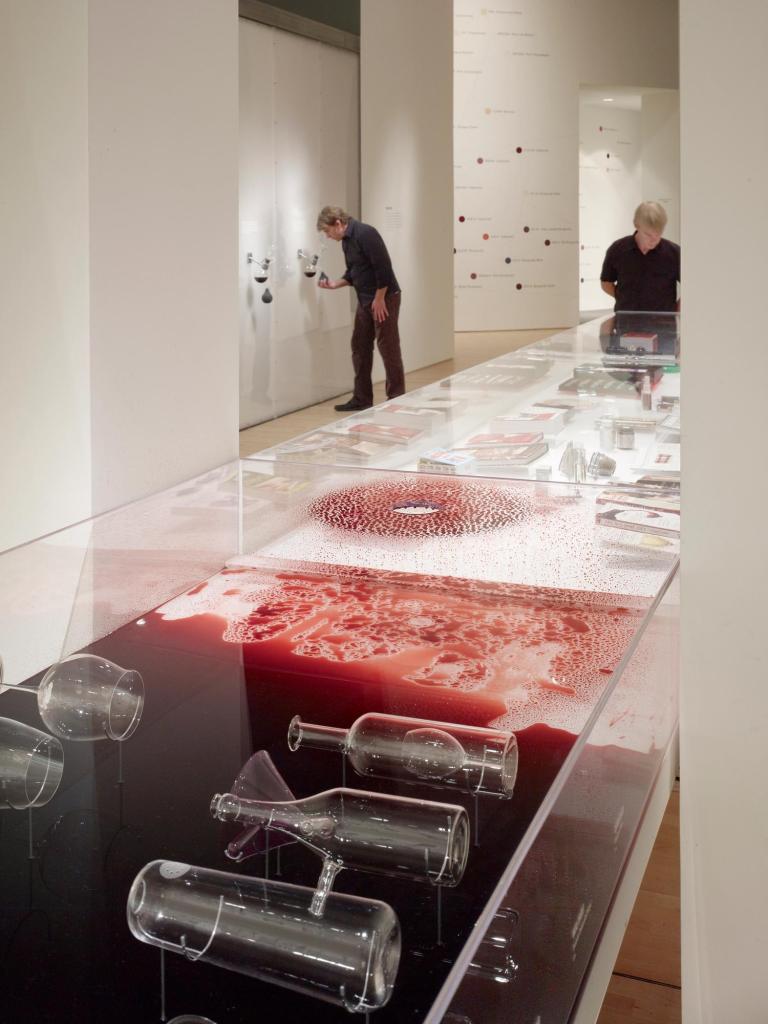
While looking through the Diller Scofidio + Renfro website I came across some other projects that piqued my interest. One of these included How Wine Became Modern (below).

I like this work because it focuses around interactive qualities between the project and the audience. It made me think about how my project could relate to the site. Fort Lane is very much currently a place for the night life of bars and restaurants. Maybe I could explore this aspect of the site through using food and drink as a material, like How Wine Became Modern, creating an interactive performative design.

One other project I found during my own research was Moving Target, also by Diller Scofidio + Renfro (below).

This project was one of my favourites in terms of this part of my research. Yet another display of Diller Scofidio + Renfro’s variety, Moving Target uses a combination of performers, light projection, and reflection to create an dimensionally immersive stage performance. One part of this work I like is the use of projection as a material and how people react and interact with it. Projection is something I might look more into in my future developments as it has for so long been an important part of film consumption. The other aspect I like about this work is that it challenges the idea of separation of audience and performers in traditional theater. Although there is separation through stage and seating, the mirrors and projections along the performers movements from a variety of view points creates a different level of connection between an audience and the performance. I’ve talked about interactive qualities likely being a part of my design and this work has sparked the idea to have the audience/occupants in my space become part of the performance themselves, taking away the separation of a stage.

Week 2: Transition Model Exploration

This week we began work on site transition models. My ideas so far are very much based around fictional space and how ideas of how a space, room, building, town or world is laid out are created by the audience through film. In terms of transition I am focusing on how transition creates a relationship between different fictional spaces. Through my first iterations of my models I am looking at how a transition can connect two fictional spaces and how this creates an idea in the audiences’ head.

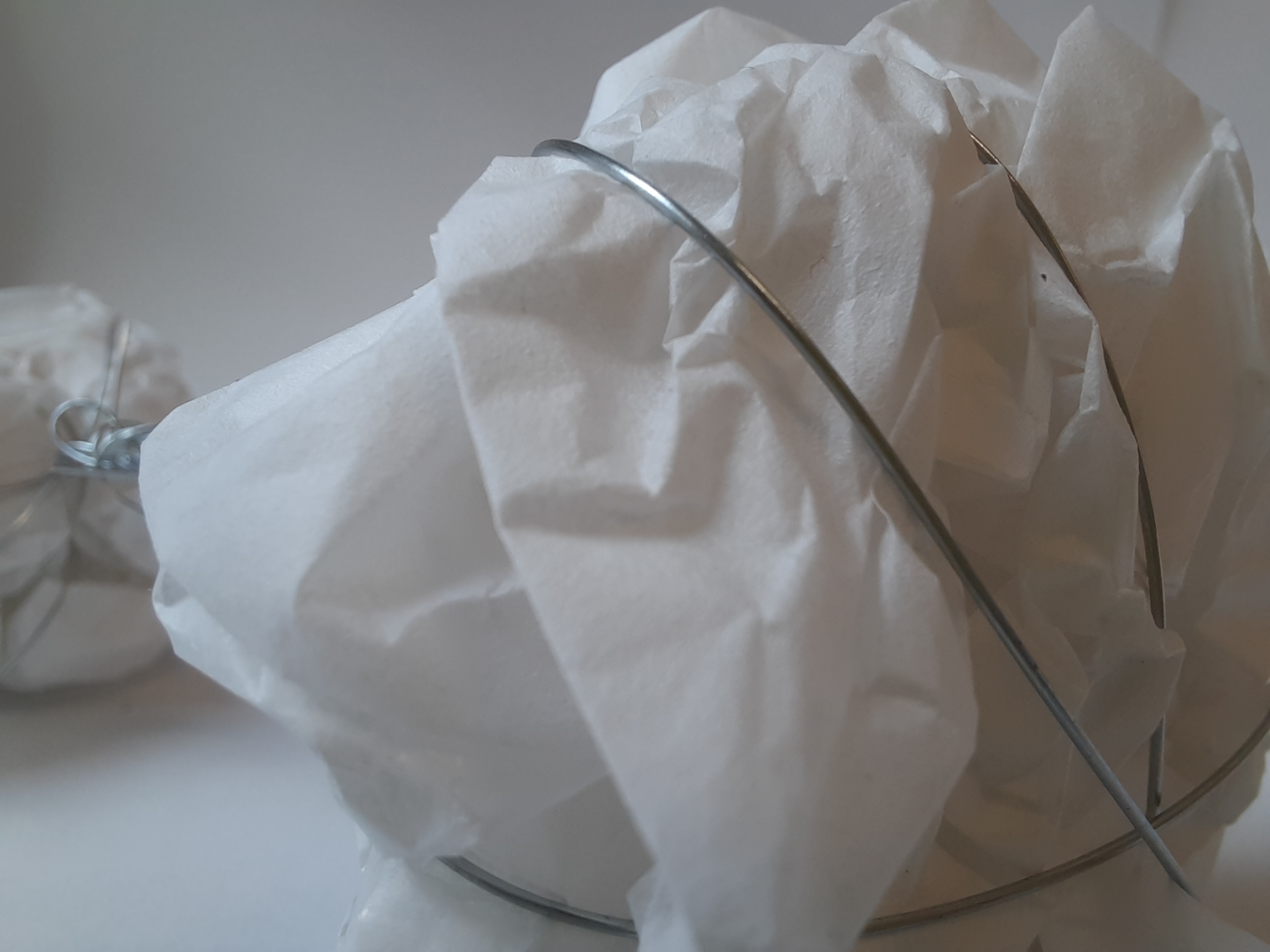
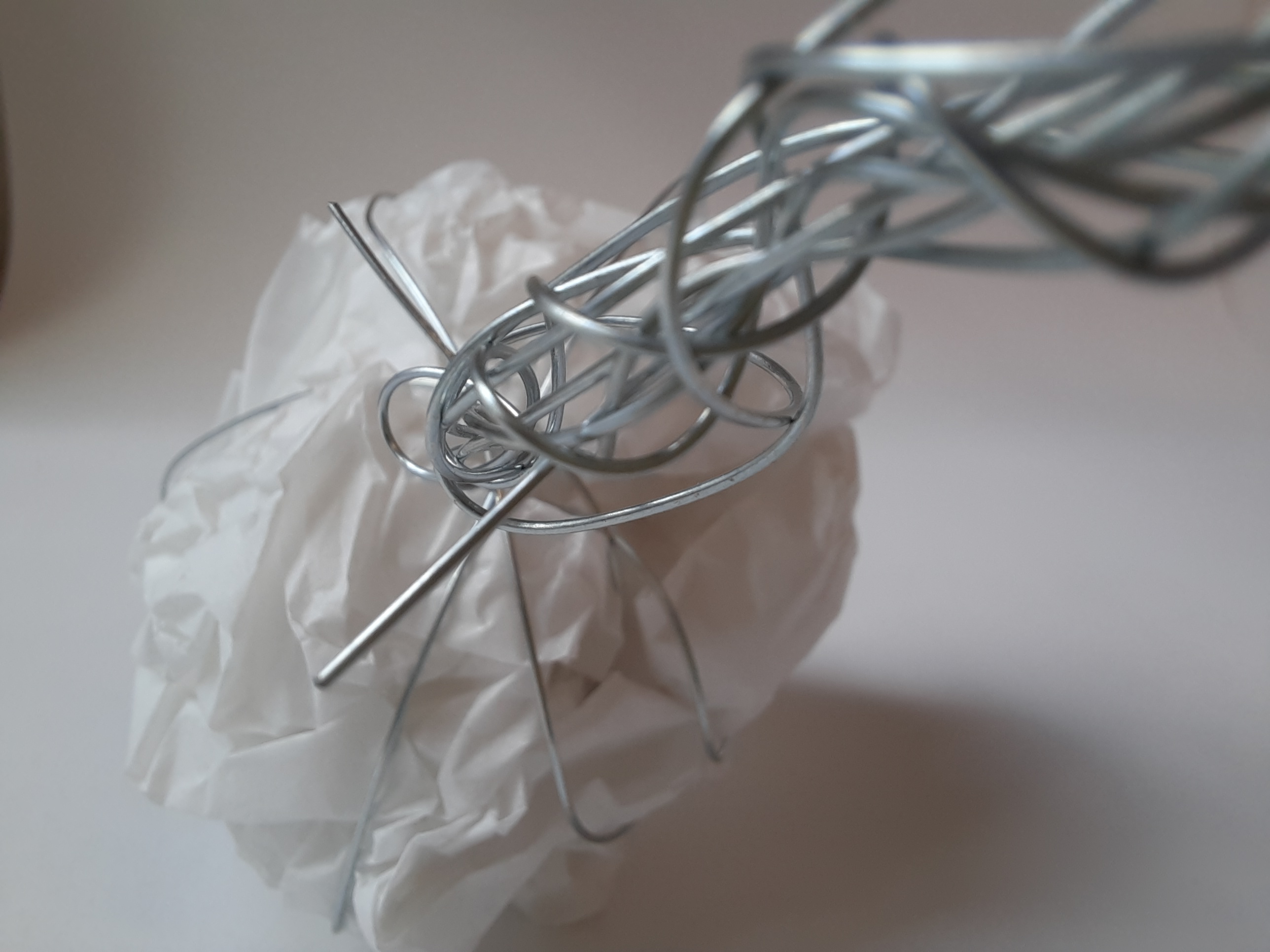
This first model was inspired by the connection between two scenes. The tissue paper spheres are representations of two different scenes which are wrapped and intertwined with each other with wire.

This model is inspired by the straight cut between scenes as well as my water reflective cinematic device.

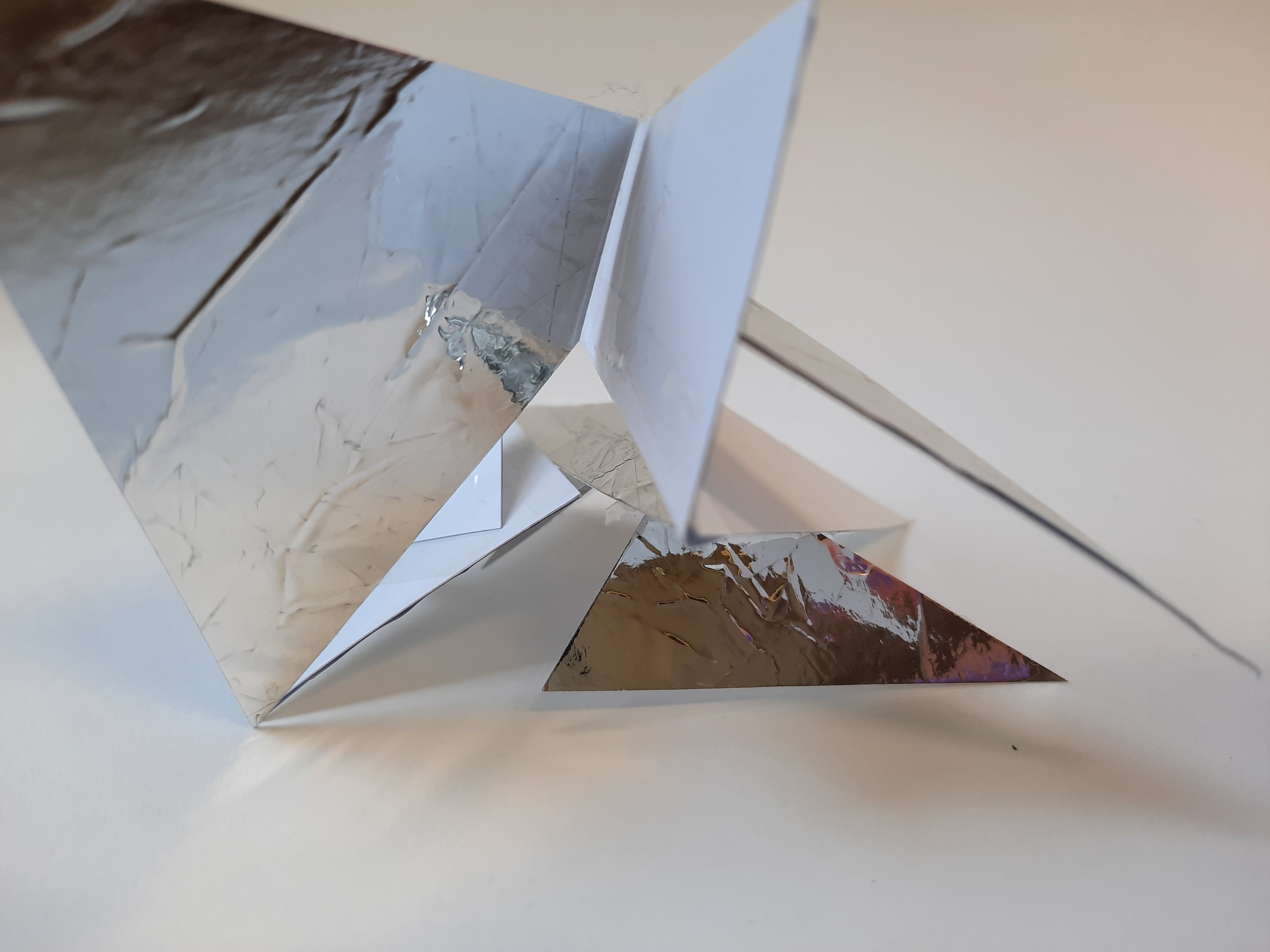
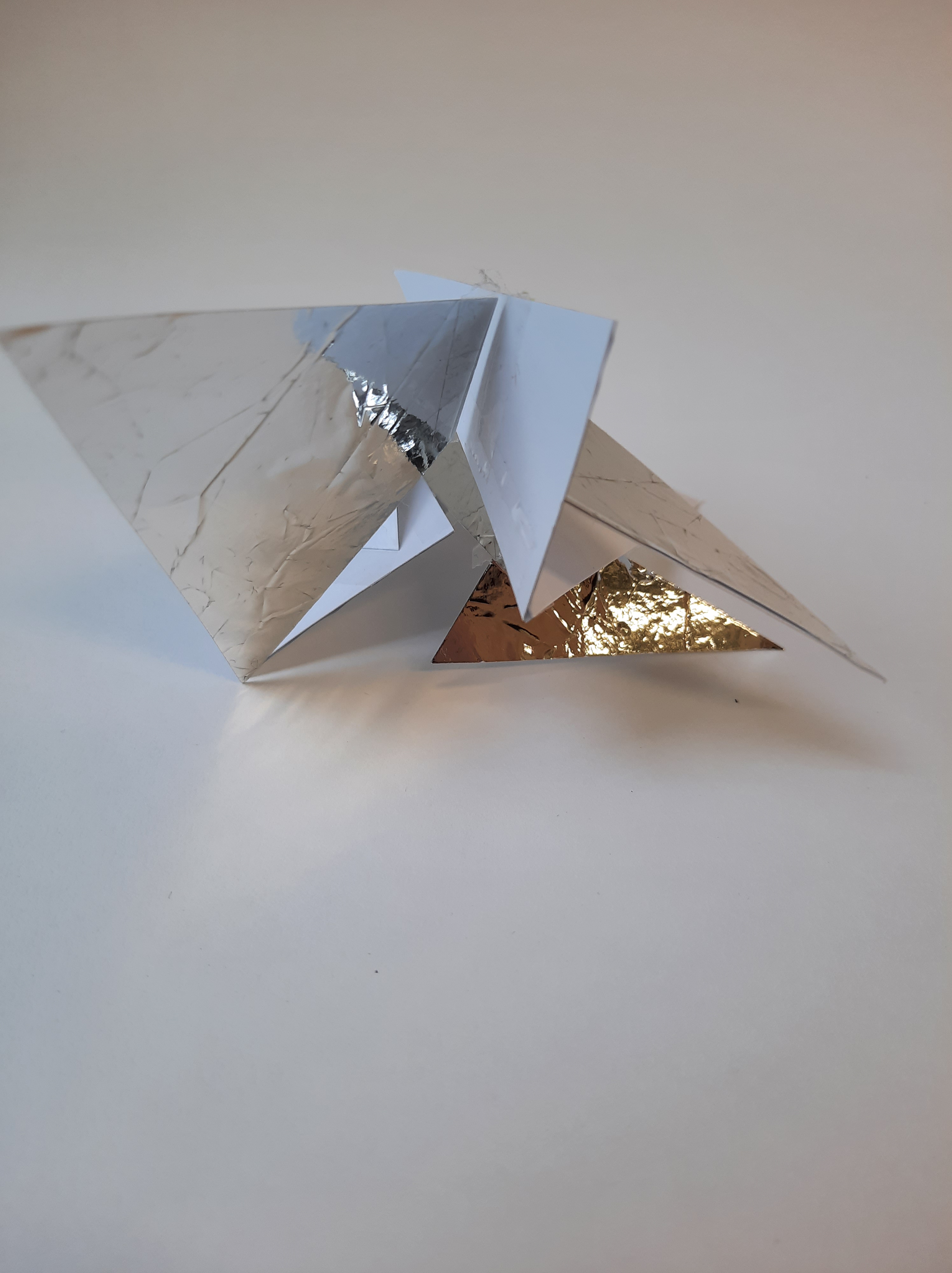
This design was an exploration of reflection through the harsh edges of triangles.

I then talked to Chris about my ideas and my lack of any particular type of film transition in mind. He gave me some good advice and showed me the match cut. This type of transition is sharp, concise and brief but through movement and colour choice, a connection and relationship is made between the two different scenes. I think this articulates my ideas well of using sets and locations to create a fiction space in the minds of an audience.

After looking at the match cut, I decided to base some conceptual models off it. I kept my model making broad and explorative because I didn’t have a particular style or idea I was dedicated to.

This is the first model I made inspired by the match cut. I used two materials of the same colour to show the drastic cut between the two while forming a relationship between them.

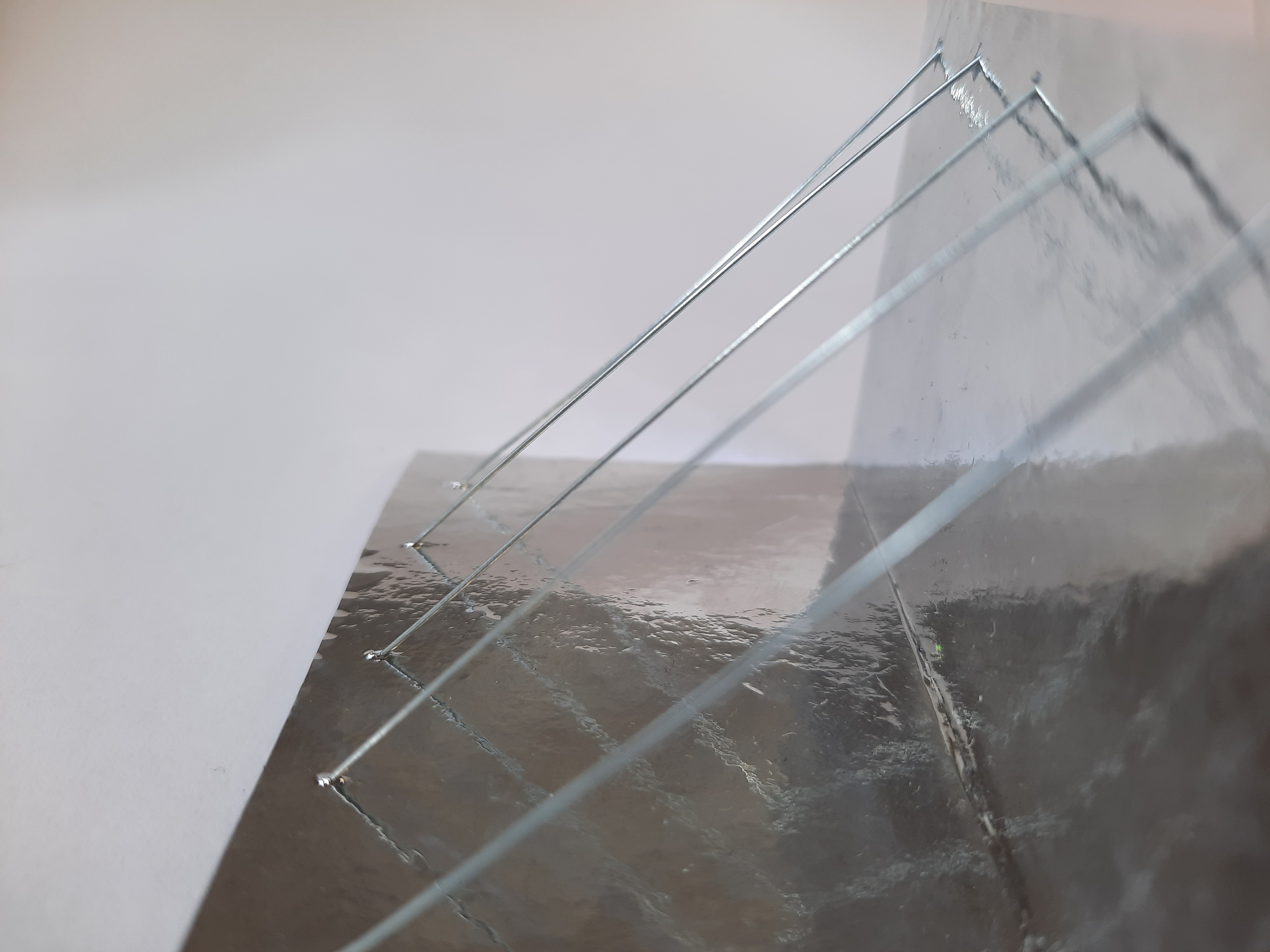
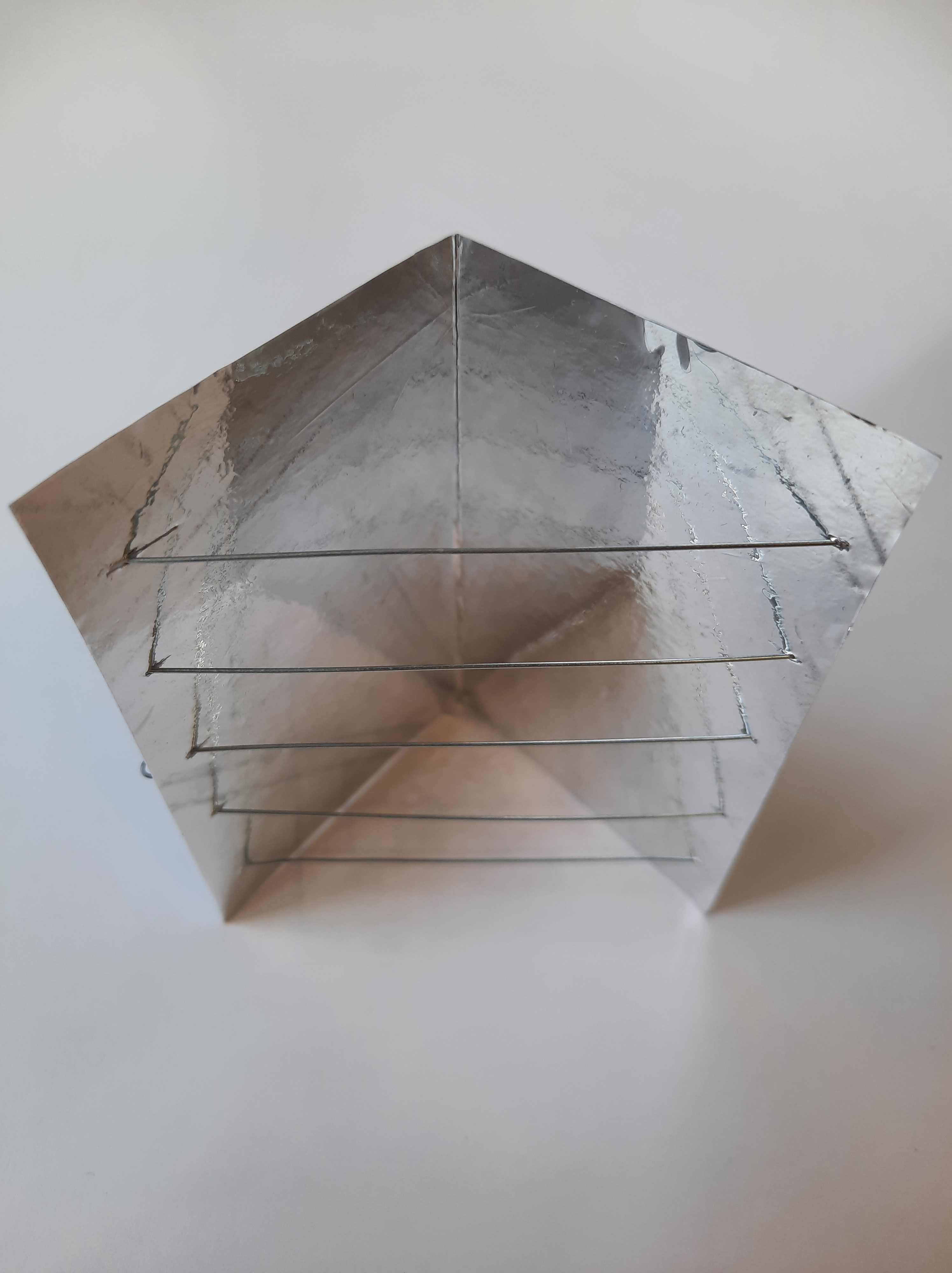
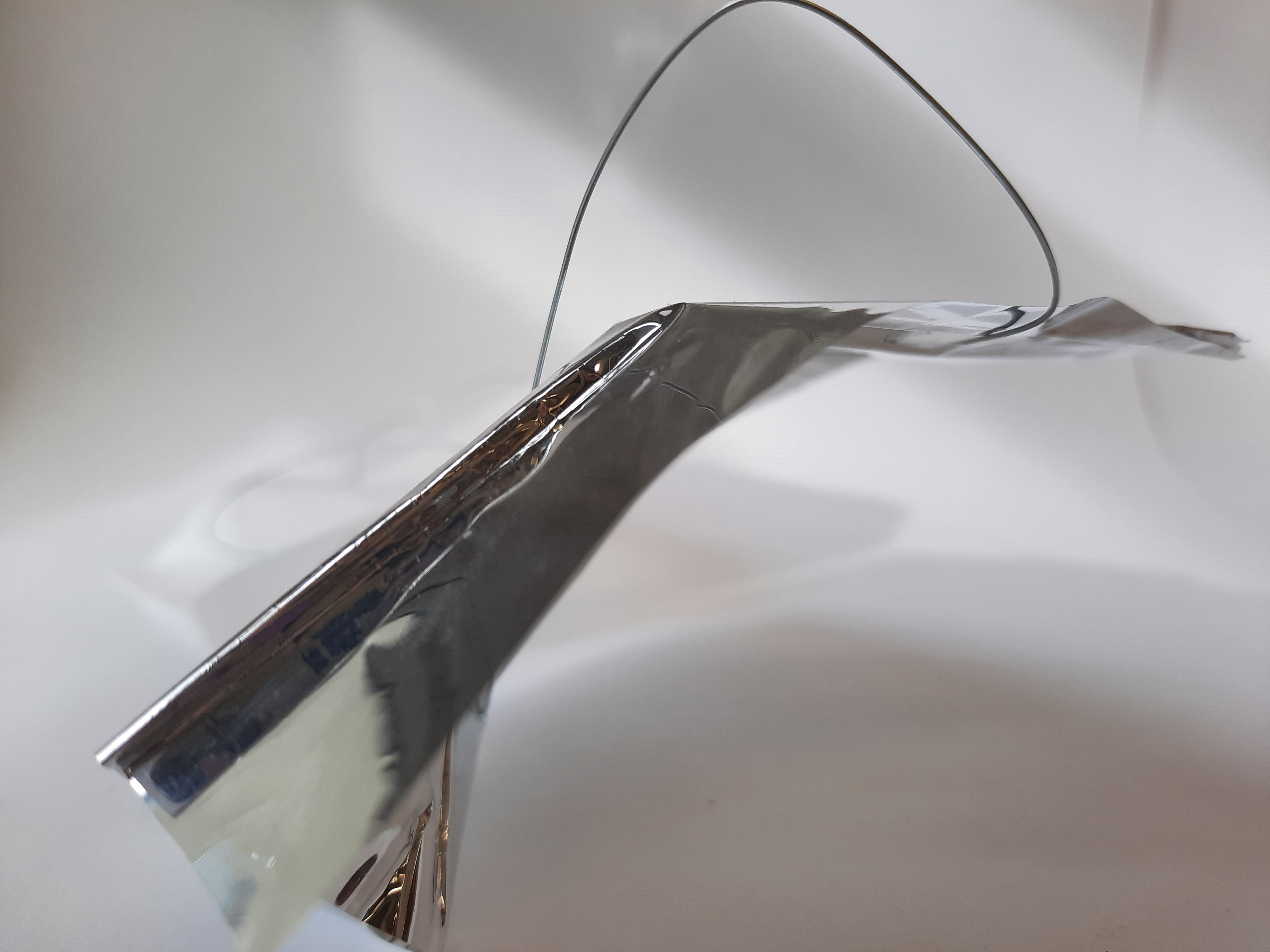
This model explores reflection again. The two planes are representations of two scenes, reflecting each other. They are connected through wire.

This model is an iteration of the previous model. It explores a less structured and looser connection between the two planes. There a less similarities show how two very different ideas can be linked through a match cut.

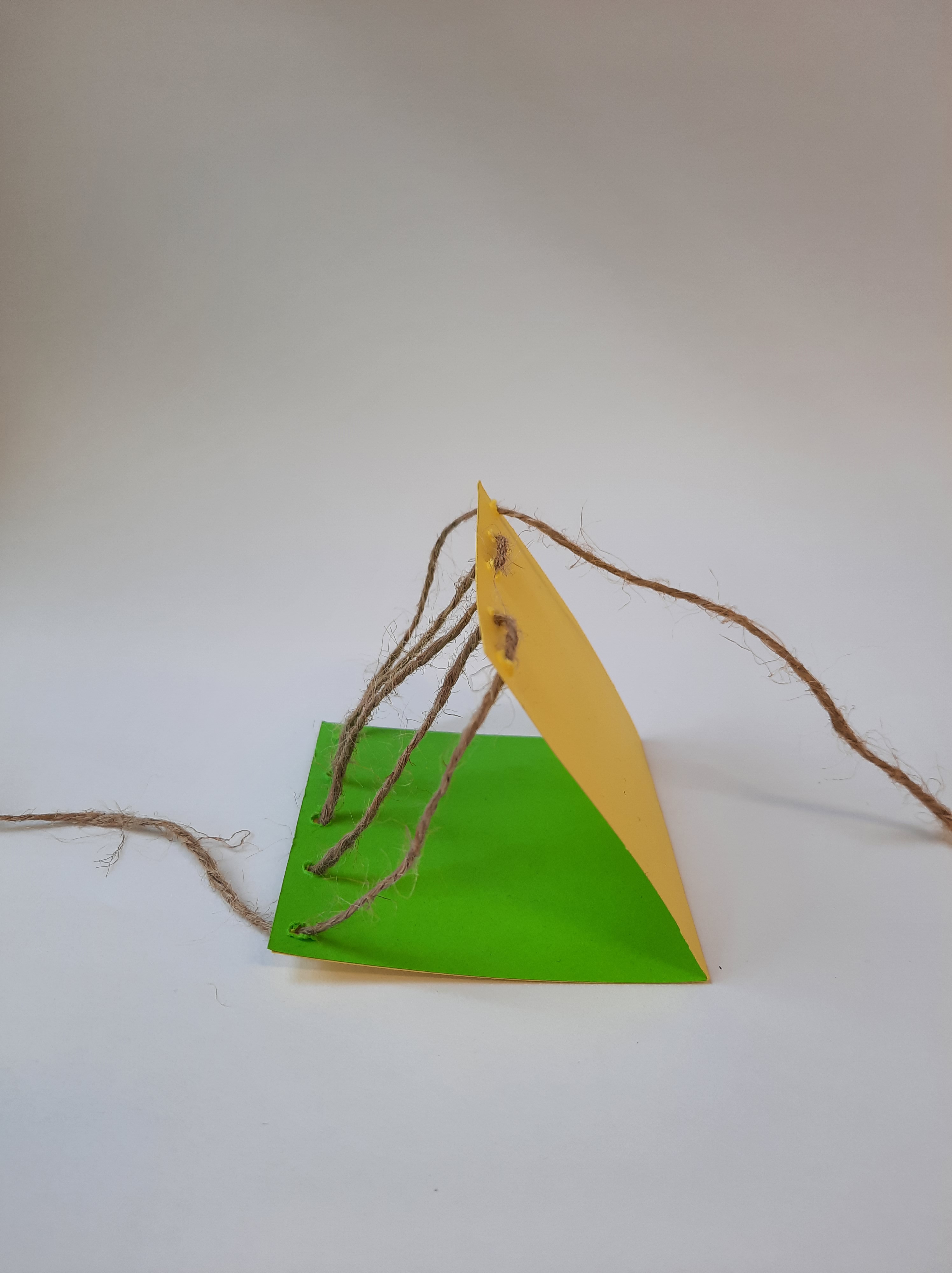
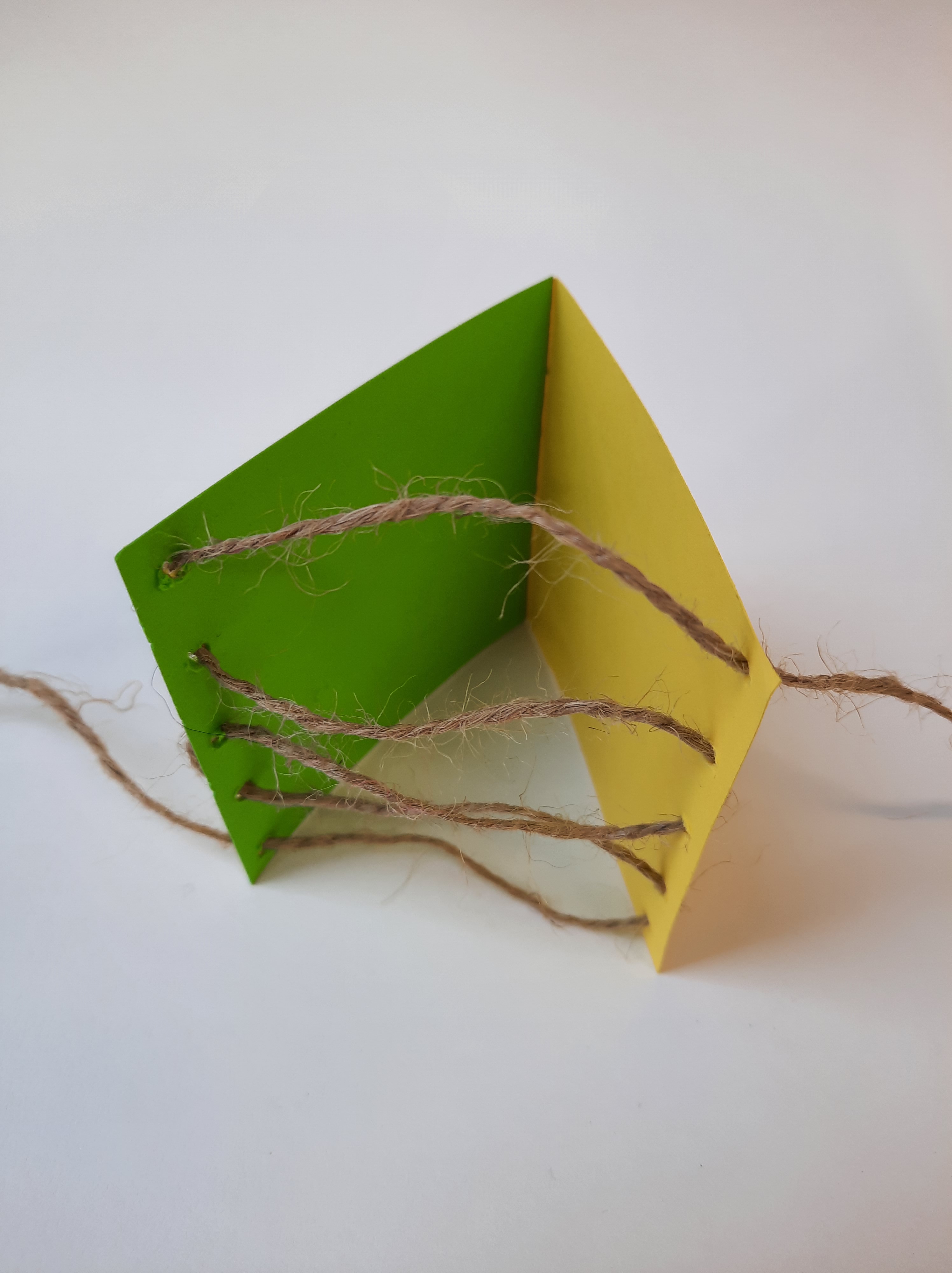
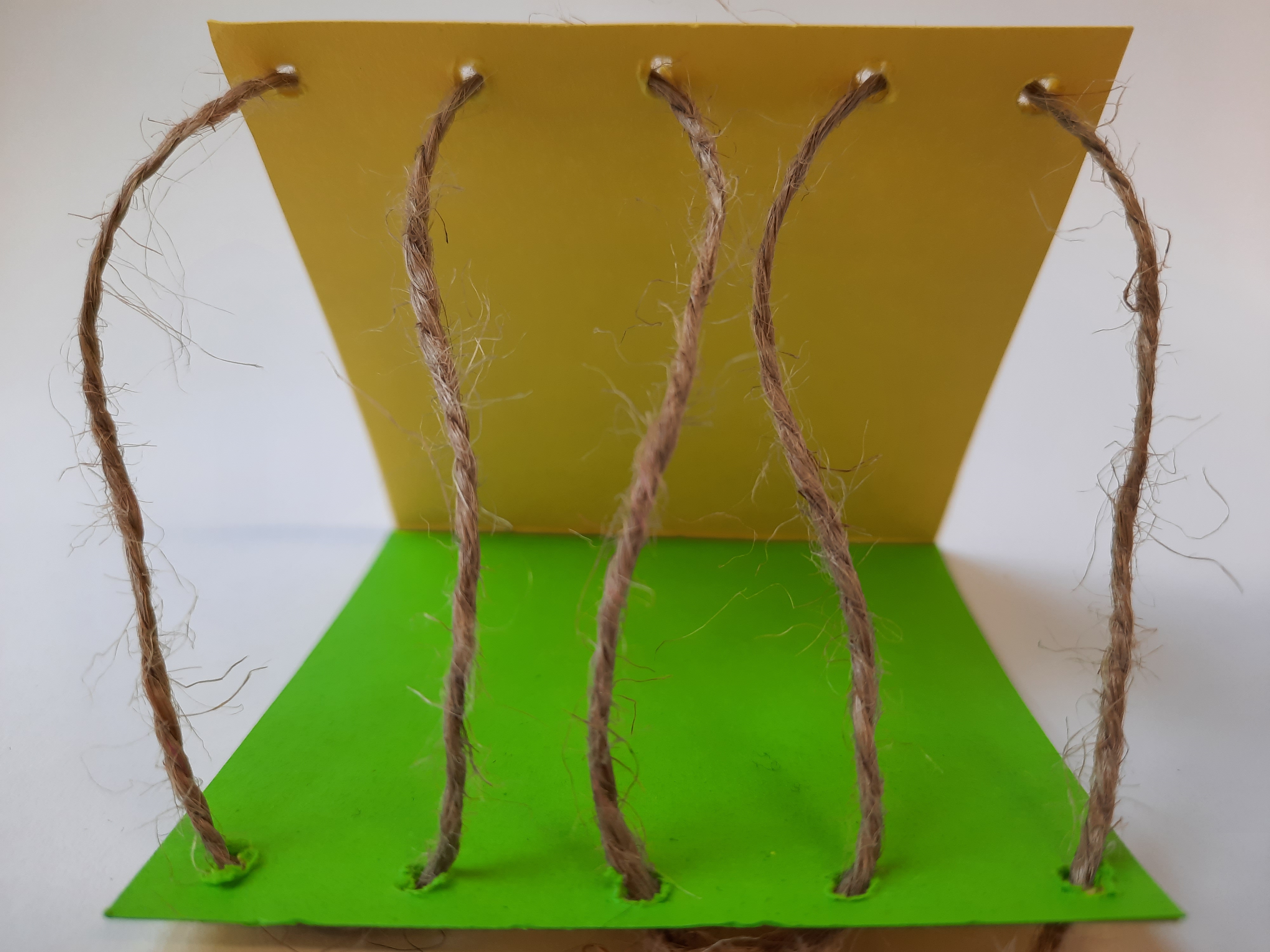
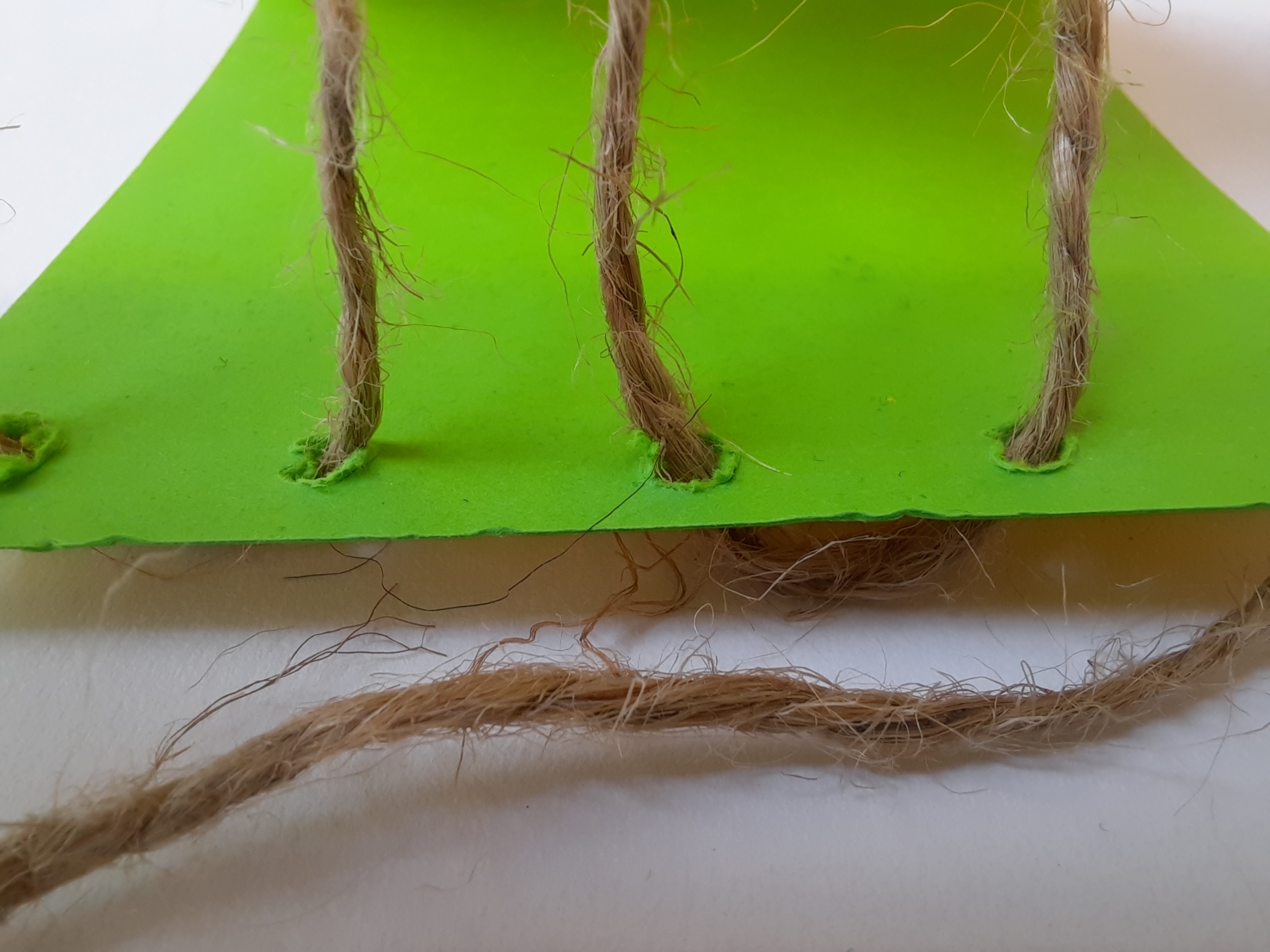
This model is another iteration of the two previous models. I hand stitched the card with nylon thread. I really like this concept of threading or stitching the two together.
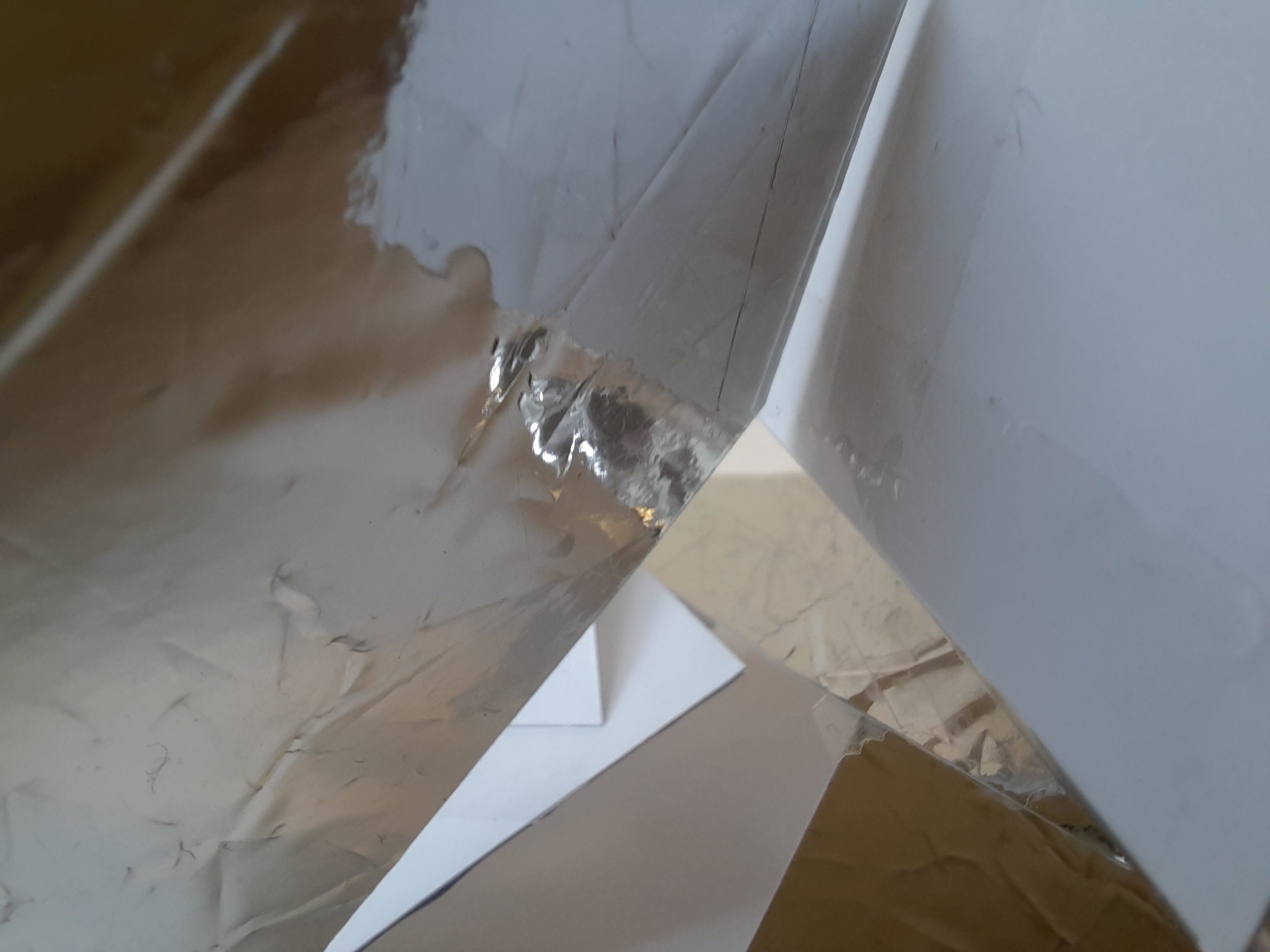
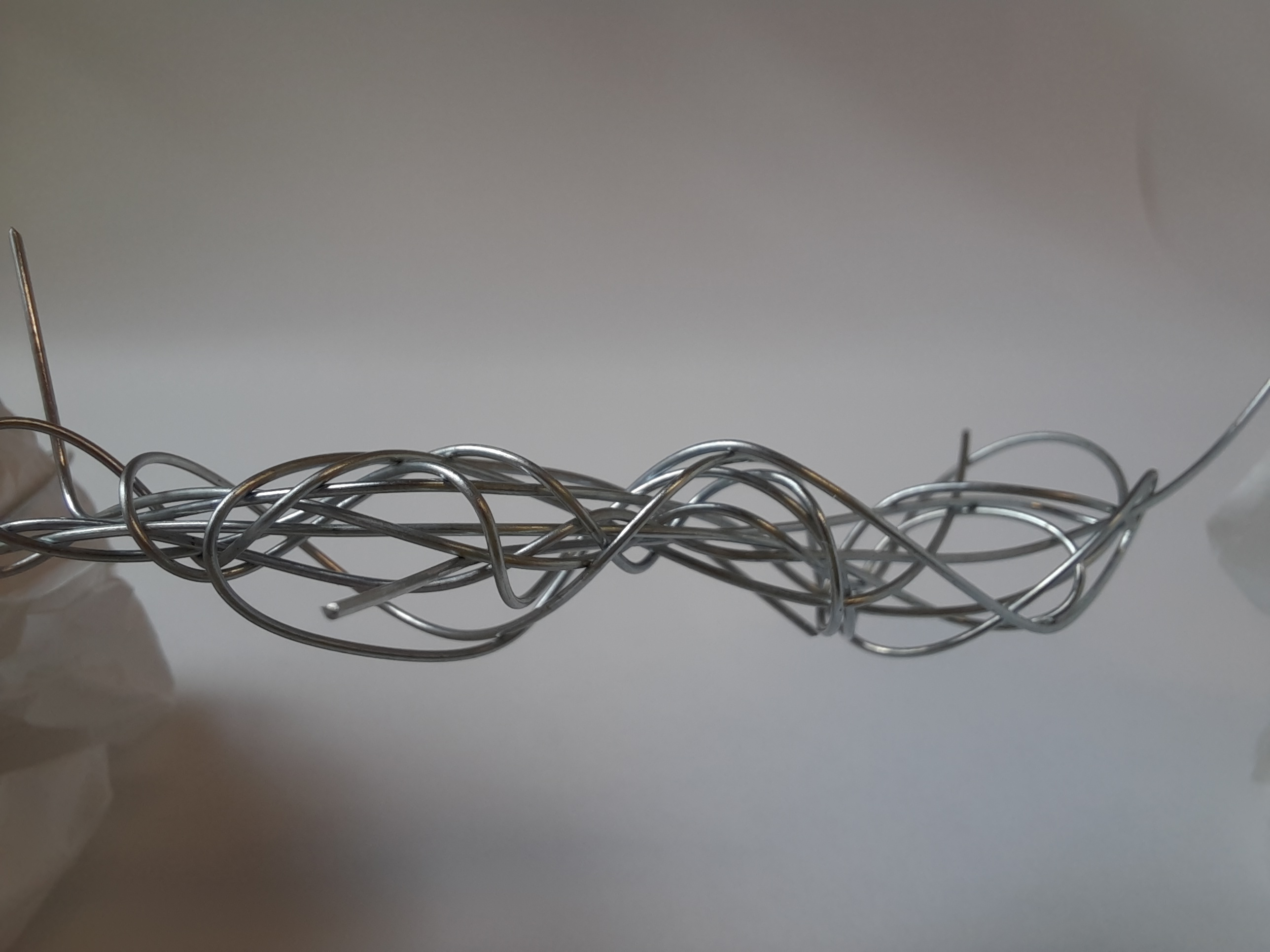
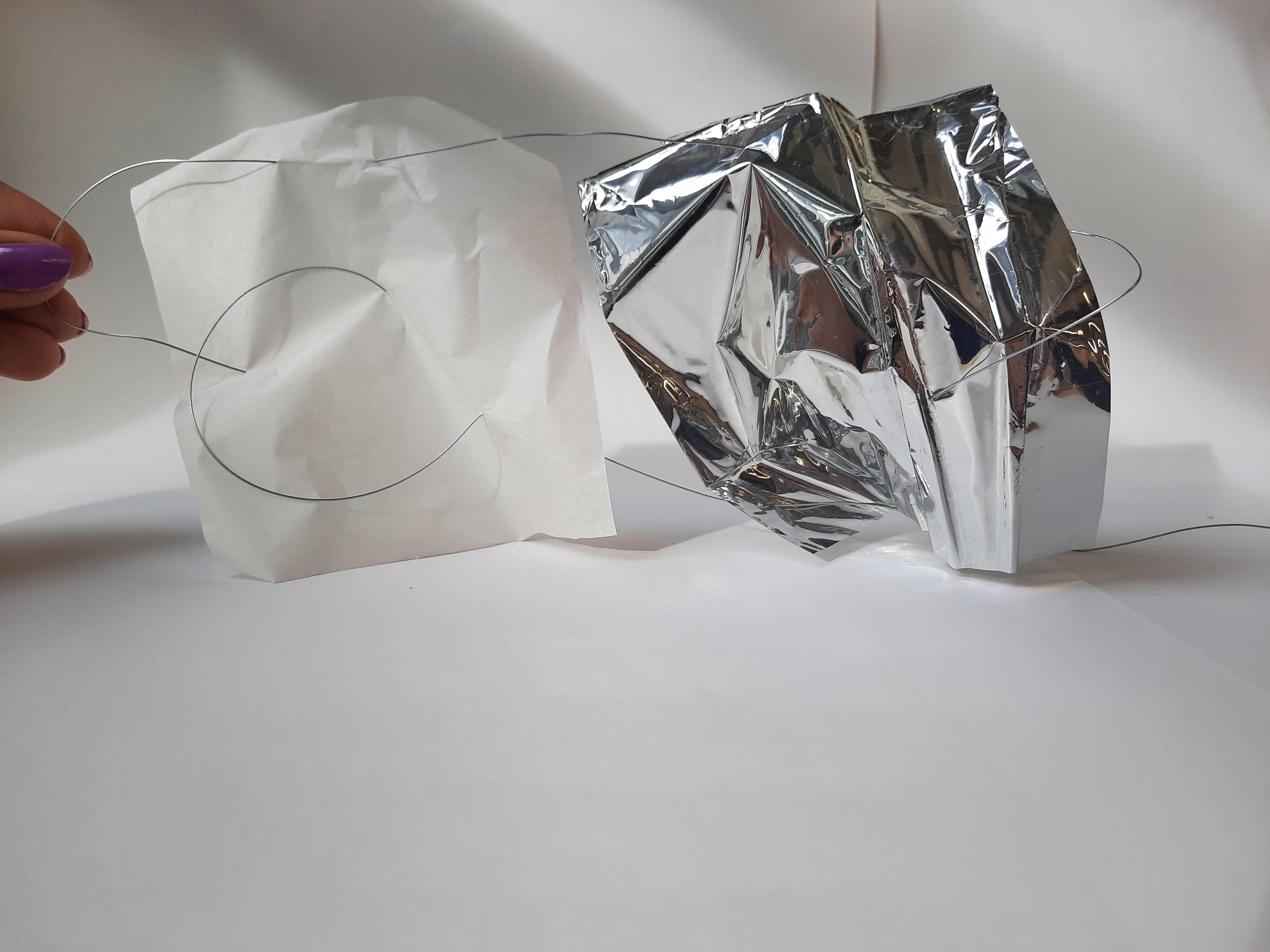
This model is another exploration of the match cut through a different set of materials. The two pieces of material ate intertwined and connected with each other through the winding wire. This model doesn’t create many interior spaces and is quite flat.

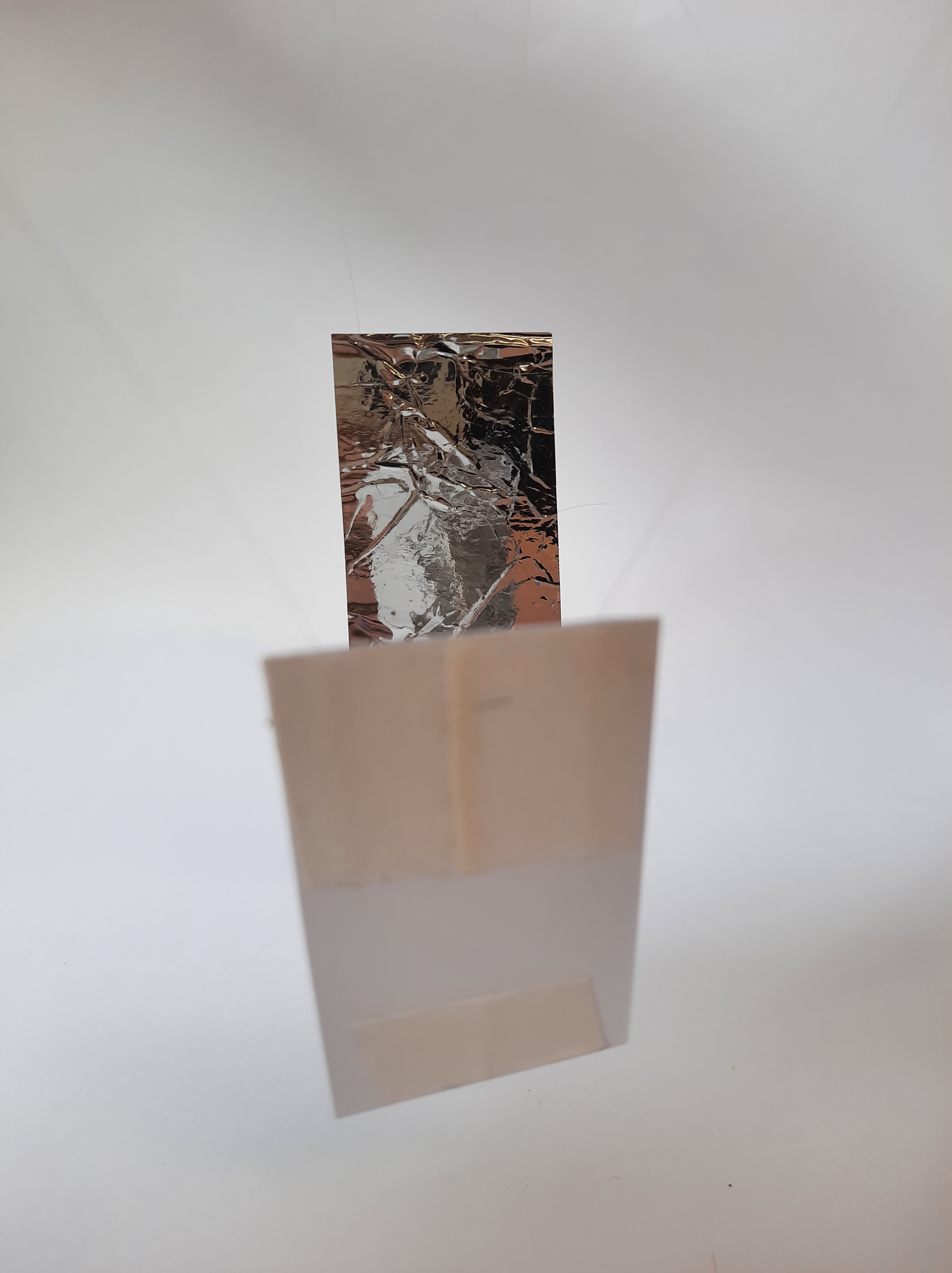
This model is two suspended reflective cards that are connected by a line of nylon. The idea of this model is to show their loose connection through movement as well as them reflecting each other.

Week 1: Site Visit and Cinematic Device

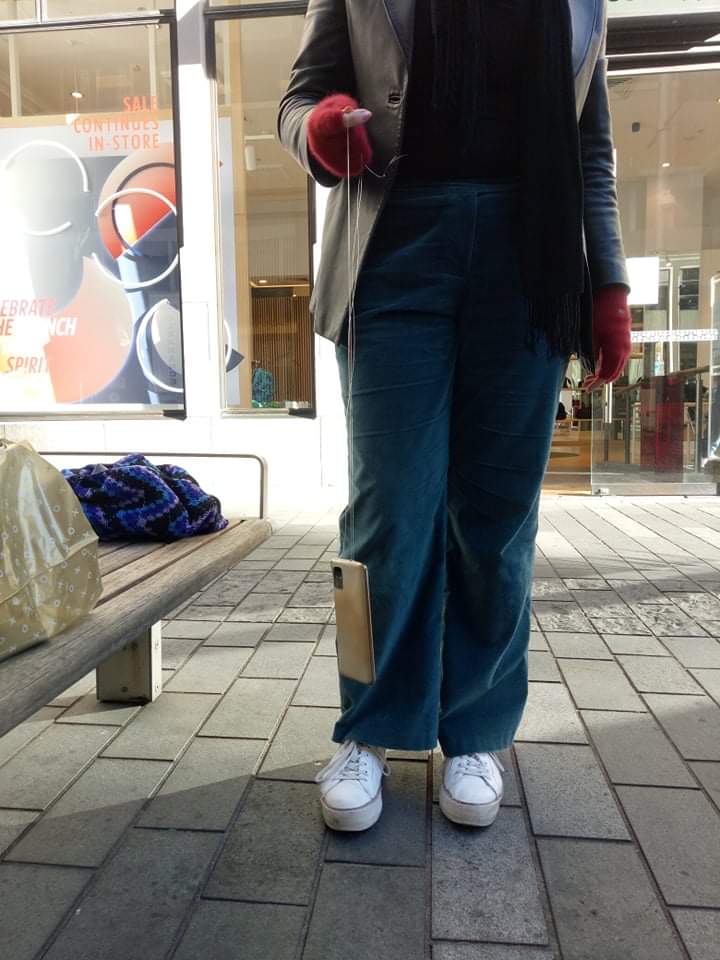
After making our cinematic devices, we did our first site visit. It was really interesting to see what everyone else had come up with and see them put their devices into action. I decided to use the suspended phone device first movie through the space (below).

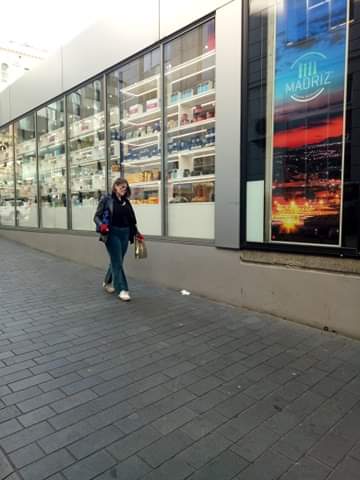
The first time I passed through Fort Lane the phone was spinning too much (below).

I then adjusted my grip on the nylon string and the way it attached to the phone so that the string connected to two points on the phone and I was holding either ends of the nylon in two hands. This ensured the phone was more stable, stopping it from going into a spinning frenzy.

I found the angle very interesting because it made me experience the site in a different way. The movement of the camera was interesting because it felt like the camera was scanning, looking from side to side.

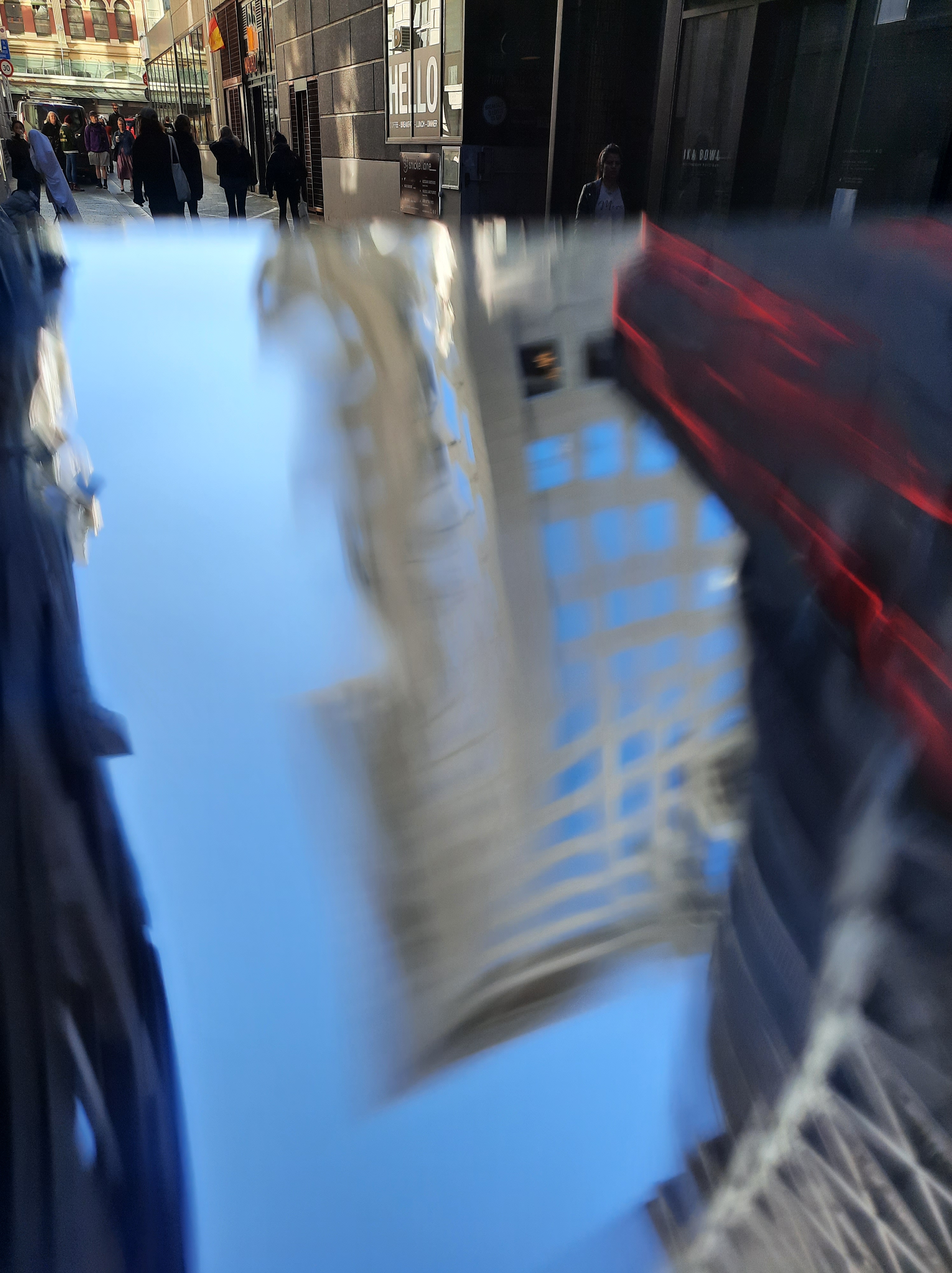
I then used my water effect half pipe device in Fort Lane (below).

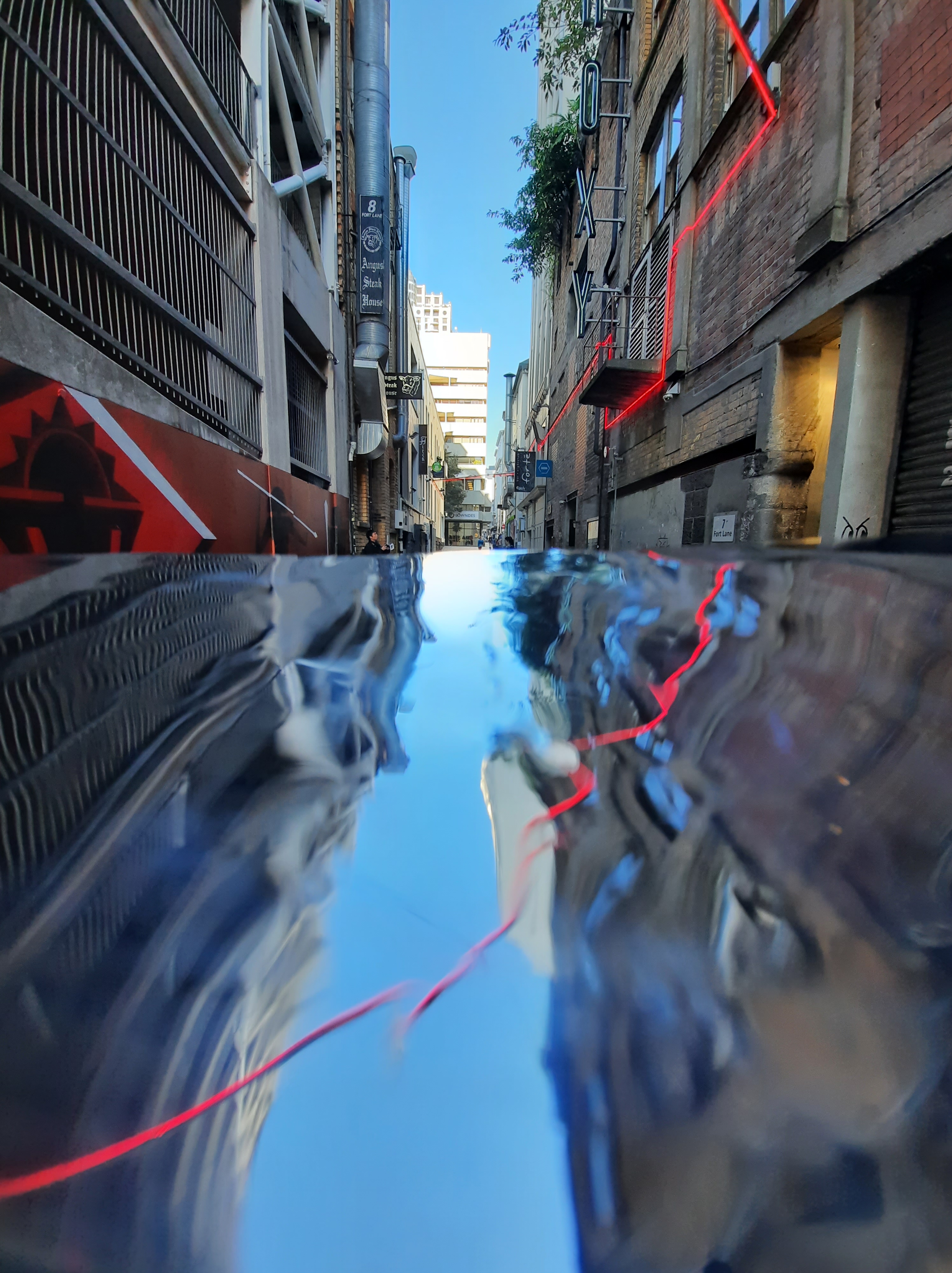
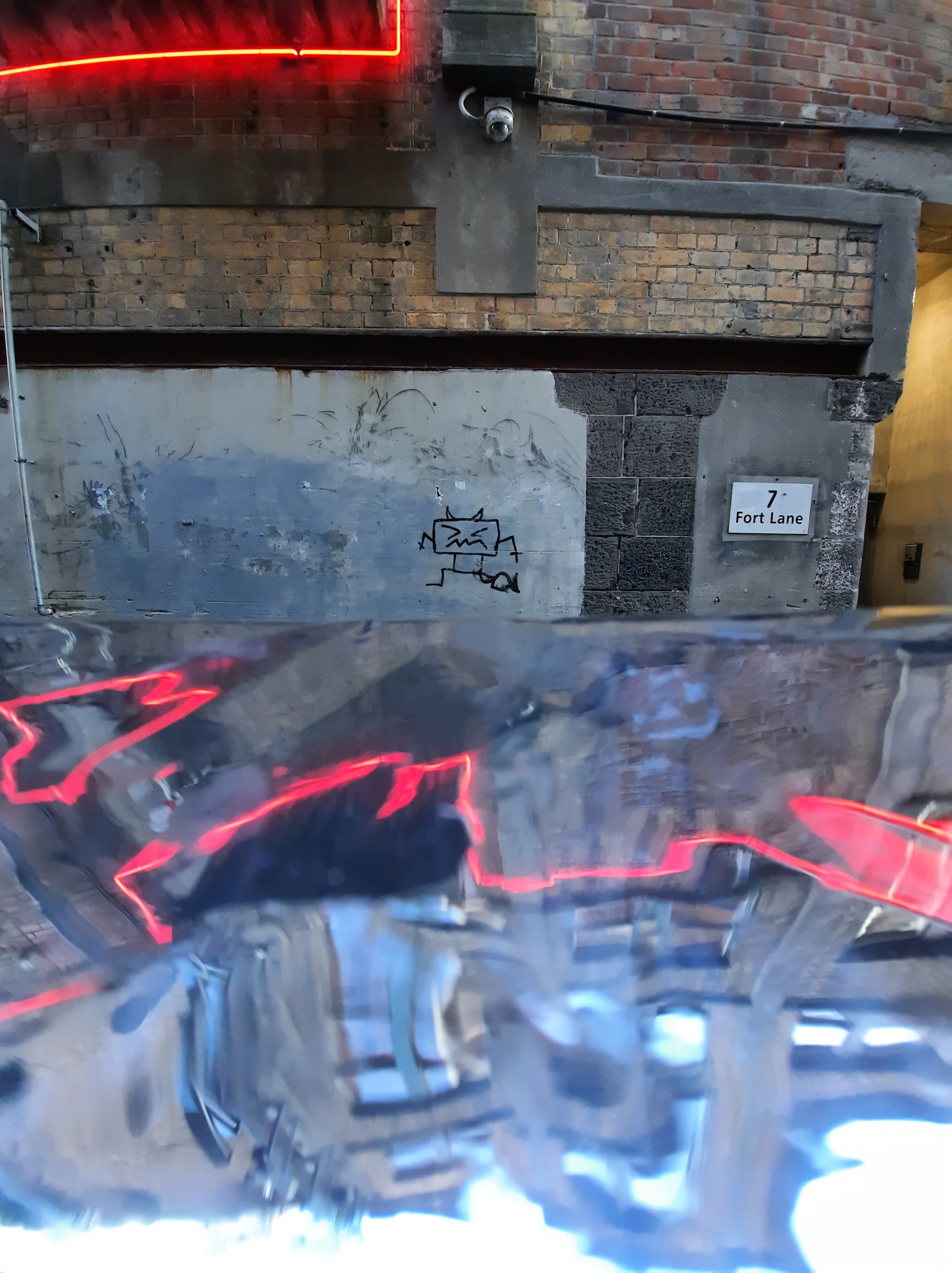
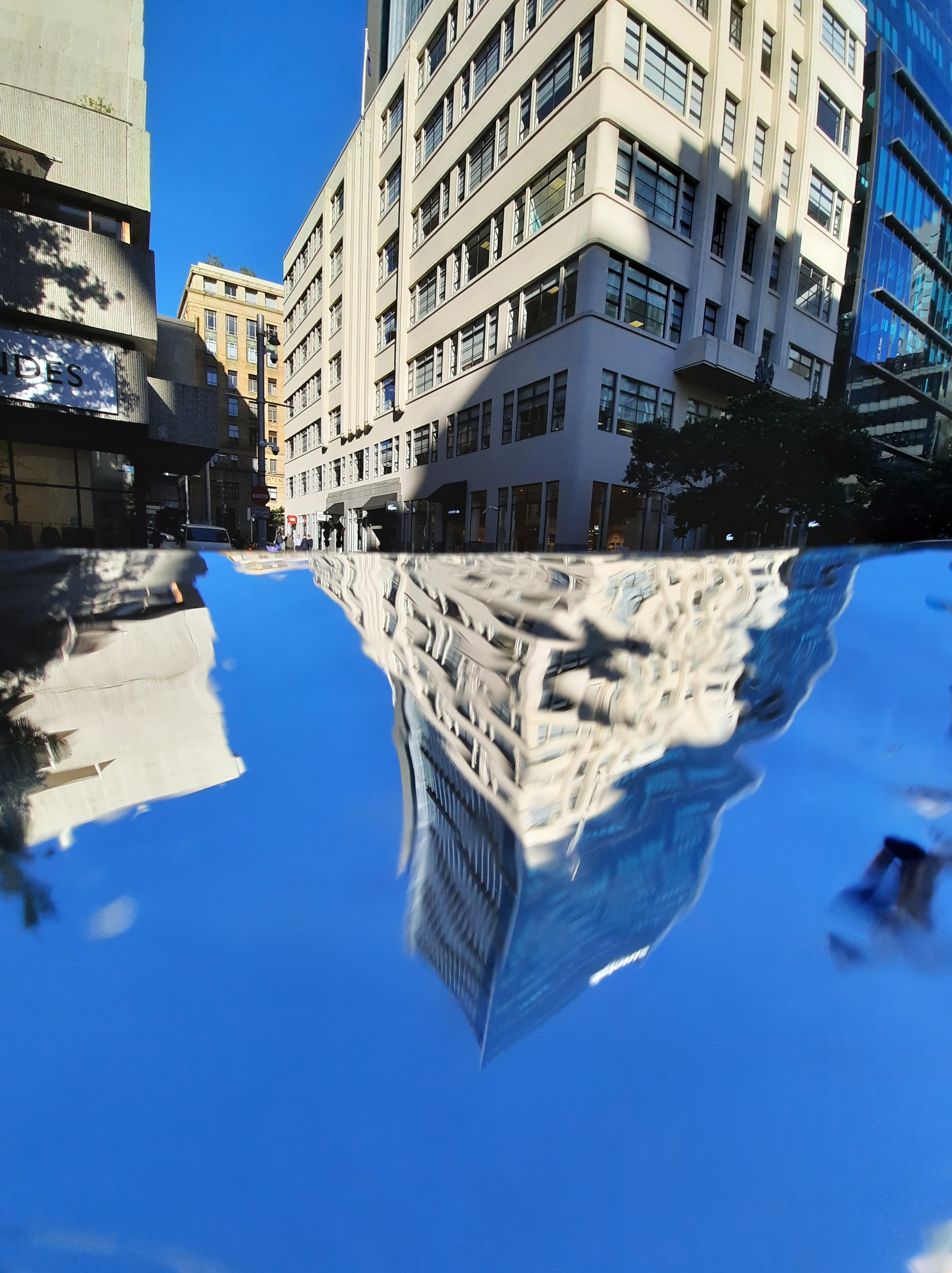
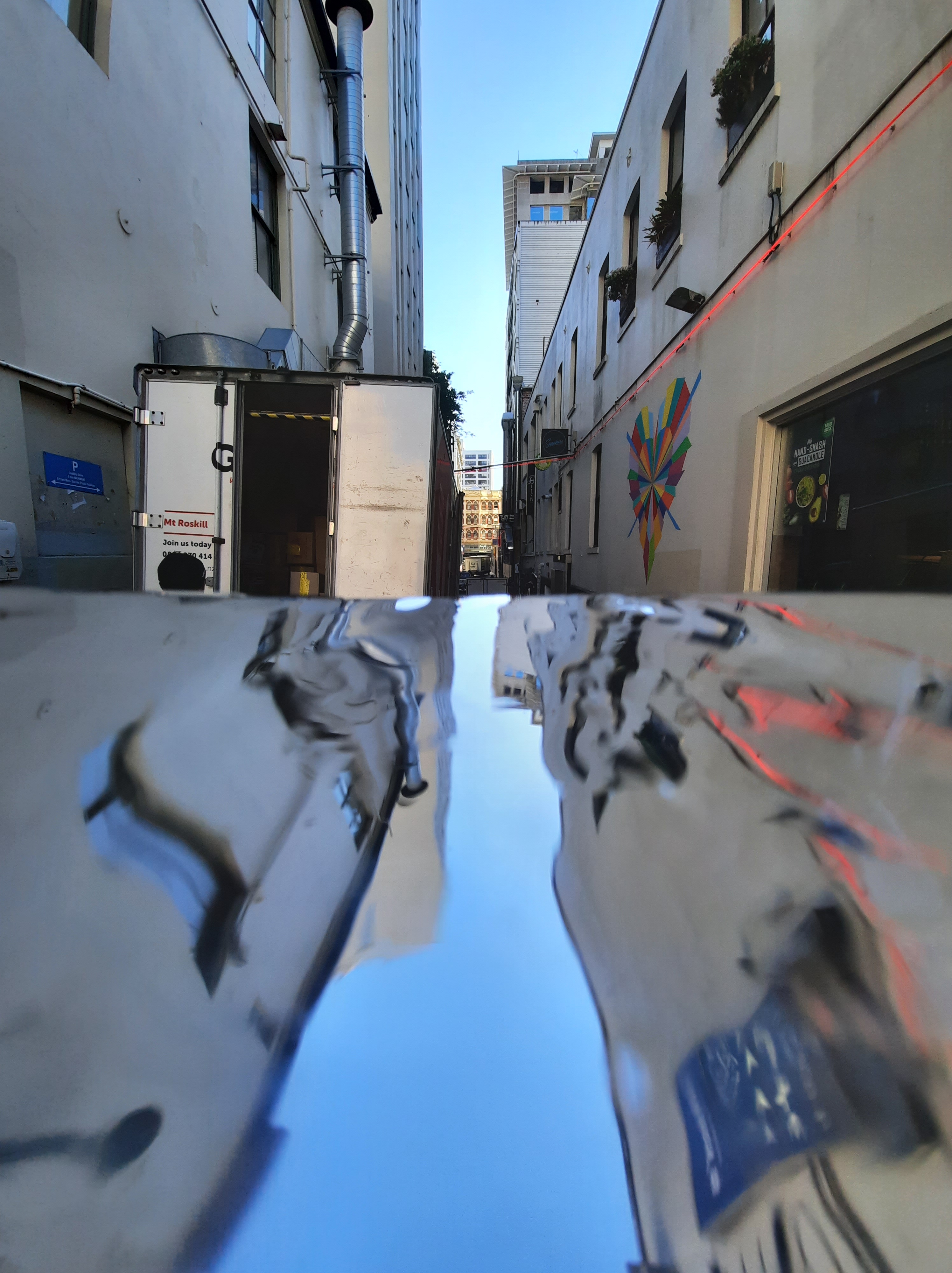
The images created by this device were very interesting. The bold strikes of colour in the space such as the lighting tube above the lane and also the sharp straight edges of the tall buildings against the blue sky made for some really interesting and beautiful reflected images. The images have this lucid psychedelic feel about them. I really like the effect this device made and was pleasantly surprised.
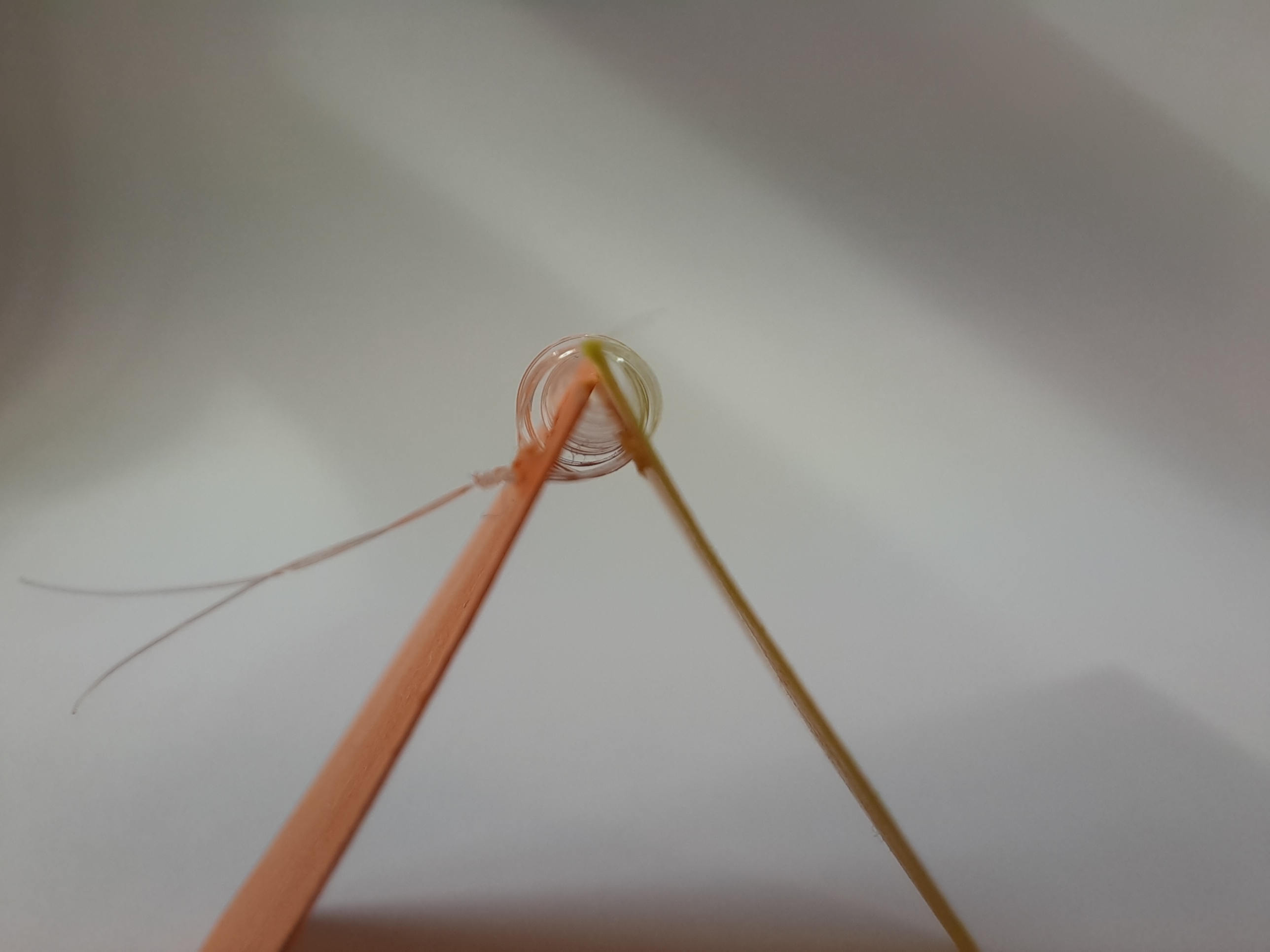
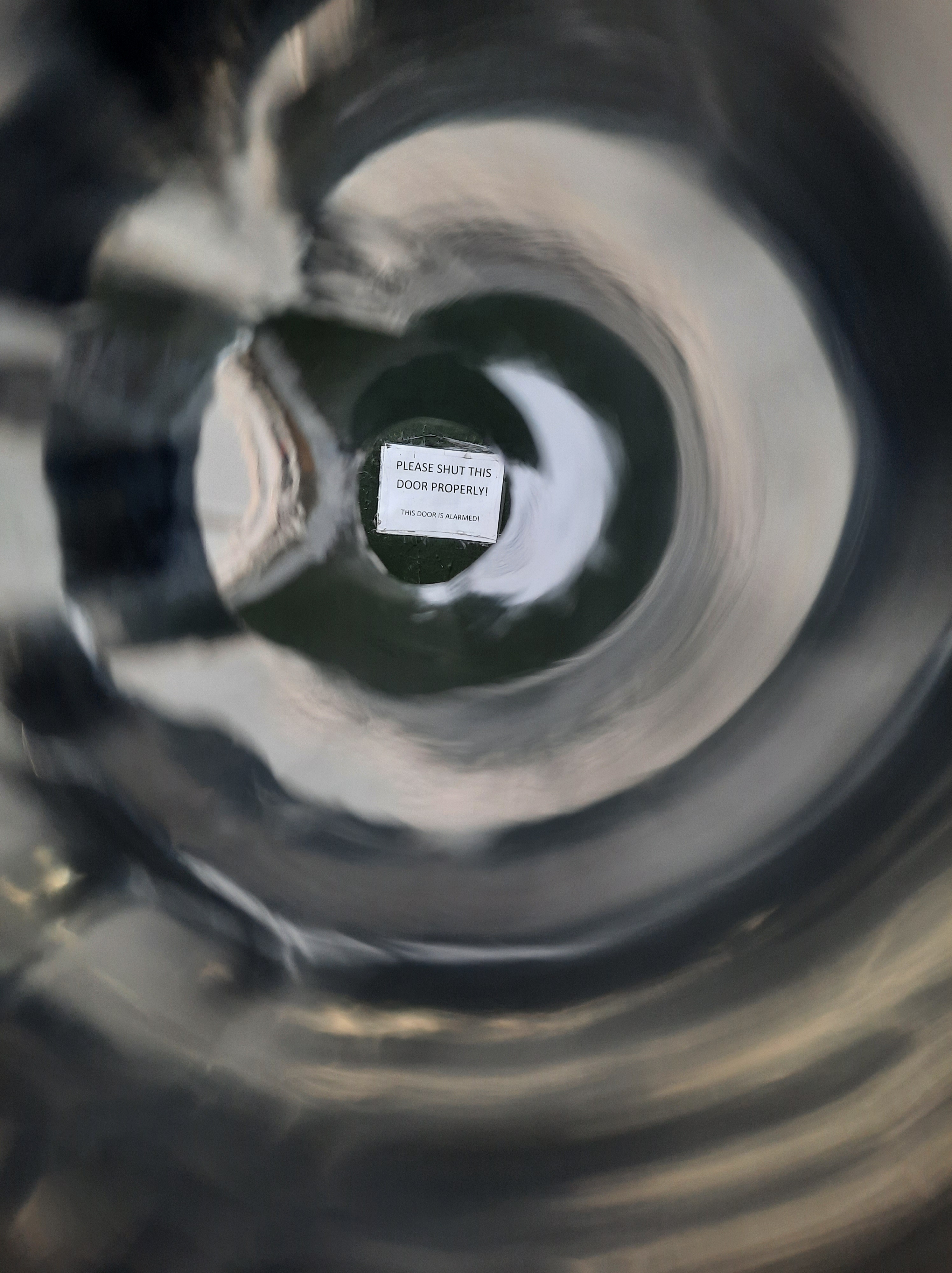
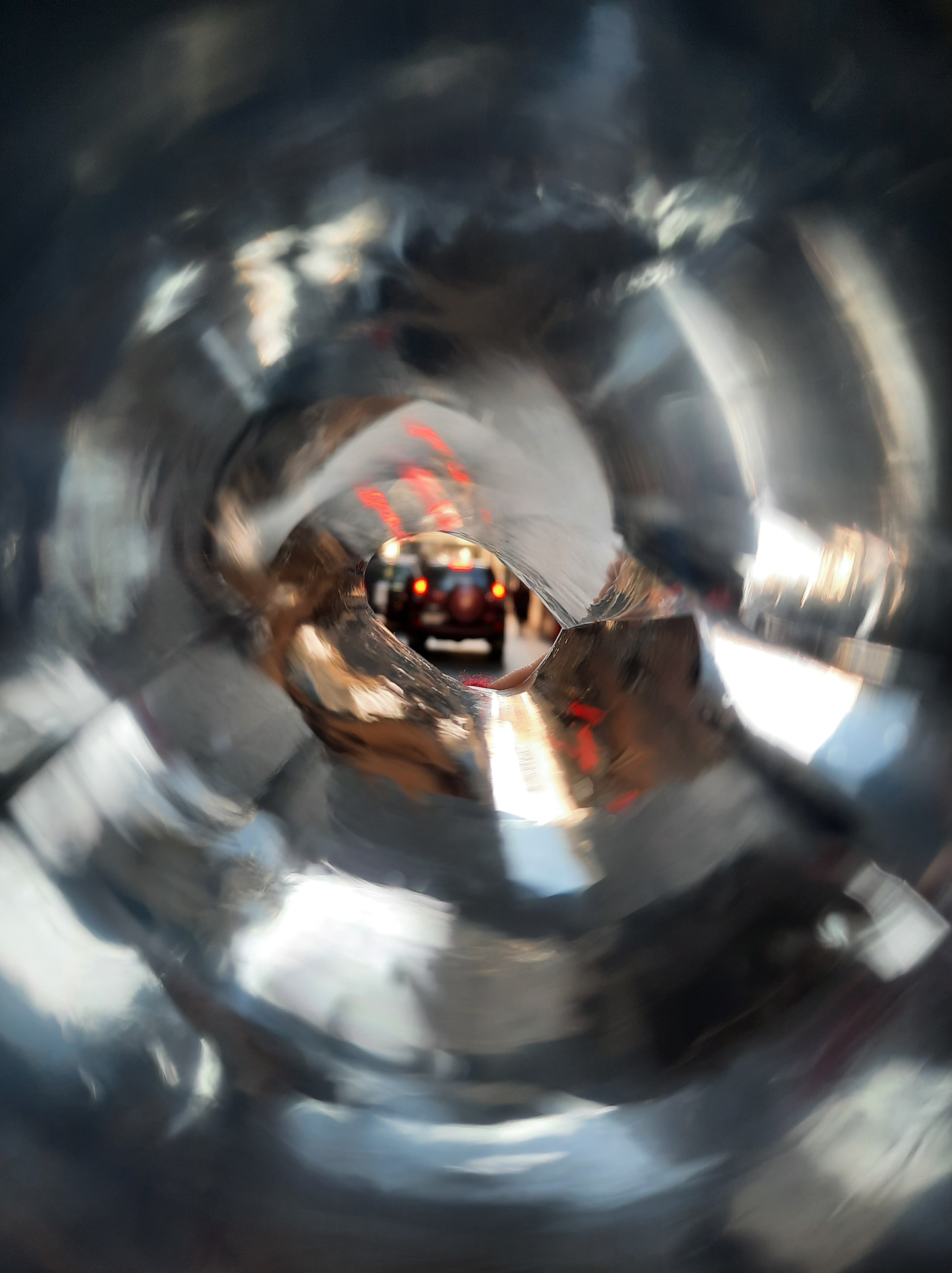
I then used the reflective kaleidoscope inspired tube to document the site (below).
I played around with having a focal point at the end of the tube as well as challenging the lens of the camera by positioning the loose reflective film edge directly in front of the camera. The result were really interesting and euphoric but it didn’t really scream any inspiration for further development or exploration.

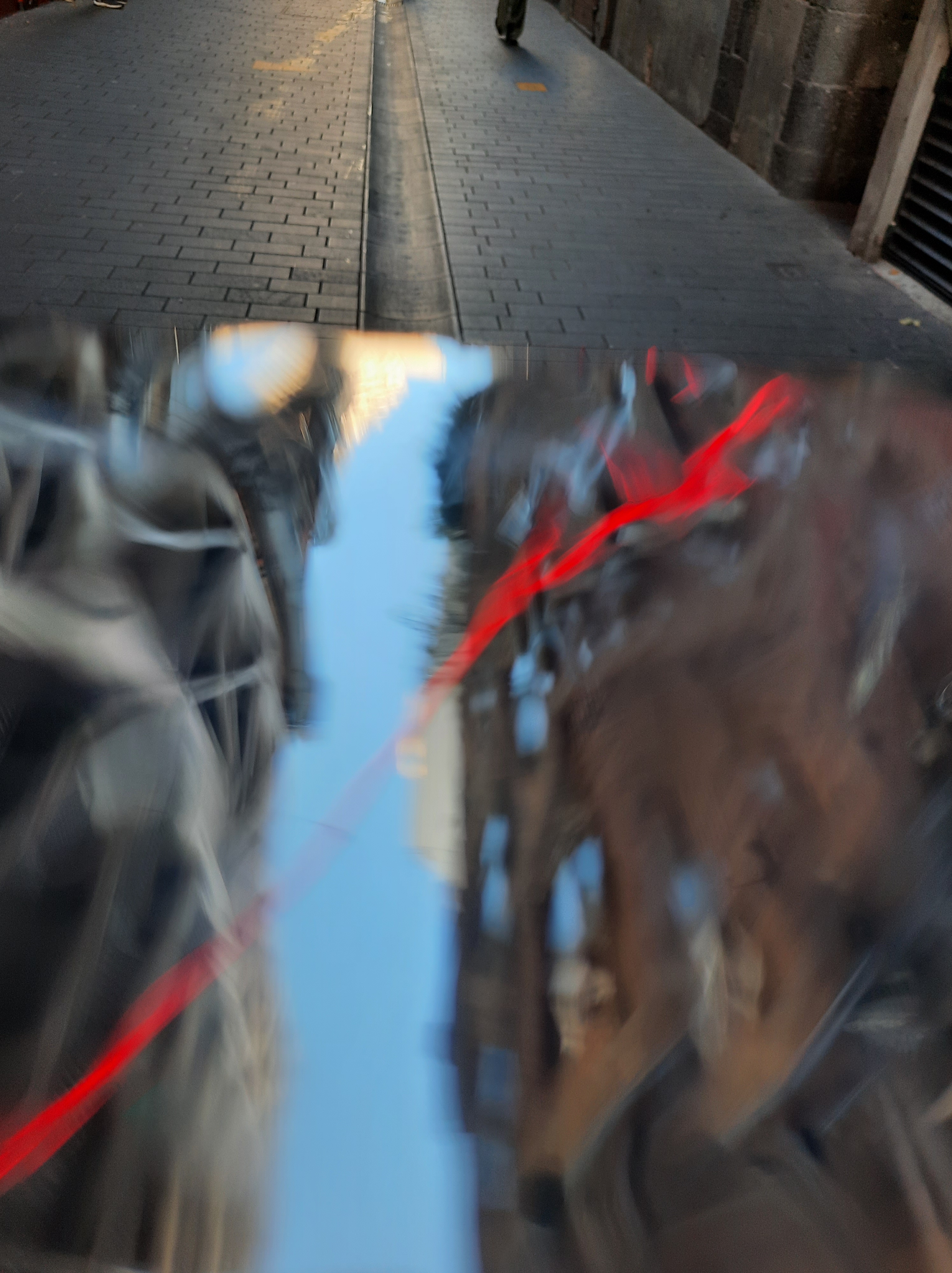
The last physical cinematic device I bought to the site was the reflective half pipe (below).

I noticed that this device had a similar effect of the water reflective device bit the reflected images weren’t as crisp. This is because the film had been stuck directly to the card which altered its surface. Although I found this interesting, I felt the images didn’t have as much depth as the other half pipe design.

For my final device I took a variety of photos of and around Fort Lane, documenting the space to allow me to create a collage. I decided to do the collage by hand because it gave me the ability to be a bit more free with the placements and overlapping of images and I wasn’t constricted by digital tools. I printed out a selection of my photos and cut them out. I wanted to keep the rectangular frame the photo had been taken in rather than cut out shapes because the idea was to use multiple frames to describe a place. The collage was a lot more structured in this respect.

I begun with creating a collage of multiple spaces in and around the site using a series images from one space. The aim of this was to use images of multiple angles and viewpoints of a space and collage them together to create an abstract yet wider understanding of the space outside of the frame.

Playing on the idea of fictional space, I also decided to use some of my photographs and draw a fictional world around them.

This explored how when we see a space displayed to us in a frame in film, we subconsciously generate ideas of how the space is laid out beyond the frame. I really like how this turned out but I think i could have been more dramatic to exaggerate a sense of fiction.

When making my first collage I didn’t put any consideration into the layout of spaces and their relationship to each other on the page. As decided before the site visit, I wanted to create a birds-eye map of Fort Lane and its surroundings using the photos I took on the day to show the relationship between the spaces. While making my first collage, I decided to add dimension to the map by collaging multiple frames together, similar to my first collage.

The day of the site visit I walked around Queen Street, Wellesley Street, Symonds Street and Karangahape Road and documented interesting and intersectional sites. This collage includes a map of these sites, directing my movement inland, away downtown Auckland. Although I like this collage, it isn’t as effective as I thought it would turn out and doesn’t articulate my ideas of fictional space as well.

Week 1: Cinematic Device Design

This week I also worked on my own cinematic devices to use during our site visit. The purpose of the cinematic device is to help gain a different view of the site and pick up on things maybe not noticed before. I am really interested in the idea of fictional space and how different scenes in film tell a story of a fictional space yet in actuality, the spaces are very different than perceived through the frame of the camera. For my cinematic device, I want to explore the space through an after editing tool. I plan to take photos of the space from a variety of angles and viewpoints and collage them together. The idea is that a series of multiple frames articulate the wider space around on shot and gives the viewer a better sense of the space.

I also plan to take photos of areas surrounding Fort Lane as well as the wider city and create a map. When watching a movie or series, we subconsciously map out the space we see in relation to each other. The ide of this cinematic editing device is to map out the site area in relation to its surroundings.

I decided that I also needed to have some physical cinematic devices that I could take with me to the site. Having something with me will force me to look at the site in a different manner.

The first experimented with some filter effects with some fabric and materials I had (below) but I didn’t feel like this made enough of an impact for me to take any further.

I then experimented with reflection, first with a small metal sheet, then a thin reflective film (below). I am often naturally drawn to light, reflection and distortion and this is why I had these materials lying around. I preferred the film just because of the distorting effect it gave to the reflected subject (thanks Georgia for being my model).

Taking inspiration from the kaleidoscope, I then created a tube placing the film inside (below). This was the first device I made. I liked the way the reflection was distorted and also with the film only sitting inside the tube rather than being attached to it, it allowed movement and chance to occur.

By chance I noticed the reflection of light off the reflective film through a rough frosted sheet of plastic I had laid over it (below). I found it interesting but it didn’t inspire a cinematic device.

After making the tubular cinematic device, I was inspired to see what the impact would be if I created a half tube and how the curved reflective surface would warp the site’s surroundings (below).

I liked the distorted reflection created by the half pipe device but I wanted to create a flatter water effect. I used the idea of the half pipe but instead of sticking the reflective film to the card, I stretched it across it so it was taught and flat (below).

I also wanted to create a device that would create a different point of view. I decided to attach a piece if nylon fishing wire to my phone and walk with my phone dangling by my feet through the space (below). I liked how it slowly spinner but decided to change my grip to stop it spinning so fast at the site.

Week 1: Cinematic Device Research

This week we began with doing some research into pre-cinematic and cinematic devices. I looked into a variety of devices including phenakistoscopes, thaumatropes, zoetropes, and a variety of current staging and editing techniques and camera angles. It was interesting to see how the process and development of film and cinema over time with the advancement of technology.

From my research I decided on three pre-cinematic and cinematic devices that interested me the most: stereoscope, shadow play, and mise-en-scène.

What I found interesting about the stereoscope (right image) was how simple yet fascinatingly technical the design of the device was. Invented in the 19th Century, the stereoscope creates an illusion like image for the viewer. Known as the original virtual reality, stereoscopes use two images (one for the left eye and one for the right) to create the illusion that the image is 3D. I find it fascinating how such a simple device of such an early time was able to trick the mind into experiencing a 3D effect.

Shadow play (top left image) was another interesting device. When doing my research, I was instantly reminded of the Hungarian shadow theatre company Attraction who competed on Britain’s Got Talent. I remember watching them on the TV and being so fascinated with how they moved and positioned themselves to tell a story and transition through scenes. Shadow play also reminds me Karate Kid (the Jaden Smith version obviously). It is another instance of illusion which I think is a massive part of film, whether that is the physical illusion of the DeLorean disappearing into thin air leaving a trail of flames behind it, or the emotional illusion created when Marley the dog dies (spoiler alert!).

I also wanted to explore some staging/editing devices and was really interested in mise-en-scène which is the arrangement of scenery, props and actors on a theatre stage or film set. The purpose of the mise-en-scène is to create or tell a story through the design and positioning of a set and camera angle. I found this interesting because it made me take a closer look at the spaces created in film. It’s interesting how fiction space are created and staged to tell a story and how we create relationships between different fictional spaces. Through the storytelling of film, audiences create relationships between the fictional spaces, mapping them out in relation to each other. It is fascinating how different our ideas of the layout of spaces is in comparison to reality when often scenes are filmed on sets or are at a variety of film locations. This reminds me of something I learnt about the television series The Vampire Diaries. The series was filmed in a town in Georgia, USA and although viewers didn’t have the town specifically mapped in their heads, the way it is filmed made it seem certain buildings and sites were further away from each other than in reality. I find it intriguing how directors and film producers can create fictional spaces and towns almost out of thin air. Mise-en-scène plays a part in telling the story of characters, film and space.

Semester 2, 2021

This semesters brief ” Urban Itinerary: Cinematic Space” is exciting. I’m really looking forward to working on this project because it allows me to truly explore my interests and fully experiment with different ideas and concepts. I’m also really excited about how free the brief is in terms of the extravagance of my project. Sometimes I can find this daunting but I really feel I have a sense of direction and support.

I’m excited about the specifics of the brief as well. I have had a fascination with film and television for years and I think this project will give me the opportunity to figure out what that means for me as a spatial designer. I have had my sights set on working in the film industry since before starting university and this brief will allow me to gain a better understanding of myself as a designer in the area of film and how my ideas of film can influence my practice.

Presentation

On Thursday morning I finished up pinning up my work for my presentation the following week.

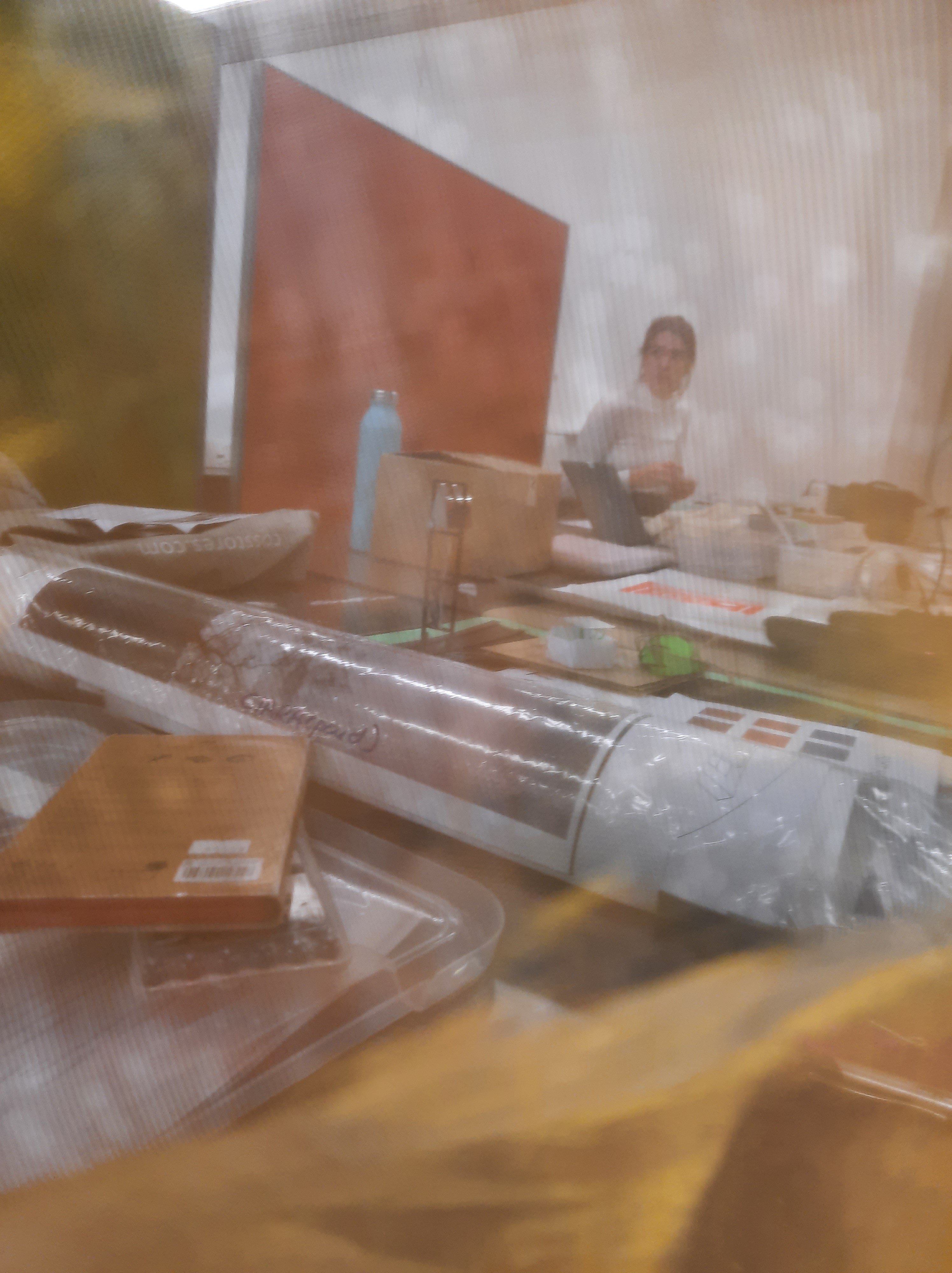
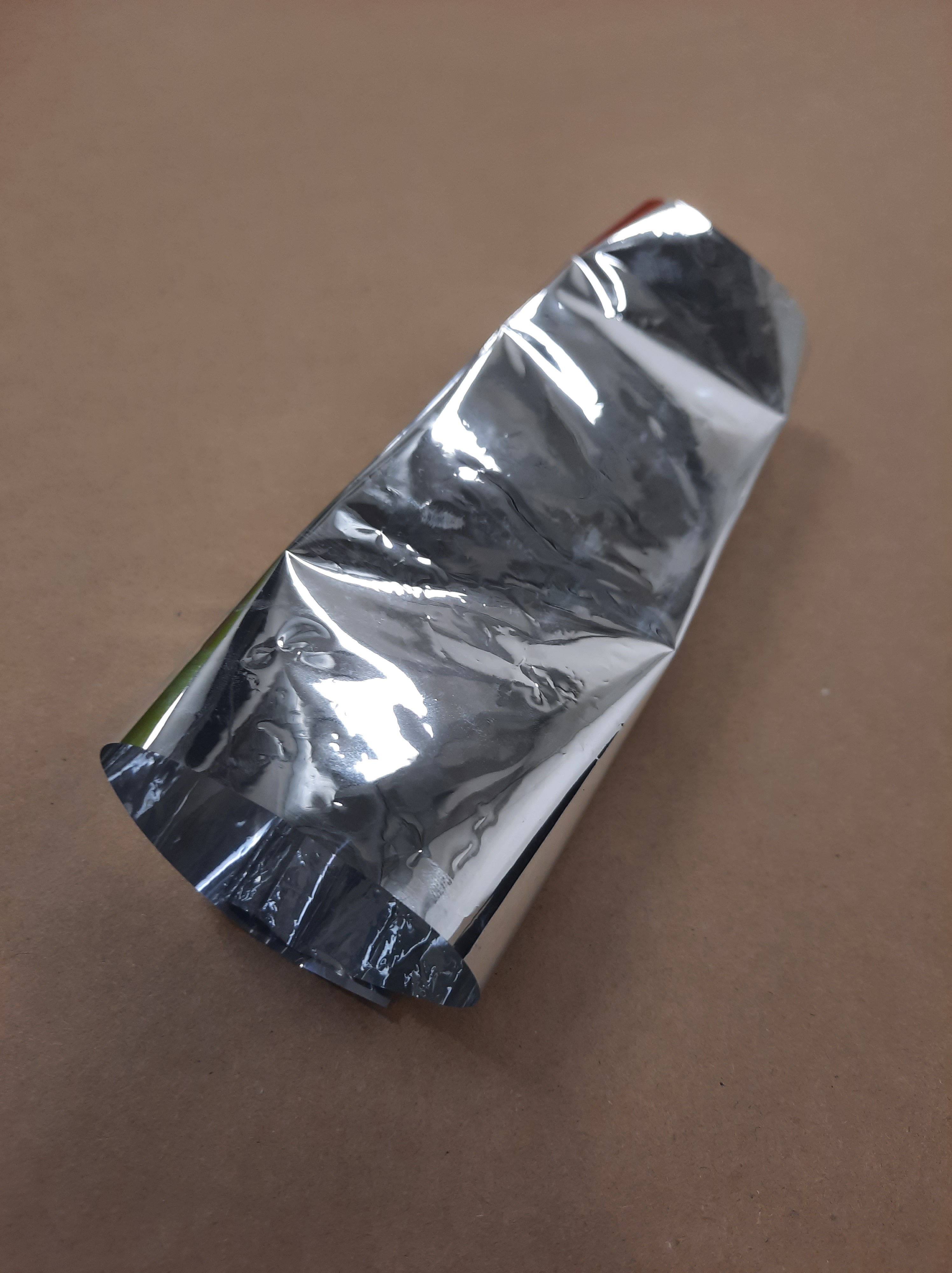
I decided to have the reflective film as a bac drop for my documents to create a more dynamic and visually interesting presentation. The film also has a series of crease which show structure within organic movement and reflection.

Considering how difficult I found it to get moving for the first half of semester as struggled to have a conceptual focus for the project, I am happy with the outcome.

Week 12: Final Touch Ups

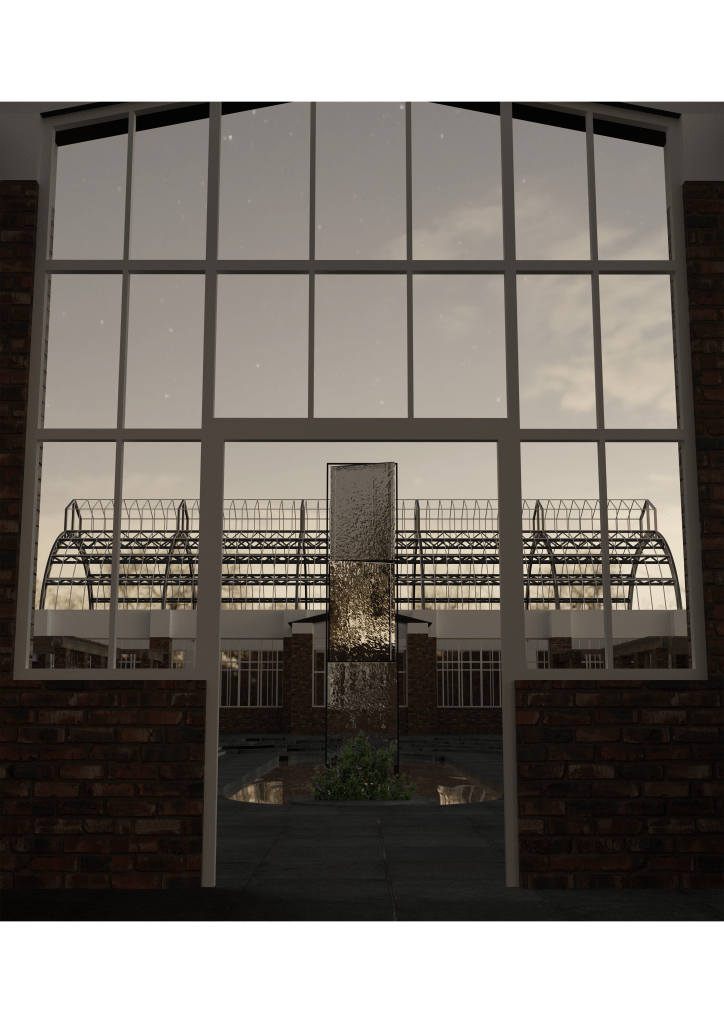
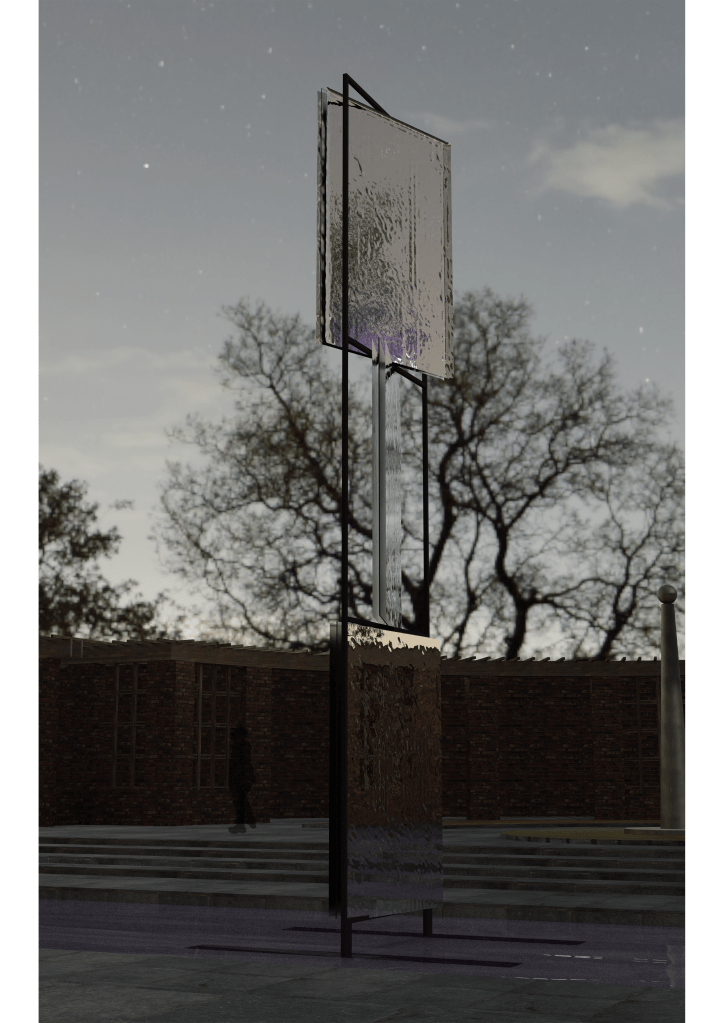
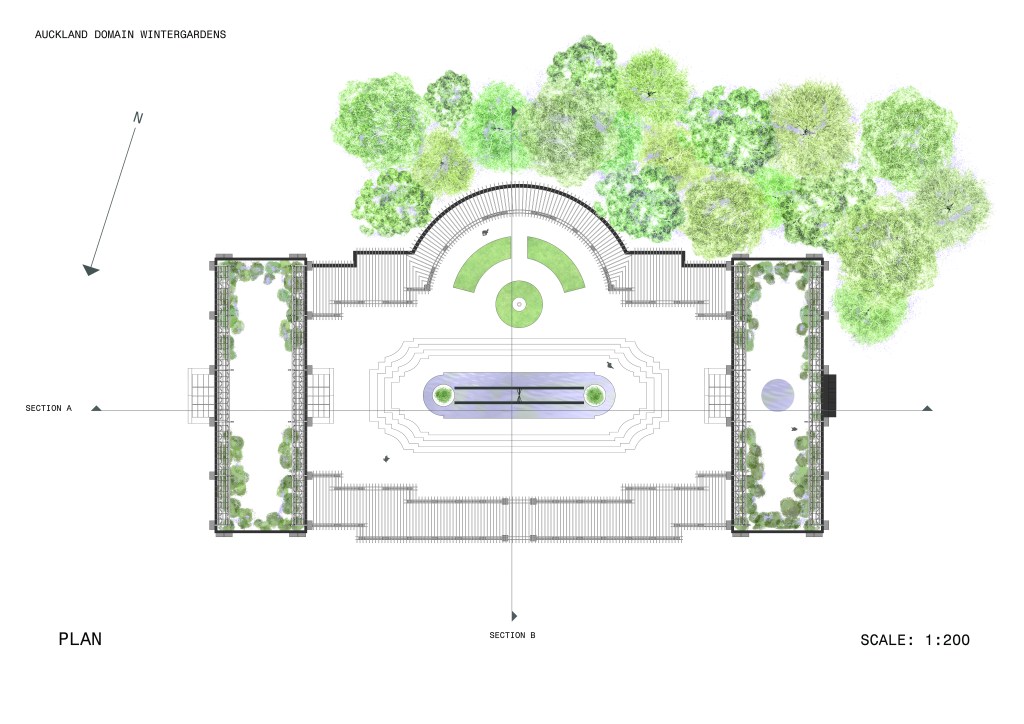
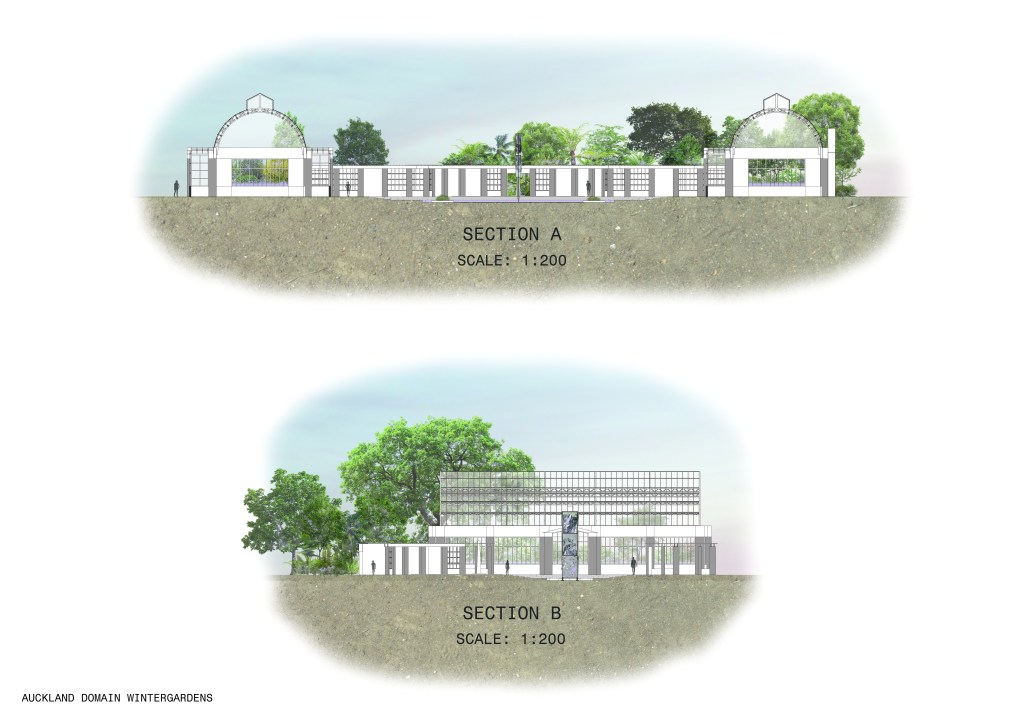
This week before our pin up on Thursday I was able to finish my 1:50 scale model of the design intervention, finalize my positioning statement and finish my site map.

1:50 SCALE MODEL

SITE MAP

FINAL POSITIONING STATEMENT
Reconnection: Changing perspectives and viewpoints. 

This project is focused on the reconnection of plant life on the inside and outside of the Wintergarden walls on both a physical and conceptual level. The inspiration of this concept derives from my fascination with the way the plants in the Wintergarden space, specifically the glasshouses, expressed a sense of entrapment and displacement through their testing and challenging of the physical constraints of the structure. This led me to investigate how placing plants into a manmade structure changes the way they are viewed conceptually. We subconsciously view the plants inside the glasshouses to be superior or of higher importance than those that grow outside the walls just because of their physical context. 

My project will focus on an exhibition experience. The aim with my design intervention is to reconnect these two separate worlds of plant life and create a shift of subconscious perception. The project will articulate how a plant’s importance is not defined by the structure it is homed in. It will shift viewers’ thinking to an understanding of how their presence and intervention influence the meaning of a space and its subjects, and also how plant life, both “encased” and “free”, are always connected through a larger ecological system. 

My aim is to explore this concept through lighting qualities and reflection. Something that articulated the dark undertone of the plant life inside the glasshouses being trapped and trying to escape was the soft looming shadows and blurred images of the plants pressing against the fogged glass on the exterior of the glasshouse. The soft horror lighting quality was very intriguing in the way it told this story of entrapment, and it was the physical quality on the site that I was most drawn to. This inspired further research where I discovered how reflective qualities would also help in articulating the reconnection of plant life.  

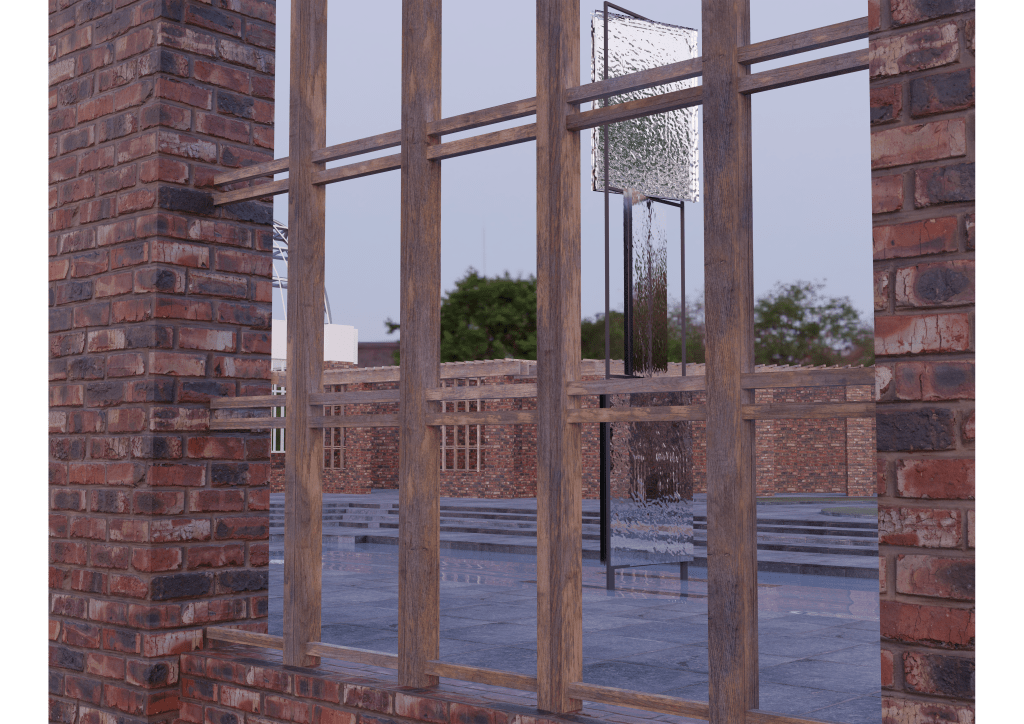
Reconnection is a project that uses lighting and reflection qualities to tell a story and alter perspectives. It is an experiential exhibition that seeks to articulate the desperate story of a cry for help from those without voices. Reconnection inspires questions, opens minds and provokes visitors to rewrite the stories next chapter.  

I also decided to give my project a name; Reconnection. The word reconnection is something that encapsulates my concept and supports my presentation documents. I feel like it ties everything up together well.