During the break I made a series of mini models and drawings to help me explore my conceptual ideas. I used this exercise to try and help me explore ideas in a physical sense to help give me more direction for next steps.
I also created the first iteration of my positioning statement to help me organize my thoughts and ideas and give me direction. I’ve been feeling like I have such a wide range of ideas and I have been struggling to find the main concept in which I can explore this array of ideas while still being clear with want I want to achieve.
Below are my ideas and my first positioning statement.
DRAFT IDEAS Gentrification Disregard to surroundings Encapsulating and trapping Created two separate worlds Social climate and purpose change Loss of value and status in a traditional sense Highlighting the disregard n terms of the design and construction of the wintergardens so there needs to be consideration to the gardens history popping the bubble and reconnecting the the two worlds One entity
Encapsulated Trapped Escaping Reclaiming Questioning limitations of Thresholds
Disregard Result of disregard
Wider system Reconnecting
Contrast Pop the bubble Lost value and status
time
POSITIONING STATEMENT This project is focused on reflection, reconnection and the idea of one being.
When the Wintergardens were built there was little consideration to its surroundings. It was created as a bubble of curated nature, separating it, using physical thresholds to create two worlds of the same contents, meters apart, one socially viewed as more elite. The glasshouses specifically are a means of encapsulating, trapping and preserving; an unnatural way of controlling a component of nature.
In this project my ideas of nature are heavily influenced by John Dixon Hunt’s theory of First, Second and Third Nature. The gardens are an example of third nature and its surroundings an example of second nature, both are viewed and experienced as two separate entities. My aim with this project is to reconnect the common denominator, nature.
In my view, nature is part of one large systematic entity which has been continually disrupted, displaced and controlled by humans over time. This project is a way of reflecting and reconnecting and highlighting the idea of one being by stripping away the social views and hierarchy placed on nature. The aim is to take the power and control people took for themselves and give it back to its rightful owner, nature.
Because my concepts have grown from the disregard taken in the design and construction of the Wintergardens it is important that I consider the history of the establishment when reconnecting the inside with the out in order not to repeat the point I am highlighting. My project is just a dot in the timeline of growth of the site, and you can’t grow without reflection.
As I continued researching I started to come across elements of different designs that interested me. One was a Visitor Centre in the Cairns Botanic Gardens.
The aspect of this design that interests me is its reflective exterior. The architects have said that this design choice was to create a camouflage by reflecting the garden onto the exterior surface and was inspired by the visual effects of the alien hunter suit in the original Predator film. I like this reflective effect not in terms of camouflage, but in terms of relation and connection to surroundings. I have talked about how there was disregard to the surrounding area ecologically when the Auckland Wintergardens was designed and built. Purpose built gardens and glasshouses also have disregard to true nature as they are often curated and articulated versions of nature that will attract people. I like the idea of recognizing and highlighting surroundings and not looking at the gardens as the curated bubble they were made to be with little influence of the land beyond its walls. I think this idea of using a reflective surface would help in creating this effect and highlight this point.
Another idea that has interested me throughout the last few weeks is this idea and relationship between interior and exterior. While doing some visual research on glasshouses, I came across some images of the structures that had been abandoned. I really like the visual quality that the glass creates. The missing glass panels and the way the light reflects off the remaining panels creates a delicate visual that connects the inside and outside of the structure together.
What I like about these images is the challenging of thresholds on the plants’ behalf. Like I mentioned in my site analysis, something that really intrigued me about the site was the way the plats inside the glasshouse pushed and challenged the physical constraints of the structure in an attempt of escaping. These images of these unmaintained glasshouses not only show the plants challenging the manmade structure, but also the results of this.
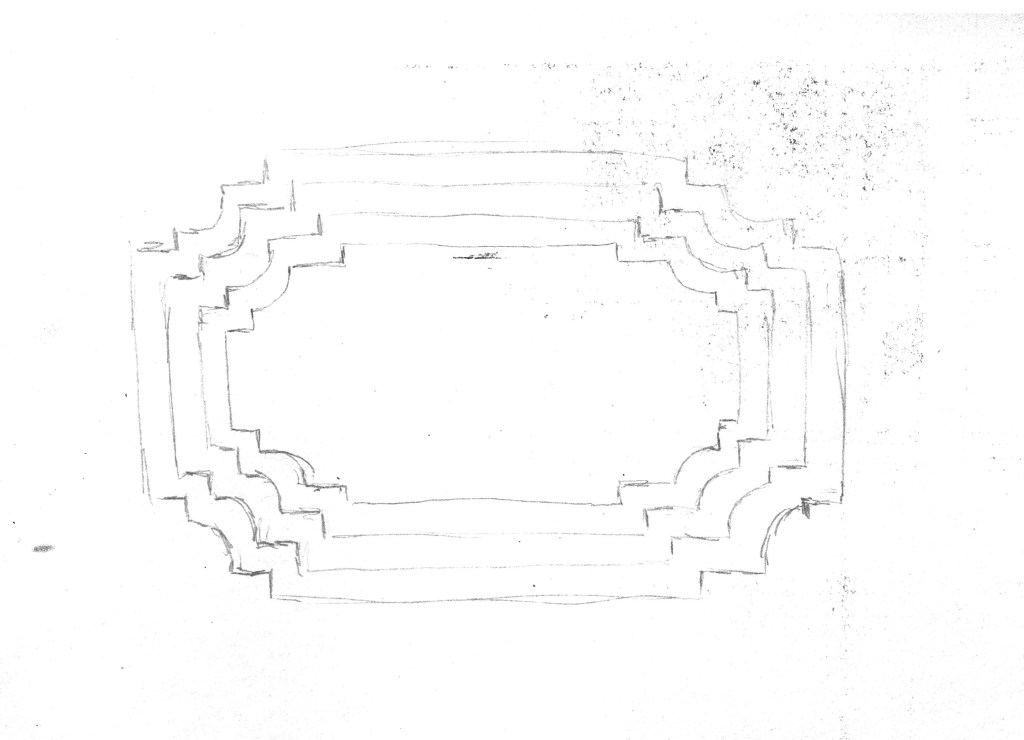
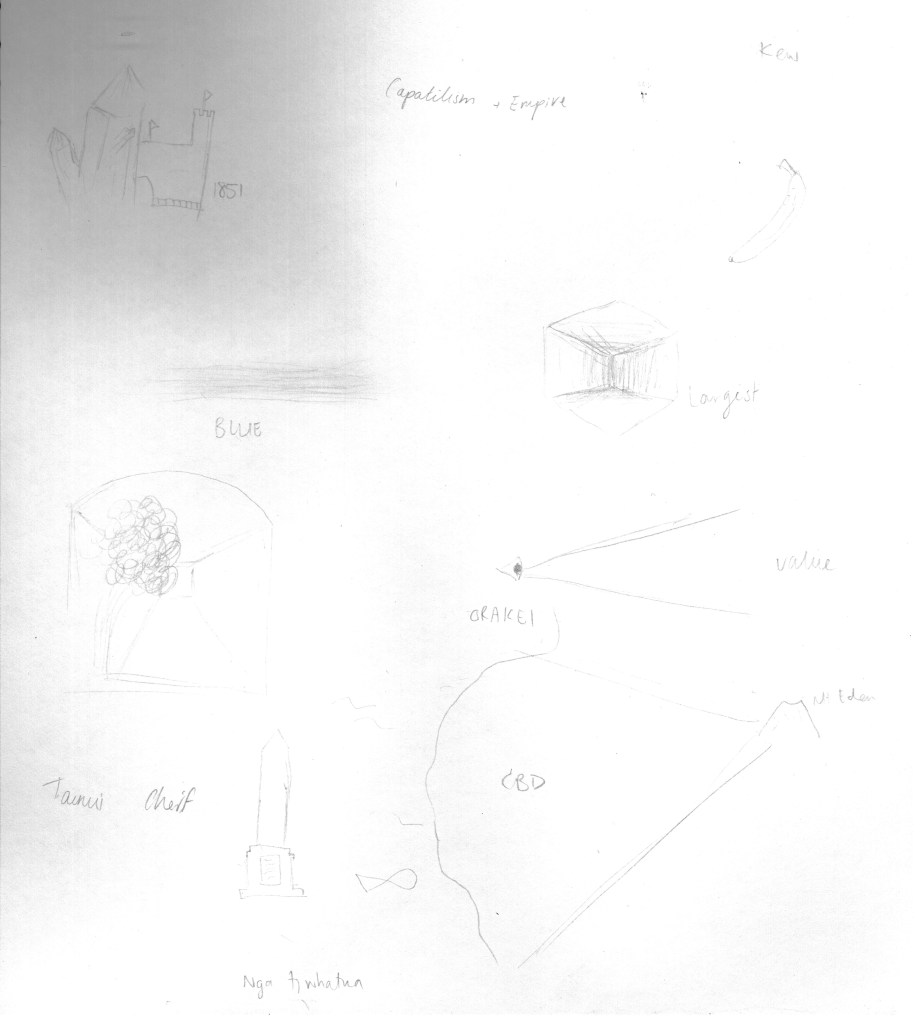
After the second site visit I decided to produce some drawings and sketches of anything that came to mind to help me get a better grasp on how I want to move forward. I often really struggle to move forward and develop ideas when I start to get stressed and start thinking ahead too much about what my next five steps are going to be. It makes me shut down and I really struggle to get back moving again. I find that I work well and am able to find my feet again if I can clear my head and forget about what process and steps need to be taken in order to achieve an end goal. So I decided to do some sketches that related to some of my ideas.
While I was at the gardens I picked up a fallen flower and pressed it in my visual diary. Here are some of the photos I took of it to get some ideas flowing.
OPACITY
DETAIL
COLOUR
OVERLAP
LINES
TRANSPARENCY
After that I began to explore some ideas through drawings. I really liked the print the flower had left in my book from when it was pressed so I explored the veins and lines it left with coloured pencils.
This week we visited the Wintergardens again to look at the space in terms of our positioning and our project. I was still feeling a bit lost about a specific concept I wanted to explore. I have so many ideas and there are so many aspects of the site that intrigue me, but I am finding it difficult to pull these ideas together to create a strong concept and context and a stable positioning in the site.
When we got to the Wintergardens we broke off into our study groups. It was really good to see where everyone was at and see how their ideas may work in the space. It was also really good to be able to give my peers a fresh set of eyes and help them explore their concepts in a way that they may not have considered before.
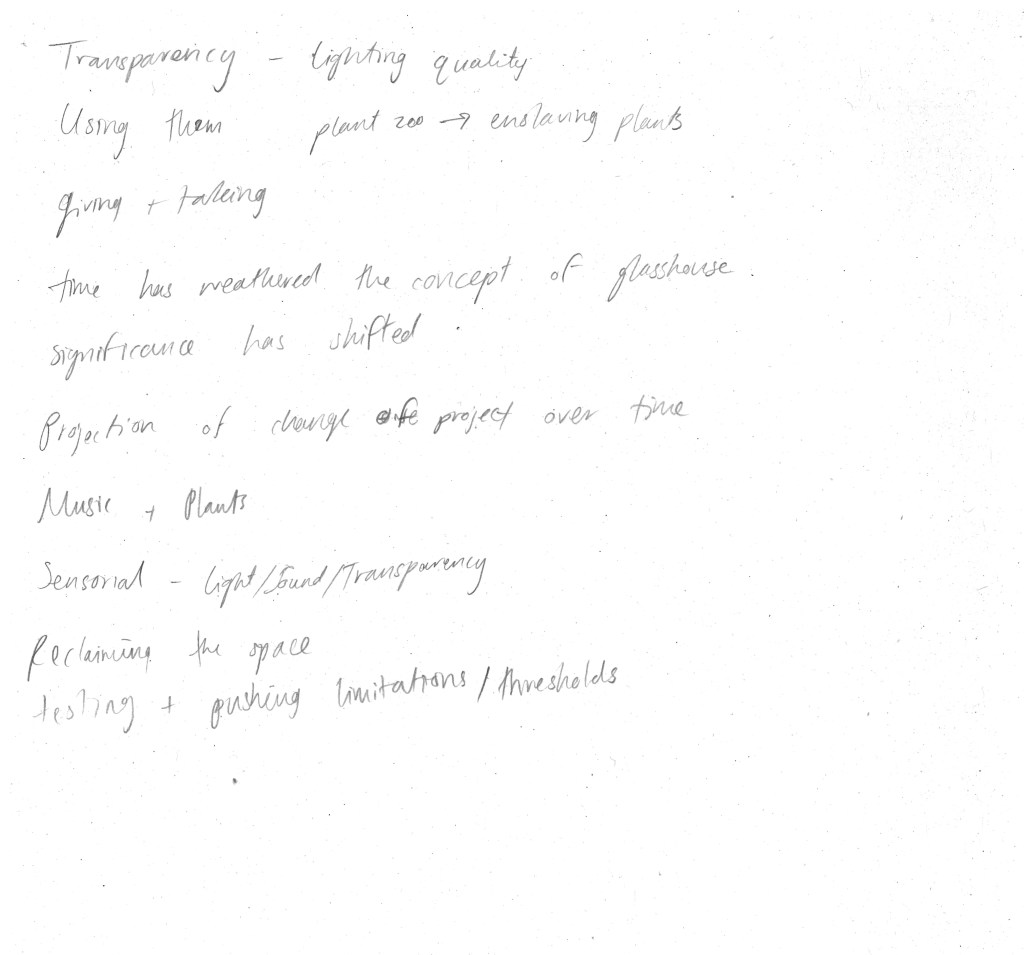
I presented my multitude of interests in the site and mentioned how I was struggling to get a rasp on a main idea that I could focus on and explore further. I got some really good suggestions on how I could explore these ideas at the site. I explained my interest in the social purpose of the site and how that has changed over time and there were some key phrases that were mentioned that really intrigued me; time has weathered the concept of the glasshouse, and the significance has shifted. I also explained this idea of curated nature and being encapsulated as well as the trapping of plant life and them escaping contraints. The visual quality from the outside of the glasshouse with the plants pressing against the glass was something I found very intriguing from the begining of this project. My group suggested looking into the transparency and lighting quality as a way of exploring this idea or exploring the idea of reclaiming space and testing/pushing limitations and thresholds.
I mentioned that I had this initial idea of a educational/exhibition space where people can come to study or work around plants and there would be an emphasis on how the plants can benefit us on a psychological level. It would be a raised are/platform in the glasshouses where people could sit nd work and their would be a selection of seed with descriptions of the benefits of said plant that people could take home and grow these plants to create a healthier at-home workspace as these are now more important than ever in today’s climate. This idea was established on the concept of how although the structure has stayed the same, the social purpose for it has changed significantly since the Wintergardens were built. It is a way of looking at how social views have changed over time and specifically in terms of plants. Although I like this idea, I feel as though it isn’t established enough on a concept or context and feels very surface level. I was given some really good ideas to explore and develop this idea by my group. They mentioned different ways to look at the plant life. One suggestion I really liked was the idea of creating a sensorial space that includes light, sound and the idea of transparency (previously discussed) and also looking at the relationship between music and plants. There was also a point highlighted about the idea of giving taking between humans and plants and how this can be explored or looked into. Then there was a suggestion to look at the plants and this idea of encapsulating and trapping in a different light. I could explore a these ideas in a darker way rather than bringing to light the positive side of things. There was the idea of using the plants and treating the glasshouses as a plant zoo that enslave plants for our benefit. I had never really looked at it in that way. I could also explore a sensorial space but in darker manner.
There were so many good suggestions that helped develop my preexisting ideas about the space and it has given me a lot to think about in terms of what hunch I want to follow and what oath I want to take my project down.
This week we also got to do some work in the workshops upstairs. It was good to have set times to go up with a group because I often feel very out of place in the workshops, especially the wood workshop. It was good to go in and get my confidence up in using equipment and working in the workshops.
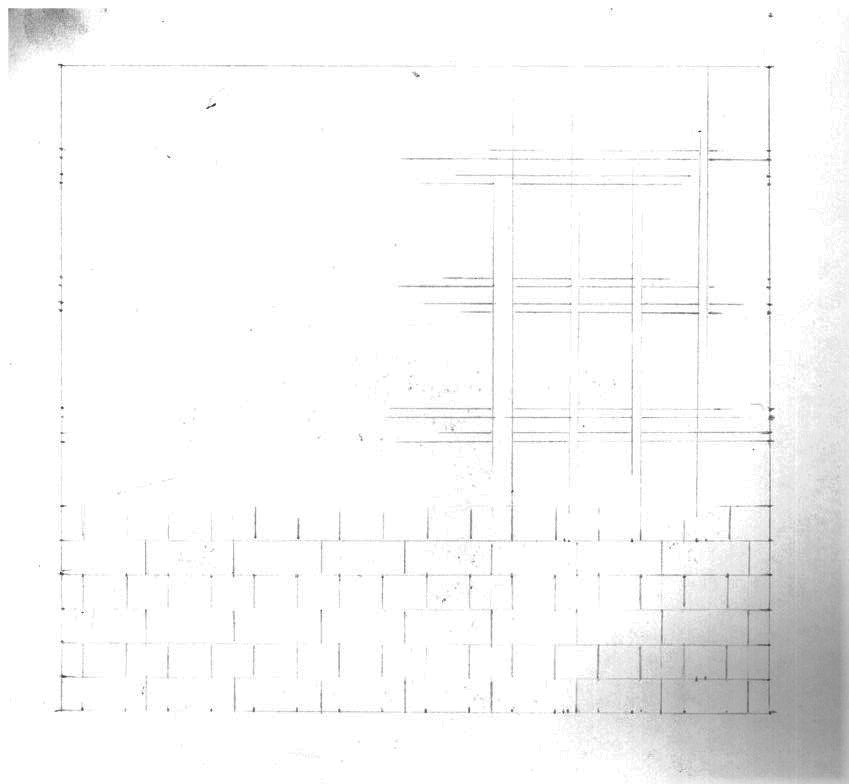
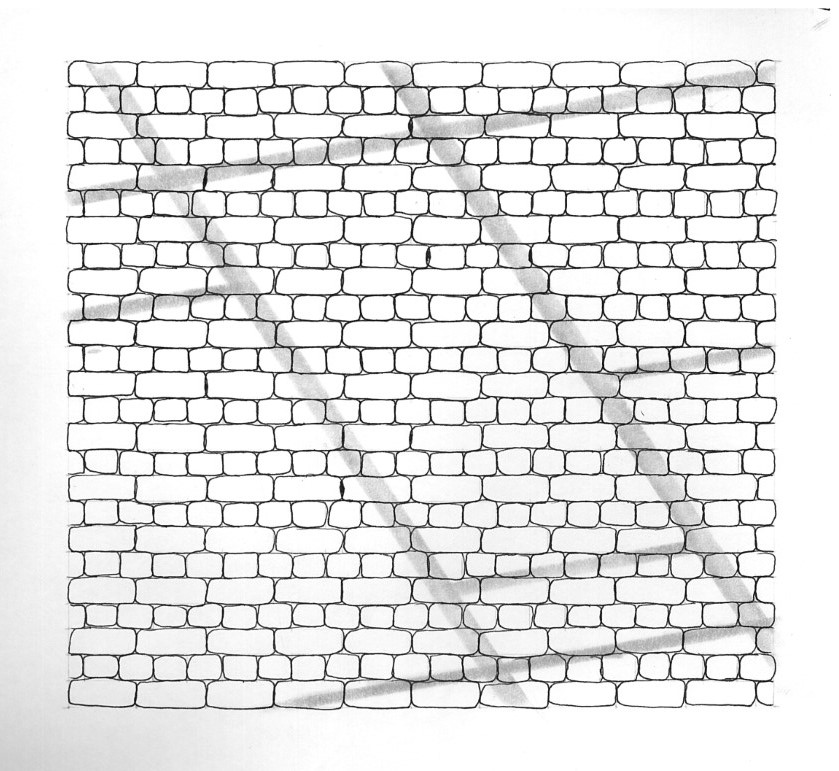
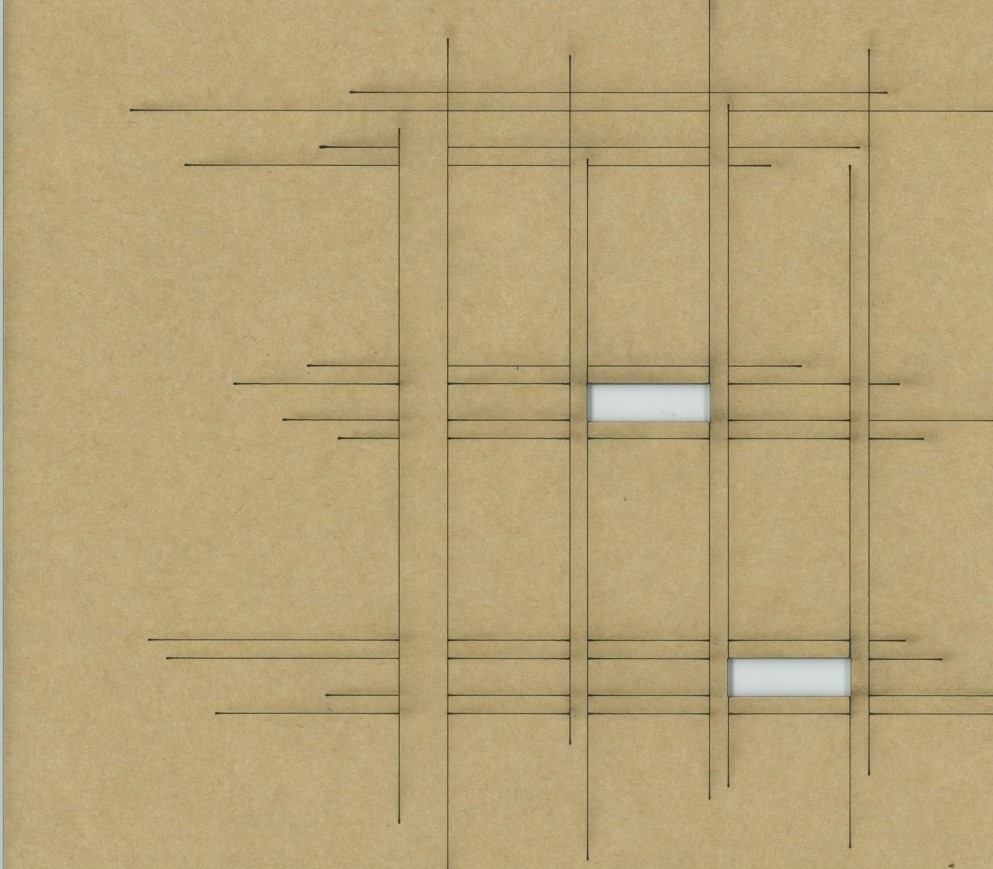
I designed a couple of grid patterns inspired by my research at the Wintergardens.
I quite liked the first grid because it explores my ideas about the site better whereas the second one explores lighting qualities in the space. I like how the first sketch intertwines two grids I found prominent in the space whereas the second sketch is more of a replication of overlapping grids I found in the space. I also just decided to draw the second grid to allow me to explore different ideas and hopefully gain something from it.
On the Monday we went to the wood workshop where we explored some of the different tools that were available. After drawing a more simplified version of the grid on my piece of plywood that they supplied us, I used the bandsaw and a range of drill pieces to create and explore my grid.
On the Wednesday we went to the laser cutting lab and got to learn how to create something with the laser cutting machine. Prior to this visit I drew a simplified version of my original grid on Rhino and differentiated what lines I wanted cut and what lines I wanted engraved on the piece of wood with different colours in the Rhino file.
It was really interesting to learn how the machines work and see what I am able to do with them. I had never been to the laser cutting room before this workshop but I have always wanted to go up and use the laser cutter so this really helped me take that first step.
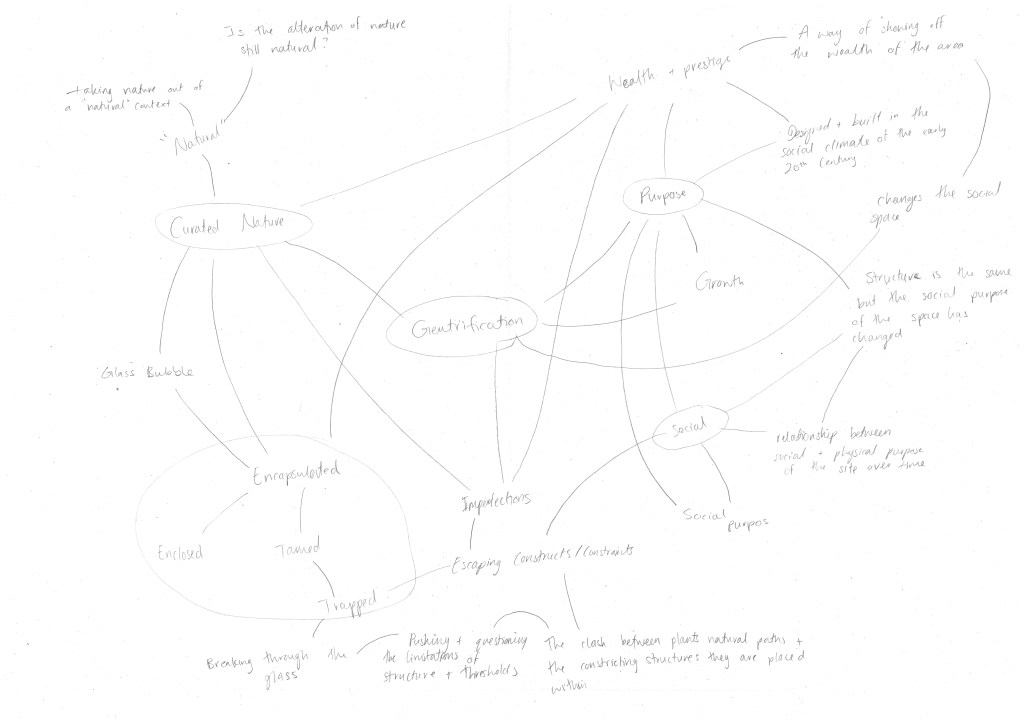
This week I developed my mind map. The visit to the Wintergardens helped me expand and gain ideas that I had begun to think about through my research. The mind map has allowed me to organise my ideas and consider the importance of each in my positioning on the site.
Mind Map
My main ideas I want to explore further are the headings that are circled. There is quite a few of them and some of them are quite varied but I think this will give me a good opportunity to explore a multitude of ideas before I narrow in on one particular concept.
This week we finally got the chance to visit the Wintergardens. This was the first time I had been to the gardens and it was nice to be able to see it in person. I find it difficult to work with and fully grasp the essence of a space from a series of image and videos; it is so important for me to immerse myself into the space to gain a better understanding of the experience of the space. Also, the simple things such as the way the site sits on the land and how its surroundings fit in to context were hard to get a real sense of while being in lockdown.
Below are some photos I took while on site.
I also did some sketches of some aspects I found intriguing on the site.
The main aspect of the site I found most intriguing was the contrast between plant life and manmade structure. I have a fascination with how these two exist and resist together. My initial encounter with this was the West side of the gardens on the outside of the Tropical House. There was a certain narrative being told by the way the glass and plants were colliding; it was an interesting combination of calmness and desperation.
I’m still not sure how I’m going to implement these ideas in generating a concept for my project but visiting the site has given me a really good opportunity to see the site in a different light and allowed me to grasp some initial ideas that will help guide me through the project.
It was so good to be back on campus this week and get back into the studio space. Carl came to talk to us about the site and we explored note taking through a visual sense. It was interesting to go into more depth about the history of glasshouses and understand the drivers behind them further. What I found particularly interesting was this idea of symmetry and curated nature being surrounded by a more organic nature, almost like two separate worlds divided by hierarchy and status.
Context Talk Notes
Because the purpose built gardens and greenhouses were a sign of status and wealth for people, that hierarchy became projected onto the plants; those in the glasshouses worth your time, exotic, whereas those that naturally grow outside the walls are of smaller importance. It’s interesting to see how our views as people has changed over time.
We also did some work on contexts in terms of the site; what we can look into and what each of them means. We went over historical, cultural, social, environmental, technological, sensorial, aural and material in a group exercise where we talked about and listed parts of the site that were under each context. This was good to get ideas flowing and helped with looking at the site in a more in depth way.
With this project being so open and there being such a wide range of opportunities and topics to research, I decided to keep an open mind, pick one point to research and document my train of thought and research as it branches off and I focus in on the main points that interest me. This will stop me from being overwhelmed and will also allow me to gain some initial ideas and get a better understanding of how I want to explore and interpret the site.
Because the Tropical and Cool houses are the main structures in the gardens and they were the aspect of the space that initially grabbed my attention, I decided that glasshouses would be a good place to start researching. I began with the history of glasshouses and found this diagram (see below).
It was very interesting to find out that although greenhouses/glasshouse were popularized in the mid to late 19th century the first known greenhouse was the Roman Greenhouse in 30 AD. While discussing this with my breakout group this week, we came to the conclusion that the Industrial Revolution played a massive part in this development of the structure. Because of the time and cost of glass making, glasshouses were very expensive to make but with the Industrial Revolution, materials became cheaper and faster to produce and the tax that had previously been on the purchase of glass was lifted.
Today, glasshouses don’t necessarily express wealth with most glasshouses being built for commercial production of produce or personal produce on a smaller scale. Most larger public glasshouses were constructed in the mid 19th century to early 20th century. It’s interesting to see the purpose behind the structures change over time and how this is possibly influenced by societal changes. In the Victorian Era when greenhouses became more popular, they were a sign of prestige and wealth whereas greenhouses built today are built more for their functionality in growing plants and supporting the hobby of doing so. But what does this mean for the Auckland Wintergardens. The gardens were built as part of an effort to make the domain more “desirable” and gentrify the area as well as a commemoration of the Industrial, Agricultural nd Mining Exhibition. Keeping with the theme of a symbol of wealth and prestige, these developments and “improvements” to the domain were in response to the area becoming more populated with the wealthy and to make it desirable for such people.
This idea of wealth and prestige symbolism and the gentrification with neglect to existing factors really interests me and is something I want to explore further in this project. These are very social and political concepts that surround greenhouses and the Wintergardens but they also make me think of their correlation to ecological notions. In the Victorian Era, glasshouses were a way to display and showoff exotic plants and therefore showoff wealth and status. The Wintergardens were a way to display and showoff a wide range of plants to alter, create and attract a new type of behavior and people that was deemed acceptable. The symbols that glasshouses and gardens stood for at that time were used to alter the intangible aspects of the public space. The plants and the way they were positioned in the space were a way to display a shared perspective of society. This made me consider the change in purpose of the plants since that era like I had done with the glasshouse structure. What does placing plants in specific spaces do in today’s social climate? Why do we chose certain plants and why do we position them the way we do? What are the differences between the Victorian Era’s purposes and choices regarding plants in a designated space to our purposes and choices in 2021?
Many people, especially in urban environments, will have indoor plants. I am interested in the why, specifically the psychological and mental benefits plants have on people. I want to explore the connection we have to nature and revisit the purpose of glasshouses and the Wintergardens and reconfigure this in the existing space to better benefit today’s social climate and views.
While doing this preliminary research, I also wanted to explore some glasshouse examples and explore what I found interesting and intriguing about them.
The first glasshouse I looked into was the Palm House at the Kew Gardens.
What I find fascinating in this glasshouse is how engulfing the plant life in the interior is. Some glasshouse have wide open spaces or are clear overhead of plants which in its own respect can be stunning as it highlights the beauty of the architecture but also articulates a sense of disconnect and separation of different elements within the space. What I love about the Palm House specifically is that because of it’s architectural height, it allows multiple experiential levels. This allows people to move in a more organic (less linear) way through the space. Also, the way that the plants and trees are organized in an organically overwhelming way enables people to be enveloped by their surroundings and give a truer sense of being within and being a part of the organic space. I find that in most glasshouses the plants are organized in a very articulated and curated way that creates a stronger sense of viewer and the viewed rather than existing as one entity.
What I really like about this glasshouse is the way the space is used. It was originally built for Austrian Emperors but has been changed to a place for people to dine with cafe’s, restaurants and bars while also still keeping some of its garden qualities. What I find the most interesting is the combination of spaces. It isn’t just an old greenhouse structure renovated into a series of bars and eateries, the organic quality of the glasshouse and plants still continues to infiltrate the space. I like how it gives it a sense of occupying the space rather than overtaking and repurposing the space. As I talked about previously, this glasshouse is a perfect example of the change of purpose of the space in relation to the social climate.
I also looked at some more contemporary approaches to glasshouses including the glasshouses at the Bombay Sapphire Distillery in Hampshire, England.
Designed by Thomas Heatherwick, these glasshouses were built in 2010 at a gin distillery in England. There are a couple of aspects that really interest me about this work. What first caught my attention was the structure itself. Heatherwick has really accentuated the curved framework sometimes found in parts of large traditional glasshouse structure. It is also interesting to see the similarities between these sculptural structures and gin balloon glasses.
What I love most about the shape of these glasshouses is how organic and flowing they are which also helps in depicting their purpose. Once I started researching this project I found that the glasshouses have a functional purpose for the distillery. They have been designed and installed in a way that they themselves will operate as gin distilleries and also will help in heating the buildings already on the site with the hot air that is produced during the process of distilling. Because of the heat, the glasshouses will also be home to a variety of tropical plants that are used to make Bombay Sapphire Gin. This glasshouse design not only creates a aesthetic attraction to the space, but it also operates as a functional part of the distillery, giving it a physical purpose in the space other than a place for people to come and look at tropical plants.
While researching these glasshouses I looked a Heatherwick’s portfolio of work which I found very interesting and intriguing. I would love to look into his work further and use it as inspiration as I find it mesmerizing. I’m not sure if I will necessarily use his work as inspiration for this project as I am still not sure where I want to take this yet but he is definitely a designer I will keep in mind for further reference.
Another modern glasshouse design I found intriguing was The Glass House by Santambrogiomilano in Milan, Italy.
Sanatambrogiomilano is a design company in Italy that works specifically with glass. They have designed a couple of glass houses, their first one being built in 2010. What I find so intriguing about this design is how the words glass and house are looked at more literally than a traditional glass house. Although the glass houses were built as a means of housing people instead of plants and the purpose of the space is almost opposite to that of traditional glasshouses in terms of privacy and public, they are still linked in terms they goals they are trying to achieve. Both Santambrogiomilano’s work and traditional glasshouses articulate a connection between person and nature.
Another fascinating design I found was a structure in the interior of the Bay South Garden in Singapore.
Unlike prior research, my interest in this design is more on the display of plants than the glasshouse structure itself. Having the plants on a vertical plane rather than a horizontal plane creates a wider range of experience as it forces the occupants eye to look up. This is something I have explored in previous projects and I find it quite interesting the how social climate and can influence the way we experience a space and how design decisions can alter or challenge the subconscious customs people display in a public space due to social expectations. Another interesting aspect if this design is the falling water. In many public gardens and glasshouses there is often a body of water, generally a pond. What I find particularly interesting about this design is the movement of water on a vertical plane and the sound effect this would create in the space. When I think of purposely designed public gardens, I associate it with the quiet. I like how this garden space incorporates organic sounds and although we can’t hear it, the image describes it well.
I am still not sure what approach I want to take for the project yet but I think this research has given me a lot to think about. I’m quite interested in the change of the purpose of the space as a result to social climate and what the Wintergardens mean today. This also relates to the differences and similarities of attitudes towards plants and nature between when the gardens were built and today.
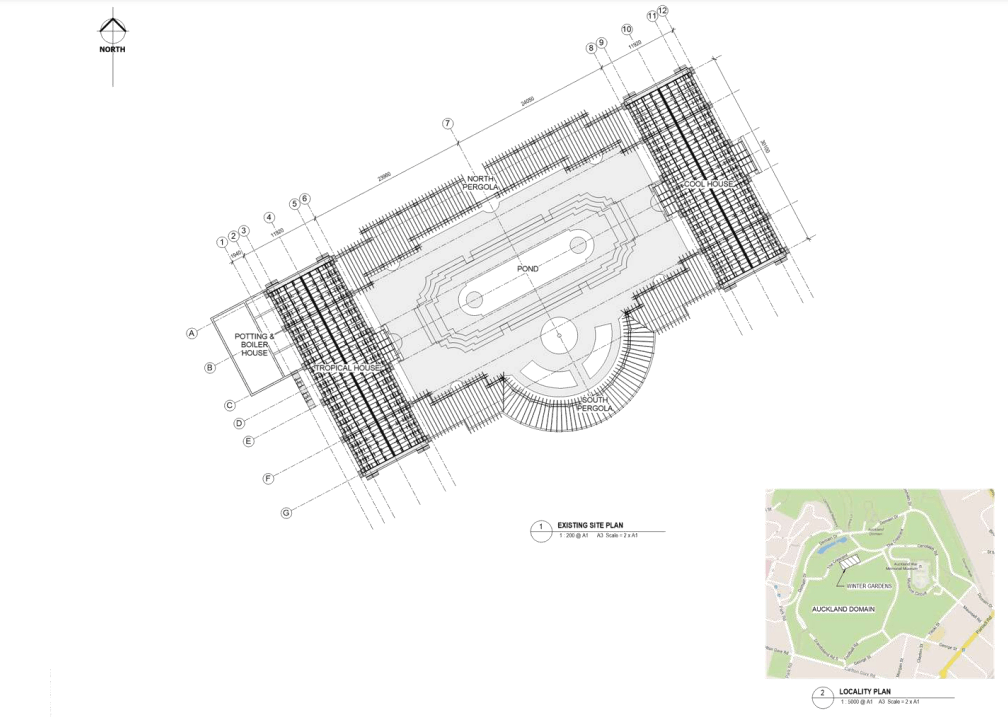
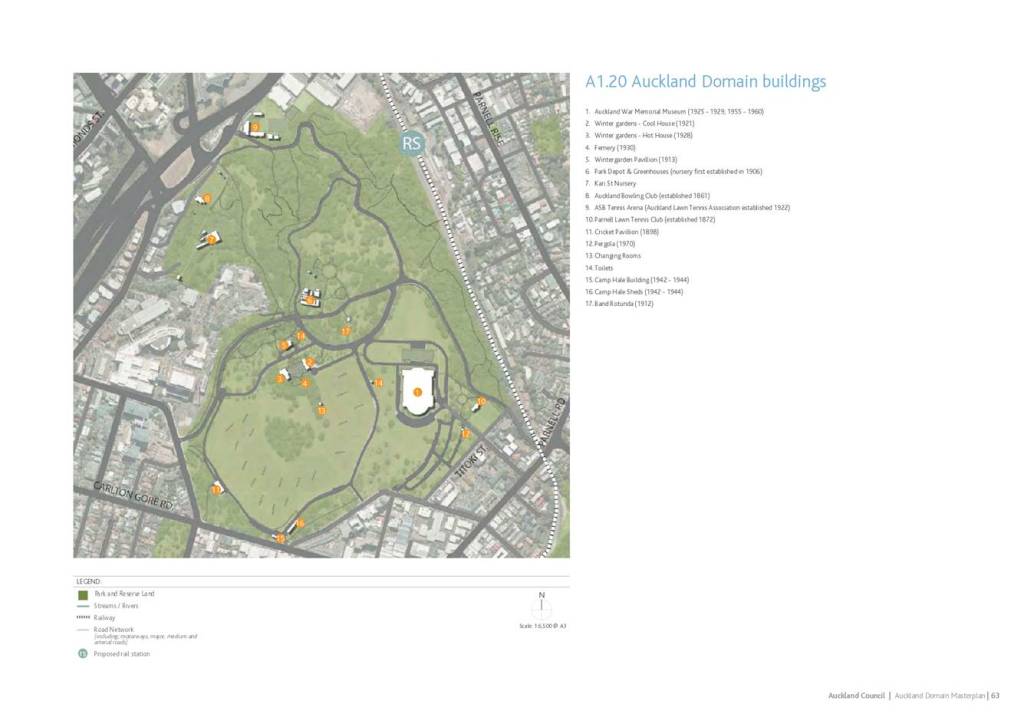
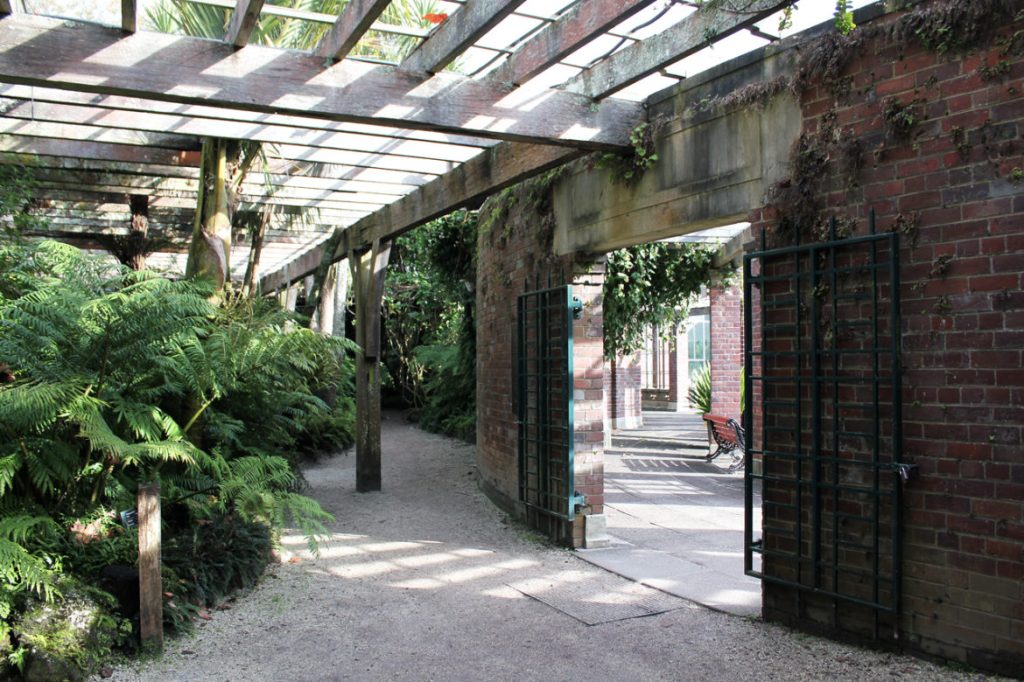
The Auckland Wintergardens is located on the Auckland Domain grounds. The gardens consist of two Victorian style glass houses, one of which is heated, a courtyard with a sunken pool, a fernery, and pergolas connecting the structures and layout (see image below). The entrance is north facing with the fernery to the south of the gardens. Much like the rest of the domain and facilities, the gardens are often used for weddings, photography and other events.
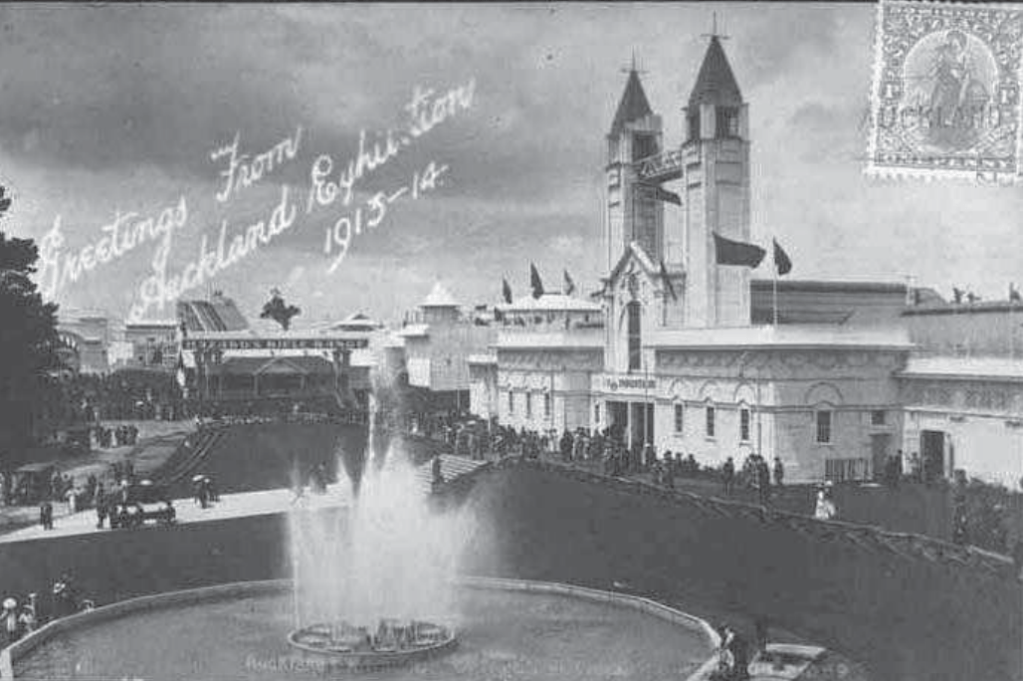
The Domain Wintergardens were designed by William Henry Gummer and Charles Reginald Ford of Gummer & Ford and began construction in 1916. The gardens were a commemoration to the Industrial, Agricultural and Mining Exhibition of 1913-1914 as well as a response to the domains attraction of “undesirables”. Although plans for the gardens had gone head together, the Temperate/Cool house was built first, being finished in 1921 while the rest of the gardens was constructed later in the 1920’s. Other modifications and additions such as the statues and sunken pool were conducted later in the 1940’s and 1950’s.
The main structural material properties are glass, barrel-vaulted steel and brick which play a part in creating the indoor and outdoor spaces of the gardens. The Domain Gardens became a Historic Place Category 1 in September of 1989.
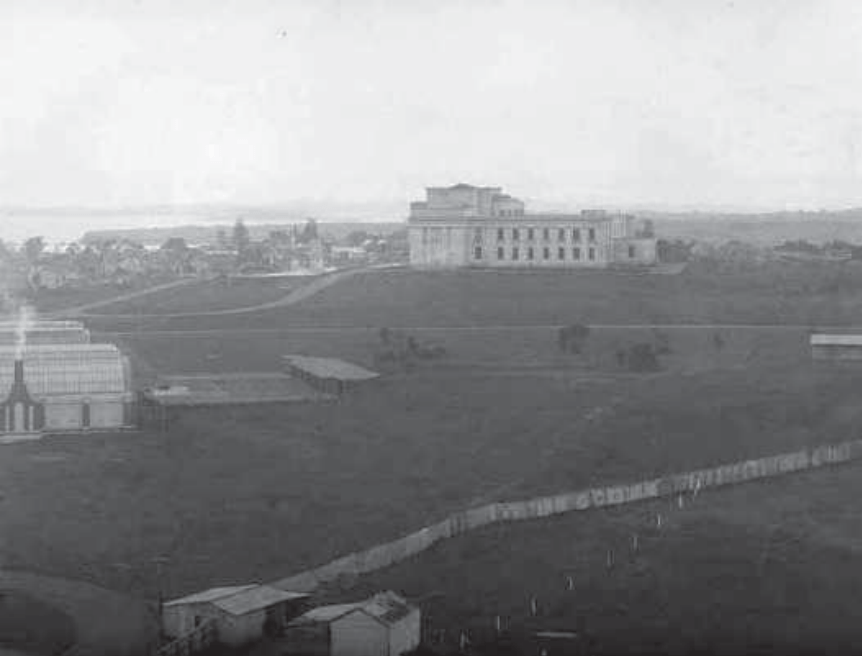
As mentioned before, The Auckland Domain Wintergardens are located on the Auckland Domain. The domain is Auckland’s oldest park, the land being put aside in 1841 (the year following the signing of the Treaty of Waitangi)as Crown land and hen being opened to the public as a place of recreation in 1844. The domain is located around the cone of Pukekawa, an extinct volcano.
Along with the Auckland Wintergardens, in the 1920’s the Auckland War Memorial Museum was built on the domain to rehome the Auckland Museum and to also pay tribute to the fallen New Zealanders from WWI.
In the 1940’s, Auckland Domain was used as camp for American Troops (see image below). Today the domain is used for many different activities and has a range of facilities available as on of the largest parks in Auckland.














 Spatial Design by Ciara