On Tuesday we did an individual mapping exercise to help consolidate our ideas. Below is my mind map/flow chart of ideas I am exploring in my work.
Mind Map/Flow Chart of ideas
This allowed me to start thinking about key terms and ideas that are communicated and influence my work. Below is an image of my list of thoughts and key terms and ideas.
Key Terms/Thoughts/Ideas
After putting these ideas and thoughts on to paper, we were put into breakout groups where we discussed our mind maps and ideas. I took this opportunity to get some feedback and ideas on how I could move forward with my work as I have been struggling to see how I could develop my idea and design.
I mentioned that I had consider some kind of bench, to create a public feel in the space. It was mentioned that possibly a traditional bench would not be beneficial to my key ideas. It was iterated that sitting down on something such as a bench encourages a horizontal eye-line, more so than that of standing up. It was suggested to design a seating space that allows people to sit and look up, that similar of places such as Stardome.
Another point raised was the walls. They come across as plain and there is a lack of connection between the ceiling and the floor. It was suggested that I have an interactive aspect to my walls as my design is an experiential installation. This would also influence movement and actions within the space and would create positive interactions with the space and the other occupants of the space.
Another suggestion was creating some kind of interaction with the ceiling material. I want the space to have movement as well as the people passing though it and an important part of my design is connecting the public with the space. Not only is a connection made by allowing interaction between the occupants and the main feature of the space, but it also encourages people to look up and consider their movements and actions within the space.
One point that I have been struggling with is by colour palette and choice of colour in the space. Since the beginning of this project, my focus has been on the colour applied by shadow, light and reflection of surroundings. With this said, having artificial lighting forces me to choose and by not making a choice, I am making a decision on colour. A suggestion made by my group was to consider the site colour palette as it already exists. Although my design is not solely based around the history of the site, I do want to allow it to influence some of my decisions as my design won’t exist by itself without any context, impact or consideration of the past, present and future of the site. This is definitely something I will look into and the mood and atmosphere it will create in the space. I also need to define the exact mood I am wanting to create.
A design suggested by one of my group members to have a look at was the Tokyu Plaza Omotesando Harajuku main entrance in Tokyo, Japan designed by Japanese architect, Hiroshi Nakamura.
What I like about this design is the way it incorporates reflection and angles to distort, manipulate and confuse light, image and colour. This is a similar affect to my approach by creating form and volume with the reflective film.
On Thursdays class we presented our surface designs and A3 exercise to our breakout groups. I was able to get some good feedback from this and also different input and ideas that I had not yet considered.
One point mentioned was having the reflected light creep up the walls. This not only would make more sense in a more a physical and realistic sense but it would also help iterate my design purpose. By having the lighting affect projected on the walls as well as the floor, it would encourage the public’s eye-level to subconsciously travel upwards, towards the ceiling.
Another point raised was the lighting. Because the foyer space is dark and has little natural light entering the space, there is a need for artificial lighting. My design didn’t xpress where the light source was and this was raised in the group presentation. We discussed the best placing for the lighting, and with the help of the group, I decided that it was better to place the lighting high up on the walls, projecting upwards. It was brought up that if the lighting was to be placed in the floor, it would create a distraction and would defeat the purpose of my design; it would draw the public to look down.
As my design is an experiential lighting installation, the consideration and application of it is an important next step in my design process. The lighting will allow me to explore colour, mood, atmosphere and social behavior further.
The last suggestion made was to make a physical model to experiment with lighting qualities and what it would actually look like in real life, not just digitally. This would also allow me to experiment with different lighting qualities and outcomes that I could possible explore in my design.
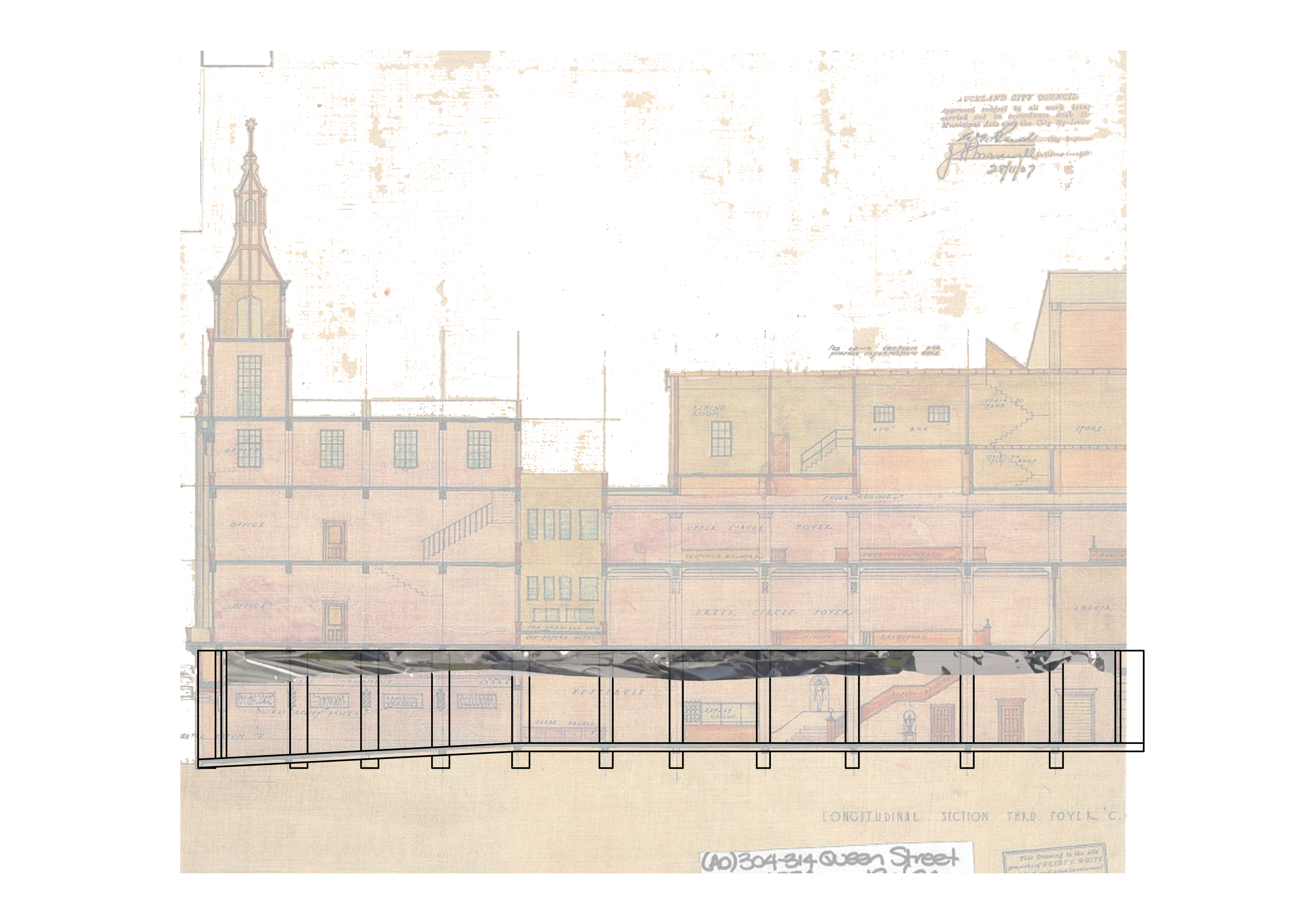
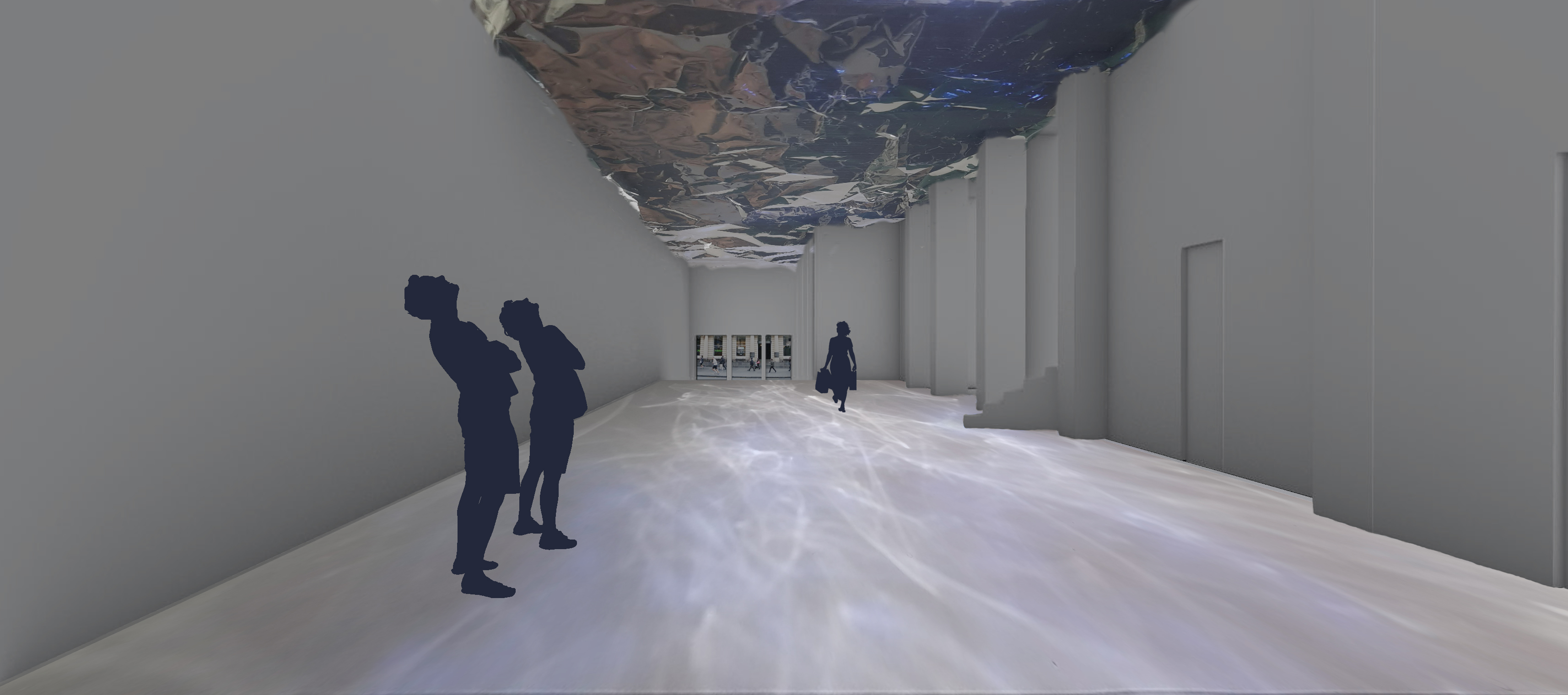
This week we began individual exercises based around exploring and designing a surface for the St Jame Theater foyer space. Based on my previous surface designs, I want to further explore reflection, manipulation and projection of light and shadow. My concept is to have a reflective ceiling with lighting that is projected onto the ceiling creating a similar affect from my previous experiments on the floor.
I have decided that I want to explore the entire foyer space, including the Queen St half that has now been demolished. I have decided that I want the foyer space to act as a public walkway between Queen St and Lorne St. The reason I have chosen this is because I have continuously mentioned and investigated the social behavior and customs in Auckland City and how they have influenced my view and experience of the site. By designing a public walkway, I am able to address, influence, and create social behavior with those who create and enact it. Not only this, but the space acted in this way prior to its closure.
The main social behavior that I have noticed and investigated is this need to look down, avoid eye contact and not interact with the hundreds of people around us if not necessary. My aim in my design is to bring this to peoples’ conscious mind and influence them to change such habits. This is why I have decided to design a surface on the ceiling; to get people to look up. The reflected light is a way to catch the attention of city-goers and encourage their gaze to travel upwards and explore the ceiling surface.
The reflective surface would be shaped to create a volume, like that of my previous surface model. The reason why I have chosen to do this is because I don’t want to create a direct reflection; I want to explore distortion and manipulation of light and image to not only create a more effective projection on the floor that has fluid, moving form, but also to create more interest in the public passing through.
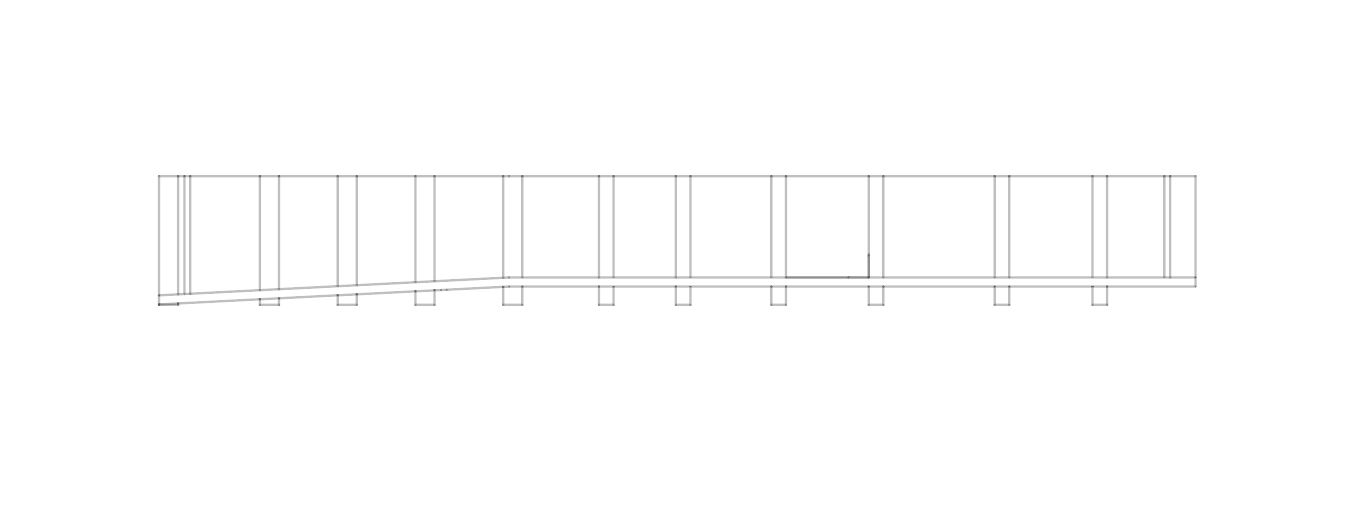
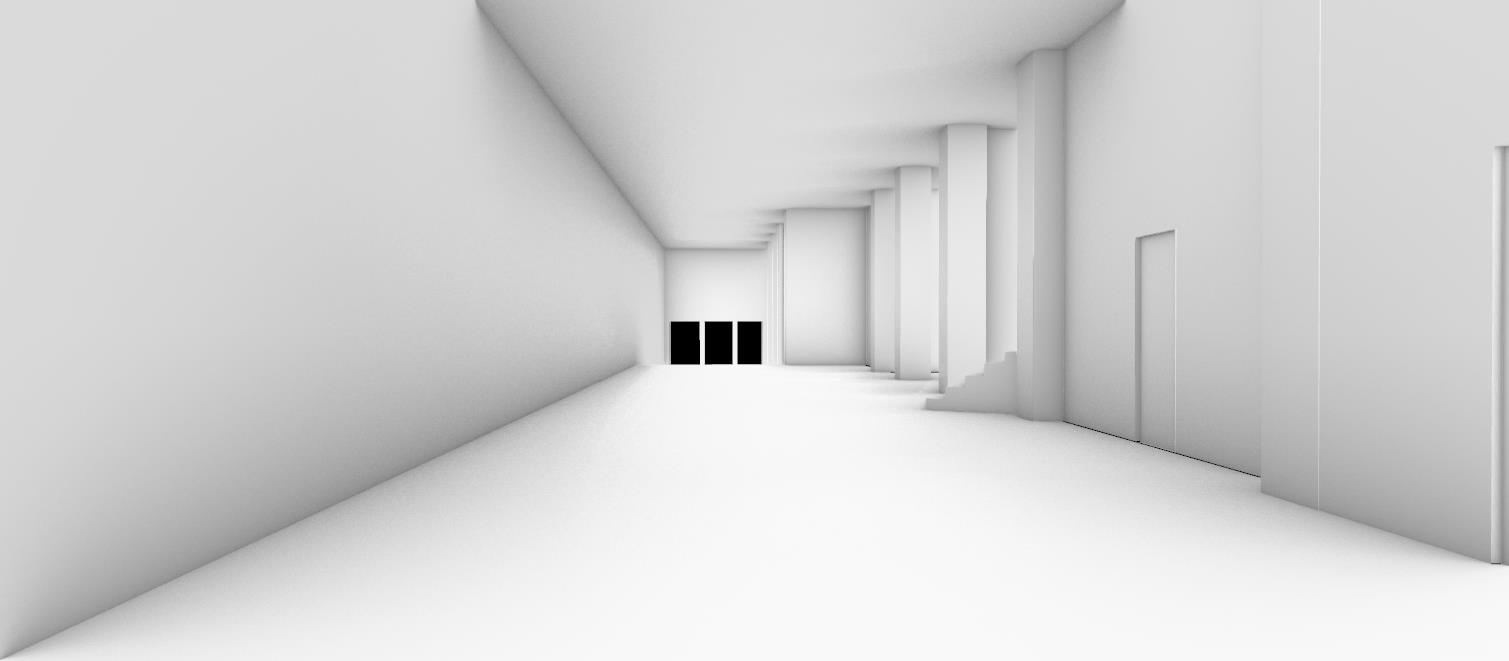
I used Daniel’s base model in Rhino as a starting point. From there I made some alterations. I decided that a plan would not best display my surface idea and location and therefore I focused on getting the line work for a section. After I had finished modelling some further details to help articulate my design and idea, I was able to take the section line work and also a perspective of the space looking from Lorne St entrance towards Queen St entrance. Because this was only an exercise and I don’t have the ability to best get atmospheric perspectives through Rhino, I explored on how I could iterate my design through Photoshop while keeping in mind to make it look as realistic as possible. I used a range of photos of the reflective film, my previous models and the light projected to create an atmospheric perspective from a simple, basic an plain Rhino model. I actually quite enjoyed this technique and found it a lot less tedious, stressful and time consuming than fully rendering in Rhino and found it to be a lot more expressive.
After layering and editing the photos in Photoshop, I created an A3 page and put them together to create my finished surface design.
Below are some of my process work images.
Below is my final A3 surface design page.
I decided to keep the space as it was and not change anything structural because it is acting as a public passageway. Not only this, but I am focusing on one specific surface in this exercise and moving, changing or getting rid of walls doesn’t affect what I am trying to achieve. With this said, I am keeping an open mind as to how I can explore this to best benefit my design further into the design process.
After creating surface designs from by observed surface of the blinds, I revisited my artist models and the aspects of their work that interests and influences me and my work. We were split into groups where we discussed our ideas and how we wanted to approach them. Some of the advice and ideas I was given in the group included exploring the use of a holographic material as well as creating and capturing forms of fabrics through mold making. I quite liked this idea because it expanded my concept of modelling to using fabric to create a form rather than using the fabric as a form.
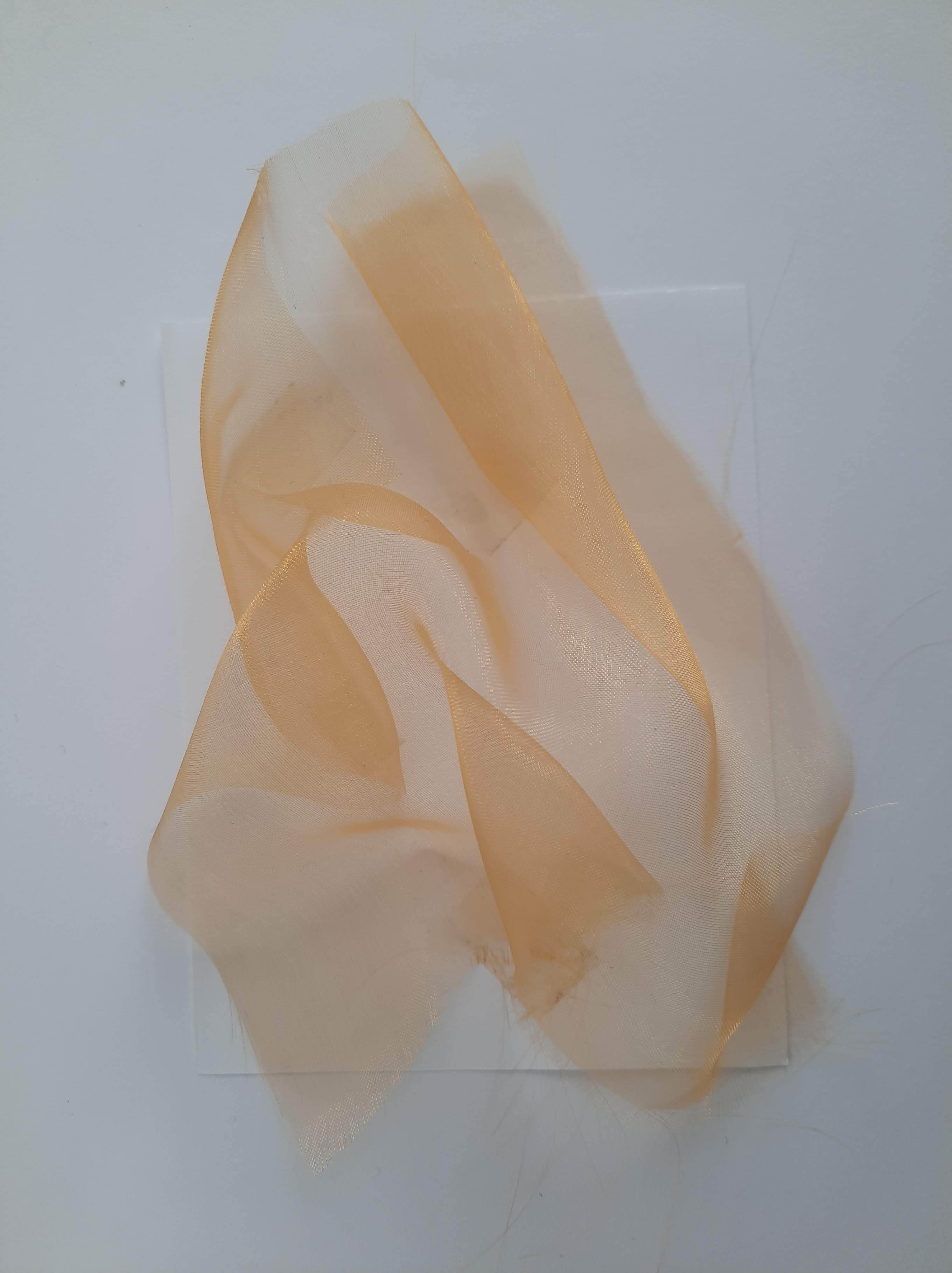
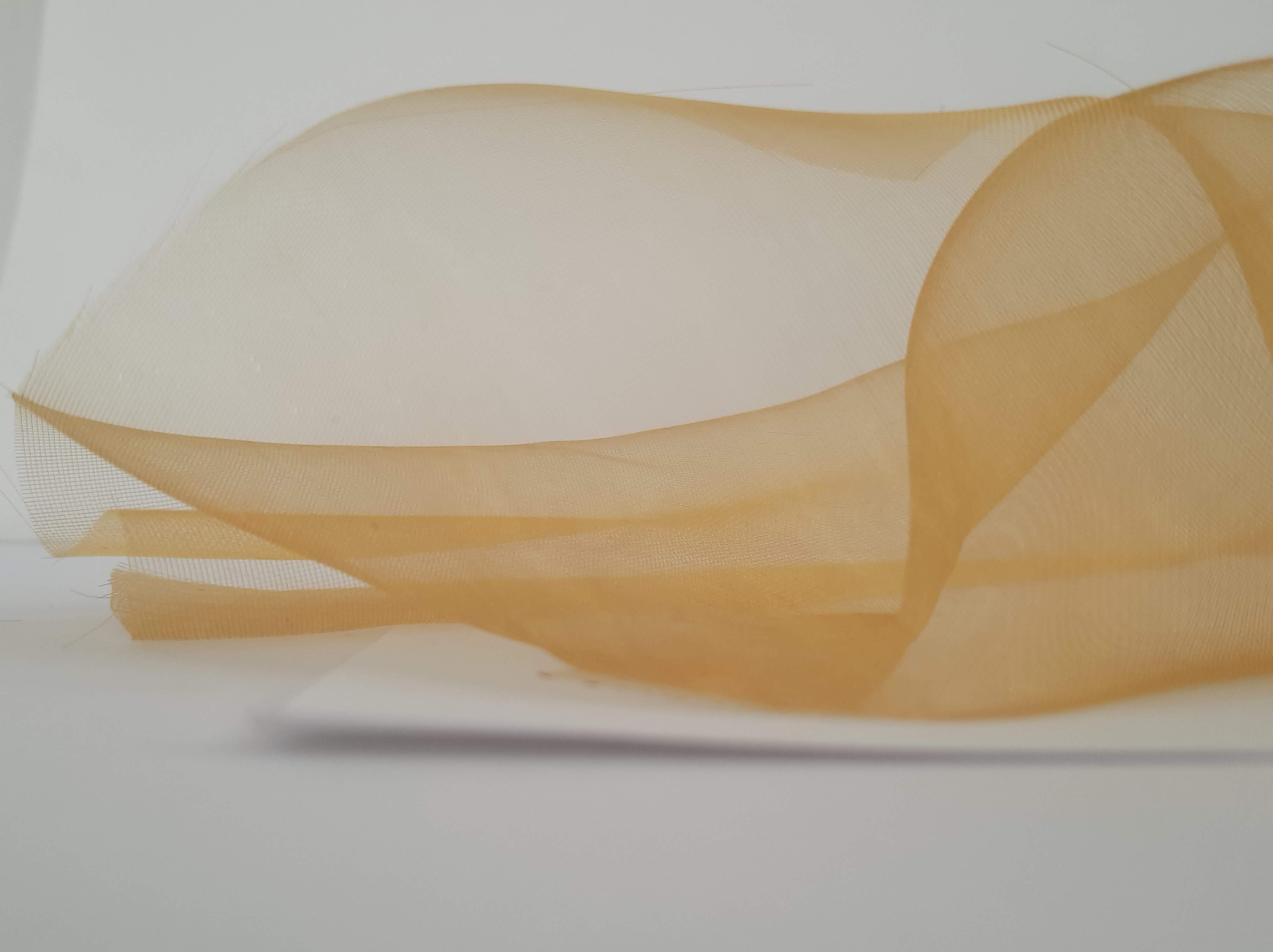
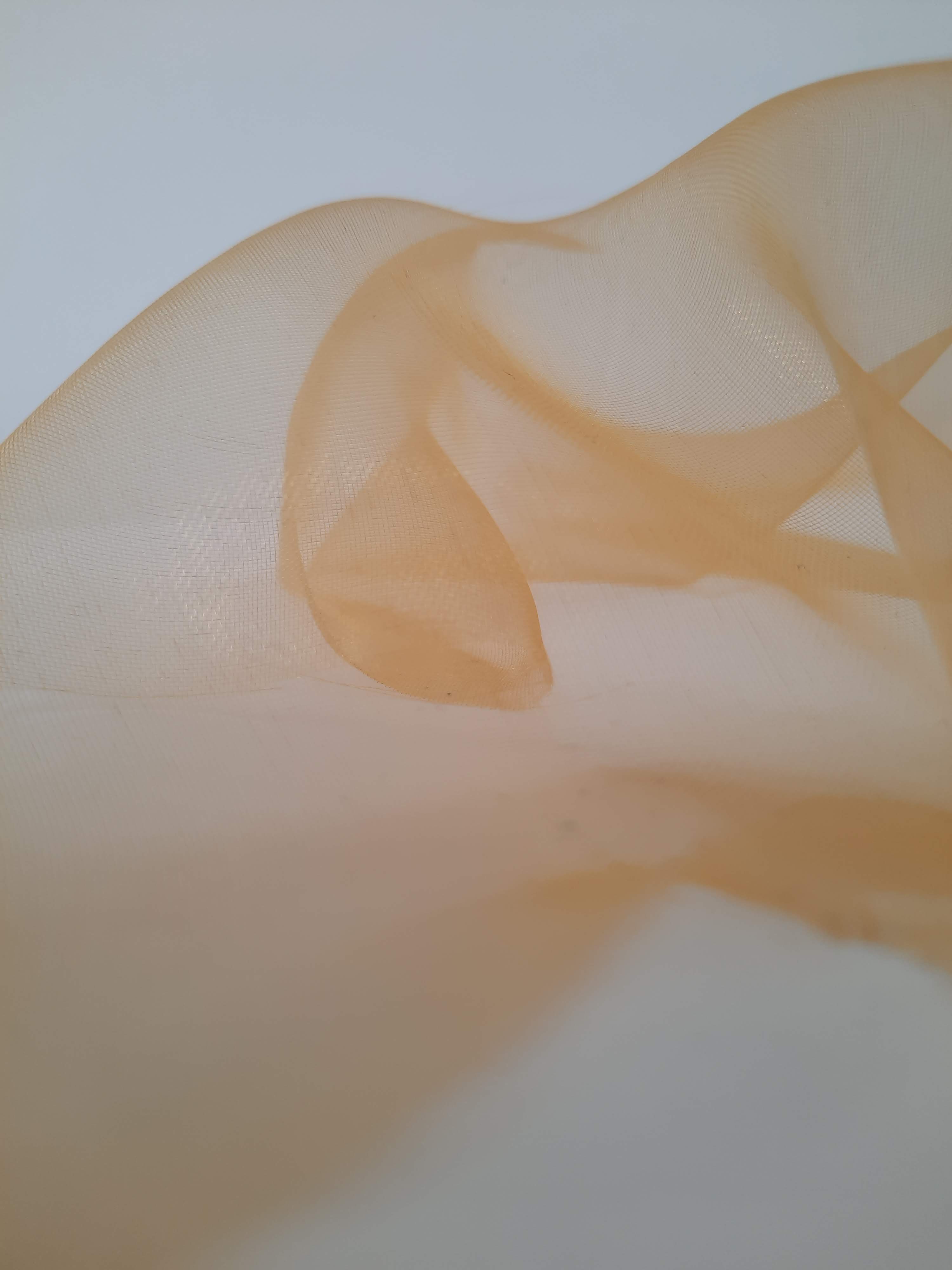
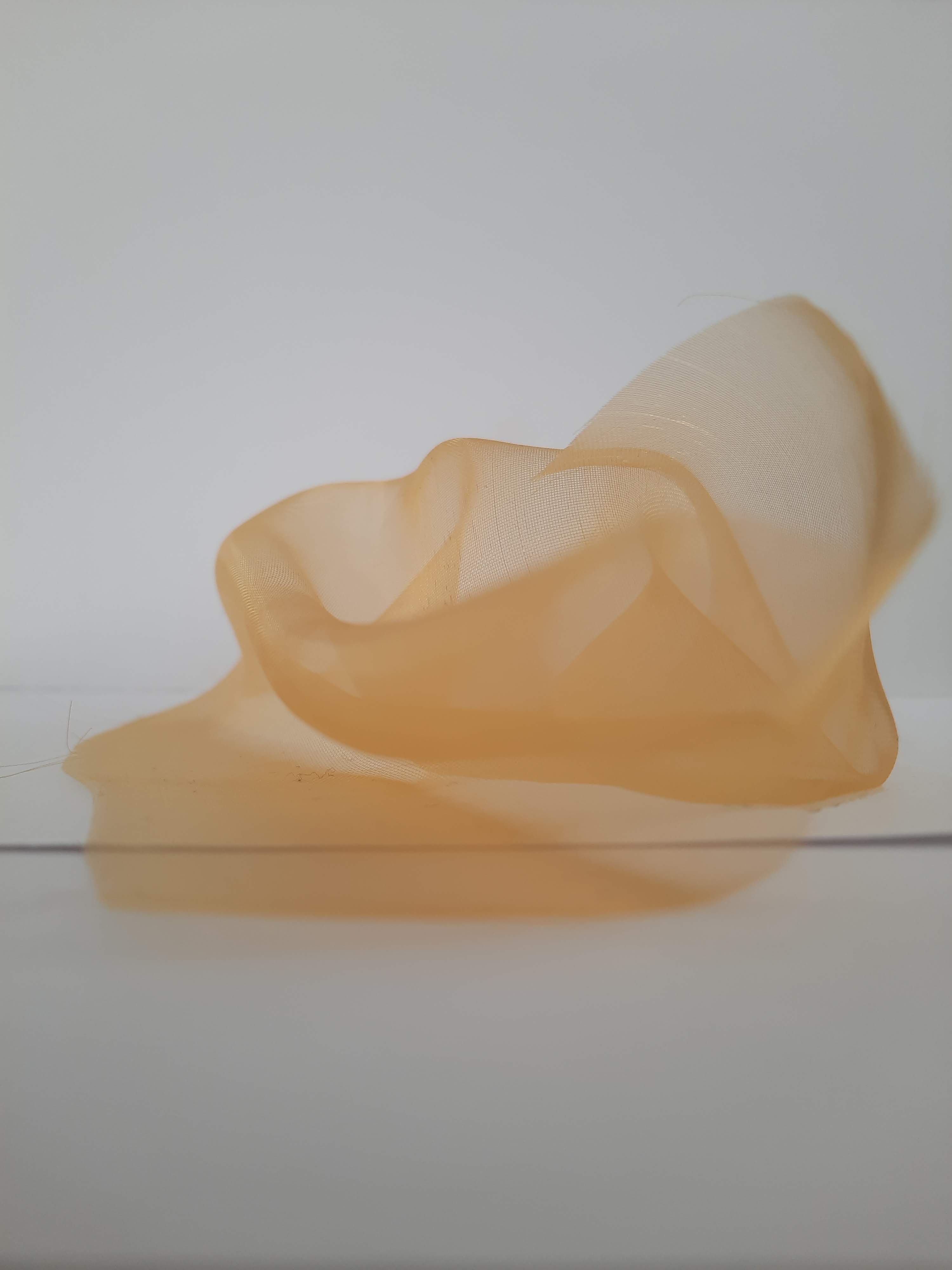
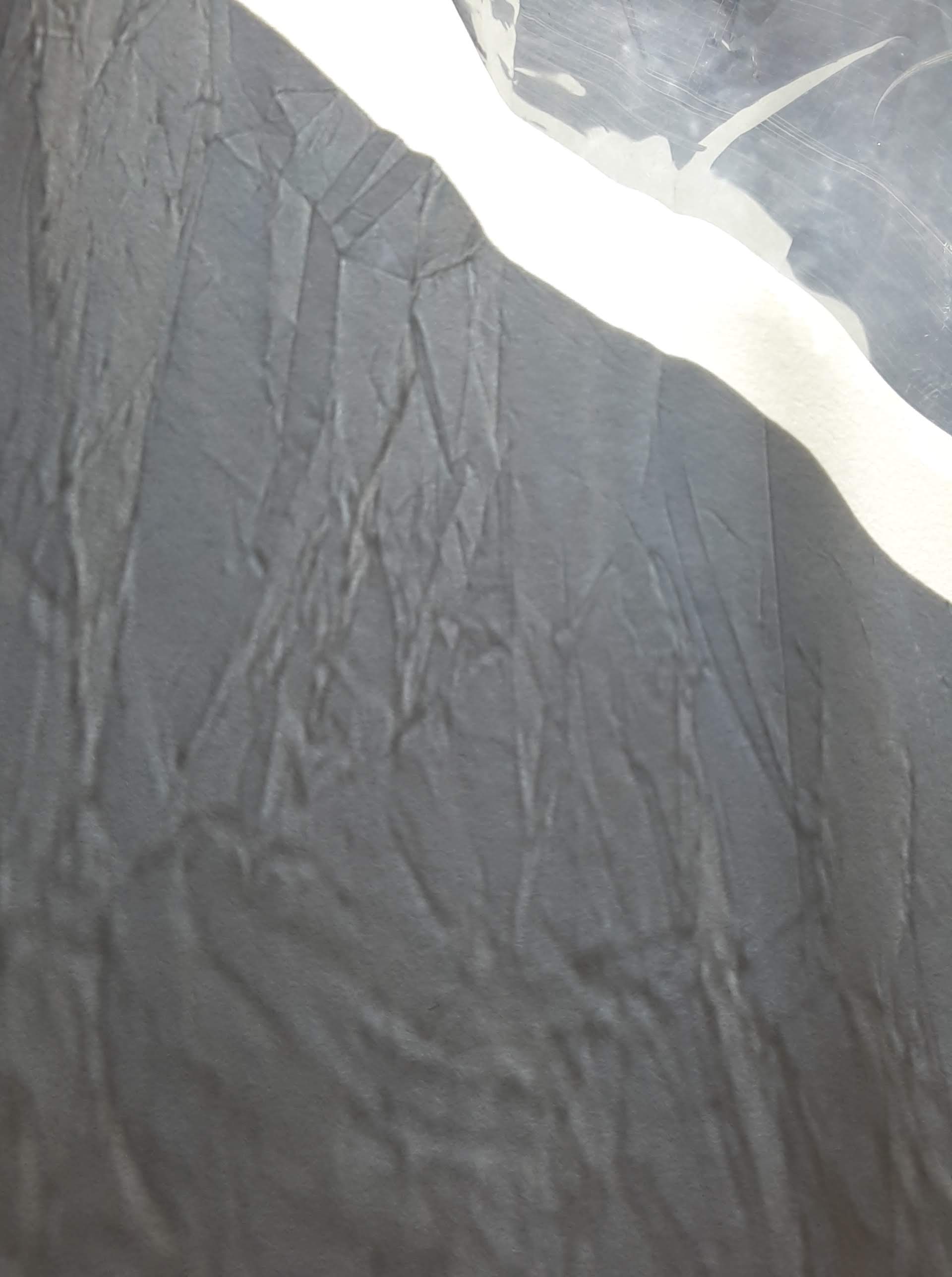
After class, I designed a series of new surfaces that were influenced by the aspects of my artist models that interest me. I first created a surface to explore the form and elegant and soft movement created through Georgia O’Keeffe’s work.
I really liked the depth and form this design expressed and the softness of curves and colour. Although this colour is not what I am necessarily wanting to explore, it iterates the softness and gentleness of Georgia O’Keeffe’s work well. Some of the photographs turned out well with the blending of the background into the surface design.
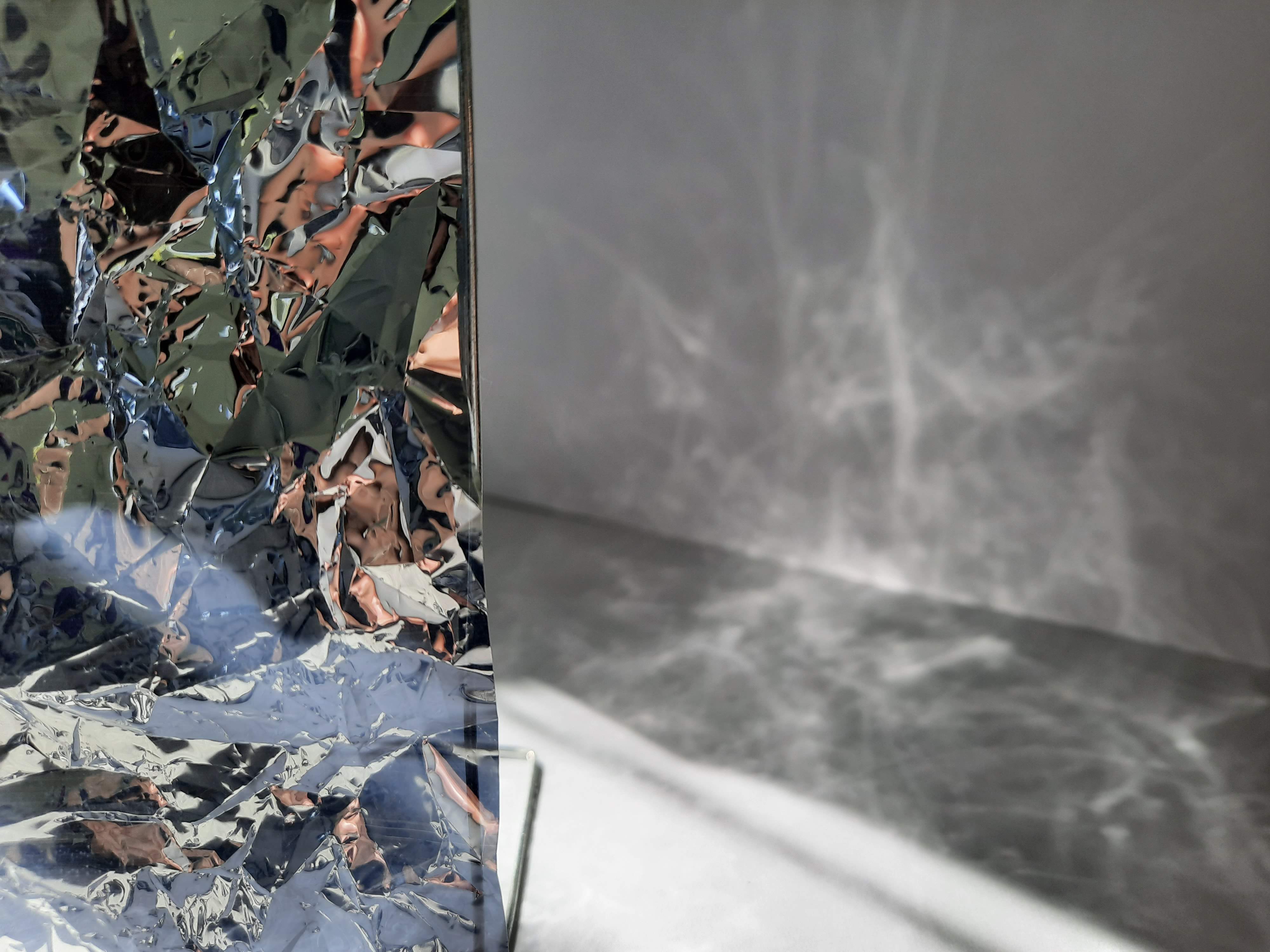
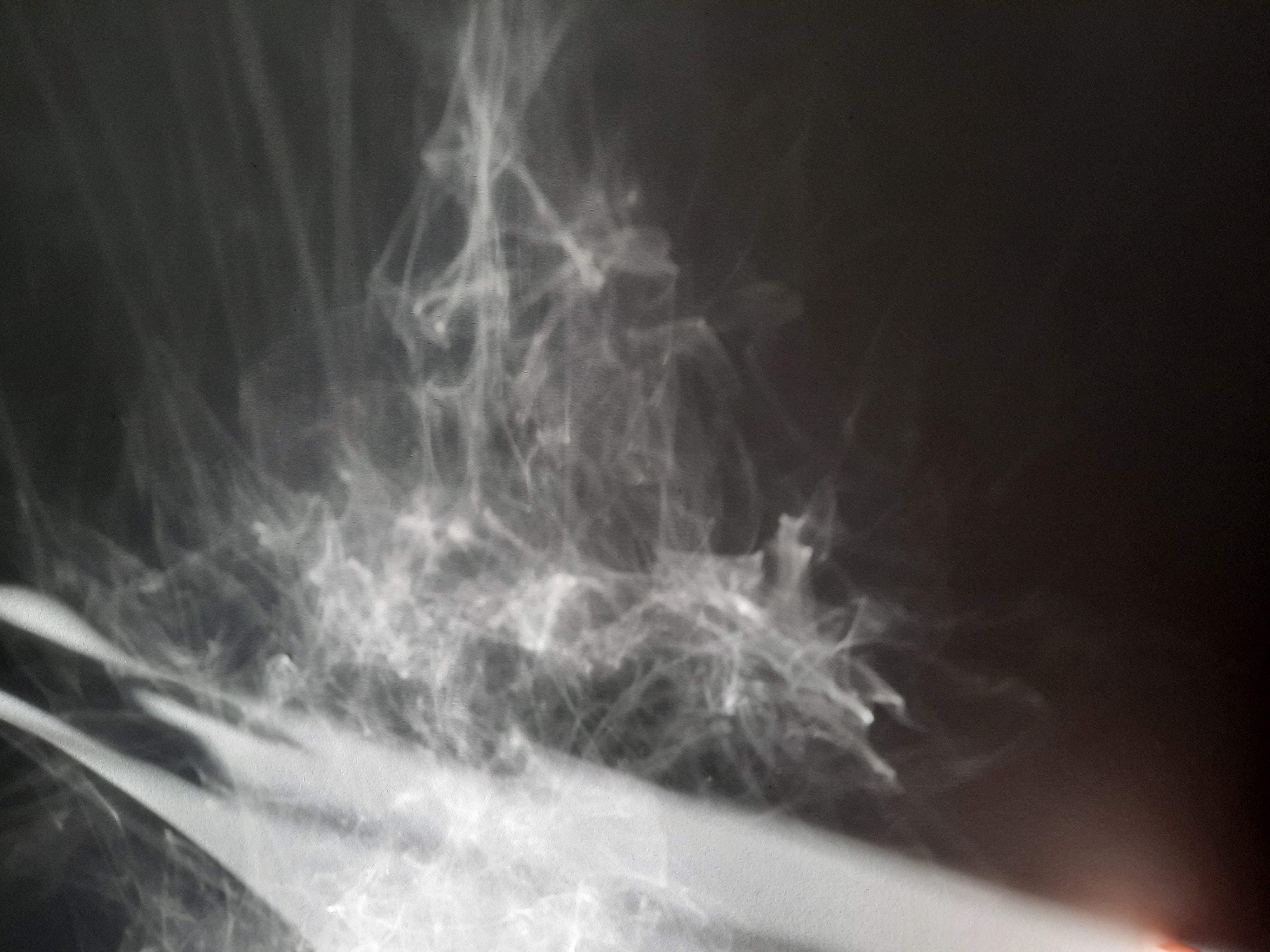
With my second surface design I wanted to explore the manipulation of light and image through reflection, similar to that of Anish Kapoor’s work.
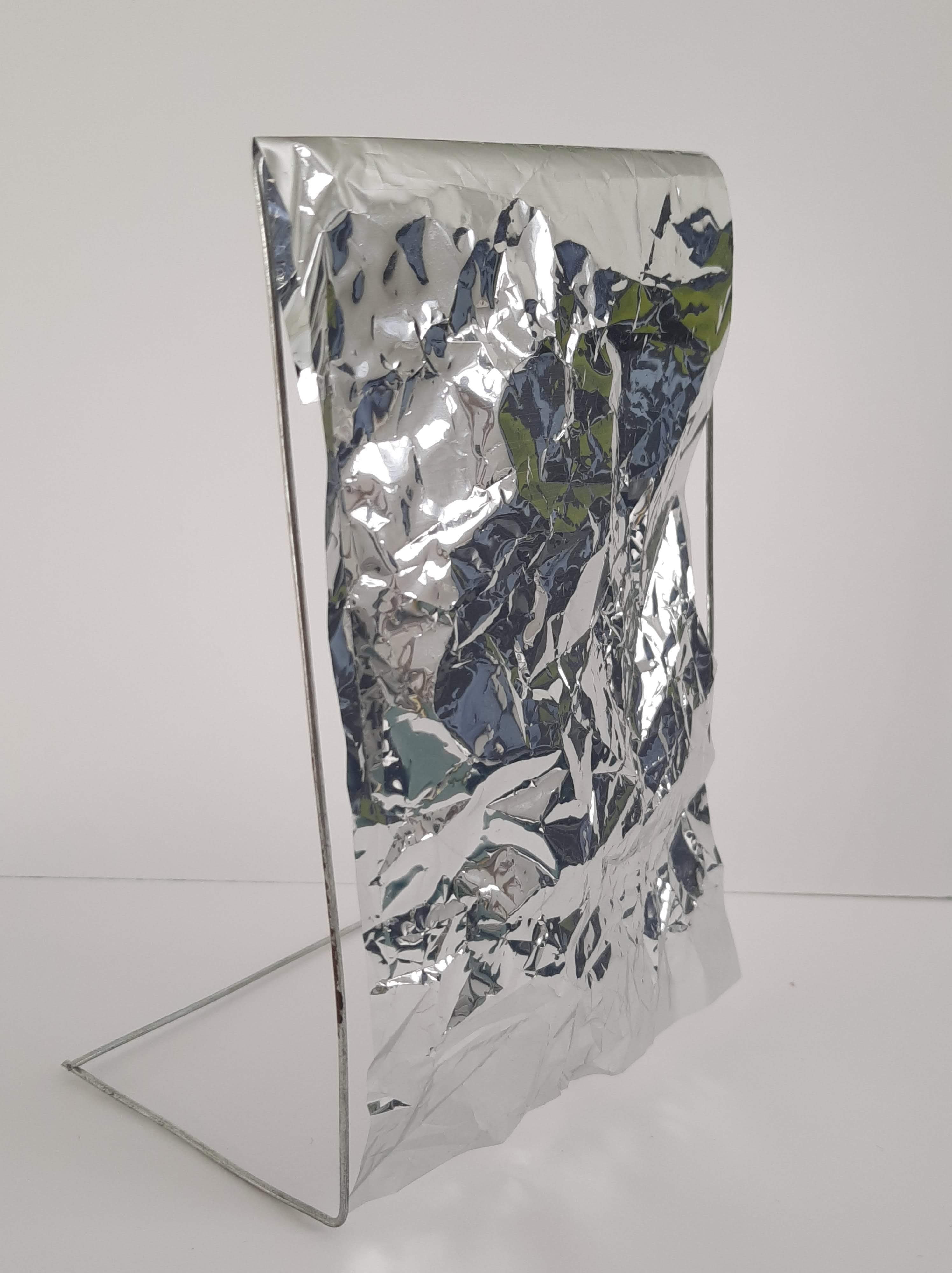
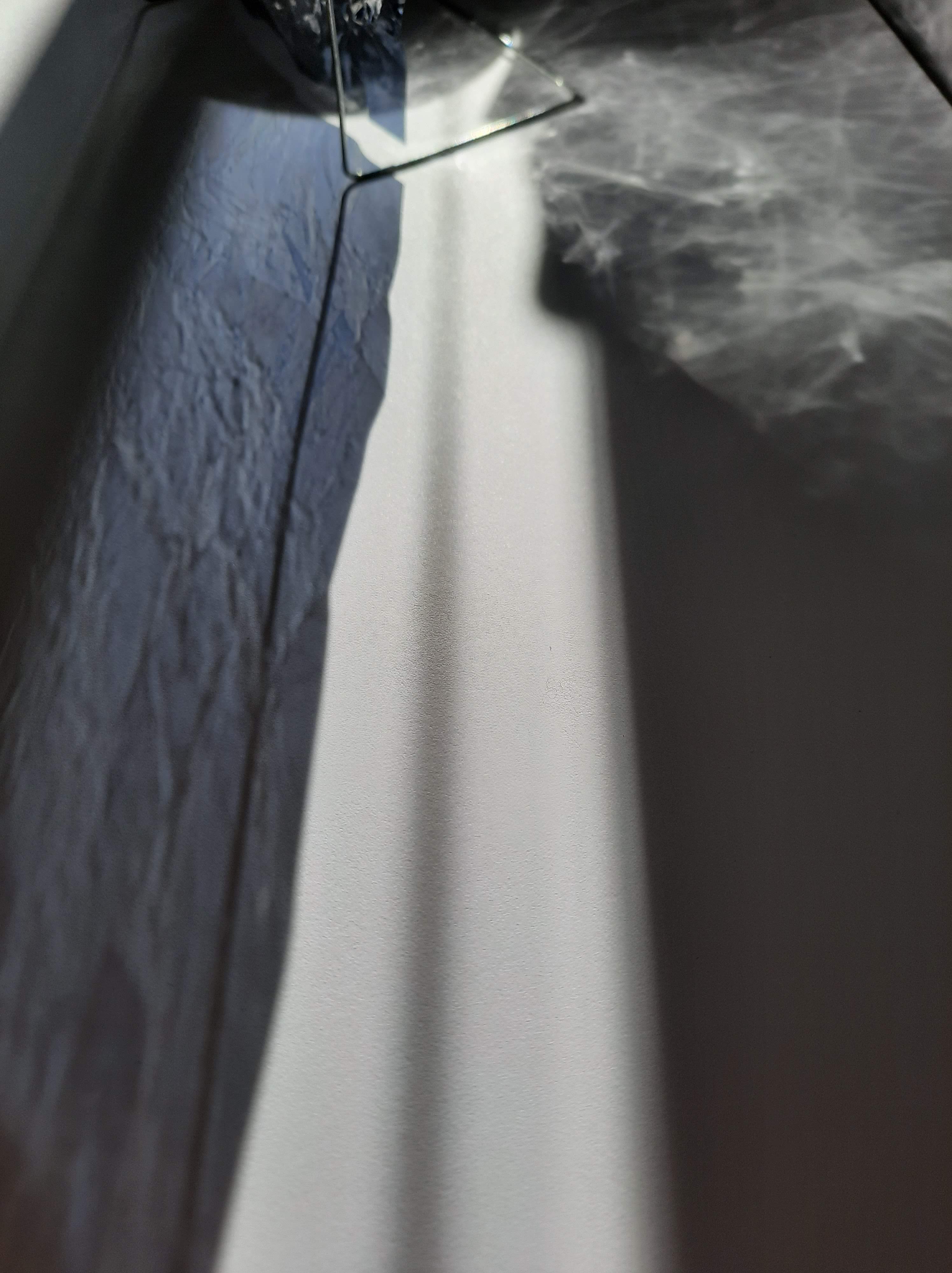
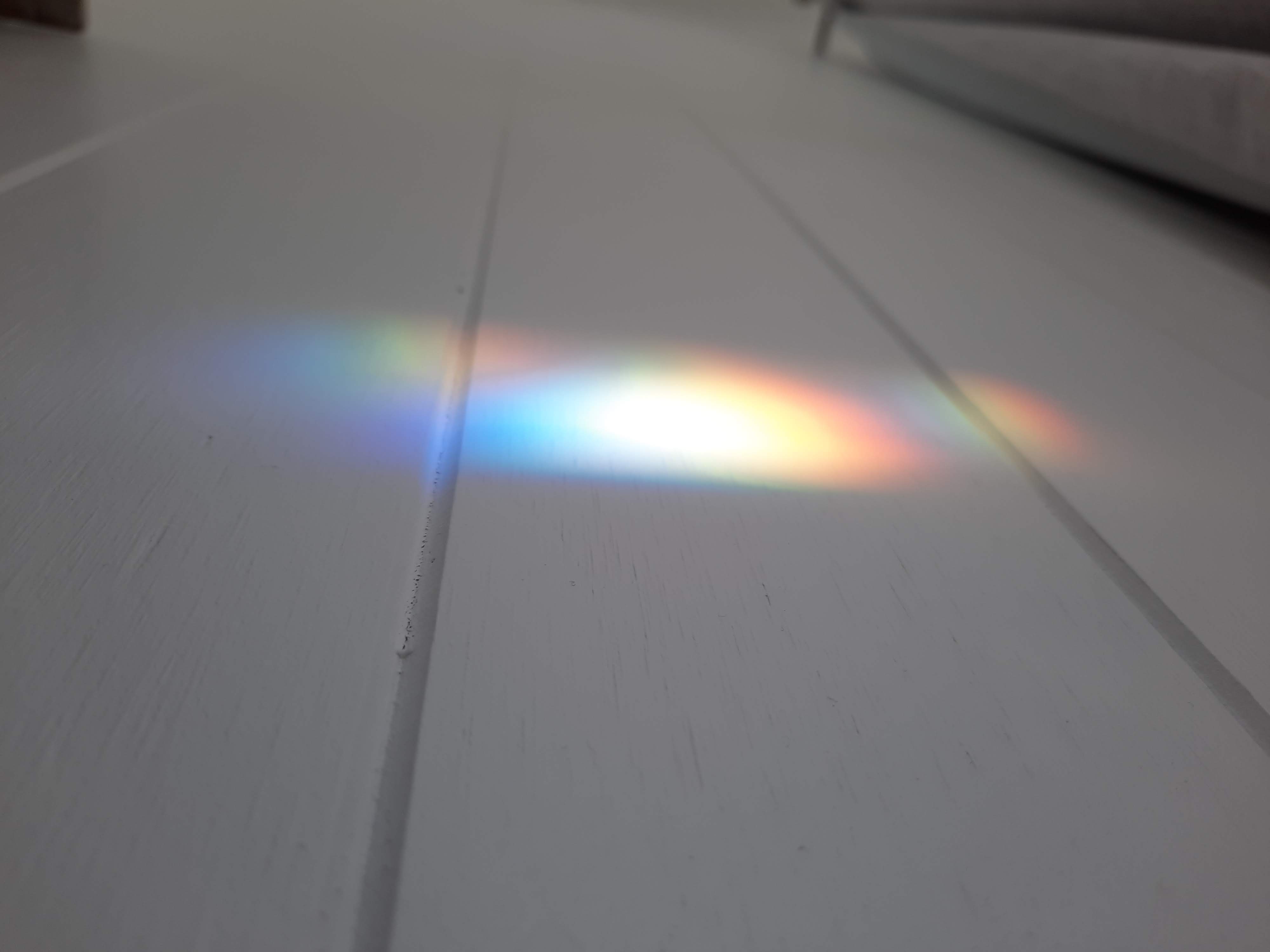
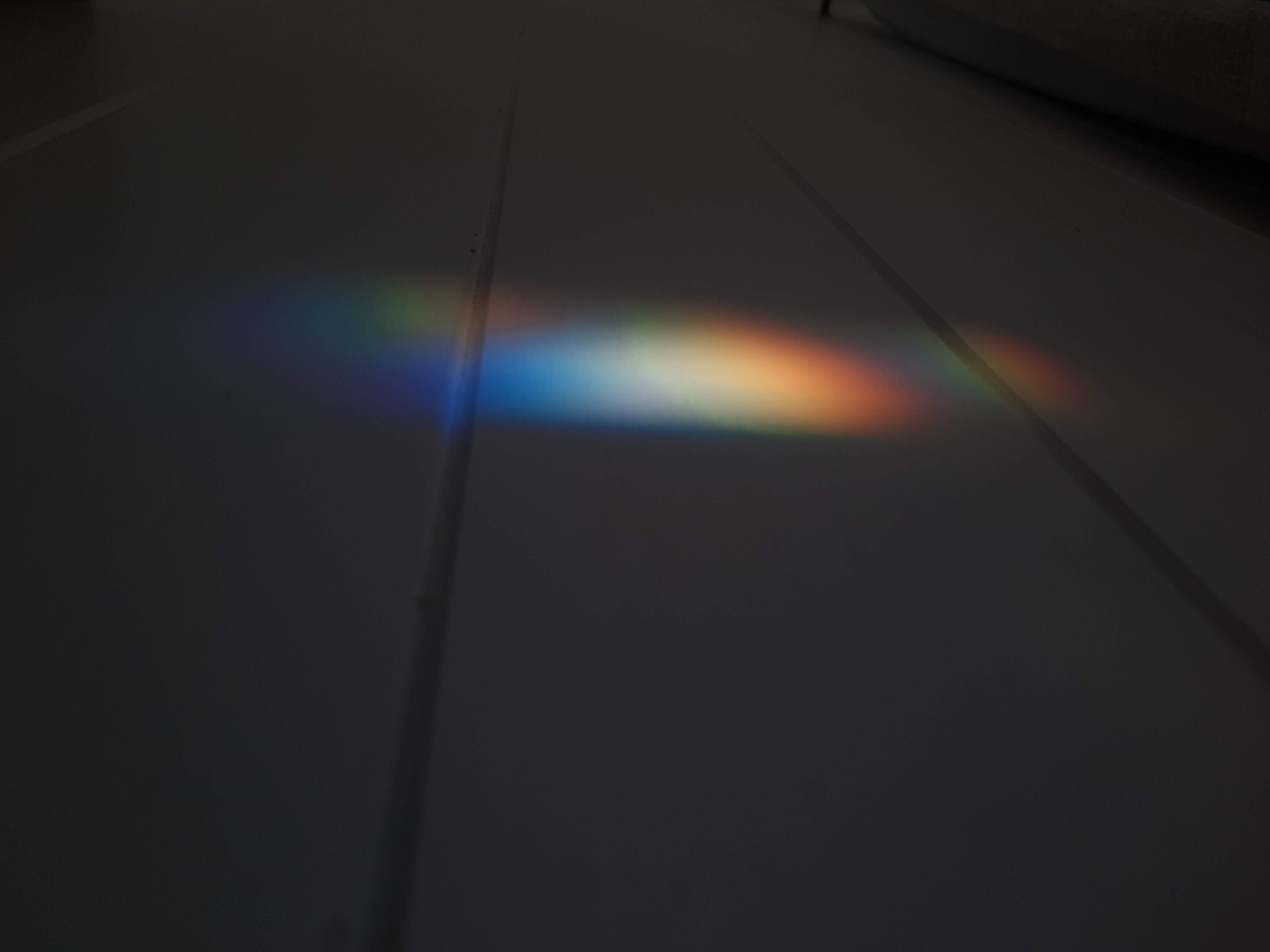
With this design, the surface can be depicted as either the reflective film or the surface in which the light is being projected onto. Unlike my previous models where I used this reflective film, I decided to scrunch it up to create more structured forms in the material and see what impact this had on the light. I noticed that it made the projected light more distorted and I quite liked this affect. After reviewing this design, I realised that it also incorporated aspects of O’Keeffe’s work. Although the film is structured and harsh, the light projected has a soft, flowing movement and ambiance to it. I found this surface design experiment very successful.
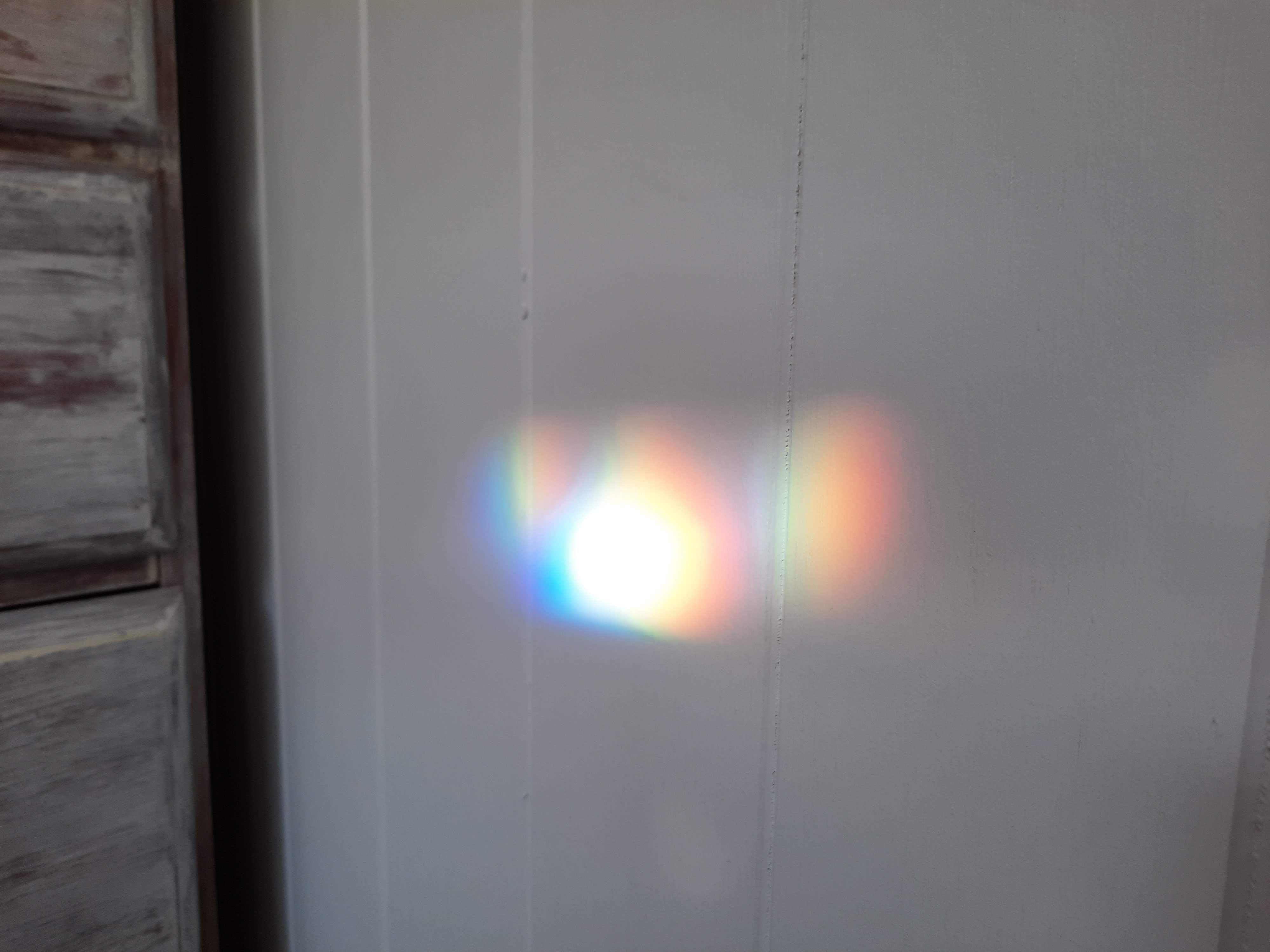
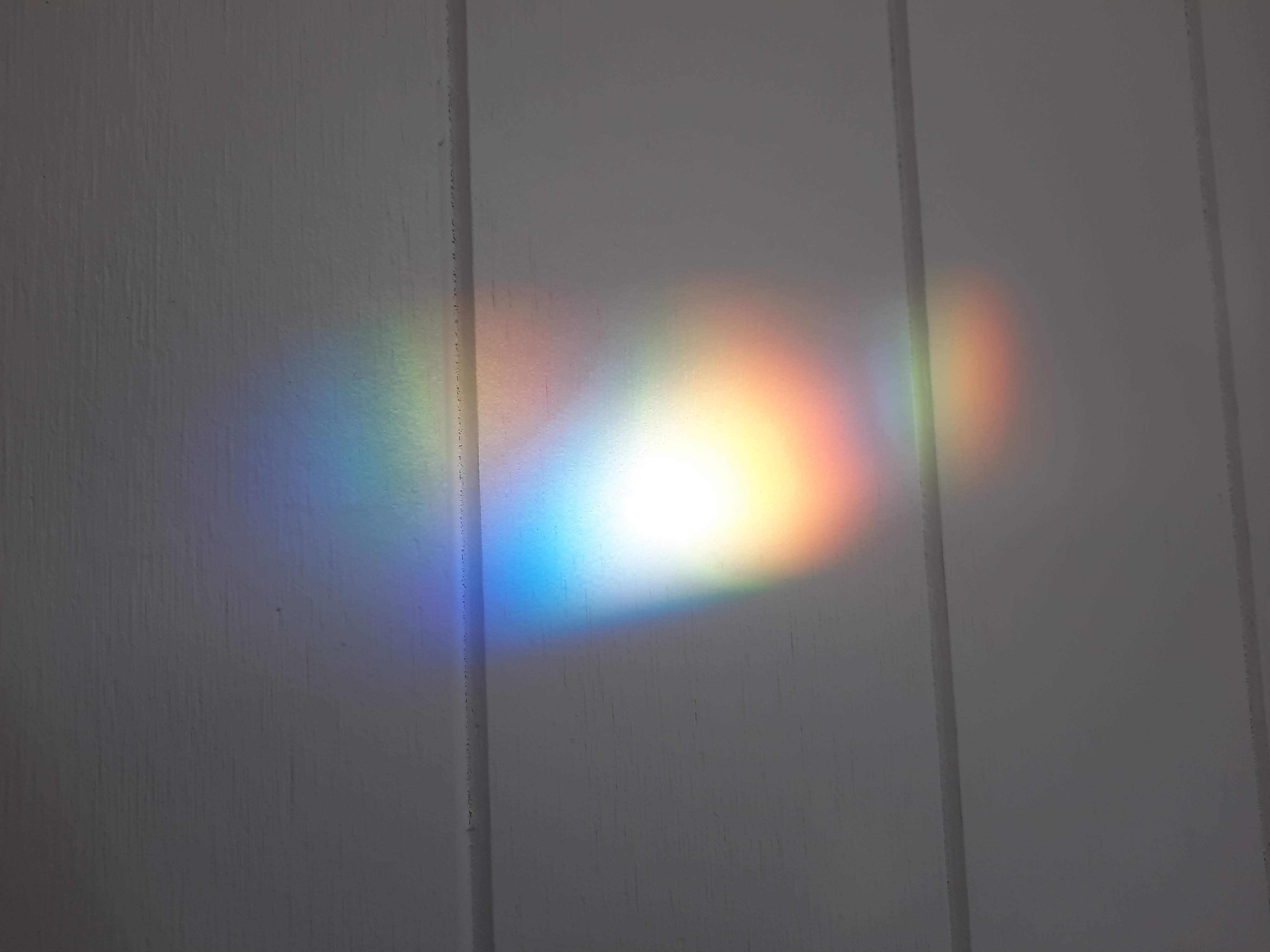
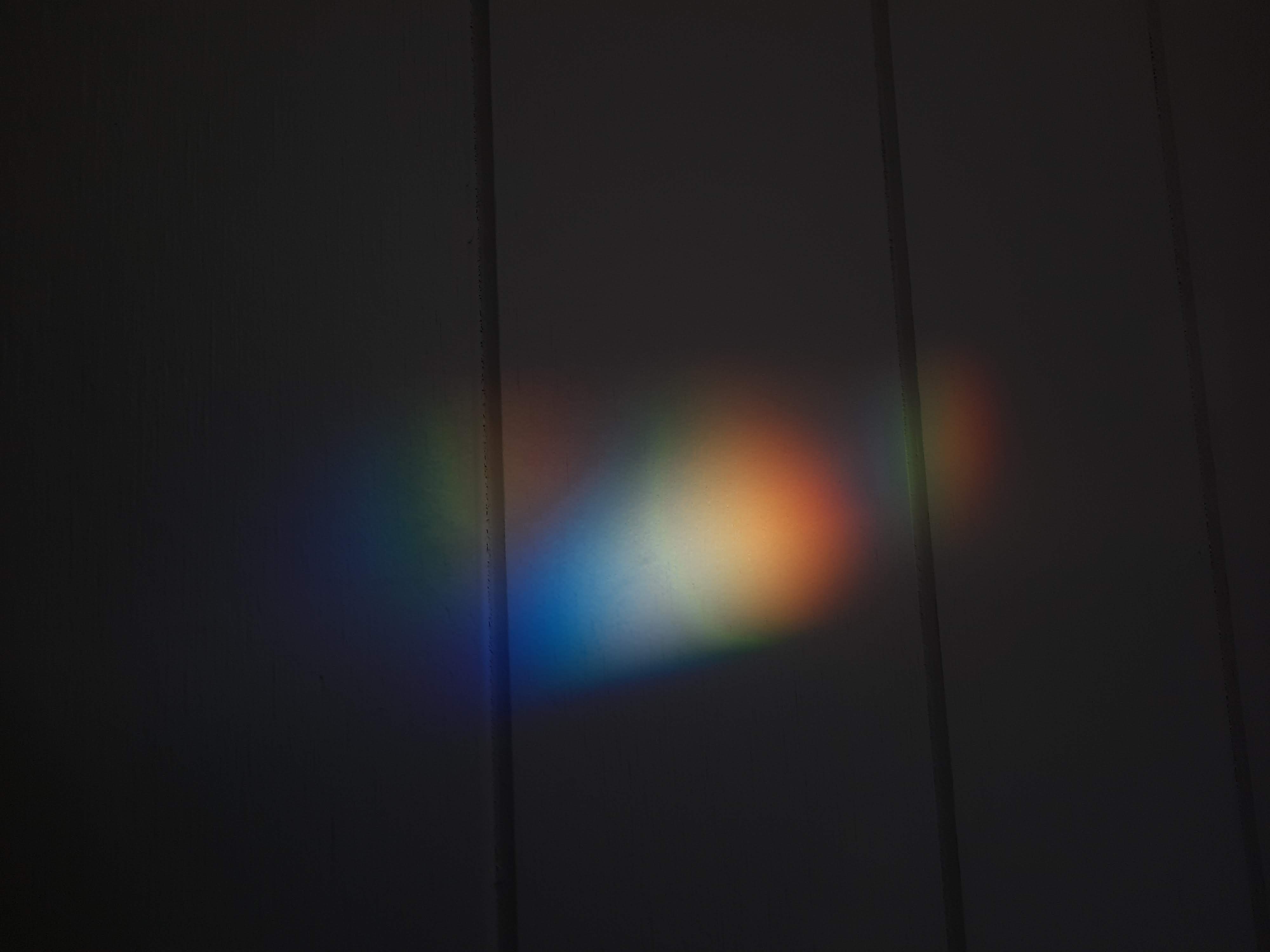
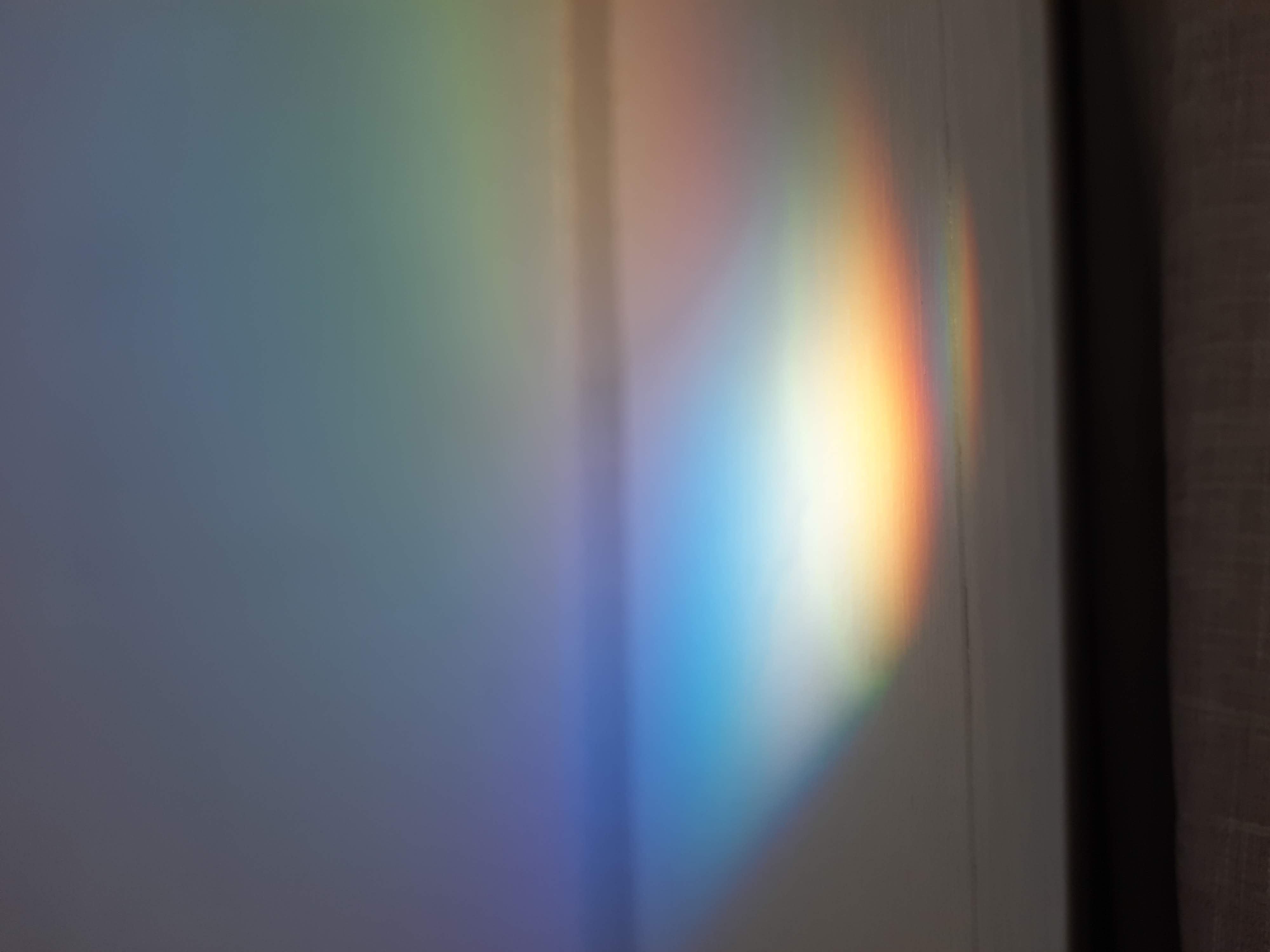
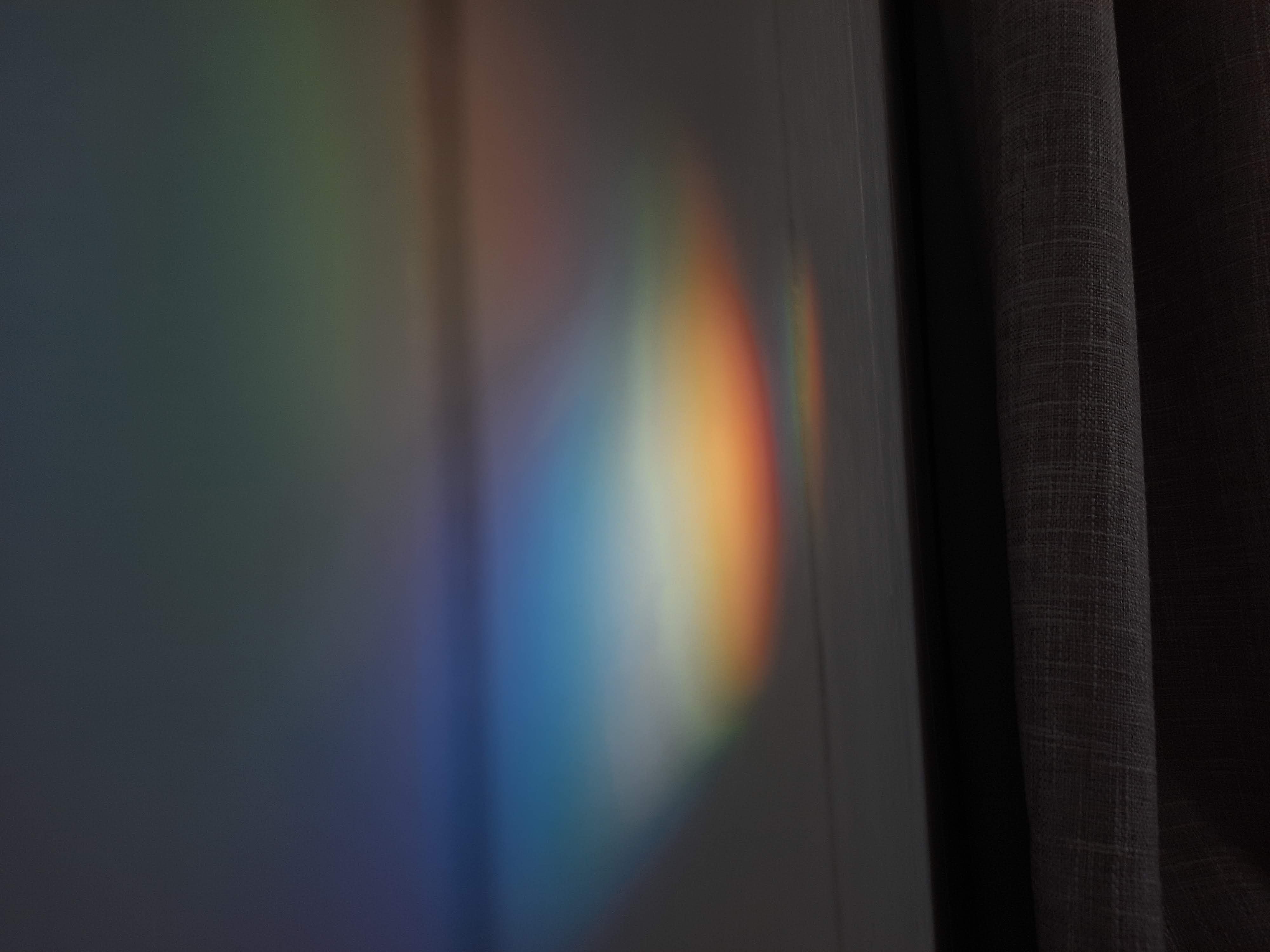
In the images above, I applied an artificial light (torch) to the reflective film to create the light projection. A few days after making this model, it was sitting on my desk and I noticed how the natural morning light bounced off it and projected onto my wall. It was interesting to see the different impacts that different types of light had on the surface and the projection.
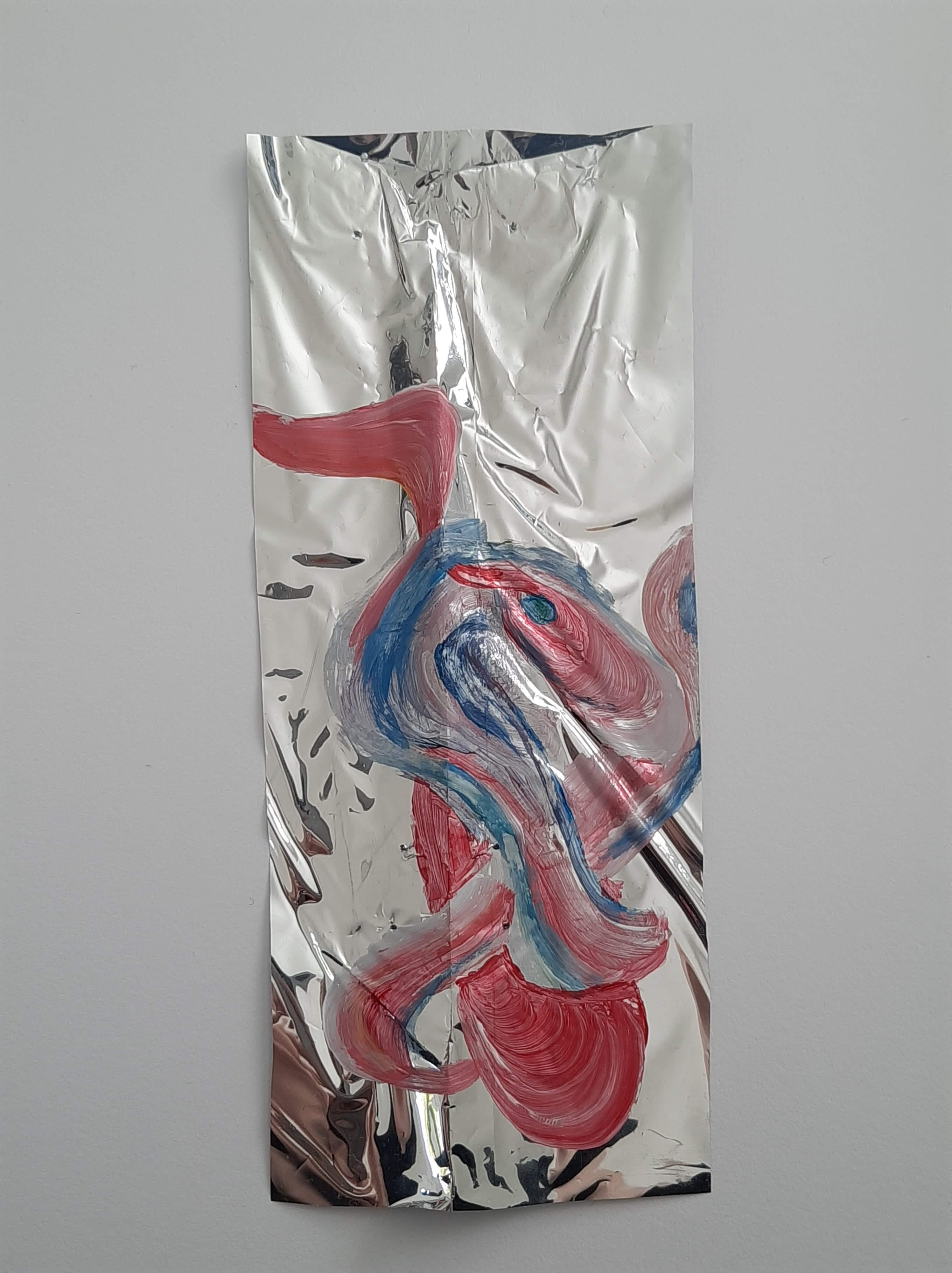
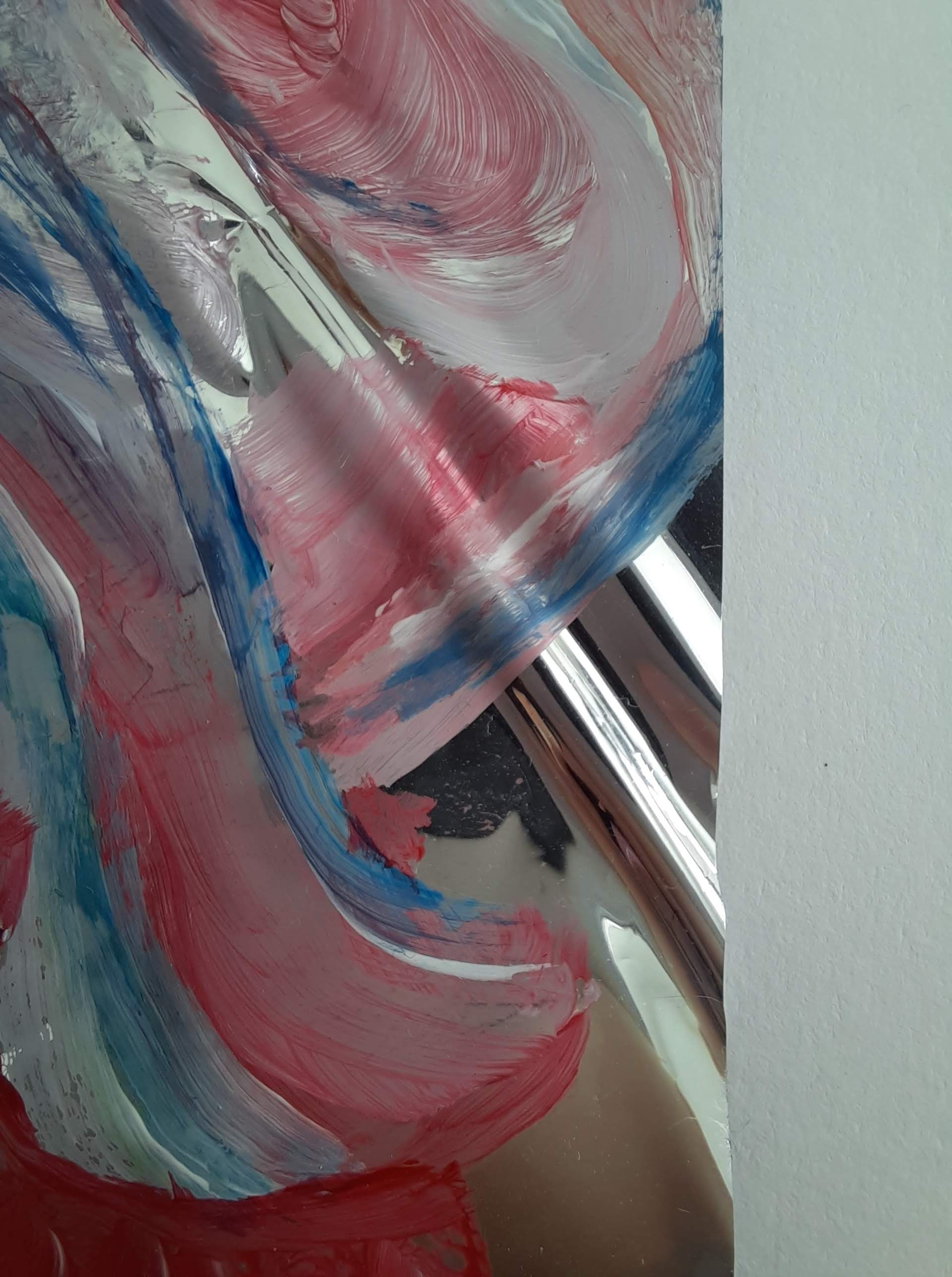
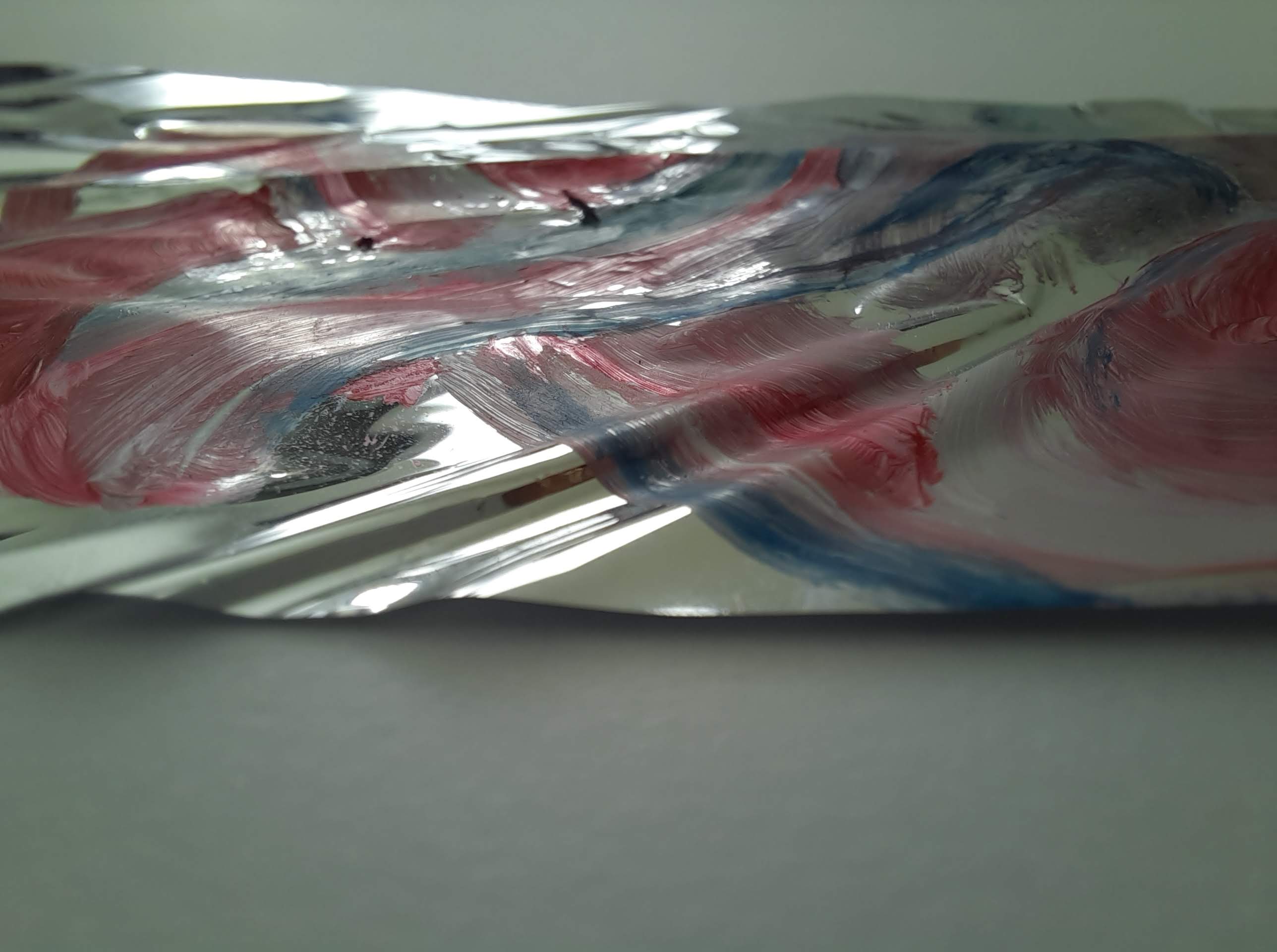
For my third design, I wanted to incorporate both artist models into one. I did this by taking their own art mediums and combining them. I experimented with acrylic paint on reflective film.
I didn’t find this experiment very successful. Although interesting, it didn’t create any desired affect and I couldn’t see it evolving in my work. With this said, I’m glad I experimented with it, I just think that this isn’t the way I want to approach incorporating my two artist models; it feels very forced and unnatural.
After creating my surface designs, myself, Moira, Fran and Georgia met in Group Collaborate to discuss our work and give each other pointers.
I explained to them about how I didn’t like my last design with the acrylics on the film but they made a good suggestion about experimenting with light in the surface and whether the acrylic paints have an affect. This would be a could way to incorporate a reoccurring theme of artificial lighting in work and it could possibly create new ideas. It’s nice getting feedback and pointers from others because what I thought was a failed experiment could possibly be just another opportunity for experimentation.
After studying the blinds in my room on Tuesday, I designed three surfaces inspired by my observations.
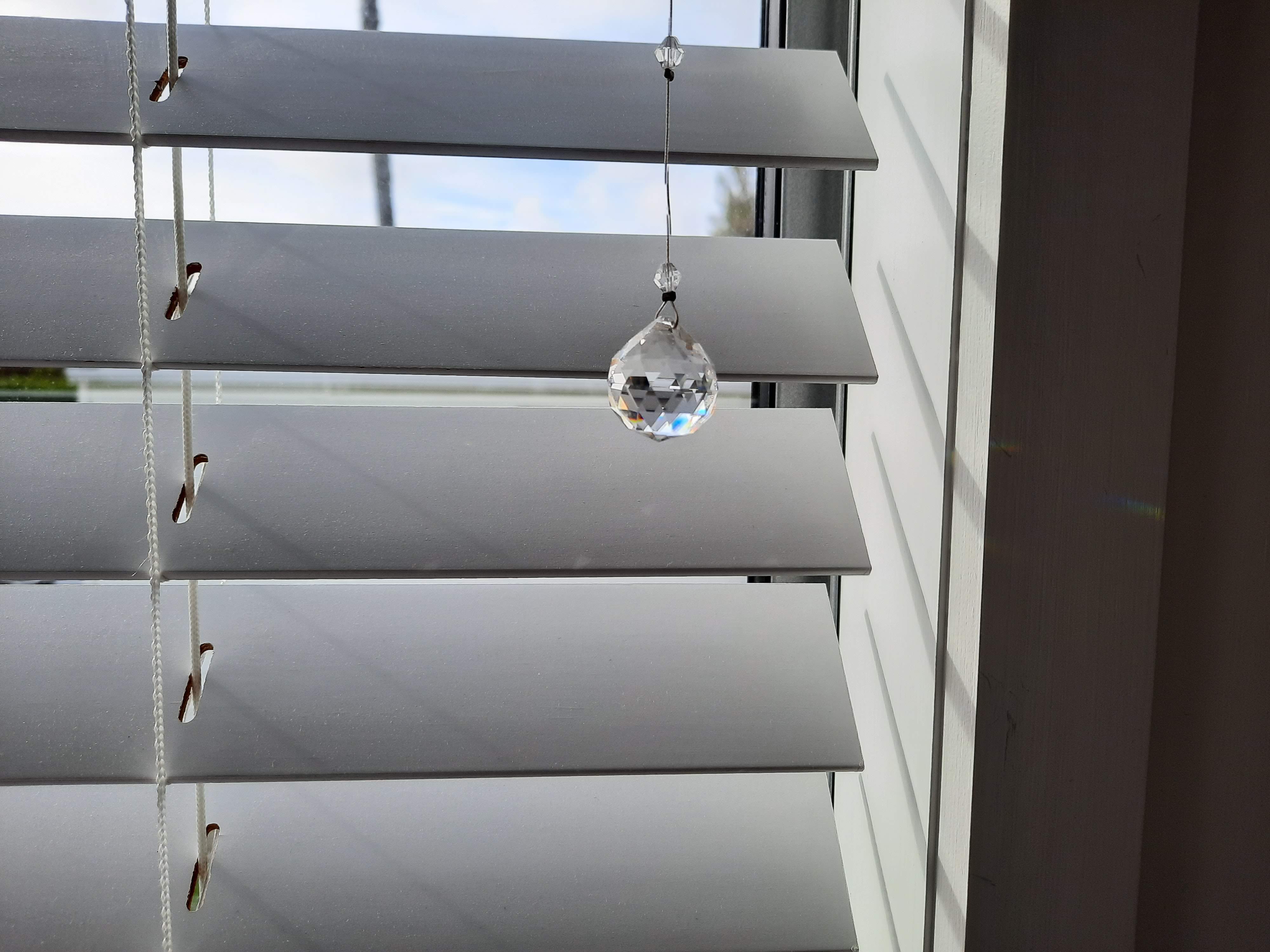
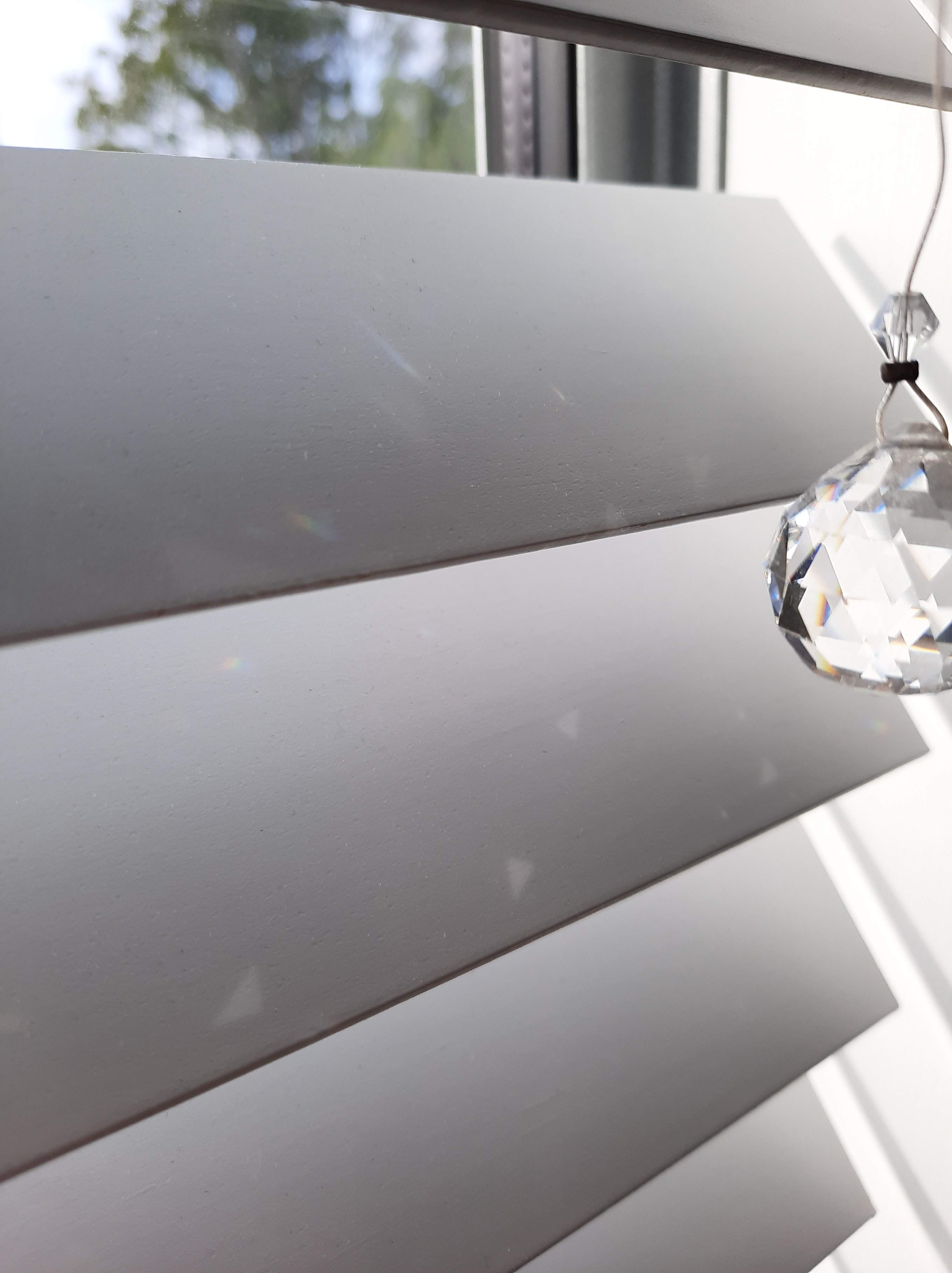
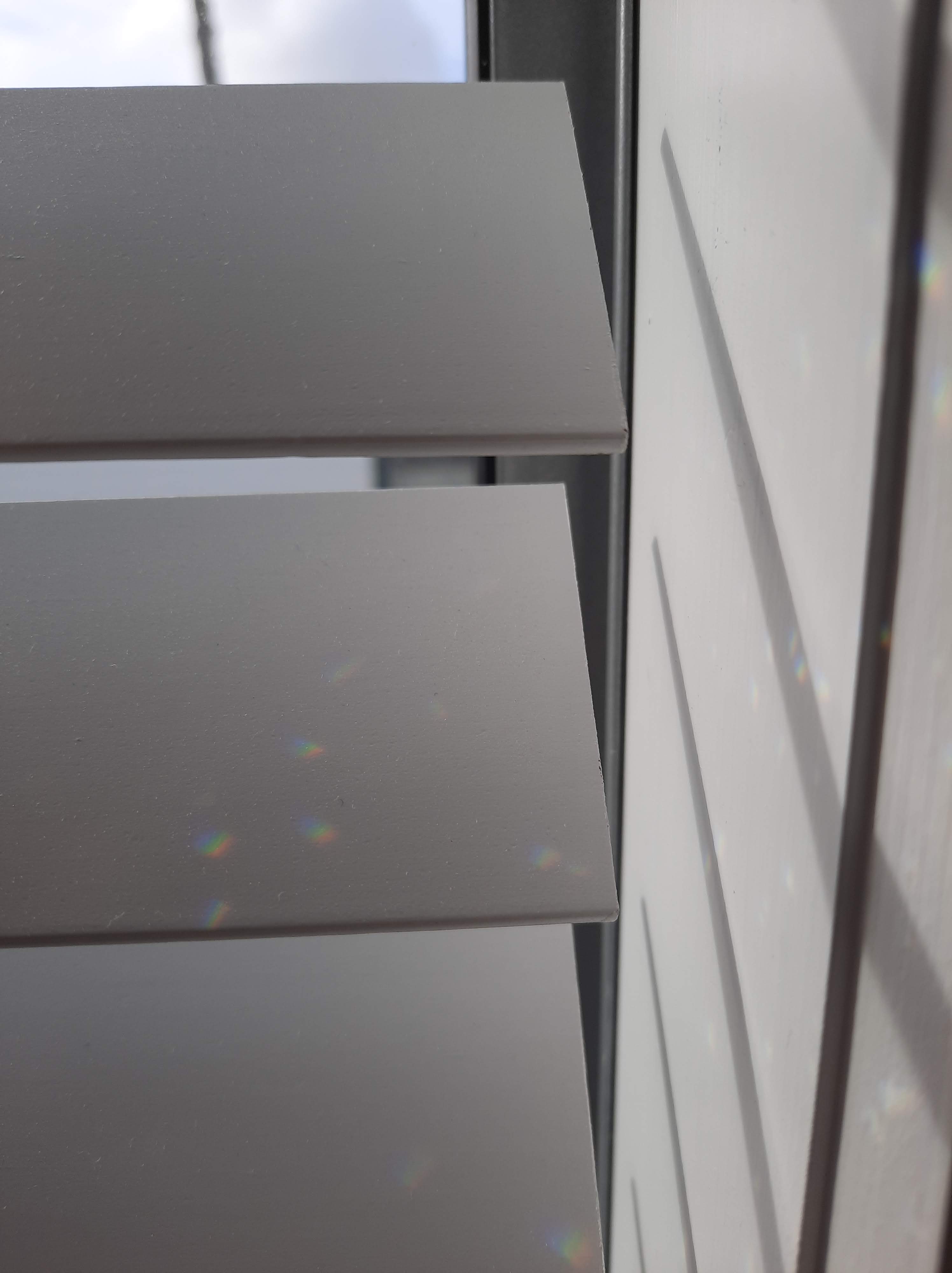
My first design was inspired by the form and movement of the projected light from the crystal sun-catcher. I noticed the consistency of triangular shapes forming on the blind as the natural sunlight was refracted through the sun-catcher. I also liked the temporality of the projection and its ability to change through the movement of the sun-catcher.
This design captures the coexisting fluidity and structure through movement and shape.
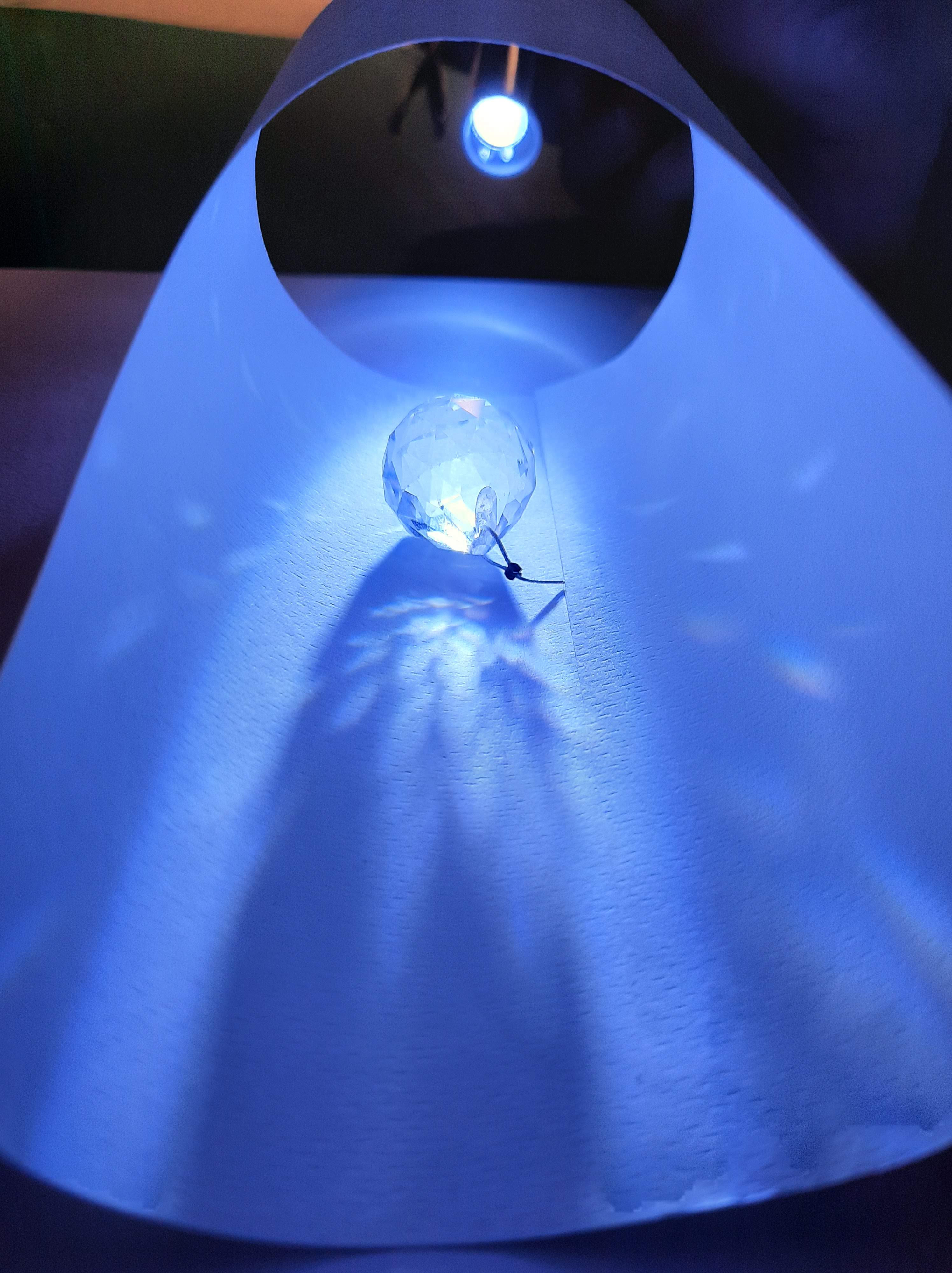
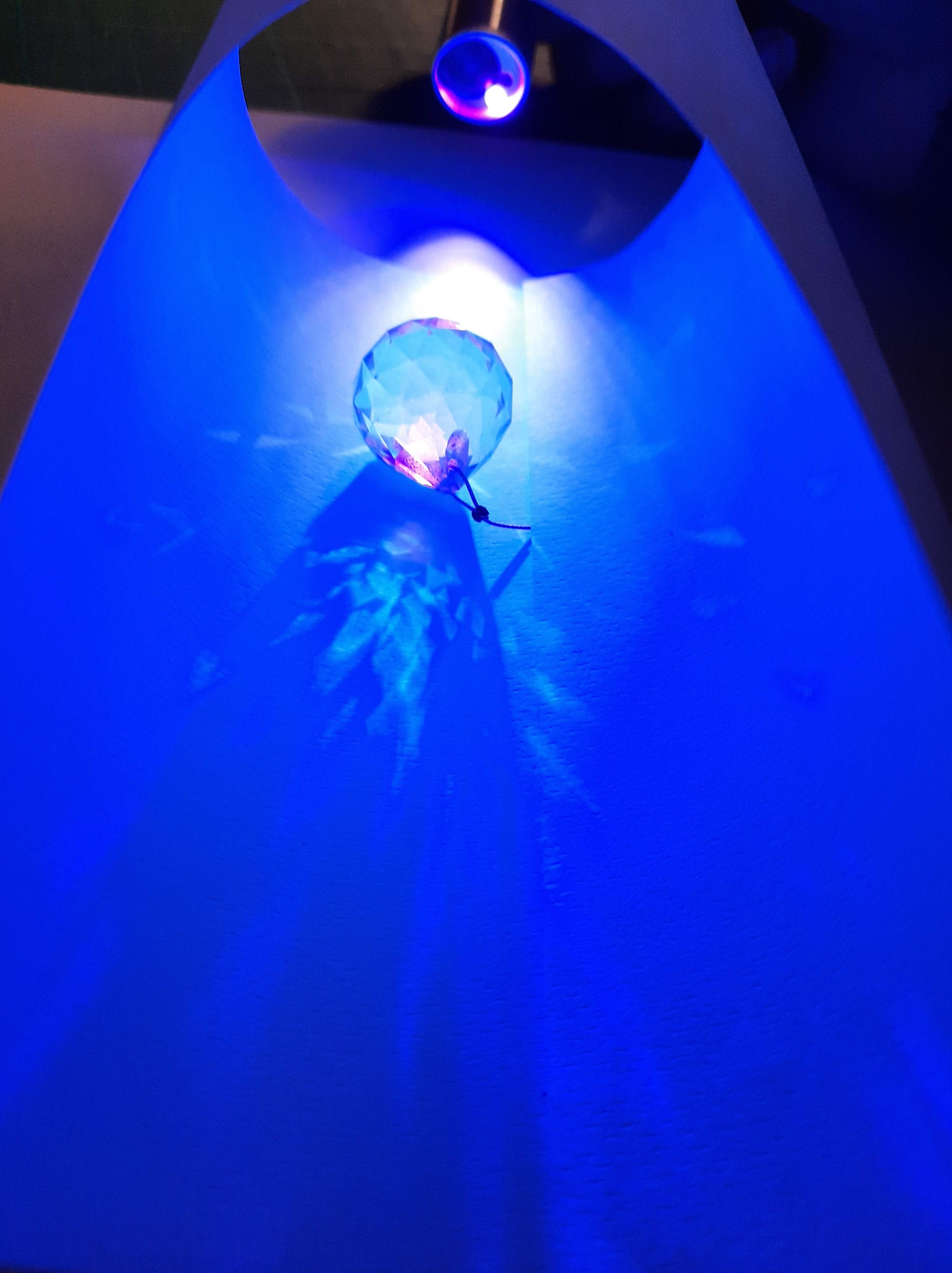
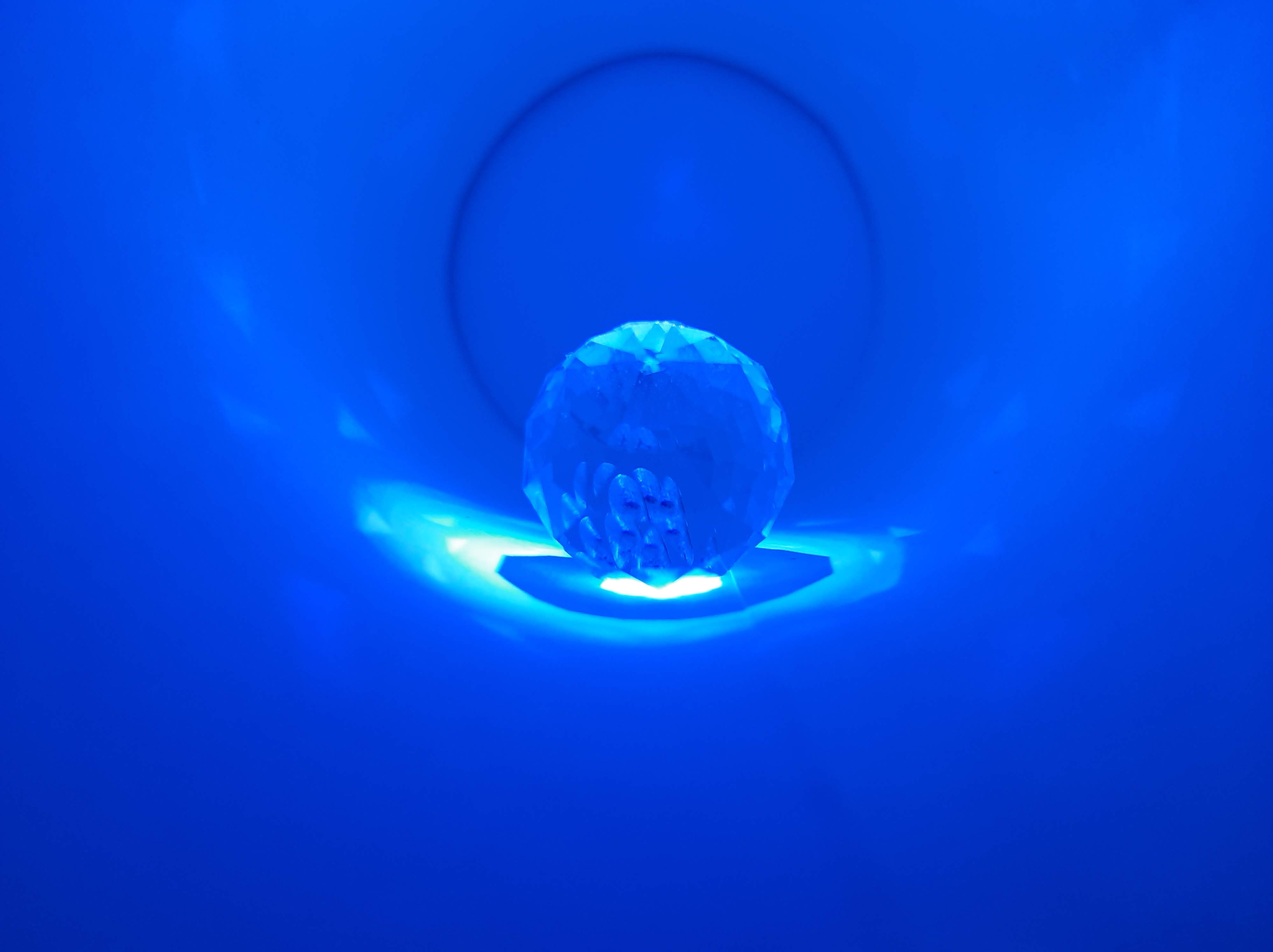
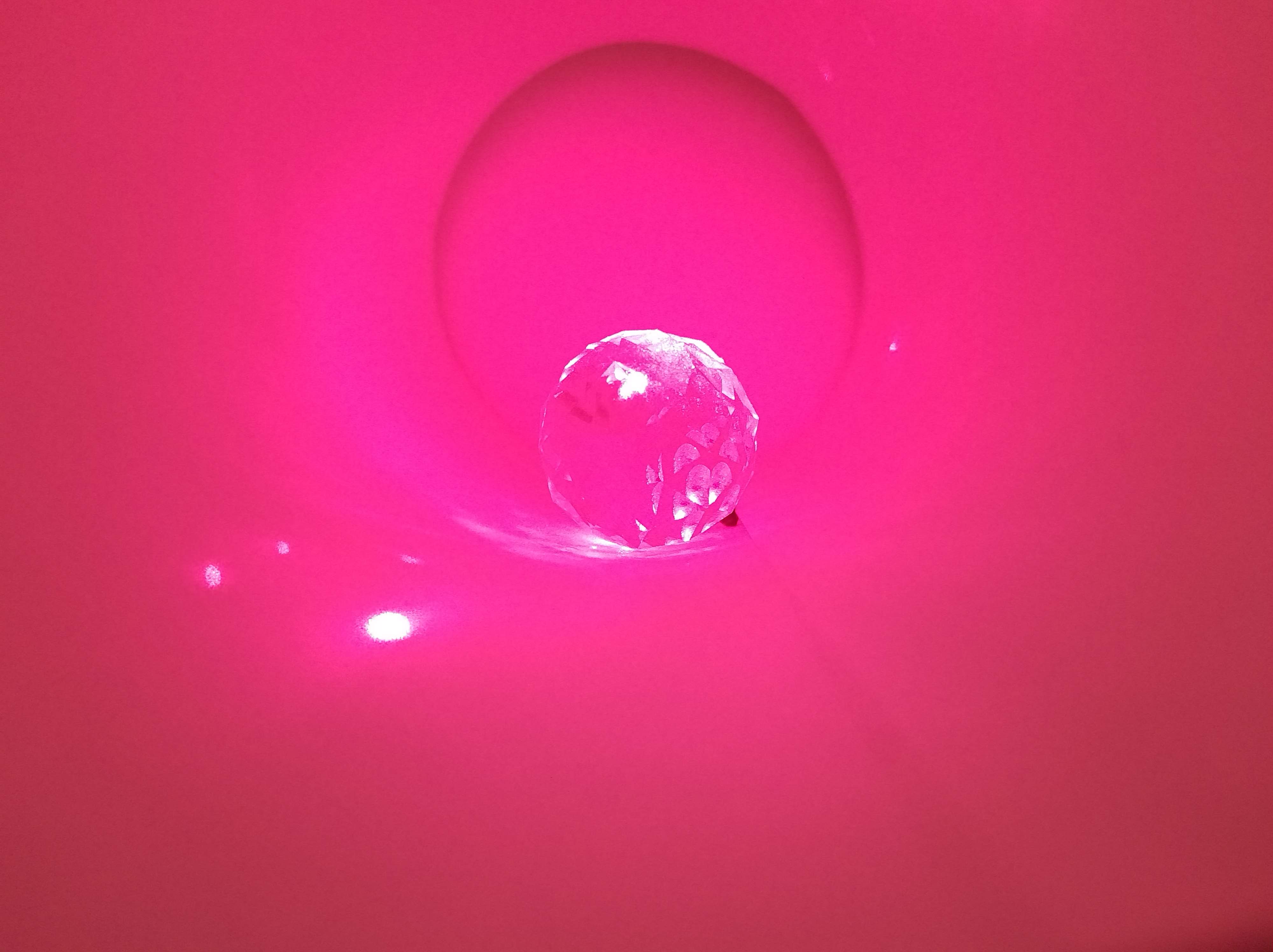
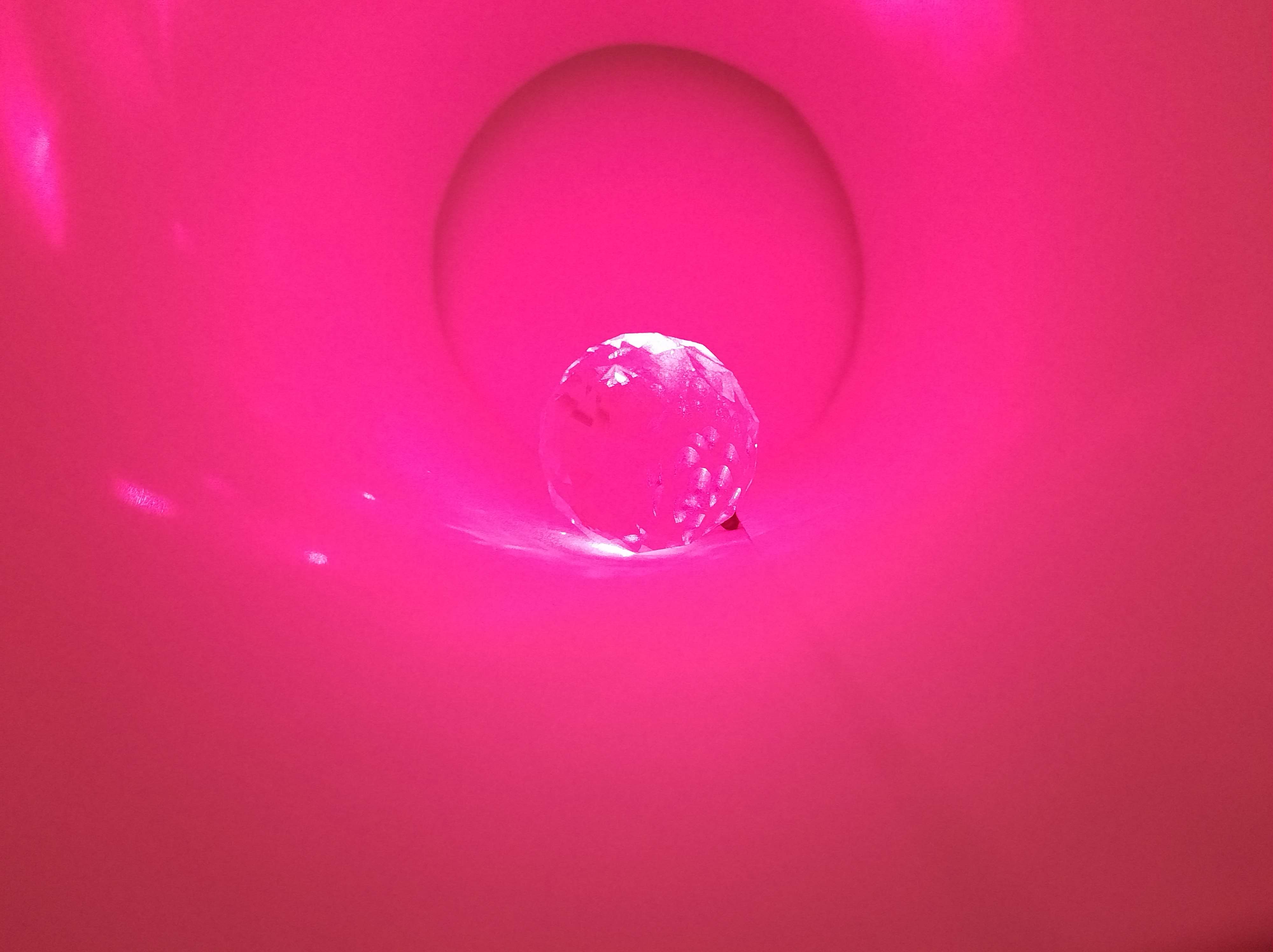
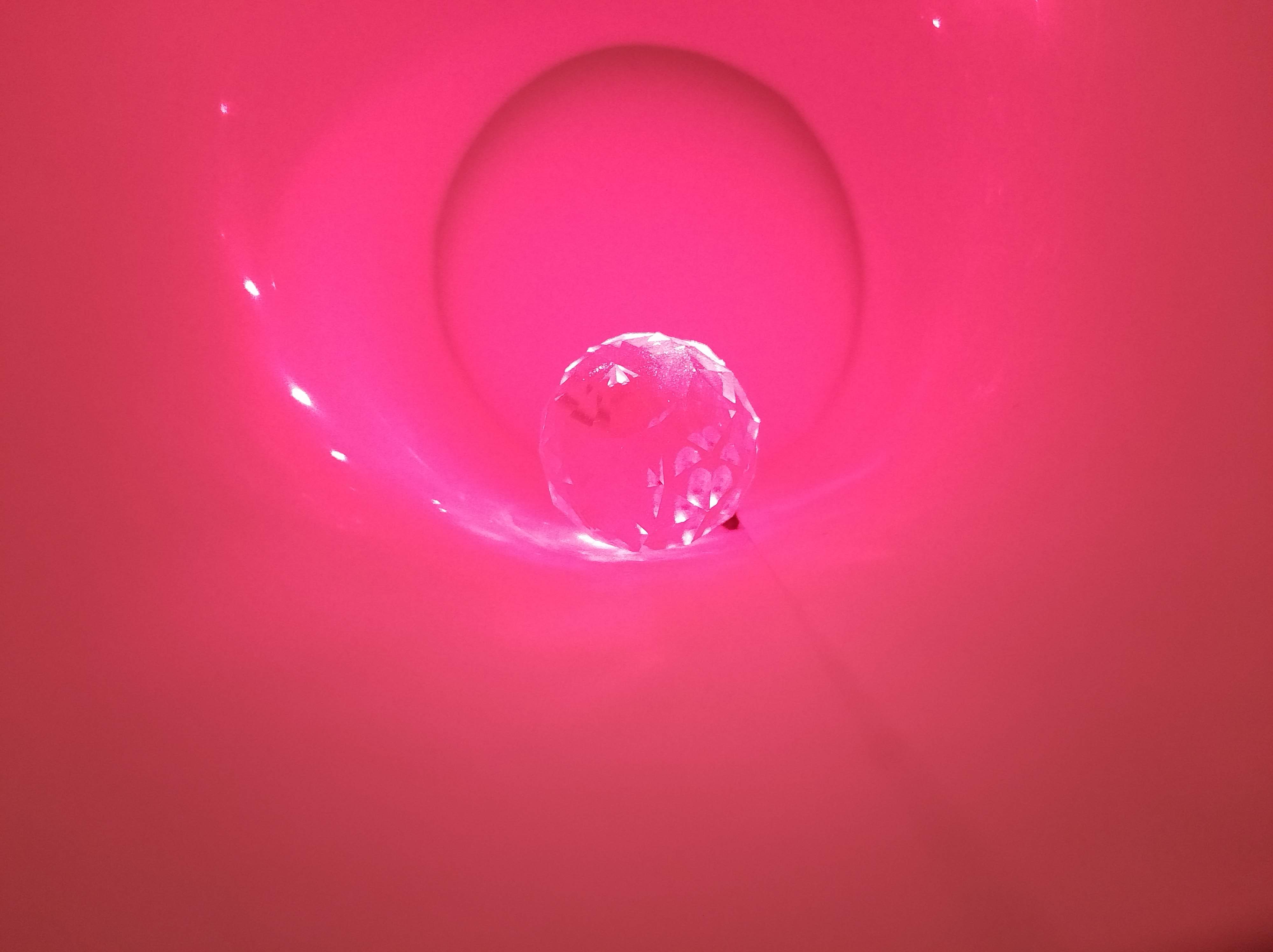
My second design played more on the idea of the projection and application of light onto a surface rather than the physicality of a surface. I also explored the refraction of different light sources through this design and the manipulation of surface through movement. This design consists of a white paper tube with my crystal sun-catcher positioned in the middle.
Below is my experiment with a white light torch.
I found the projection of triangular shapes onto the white surface very distinct and effective. I was slightly disappointed with the lack of movement in the projected light. I thought that maybe moving the light source would create more movement in the shapes cast. I think that to create more movement in the projection I would have to move the sun-catcher rather than the light source.
Below is my experiment with a black light torch.
I found the black light not as effective as the white light in refracting and casting projections on the surface. Although this said, it did cast a nice deep blue colour which, although I am not exploring in this experiment, might be useful for other experiments down the track.
Below is my experiment with a red laser.
I am not surprised my the lack of projected forms of light on the surface just because the light source was very direct and narrow. With this said, I did like how in some angles, the laser cast a speckled affect.
In my third design I really wanted to explore different methods and techniques while I have restrictions around what I can use to design. Because of this, I explored creating a surface digitally to also broaden my skills. With this surface I explored the affects of filtrated light through the the already existing aspects of my bedroom.
Above is an image of the shadow cast into my room from a hedge outside my window in the afternoon.
These are images of the afternoon light being refracted through another sun-catcher and projected onto my wall.
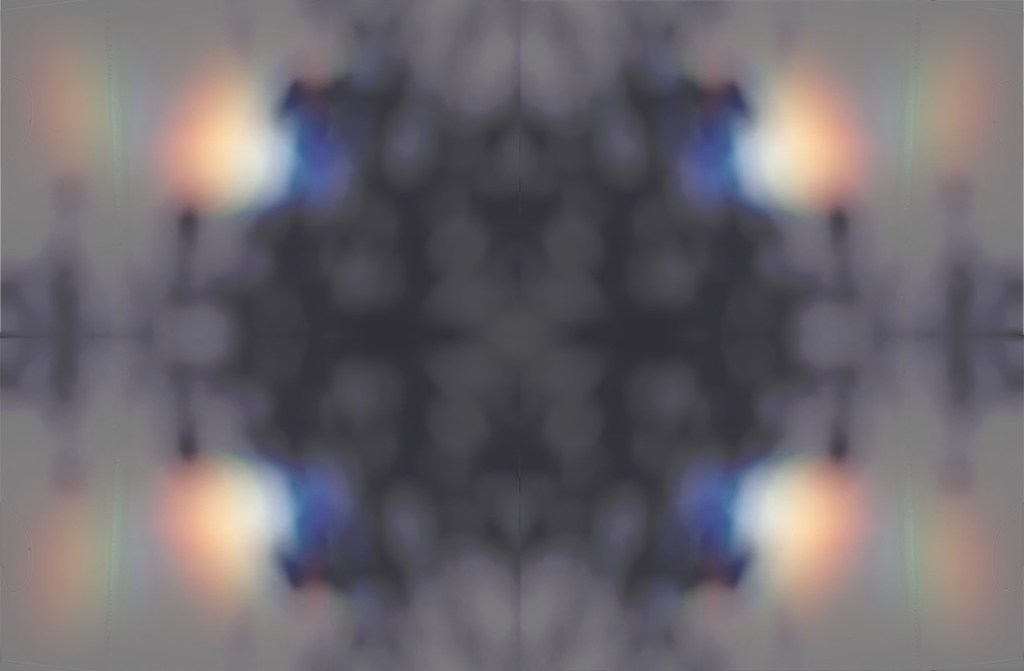
In Photoshop I explored different tools to combine these images into one. I then played around with rotation, mirroring and duplication of this image. Below is the result.
After creating these surfaces, myself, Fran, Moira and Georgia met in Group Collaborate and discussed our work with each other.
It was really helpful to discus my ideas with other people as I find when designing by yourself in an isolated environment, you can miss out and be blind to other perspectives and ideas on your work.
This week was the first week of online learning. We began with a Virtual Studio exercise where we explored and observed a surface in our study space for 15 minutes. I chose to study the blinds next to my desk. The window is a East facing window, and as we did this exercise around 9:30am, I had the morning sun shining in through the blinds.
I chose the spot where I have a crystal sun-catcher hanging so that I could observe how the changing and manipulation of light over time and movement would impact the surface of the blinds.
What I found interesting was the triangular shapes the sun-catcher cast on the blinds along with the varying colours. I also liked how the movement of the sun-catcher imprinted movement on the surface. Below is a drawing of my observations.
When I was undertaking this observation of the blinds, it was quite overcast outside. Throughout the 15 minutes, the light from the sun was constantly brightening and dimming as clouds covered and uncovered the sun, exposing more and less light. This impacted the blinds as the surface not only lightened and darkened, but the projection from the sun-catcher faded in and out.
After individually observing our surfaces, we were put into randomly combined groups of four. In my group we discussed each of our surfaces and what we found interesting about them. What was fascinating was how we had all gravitated towards a surface involving a window.
After discussing our surfaces, we experimented with Blackboard Collaborate to see if we could create a collection of our images. After finding we could only share one image at a time, we created a group document and organised our images together.
It was quite interesting to see how, although we worked by ourselves without the influence of each other, all of our images had a similar aesthetic, lighting qualities and mood. It is quite fascinating how all of our images linked to each other unintentionally.
Continuig from my artist/designer reasearch, I created 3 model based off Georgia O’Keeffe and Anish Kapoor’s techniques and styles in Thursdays class.
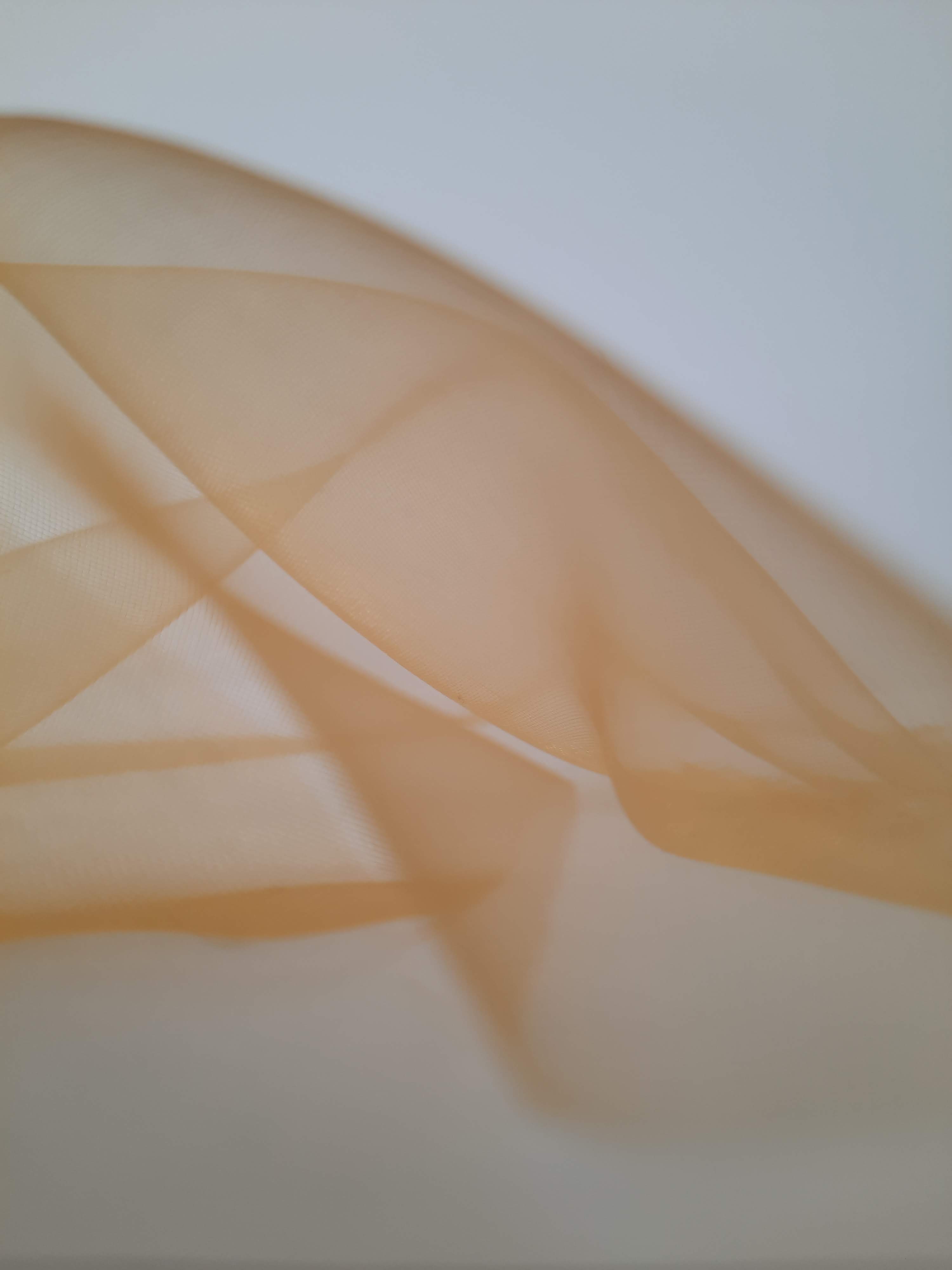
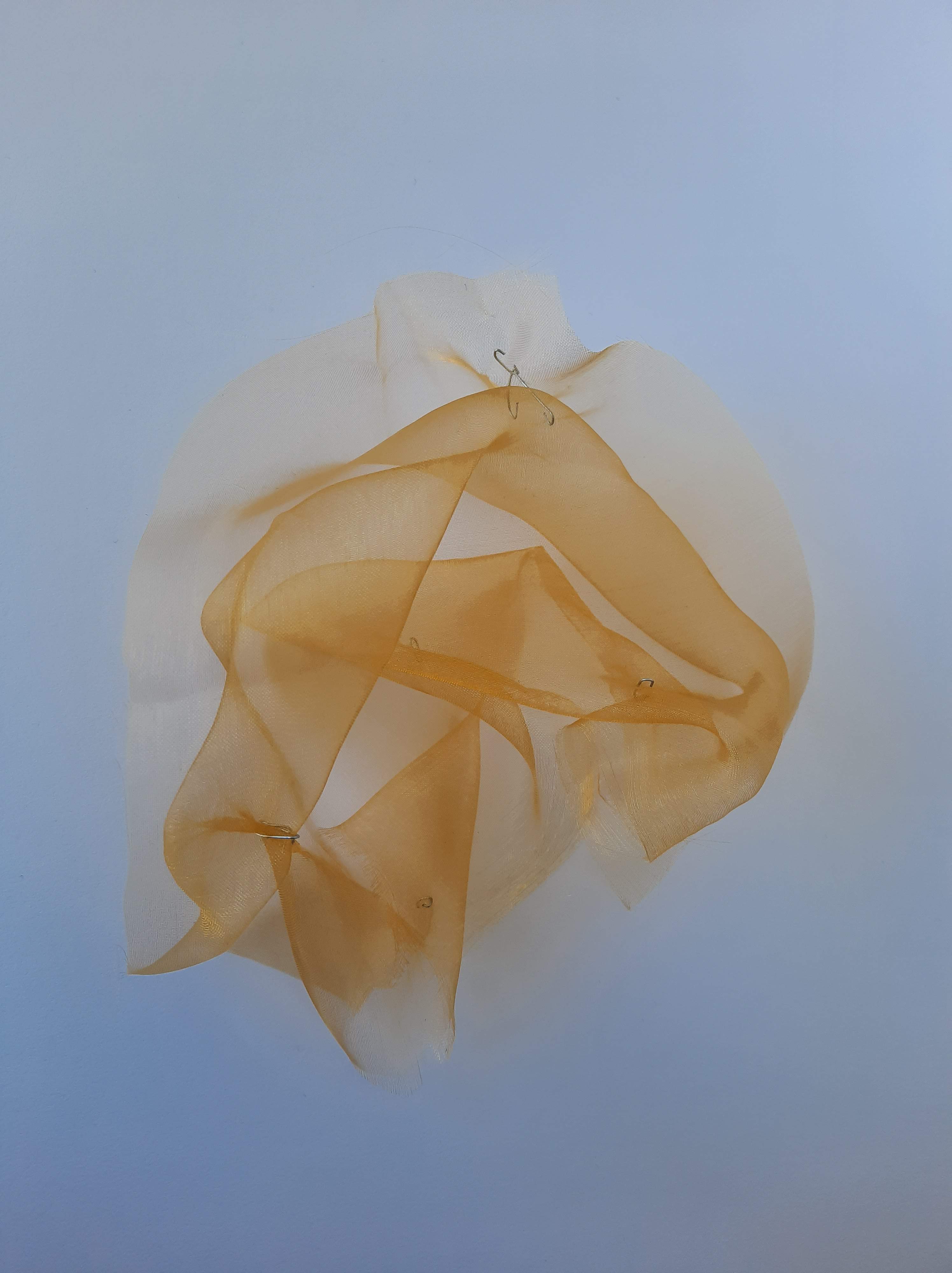
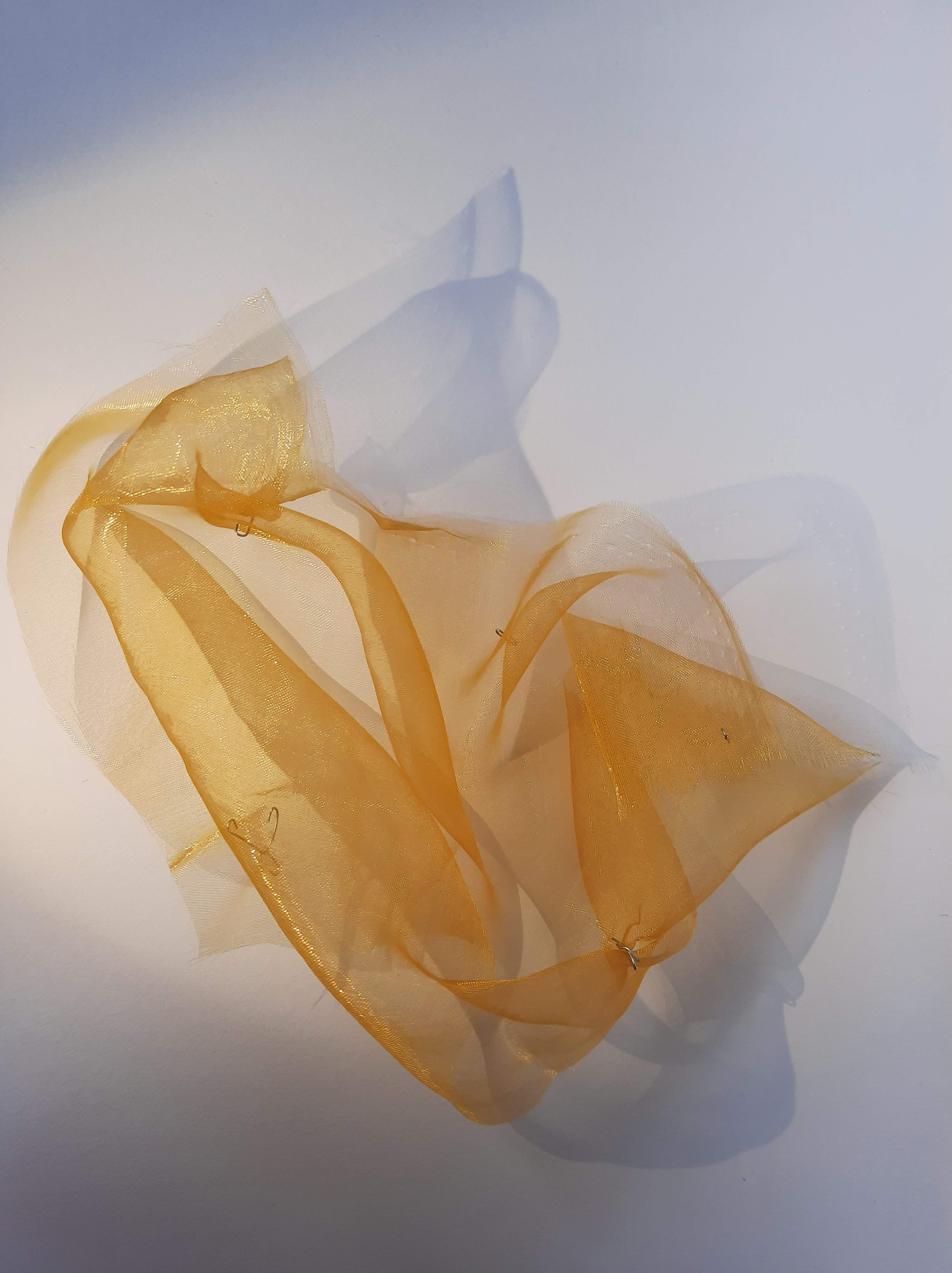
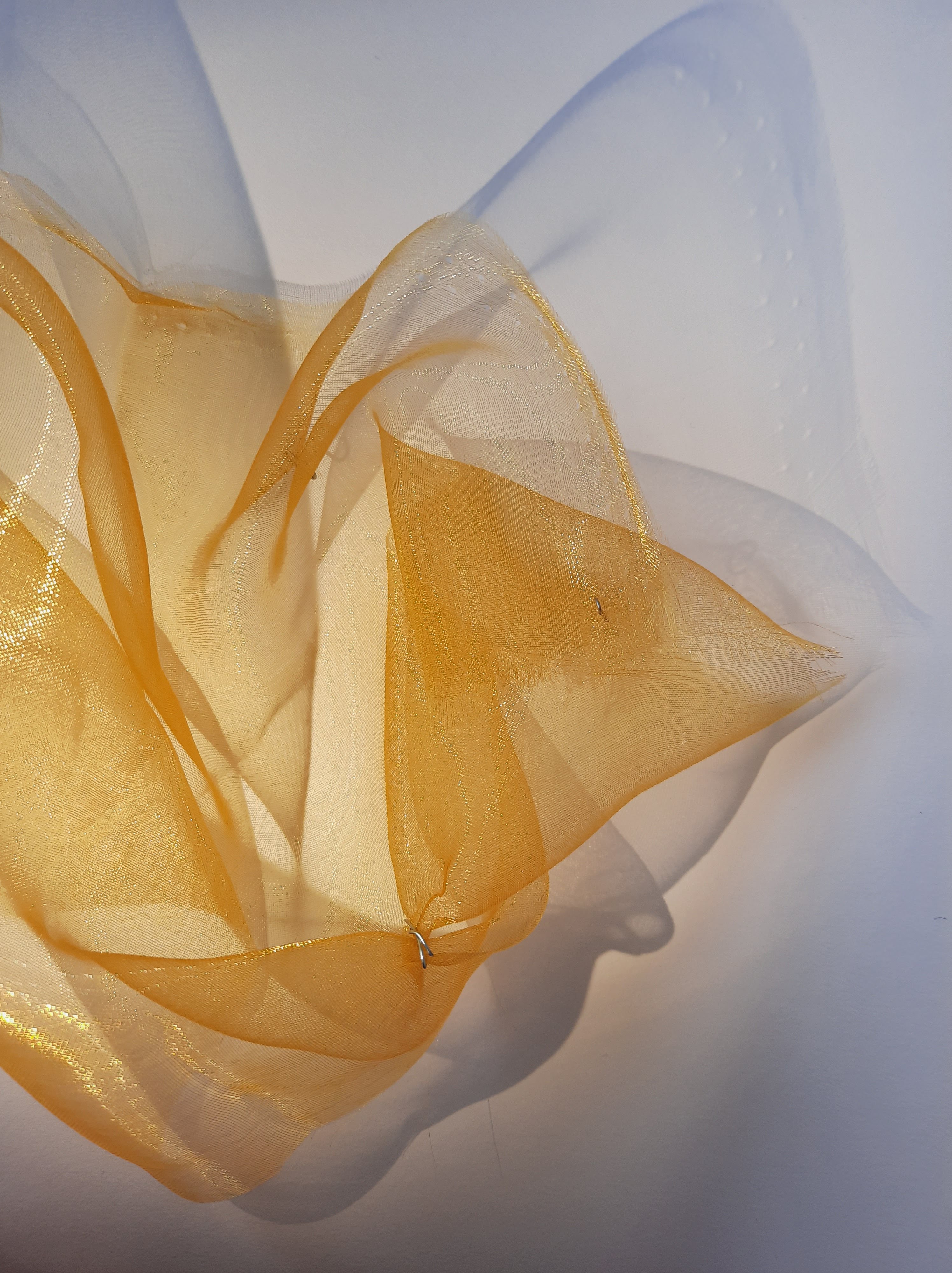
Below is my first model. This model explores the intersection of colour volumes and light.
This model mainly focuses on the techniques and style of O’Keeffe. With this model, I explored the fluid form and depth that O’Keeffe focuses her work around. This model is made to be temporal, as it is moved its form changes. The fabric I used was a sheer chiffon-like fabric. the transparency of the material allows a depth of layering in the shadow cast. The overlaying fabric creates a darker shadow whereas the single film of fabric creates a light and sot shadow. I chose the colour of the fabric to correlate with O’Keeffe’s colour palettes in her paintings.
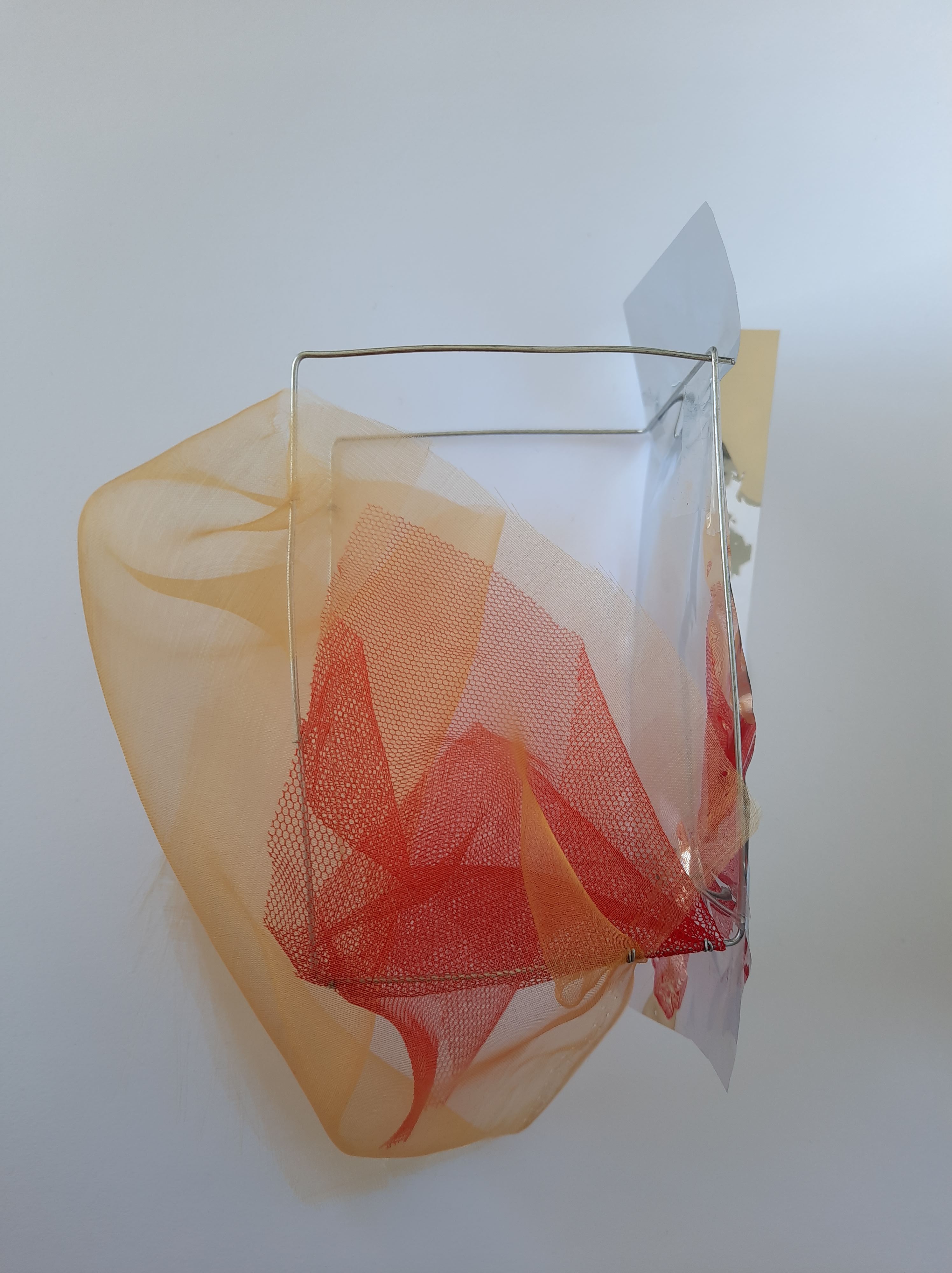
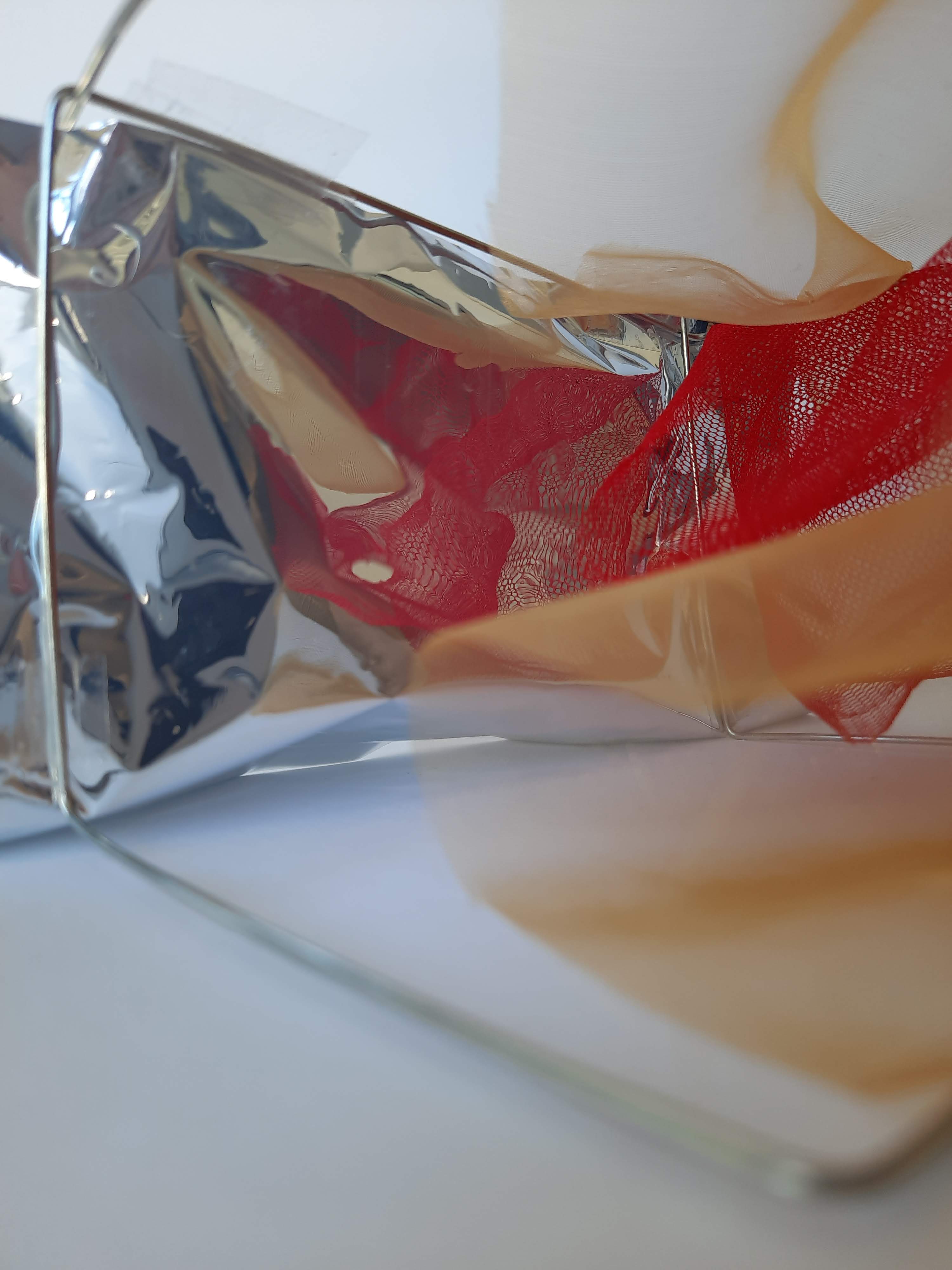
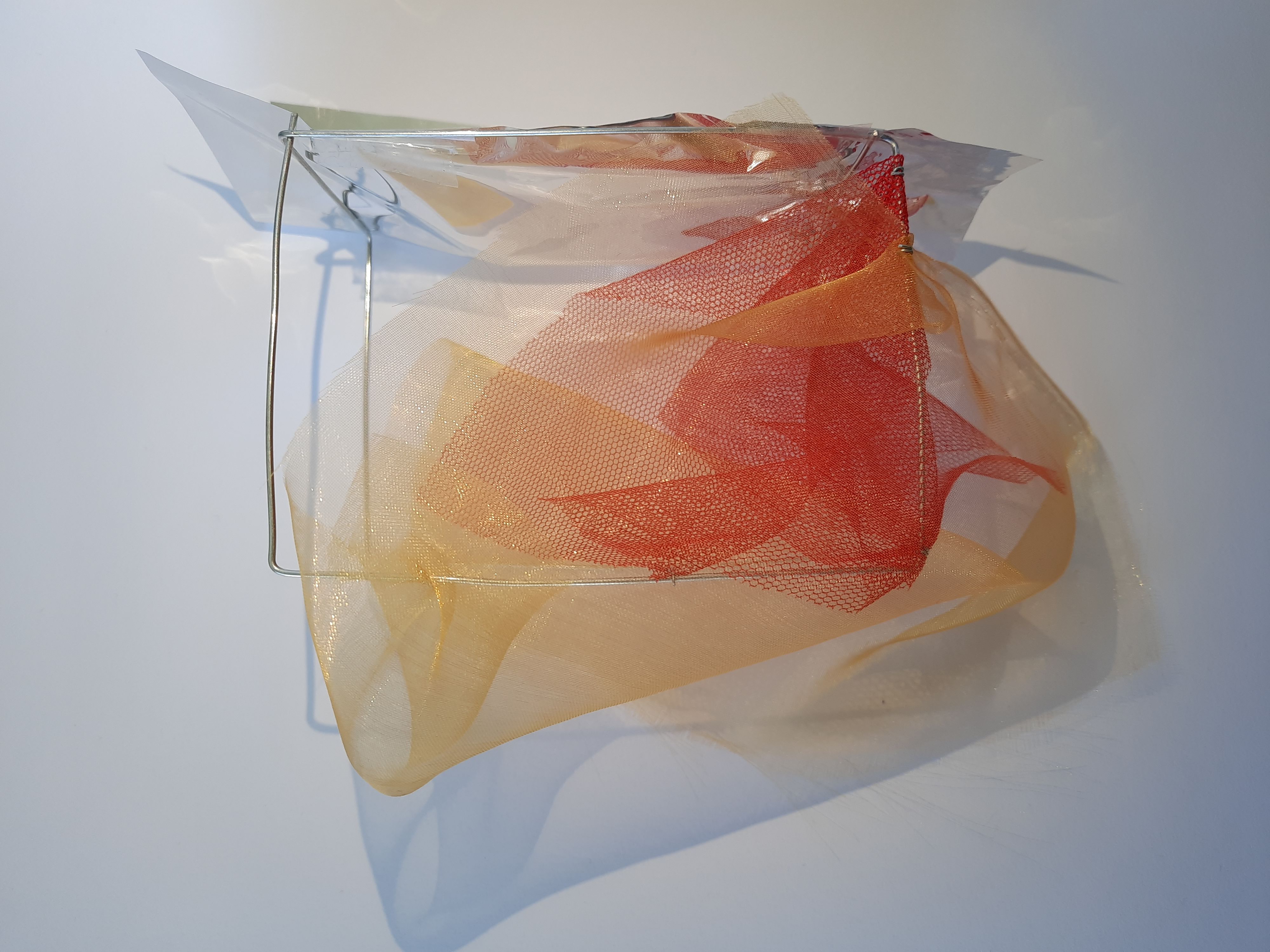
Below is my second model. This model explores surface textures and shadow.
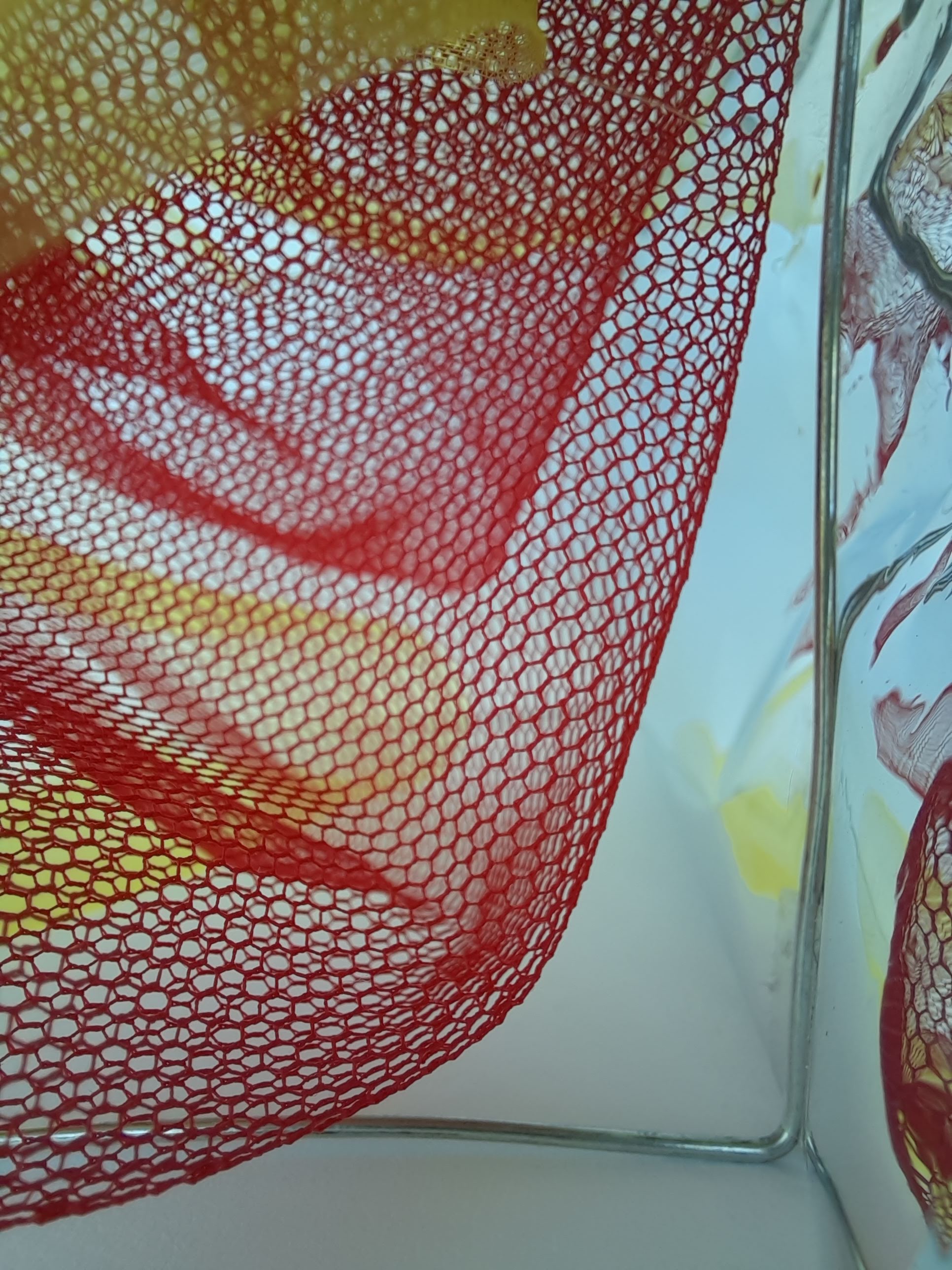
With this model I explore the different texture and form created by different fabrics and material and how they interact with each other, specifically in relation to light. The wire used created structure. Although not an essential part of my study, Kapoor’s work has a large focus on structure and I wanted to include this in my model without it being overpowering. The intertwined chiffon and tulle fabrics reflections were distorted through the glossy, reflective film. The reaction to light was quite interesting. Like the first model, the shadow cast by the fabrics created a layered shadow. If studied closely, the shadow from the tulle expressed the texture of the fabric into a form of print on the white surface. Scattered through the shadow form was a fluid, water-like reflection of light from the reflective film. the model expressed depth not only in its physical form, but also in its reaction and imprint of light.
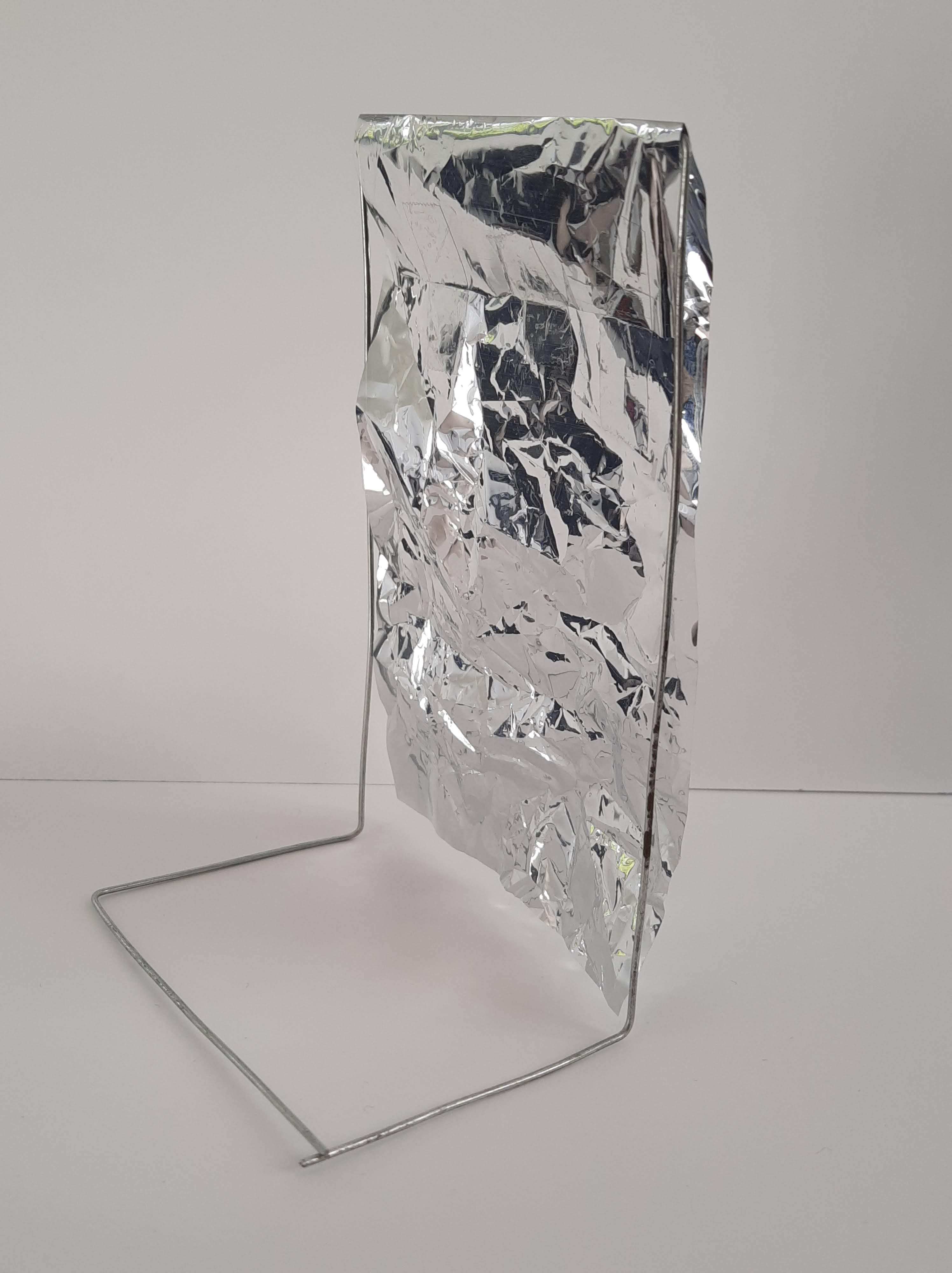
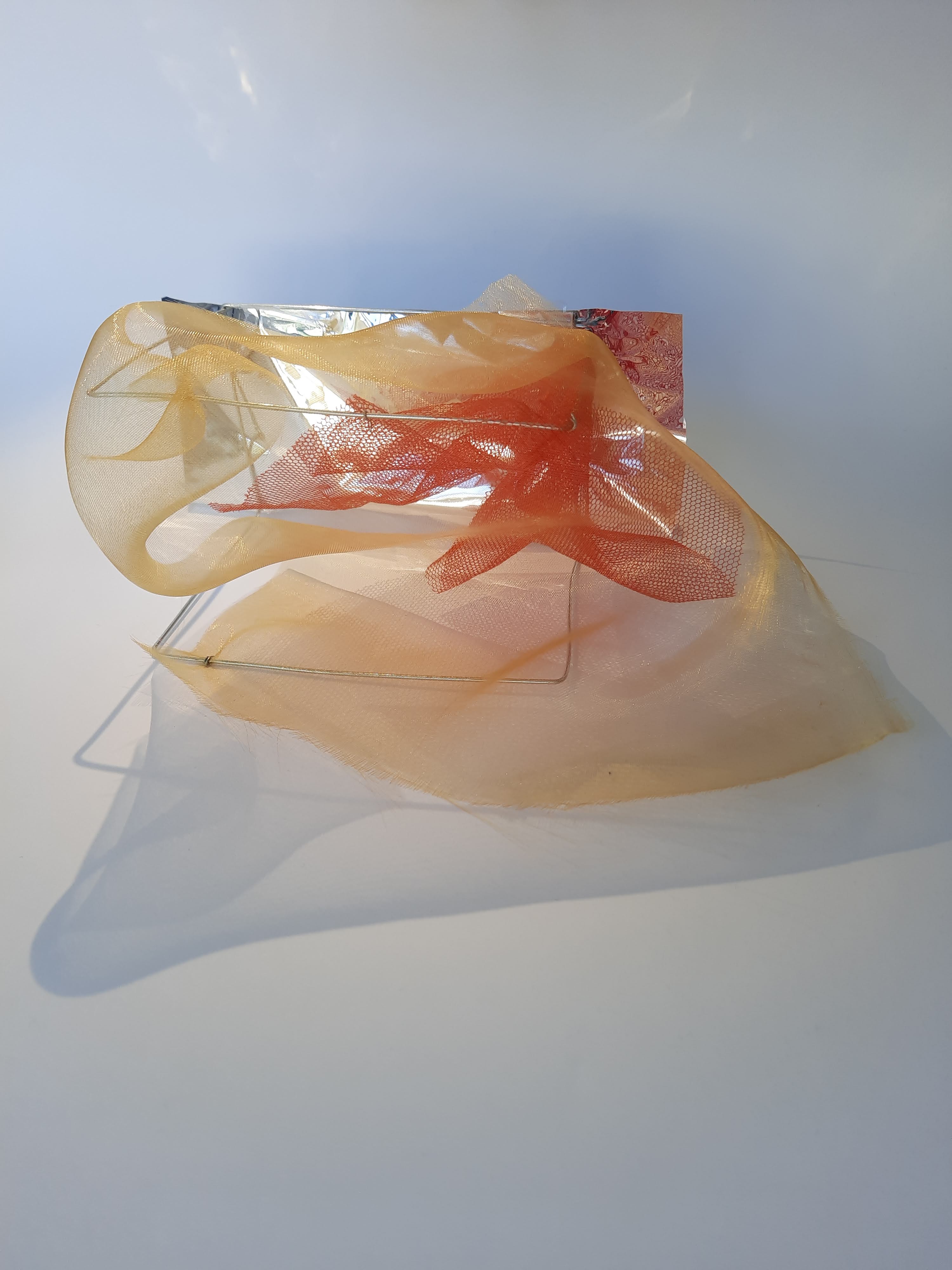
Below is my third and final model. This model connects the first and second model, producing a series of thresholds or transitions between.
This is my third model. This model combines my first and second model together. I noticed in my second model the fluid form and movement of the reflective film. This above model explores the manipulation of light through distorted reflection and the soft, fluid form that this projection creates. Although the wire brings back a sense of structure. this model is constructed to allow me to photograph the affects of lighting and its reaction to the fluid reflective film against a plain curved surface.
Above is Kapoor’s Cloud Gate located in Chicago, Illinois. This is a reflective stainless steel structure that is 10m x 20m x 12.8m in dimensions. The sculpture has become a well known tourist attraction for the city of Chicago.
Kapoor’s C-Curve is a sculpture that has been installed in many different locations over the years. The sculpture, like a lot of Kapoor’s work, is made from reflective stainless steel. The dimensions of this piece are 220cm x 770cm x 300cm.
Above is Kapoor’s Sky Mirror (for Hendrik), another sculpture made from stainless steel. Kapoor designed and created a range of different Sky Mirrors located all around the world. This specific Sky Mirror is 6.5m x 2.5m x 2m.
Kapoor manipulates and plays with light and image in this reflective sculpture. He uses the changing and temporal light and colour in the surrounding environment to create the piece. The surrounding environment is the sculpture, it acts as the paint on the canvas of the stainless steel.
Suh most frequently uses a sheer translucent fabric as seen above in his work Passage/s. This piece can be found at the Victoria Miro Gallery in London. Passage/s is a combination of spacial sections that replicate his homes and studios he has lived and worked in around the world. The transparent fabric creates a ghostly and nostalgic impression of the space that the Suh once occupied. The impressions of Suh’s environment directly influences his designs and creative practice.
Above is one of Hatoum’s pieces of work that I found most interesting and inspiring. This is called Light Sentence, created in 1992. It is 198 cm x 185 cm x 490 cm in dimensions and is made up of galvanized wire mesh lockers, an electric motor and light bulb. I have become increasingly interested in the affect of light and shadow in creating an atmosphere, mood and experience. I find it fascinating how the shadow engulfs the space and even when not inside of the ‘cage’, there is a sense of encapsulation and surrounding. The shadow and light create a sense of space and structure outside of the physical structure of the lockers.
Hatoum’s work is structured, simple yet effective. Her work creates a sense of space in the surroundings and environment of her work; they don’t sit alone in a vacuum, but have an impact and create meaning and atmosphere in the spaces in between, where her work doesn’t physically exist.
Olafur Eliasson is a Danish-Icelandic artist born in Copenhagen, Denmark in 1967. He is well known for his large scale installations and sculptures and likes to use aspects of the elements such as water, light and air temperature.
Eliasson’s Beauty was an installation in the Tate Modern in London in 1993. The affect of the work was created by a spotlight, water, nozzles, wood, hose and pump. What I like about this work is not only its illusion-like affect, but also its ability to adapts and change depending on the way the viewer occupies, moves and observes the space. I am really interested in exploring the viewer as a part of the space in my own work.
This piece by Eliasson was an installation at the Tate Modern, London in 1995. It also appeared in many other spaces around the world over the years. The work was created with a spotlight, mirrors, projection foil, motor and tripod. This work looks more into the manipulation, transformation and projection of light. I found that it was very science and physics based and instead of showing just the final aesthetic result, Eliasson exposes the making and creation of the lighting affect. I am very interested in the organic, abstract and euphoric image projected on the screen and its visual movement.
Although the image above was taken at Studio Olafur Eliasson in Berlin in 2010, Your uncertain shadow (colour) was installed also at the Tate Modern in London. The installation consists of HMI lamps (green, orange, blue, magenta), glass, aluminium and transformers. What is intriguing about this work is the influence that the viewer has over the design and space. Something that will carried through to my own design from this work is the element of interaction between the viewer/occupant and the space.
What is most inspiring about Eliasson’s work is the way he incorporates the viewer into the design to create a more immersive experience. By leaving some of the creation up to the viewer, it gives the design a sense of chance and temporality which is something I am considering exploring in y own work.
Above is one of Millar’s pieces that I found most interesting. The painting consists of acrylic and oil paints on paper. What I like about this painting and also Millar’s style is the sense of depth and form through her dark line-work. I also like this specific colour palette; the pastel colours are given depth through the application of a darker colour such as black. The colours are soft and aren’t in your face.
Yayoi Kusama is a Japanese contemporay artist who is most well known for her installation art. With this said, she also practices in sculpture, painting, fashion, film, performance and poetry. She was born in Matsumoto, Japan in 1929.
Infinity rooms is a collection of installations by Kusama that have appeared in galleries all around the world. The rooms are a combination of mirrors, acrylic, plastic and lighting. The Infinity mirror rooms were an application of her repetitiveness in her paintings into the form of an experiential space.
What I find most interesting and inspiring about Kusama’s work is the way she uses reflection and light to create an illusionary sense of space and depth. The repetition of image creates a immersive sense of calm, peace and serenity.
Georgia O’Keeffe was one of the first American artists to explore pure abstraction. Born in Wisconsin in 1887, O’Keeffe lived and worked in New York and New Mexico. It was in New Mexico where she drew her inspiration from during the majority of her career. In the mid 1950’s, she traveled internationally to draw inspiration from places such as Peru and Mt Fuji. O’Keeffe painted her last unassisted painting in 1972 due to failing eyesight before her death in 1986.
Black Iris Georgia O’Keeffe 1926 Oil on canvas 91.4 cm x 75.9 cm
We were given a series of questions to answer in relation to our artist model research. Because I have done previous studies and paintings inspired by Georgia O’Keeffe and am a fan of her work, I decided to start with answering the questions in relation to her and her work.
Find out when and where they produced their work.
O’Keeffe produced majority of her work from her successful years in northern New Mexico from mid-late 1920’s until her death in 1986. Her work was not only inspired by the landscape, indigenous at and adobe architecture, but also her abstracted style inspired by Arthur Wesley Dow as opposed to a realism approach.
2. Identify the key conceptual ideas that underpin their work.
O’Keeffe creates layering affects using tones and shades of similar colours to create a sense of depth in her work. She also, in a range of her works, explores a subject in a magnified sense and abstracting it to give the work another context.
3. Identify their critical position on colour in relation to their work (i.e. how is colour applied, in what proportions, what particular theories about colour inform the making of the work, how does colour change dependent upon the environment in which the work is viewed.
O’Keeffe applies colour to surface through mediums such as oil paints, pastels, watercolours and charcoal along with sketches in graphite. She uses a range of warm and cool colour in each work. She uses tints and lightened versions of vibrant colours, specifically focusing on blues, reds, yellows and greens. Because she uses lightened, pastel colours, the pieces still stand out and catch the eye but aren’t overwhelming. She also allows space to create depth within her work with deeper, darker versions of the colour. O’Keeffe uses complimentary colours in a hidden way. She applies white versions of complimentary colours to make the work pop and other aspects of the painting stand out without overloading on colour.
4. What type of surface treatments are used in the work? Do they use matte, satin, or gloss paints or material finishes or all of them together? Why might they do this and what is the effect of doing this?
O’Keeffe often used either oil on canvas in her works or watercolour on paper. These were her two main mediums and techniques she used. She also used charcoal and pastels, but these works aren’t as prominent.
5. What scale are the artworks you have researched? How does scale impact on how the work is experienced and how colour and materiality are perceived?
O’Keeffe’s works were often on average between 50-100 cm x 50-100 cm. This isn’t extremely large or extremely small but because of her work consisting of magnified abstracted subjects. This scale can make the painting seem larger and have more of a presence.
To further my exploration and research of O’Keeffe, I did some quick drawings to investigate aspects of her work.
Drawing 1
Drawing 2
Drawing 3
In the first drawing I explored form, depth and visual movement through the fluid abstract shape and folds. This was done with pencil on paper.
In my second drawing I explored O’Keeffe’s colour palette in some of her work. I also explored through watercolour because this was a medium that O’Keeffe sometimes used. The black outline and slight pencil shading explored form but I didn’t want to it to distract from the stud of colour.
The third drawing I tried to combine the aspects I explored in my first and second drawing. I used graphite pencil to explore form, depth and movement and applied colour by coloured pencil to highlight certain aspects. I didn’t really like the way that this drawing turned out but glad that I explored it.
RESEARCH CONCLUSION
After some indepth research into a variety of artists and designers, I have come to the decided to focus my work on Georgia O’Keeffe and Anish Kapoor.
I chose Georgia O’Keeffe because not only am I a fan of her work, but I also see similarities in my own practice with the exploration and focus on form, depth and materiality. I want to explore this further. Also, O’Keeffe’s work is created through wet media. I used to paint a lot in high school and want to take this opportunity to explore the use of paint in terms of spatial design.
The reason why I chose Anish Kapoor is because of the way he explore lights, colour and image through reflection. In previous model making exercises I explored reflective surfaces to iterate the idea of perspective changing the view of something. Ever since the walk to the site in the first week, reflection, filtration and manipulation of light, shadow, colour and image has been a focal point for me. I did do research on other artists/designers that explored their work through reflection and mirrors but what interested me most about Kapoor was how it was the environment and surrounding of his sculptures that created the sculpture; it acted as if they were dependent on each other. In my work I am focusing on highlighting the disregarded through change in movement and perspective and Kapoor’s work best correlated to my ideas.
O’Keeffe and Kapoor’s work are very different in many aspects but I think that exploring fluidity, form, depth, materiality with reflection, manipulation and filtration of light, shadow and image could create an interesting and unique combination that best explores my ideas and interests as a designer.
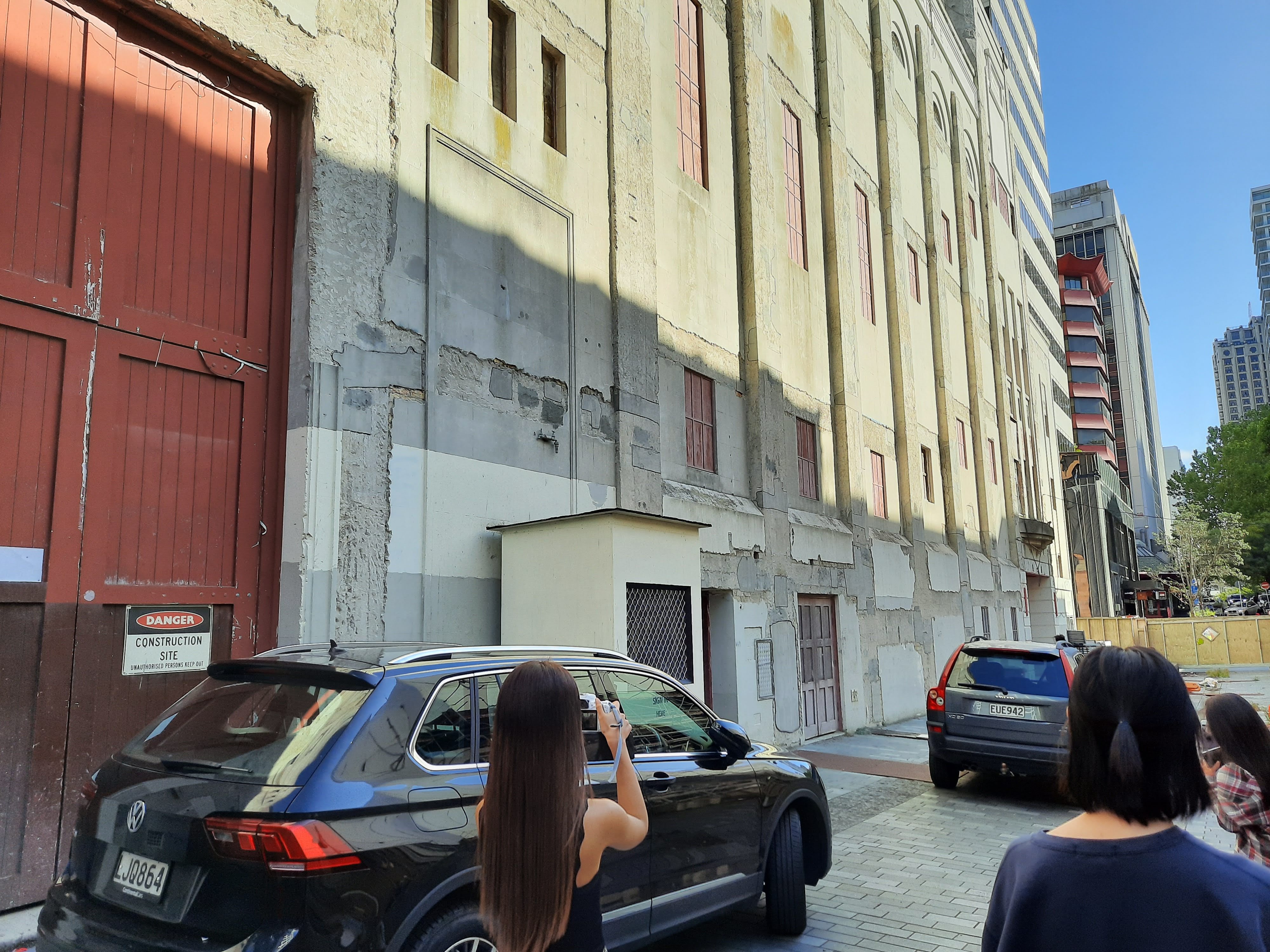
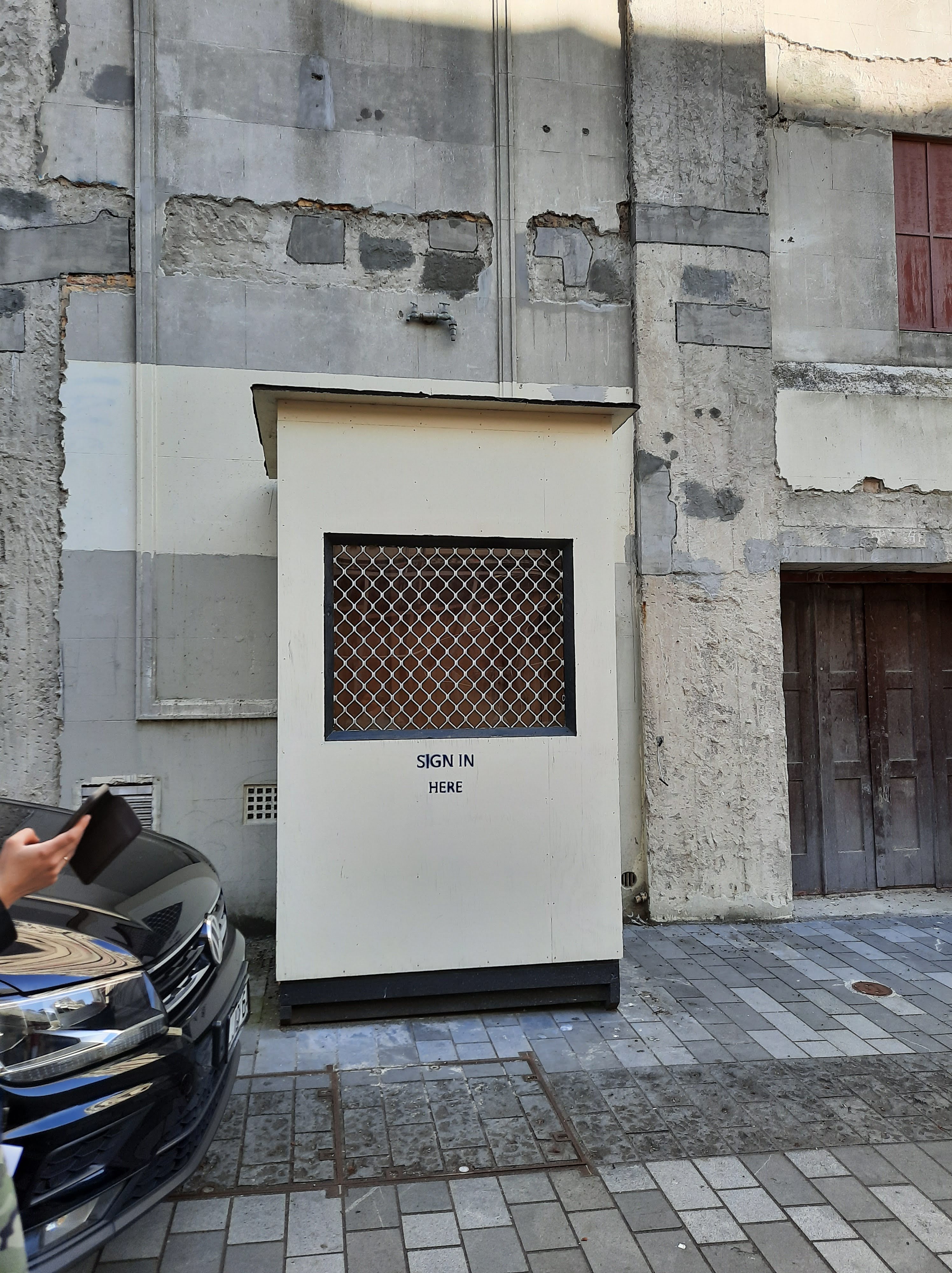
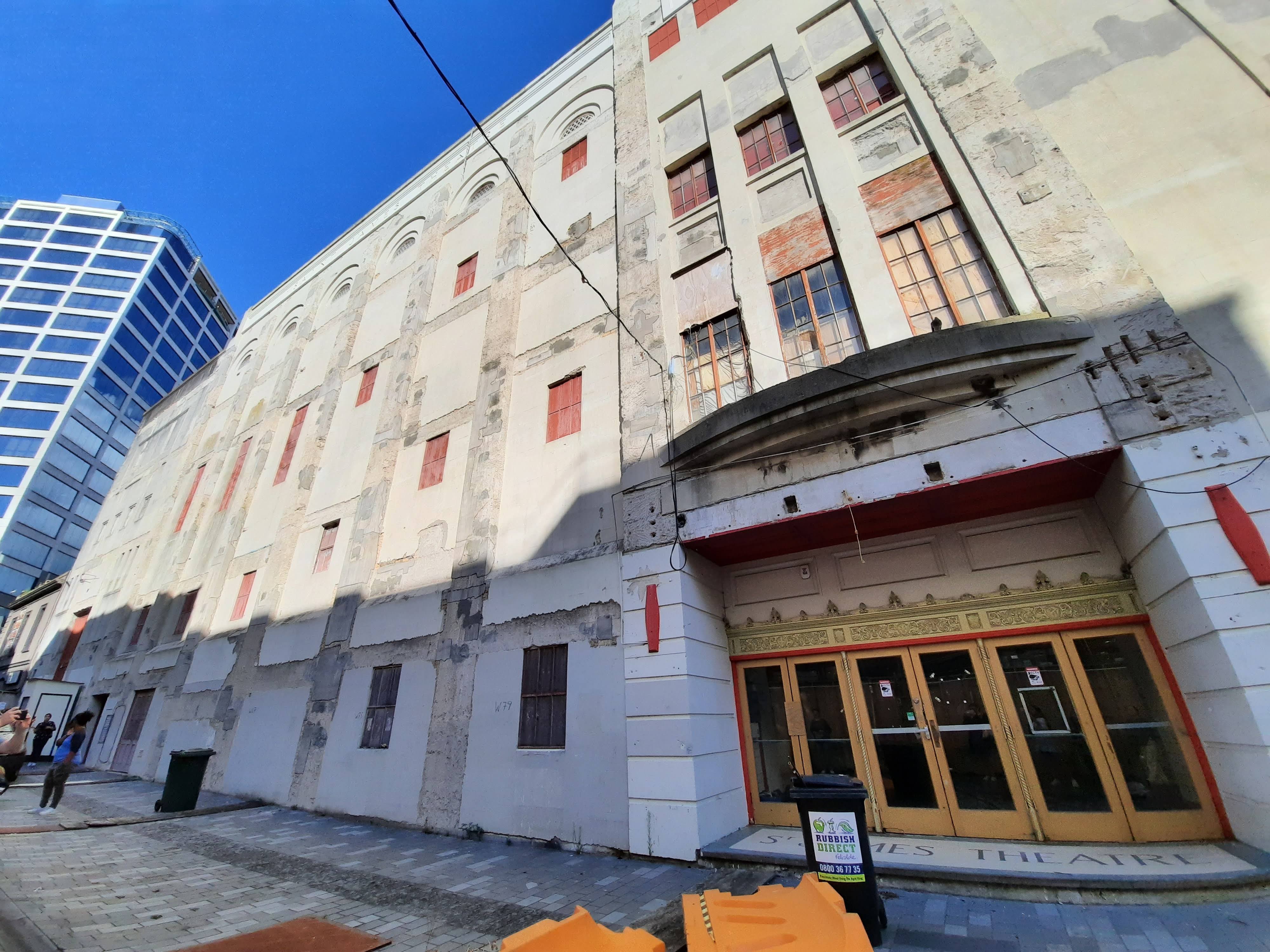
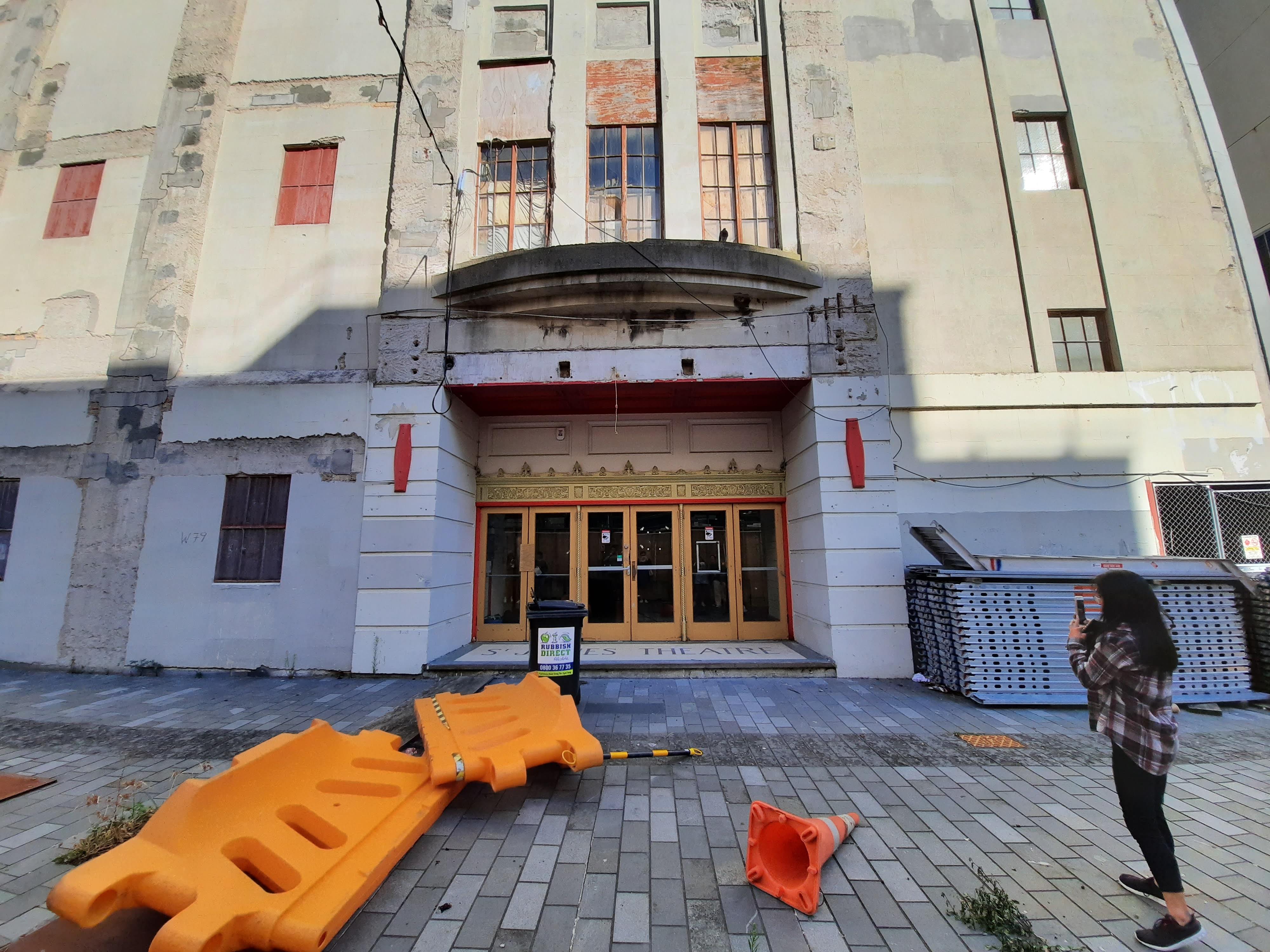
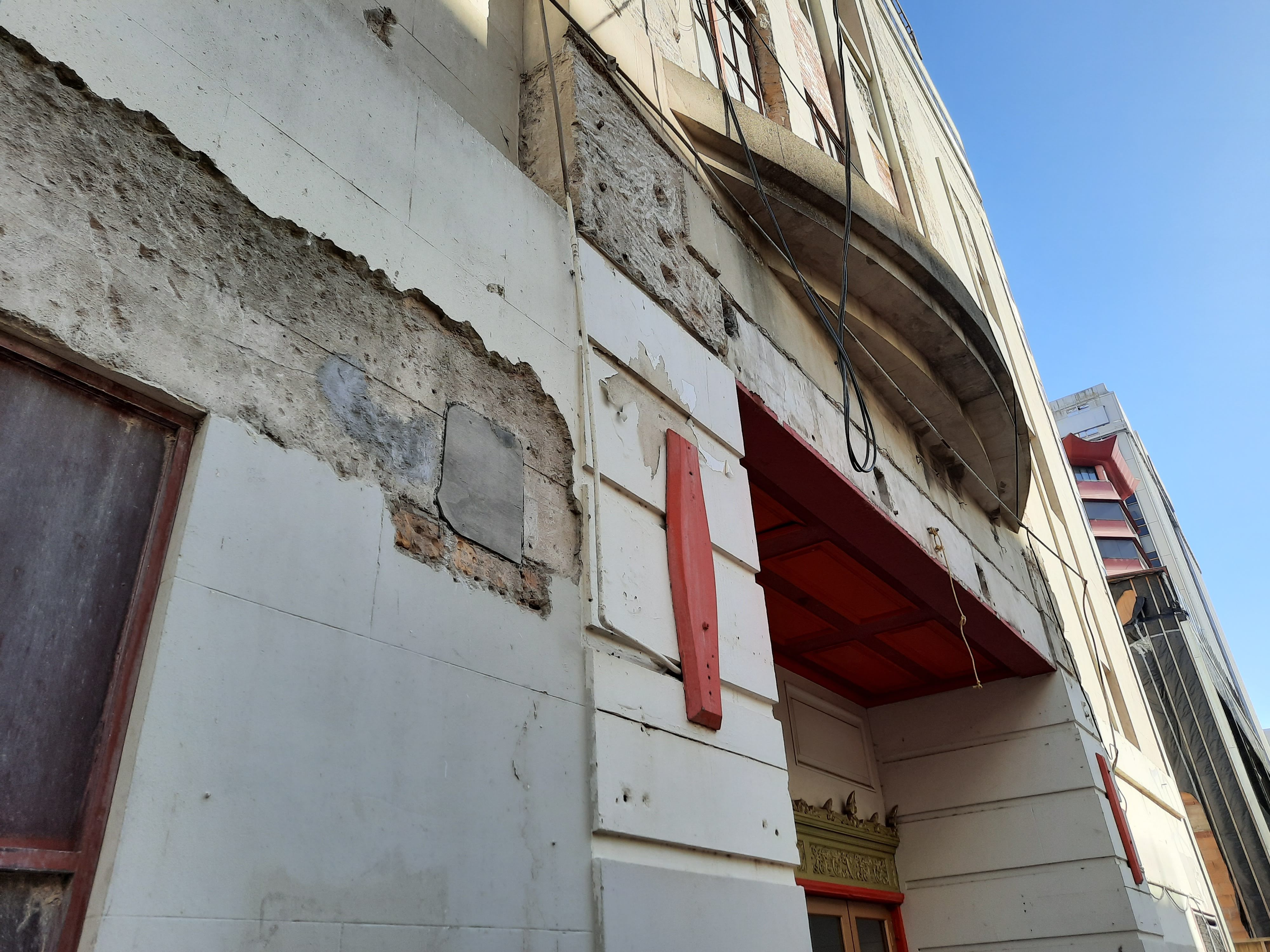
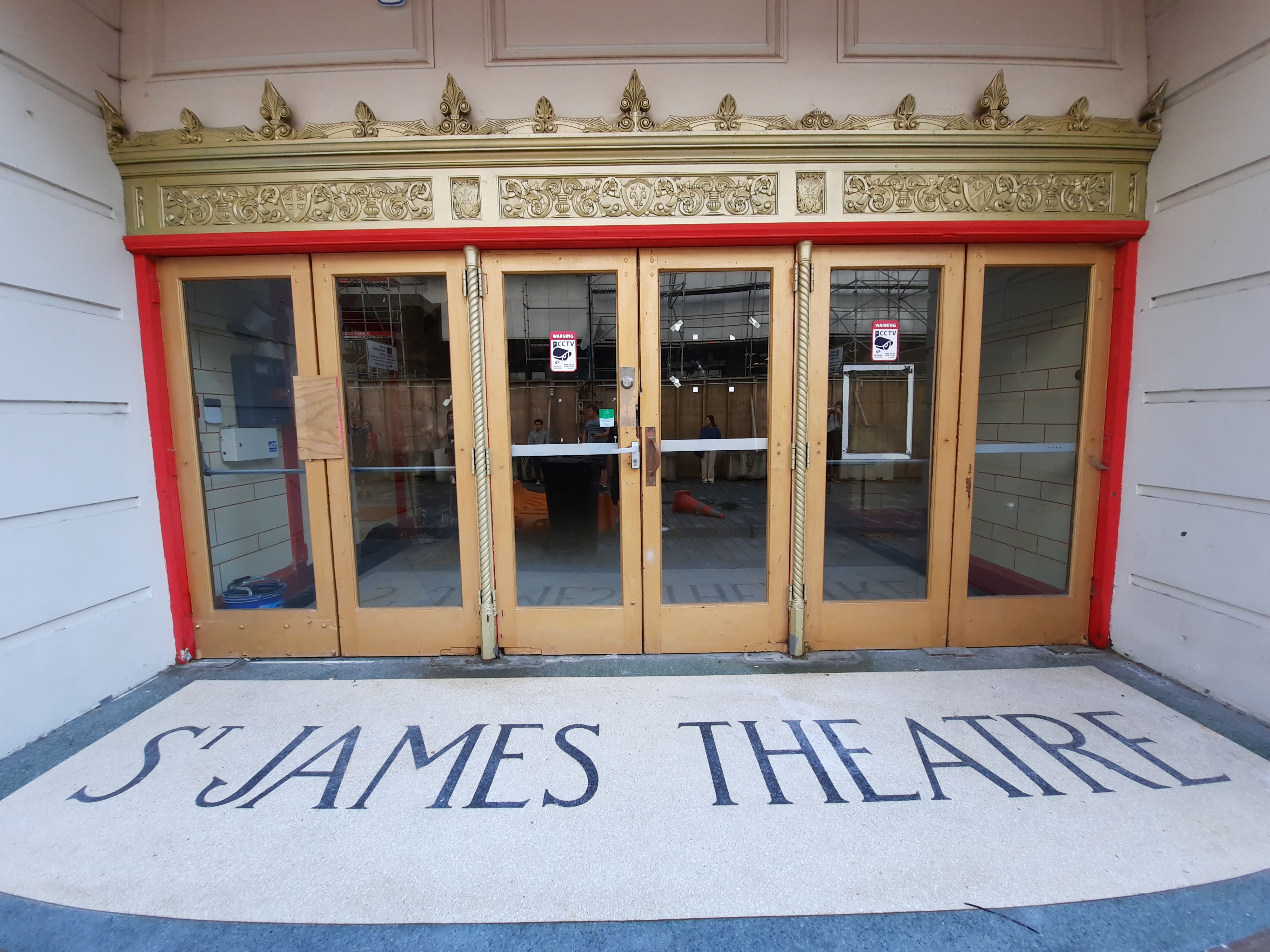
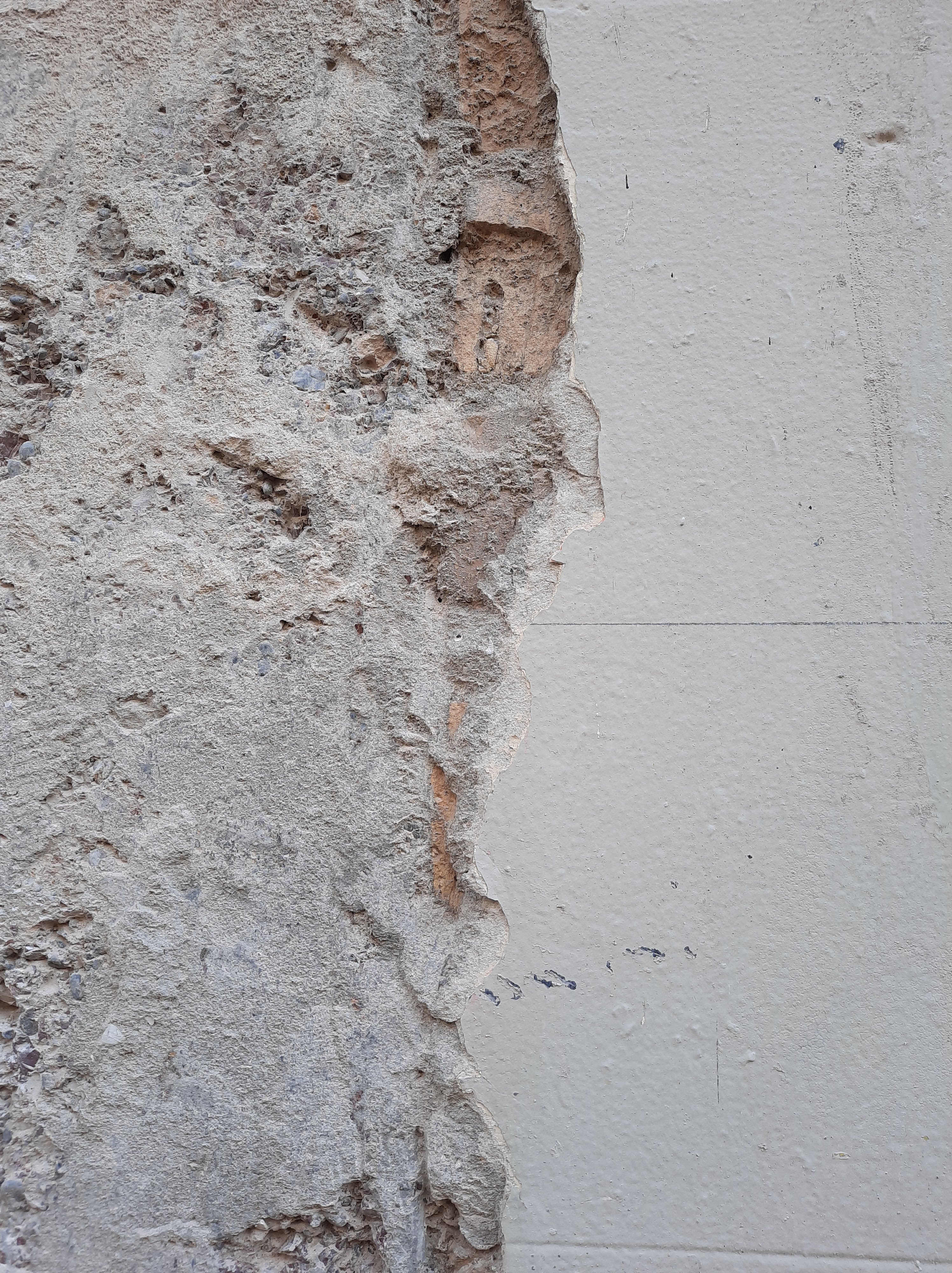
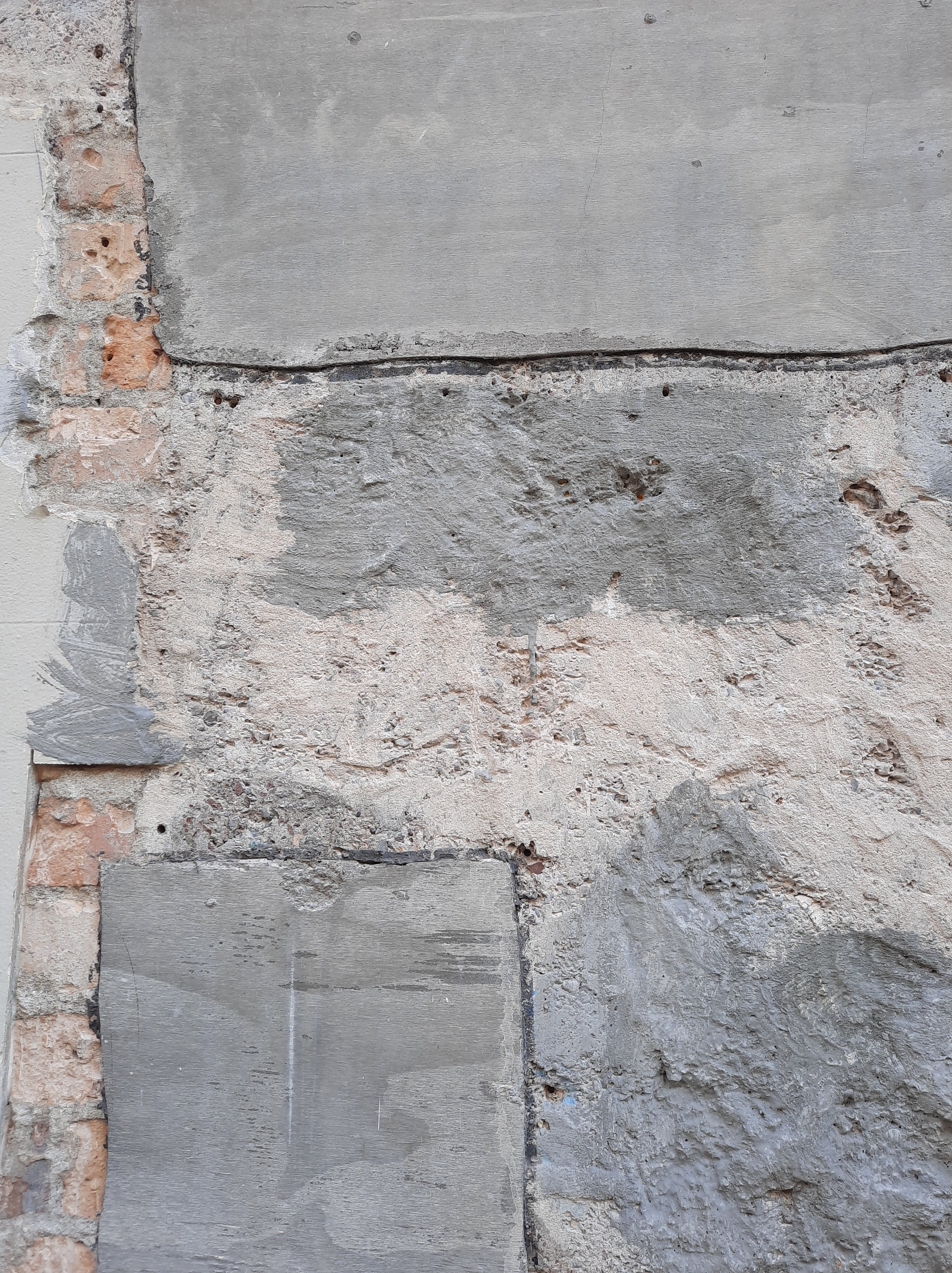
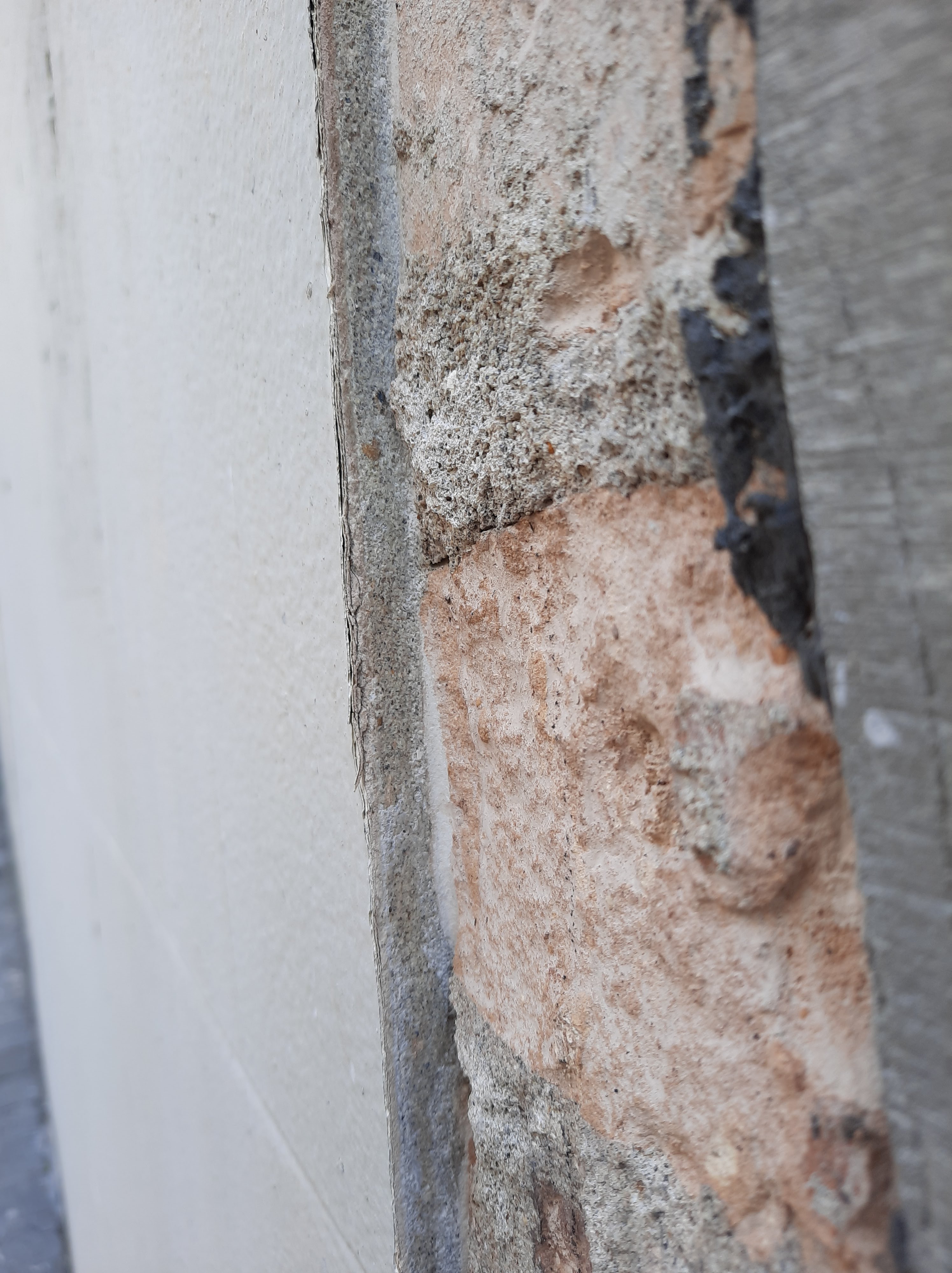
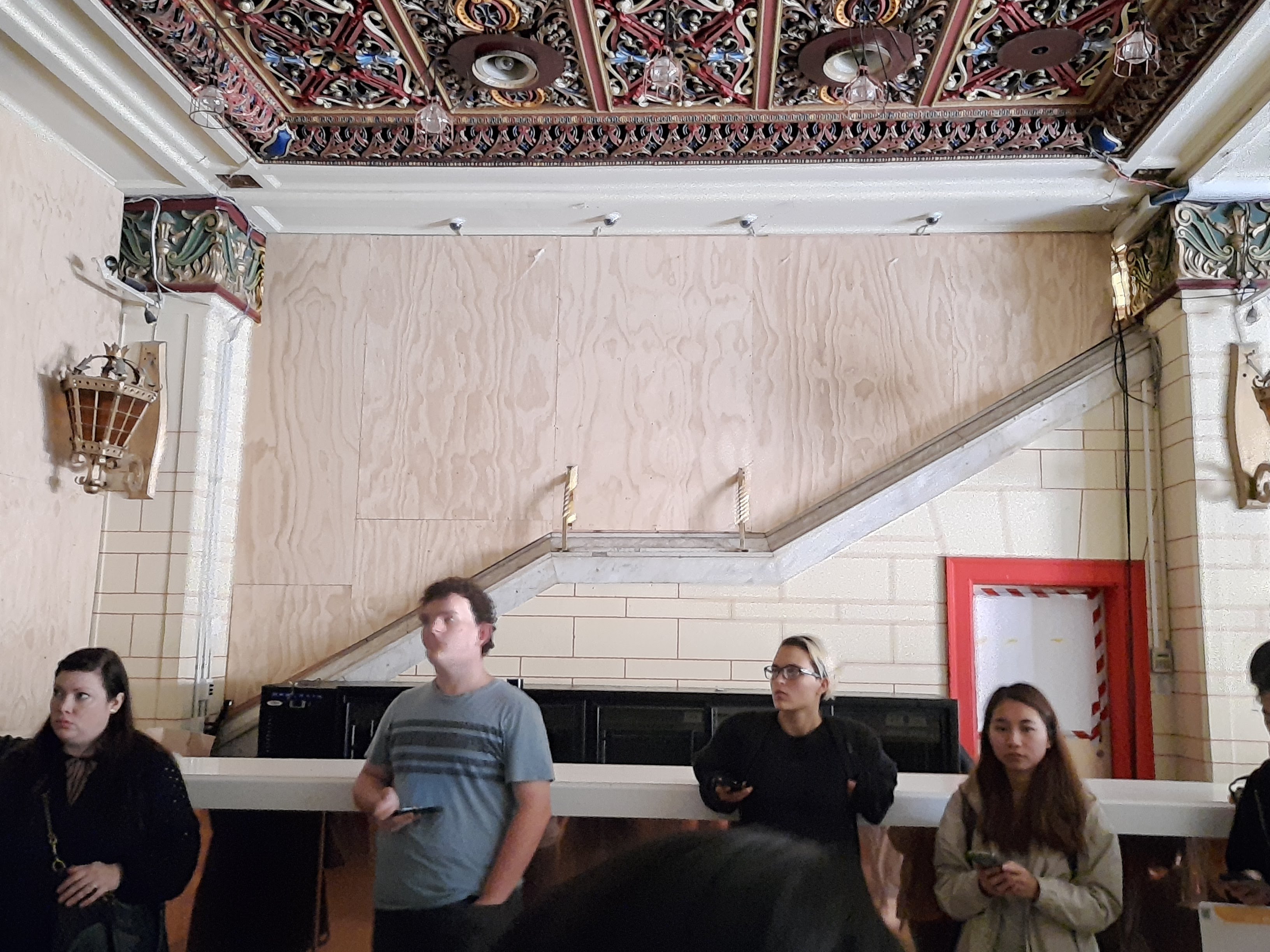
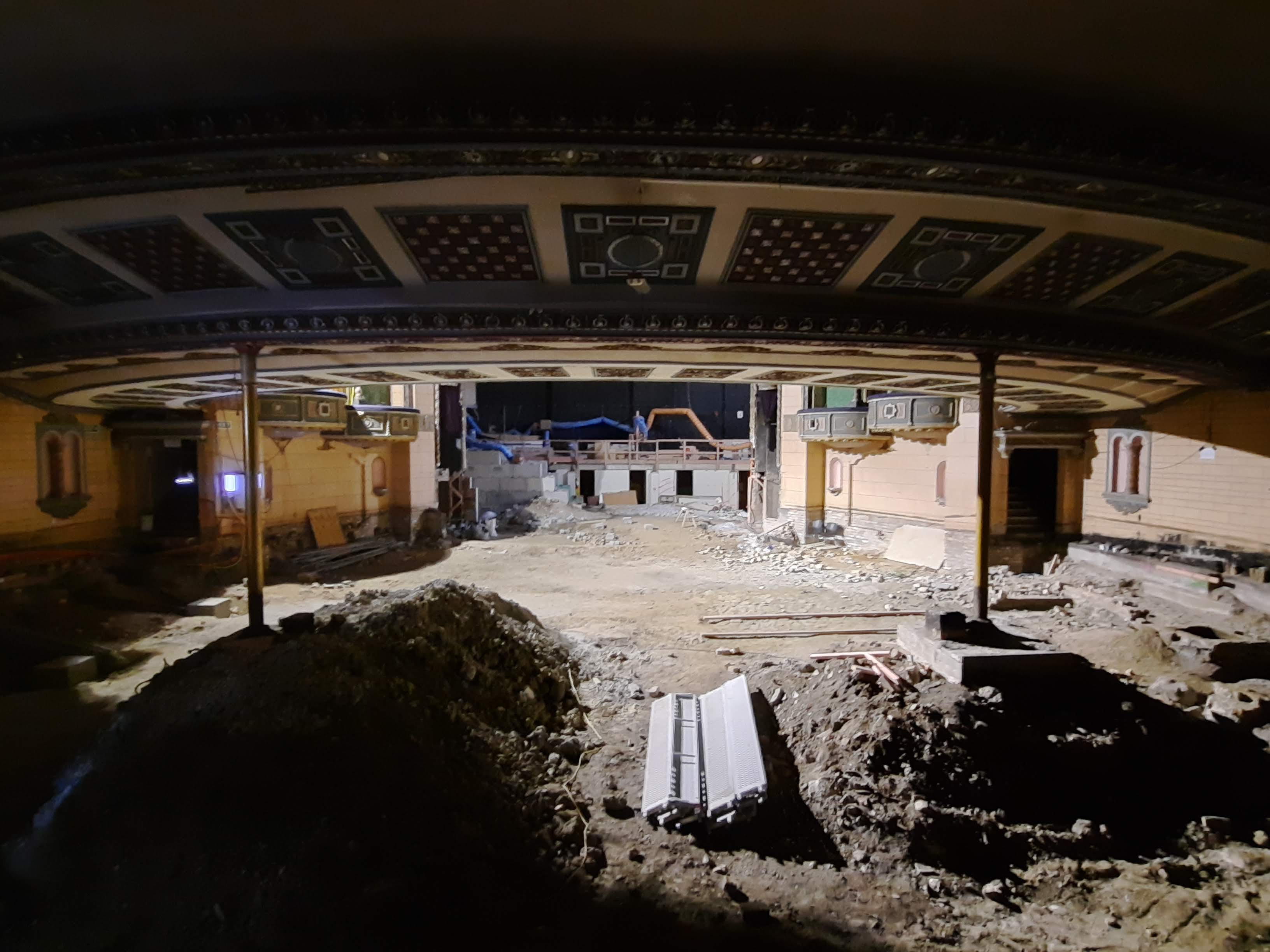
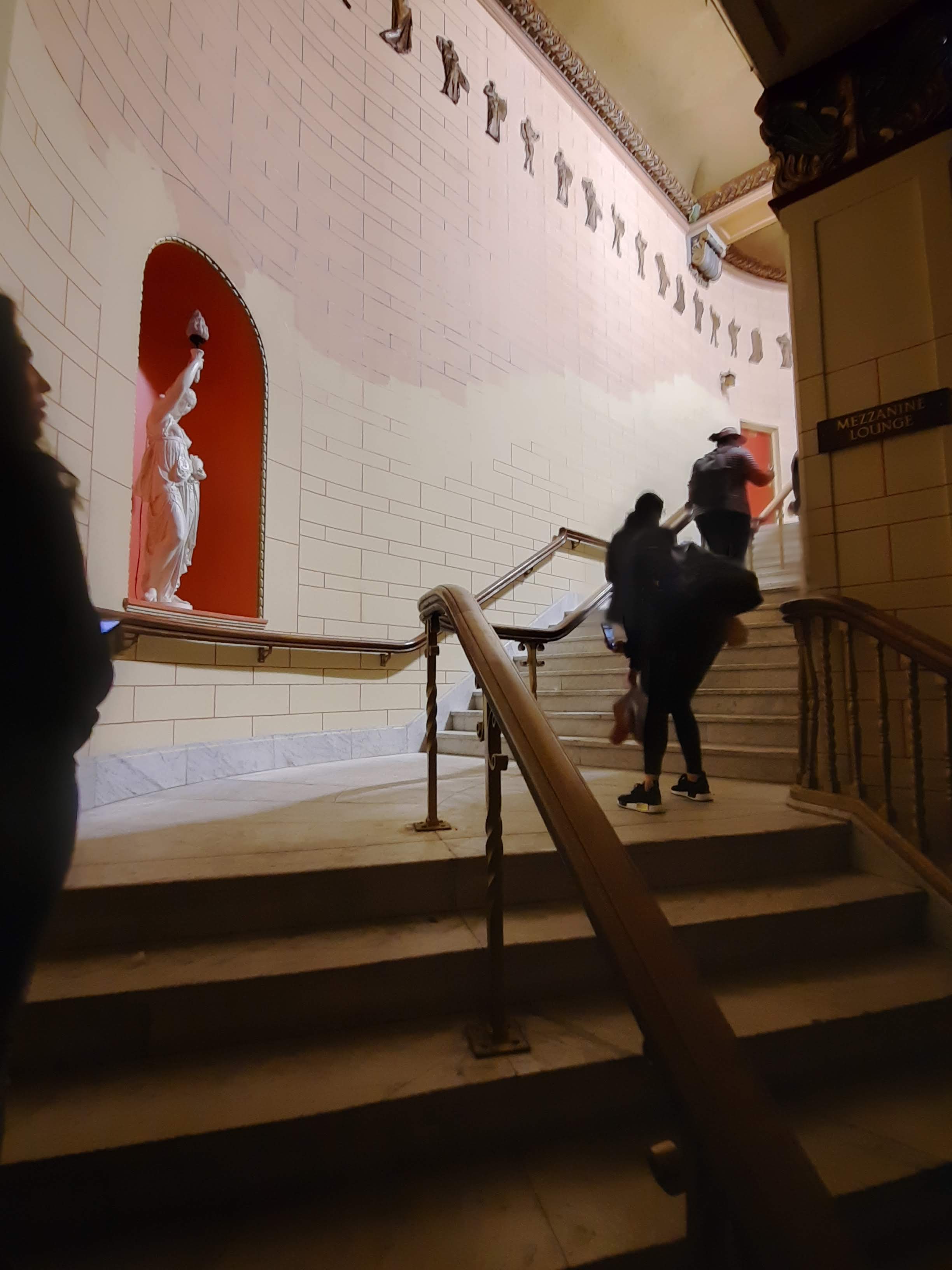
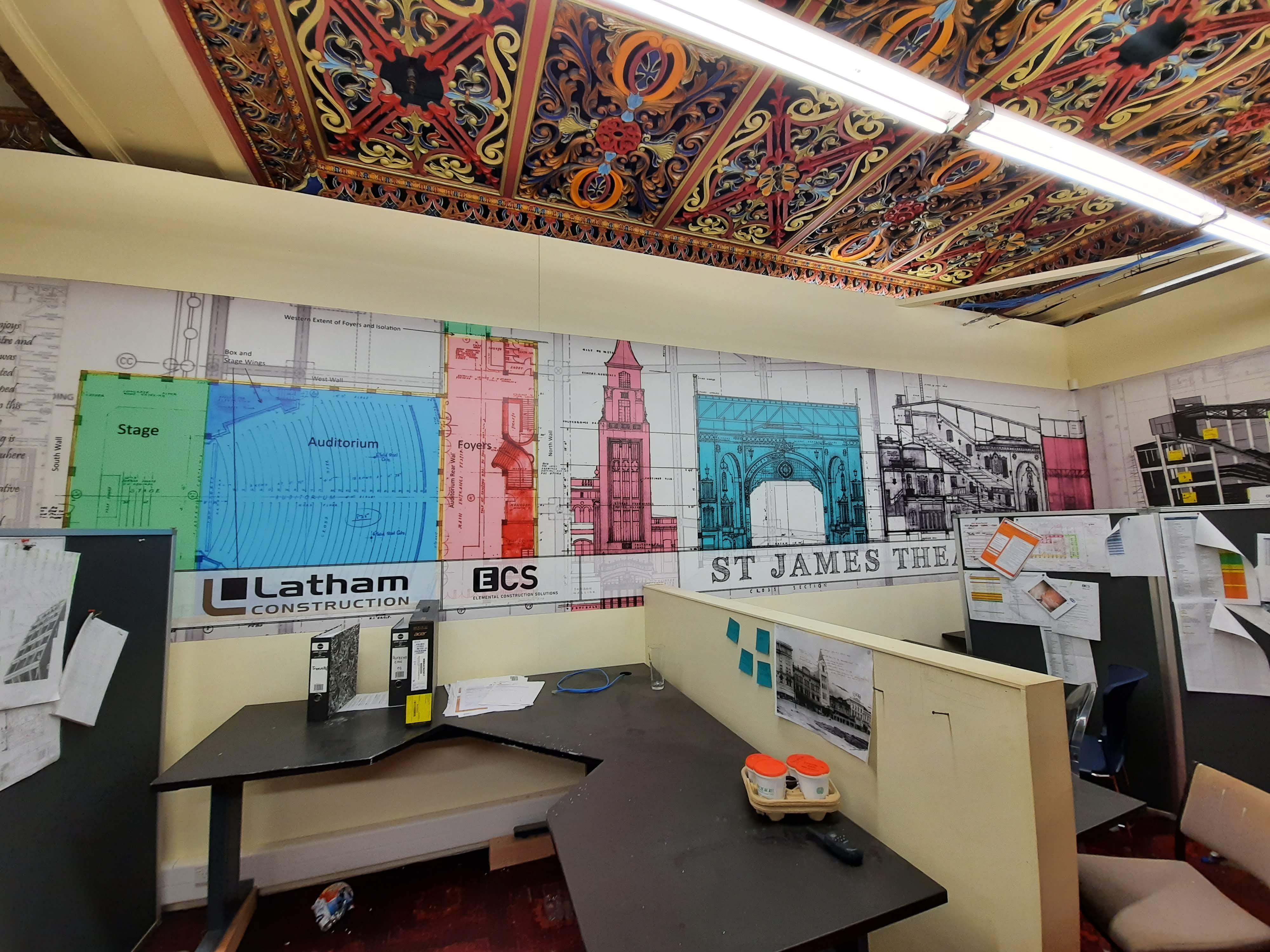
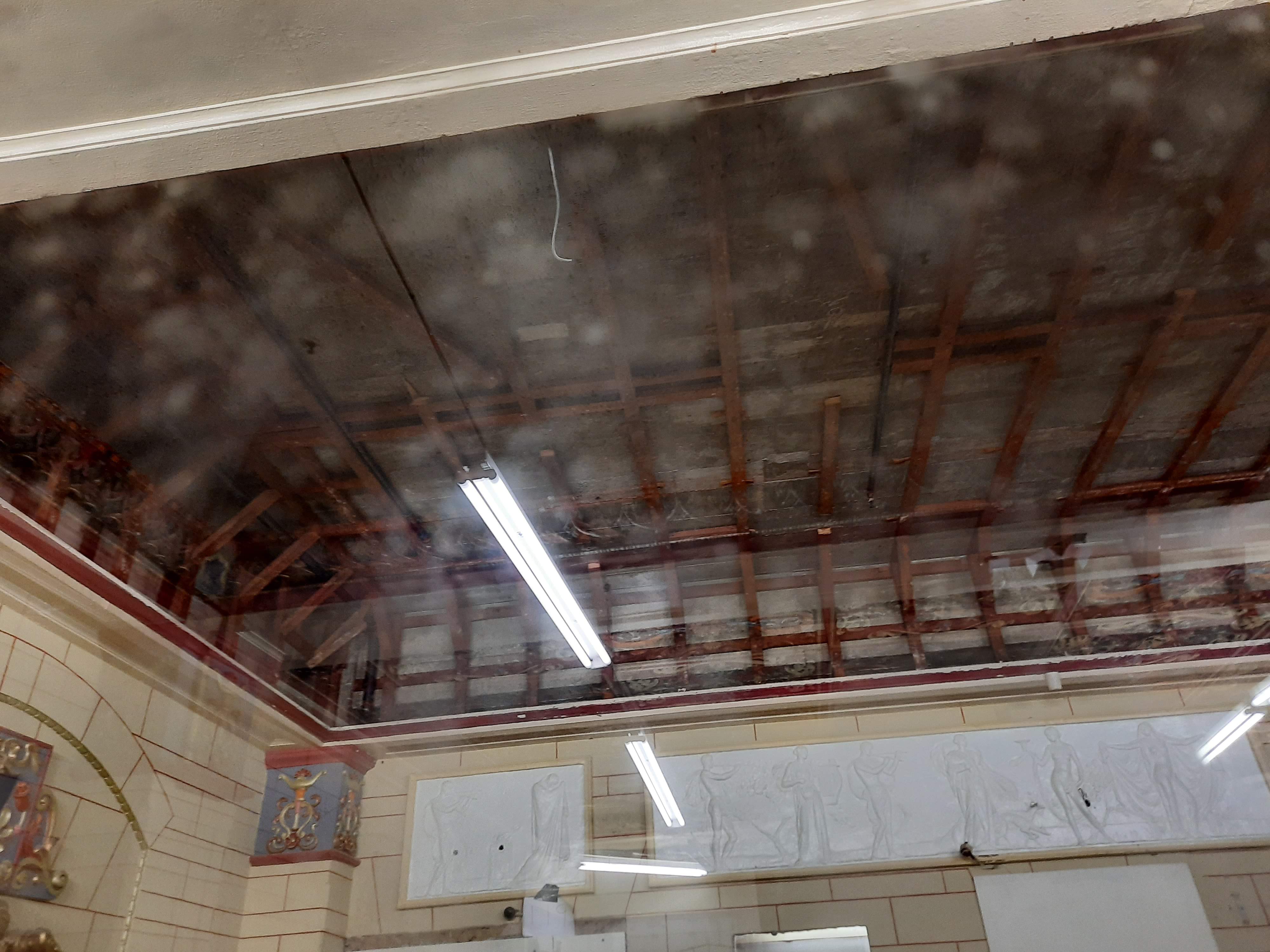
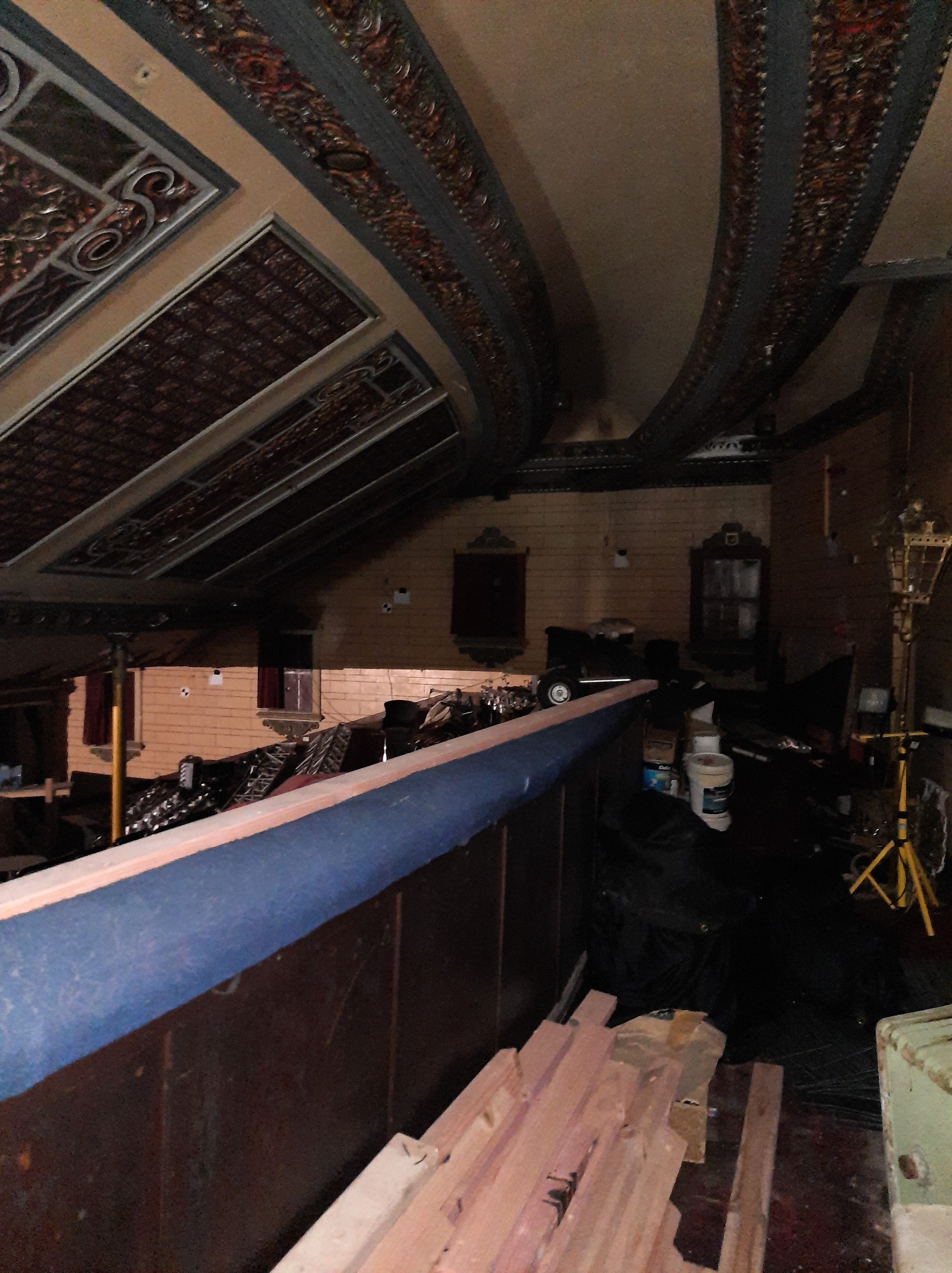
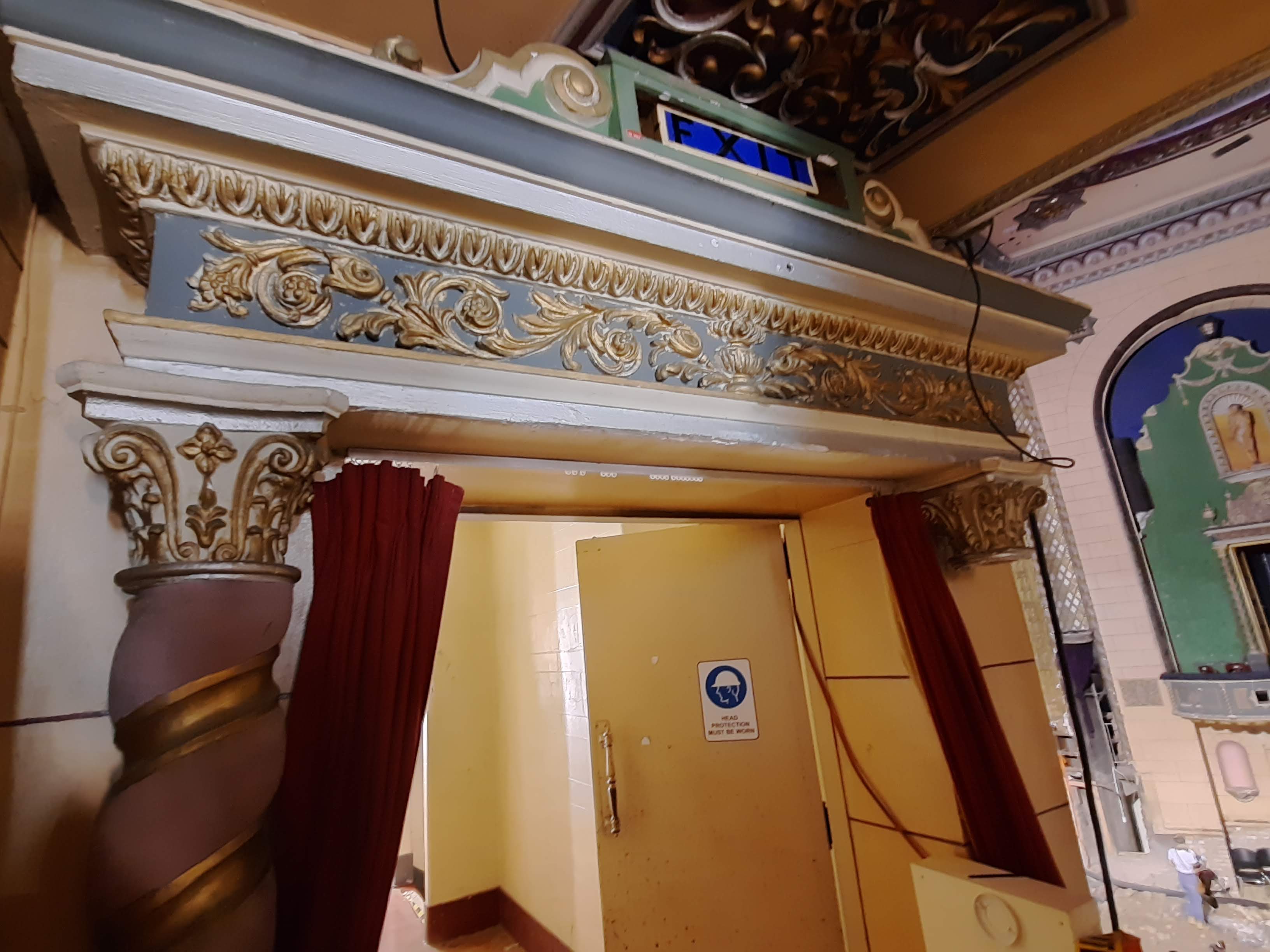
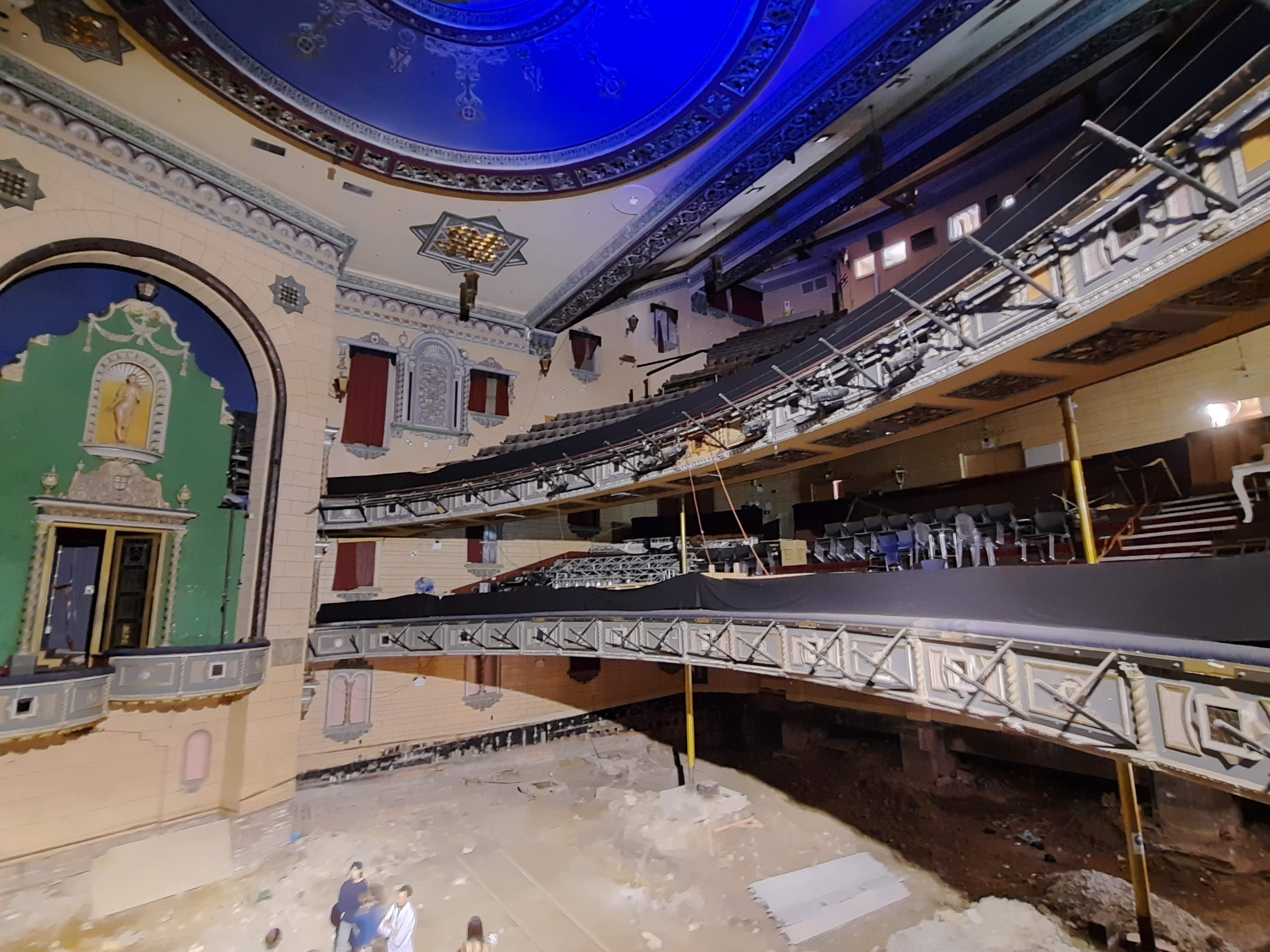
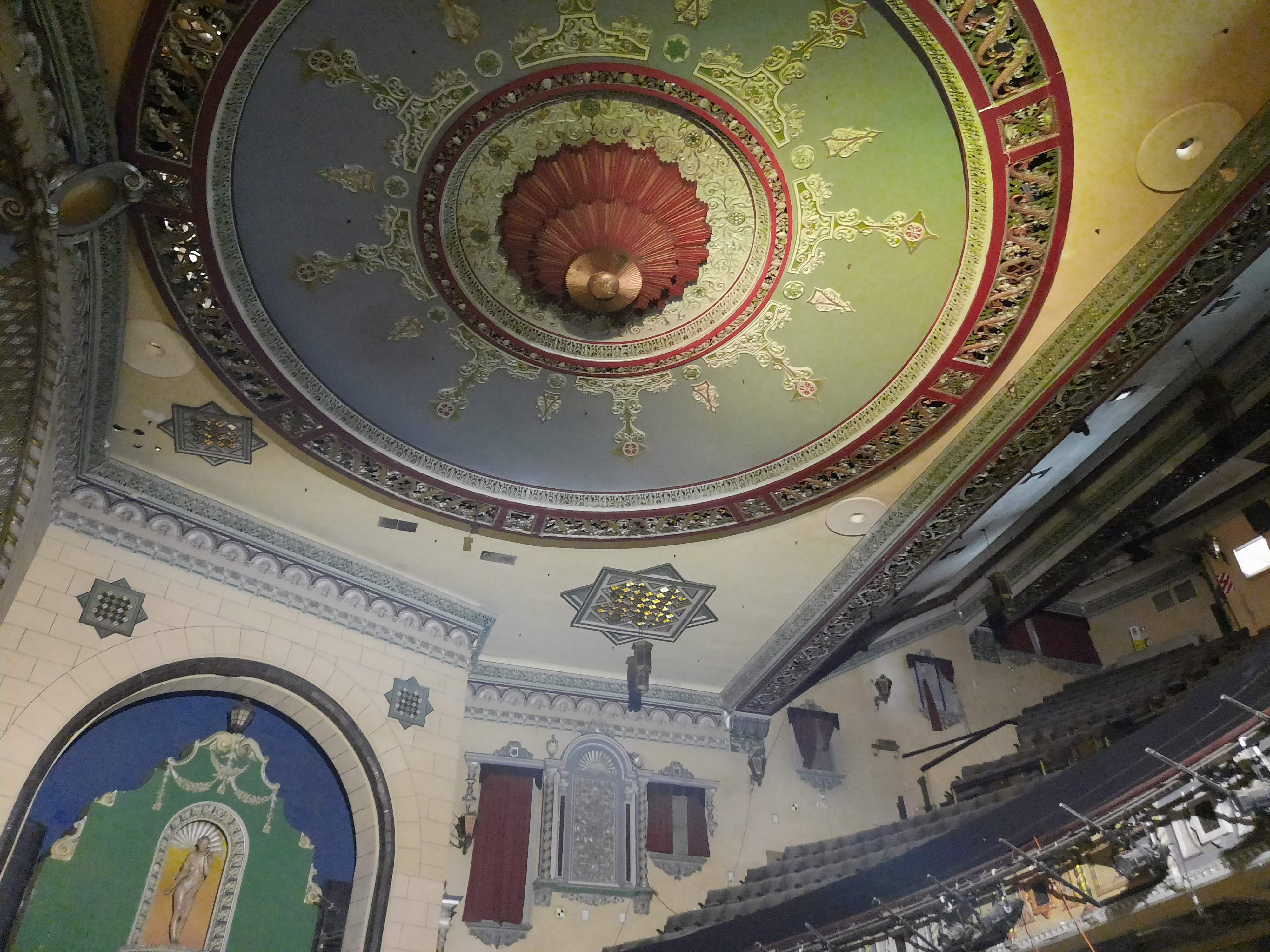
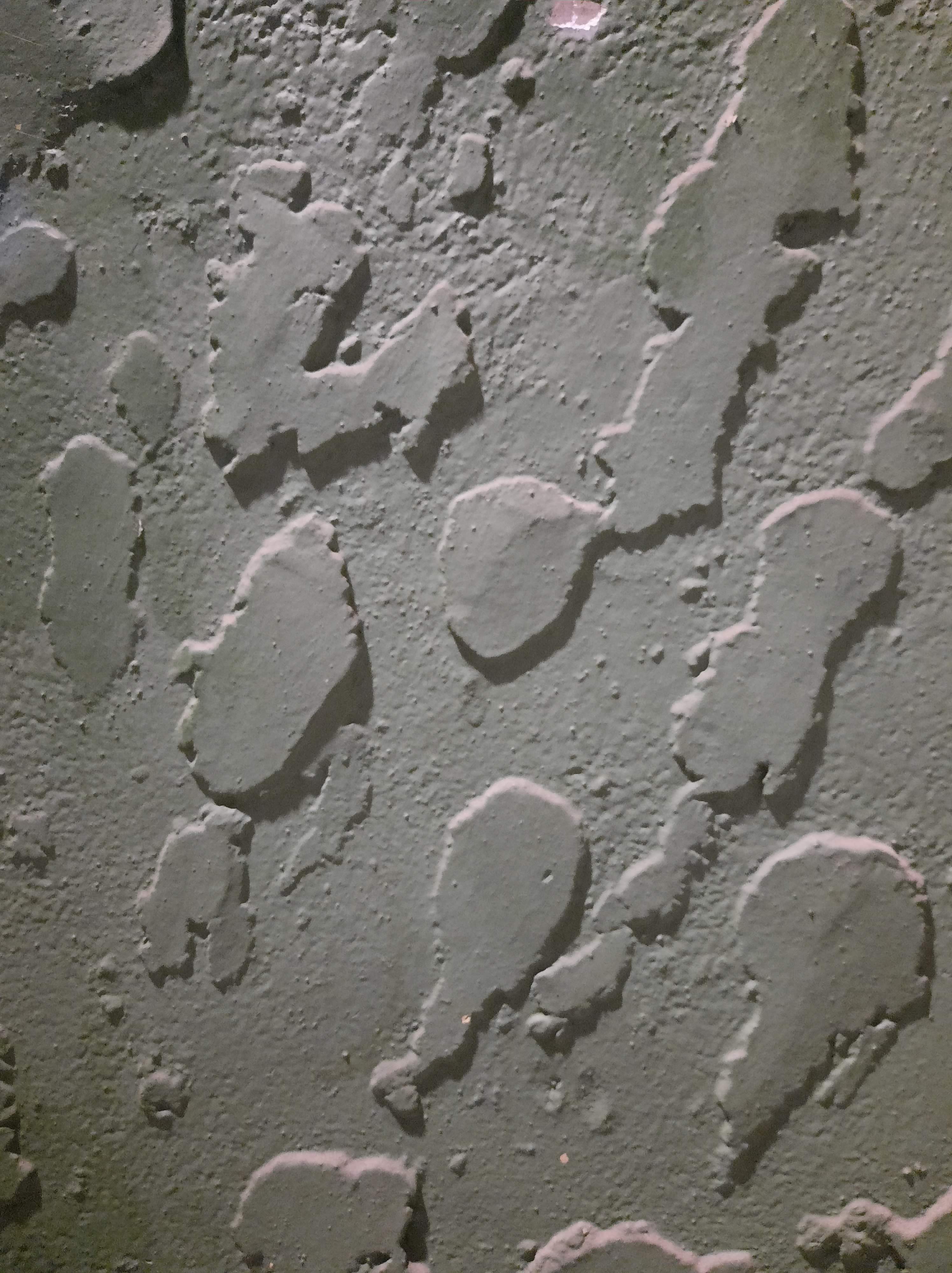
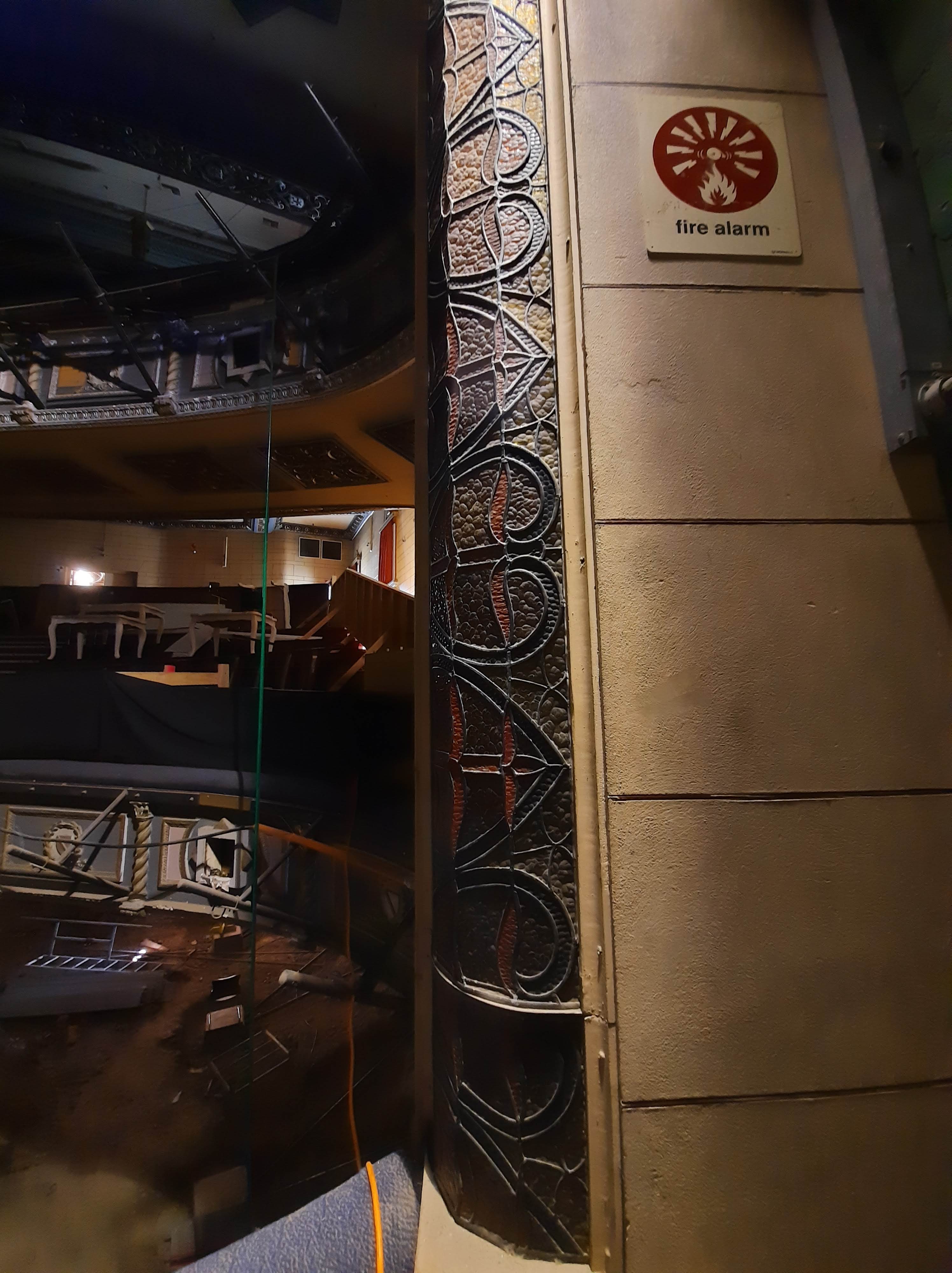
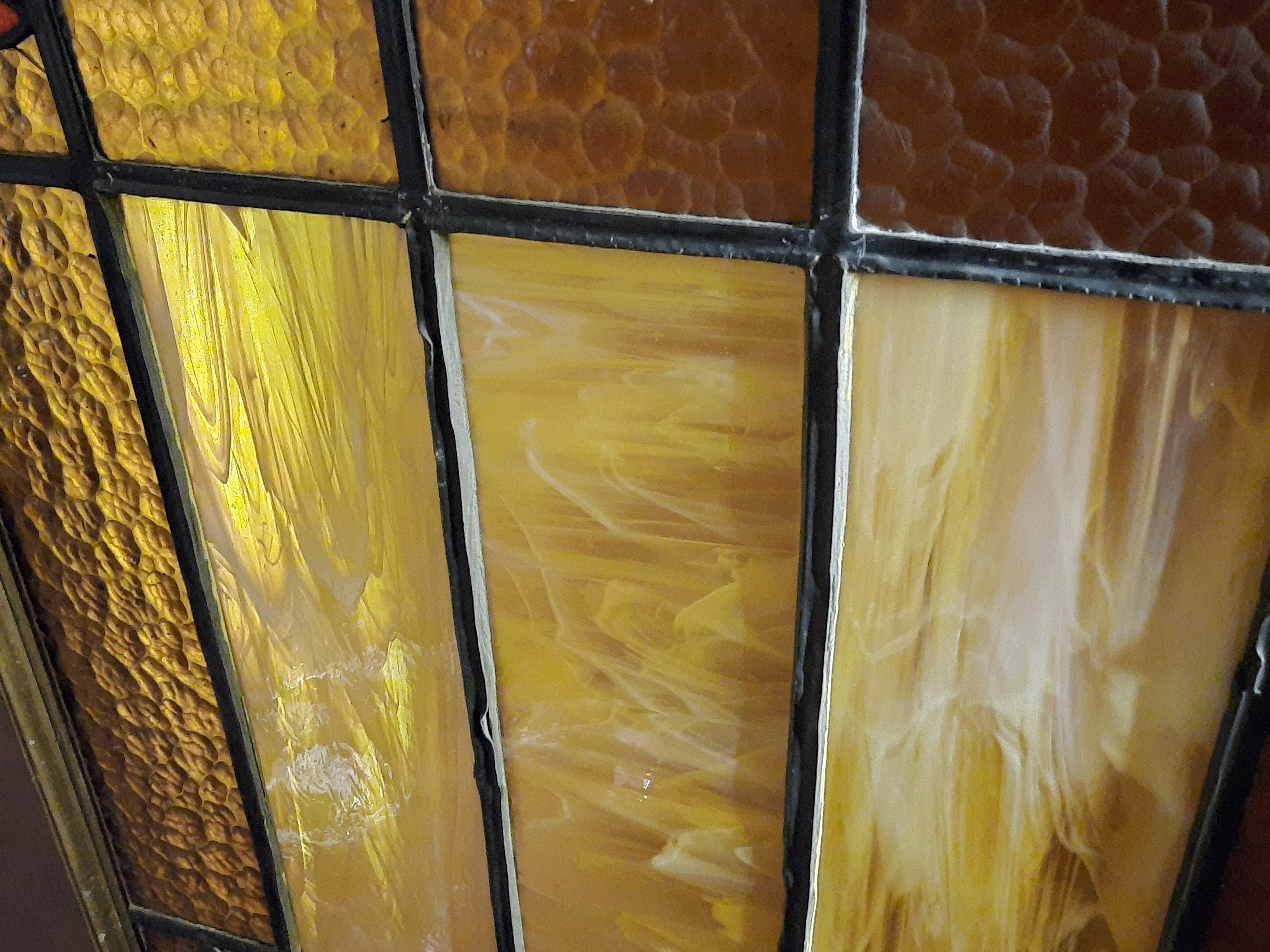
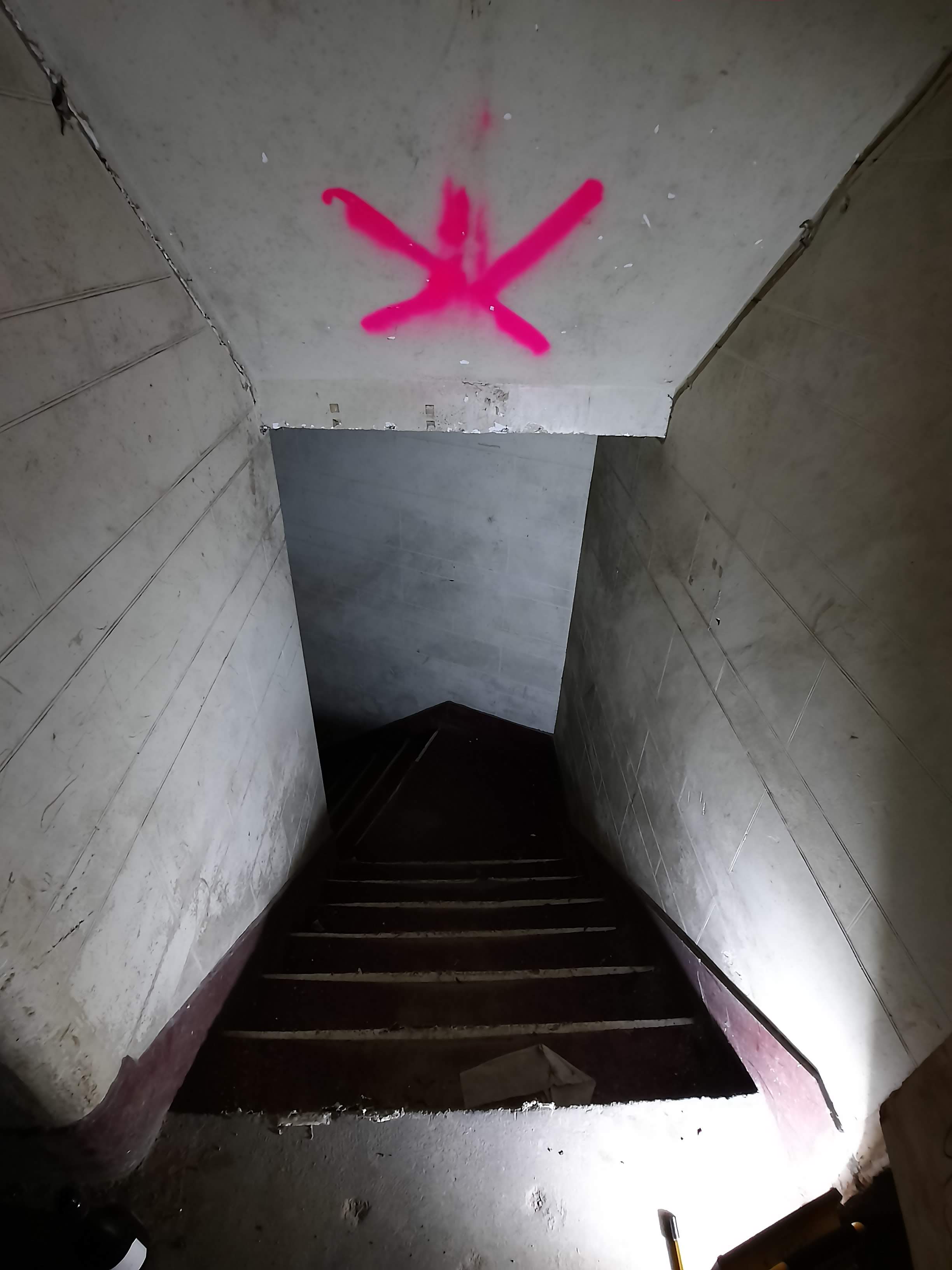
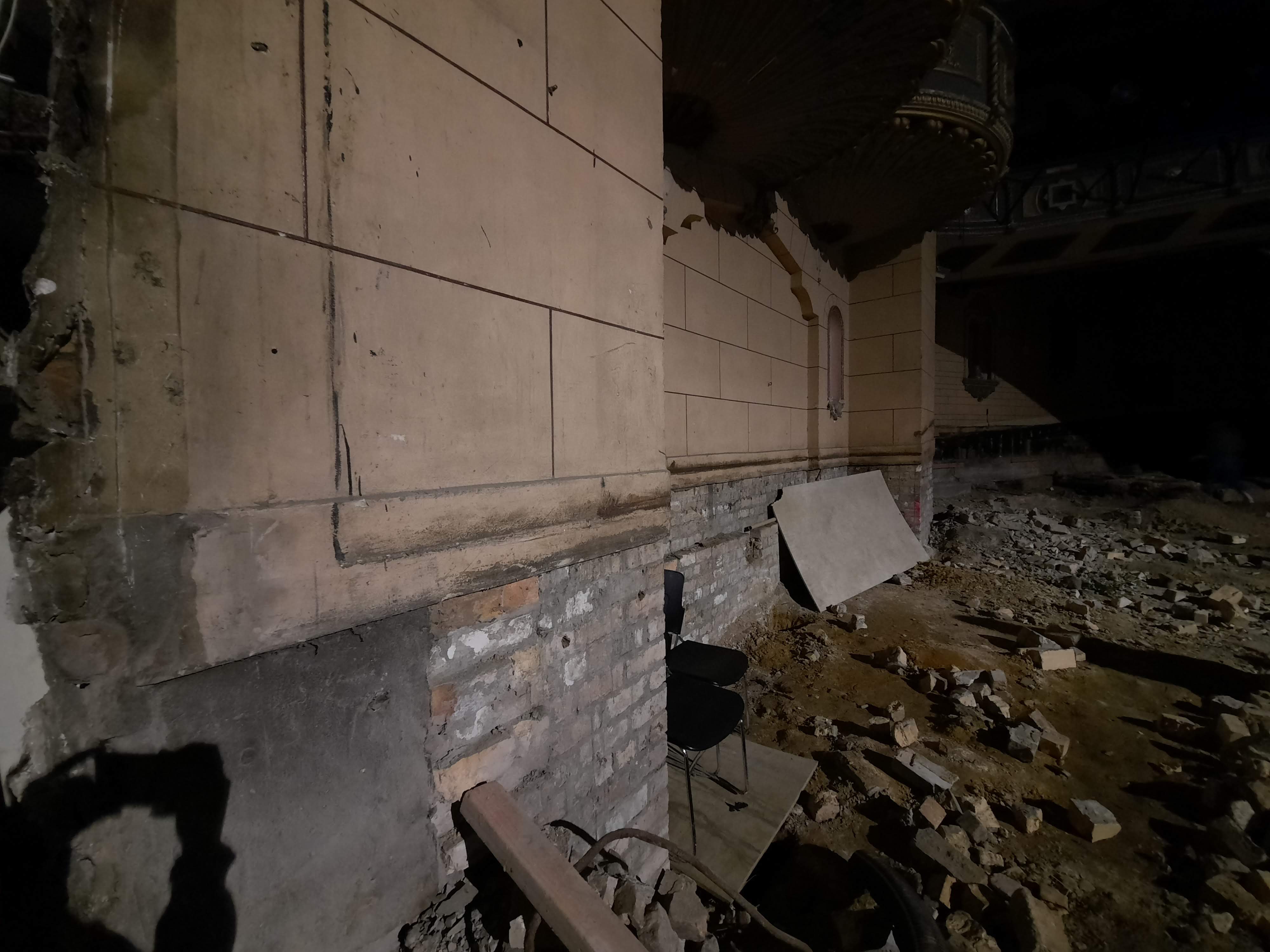
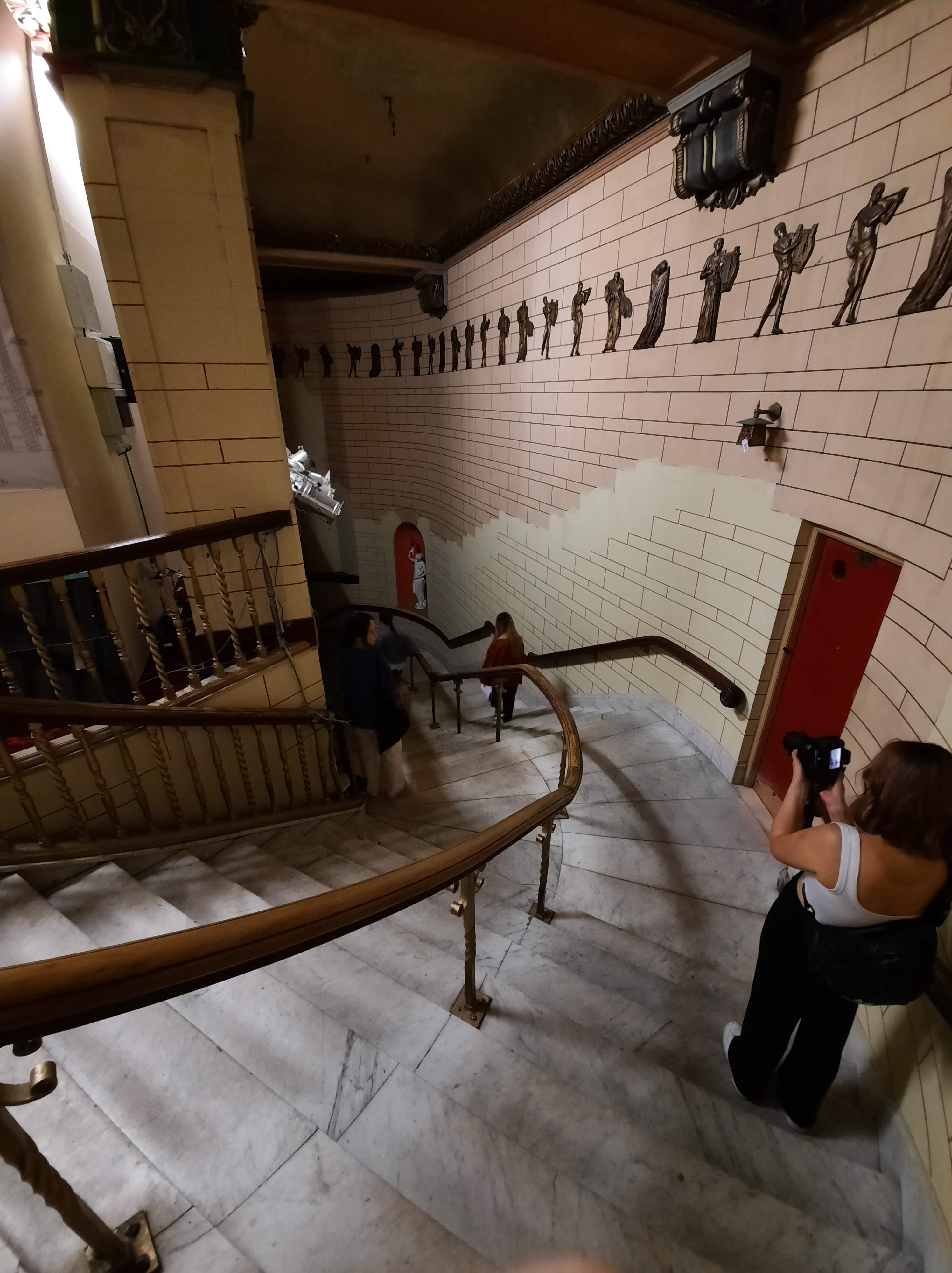
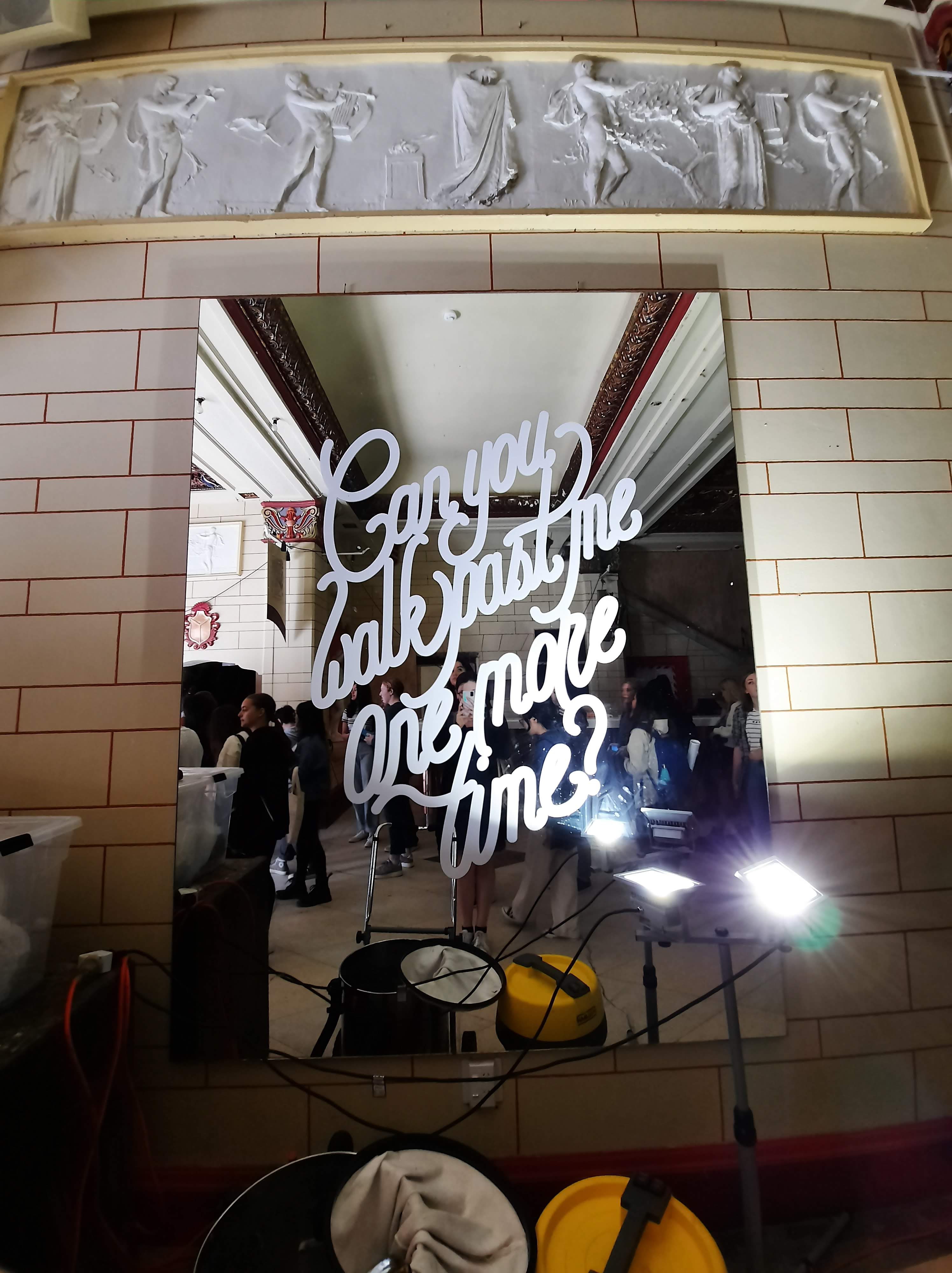
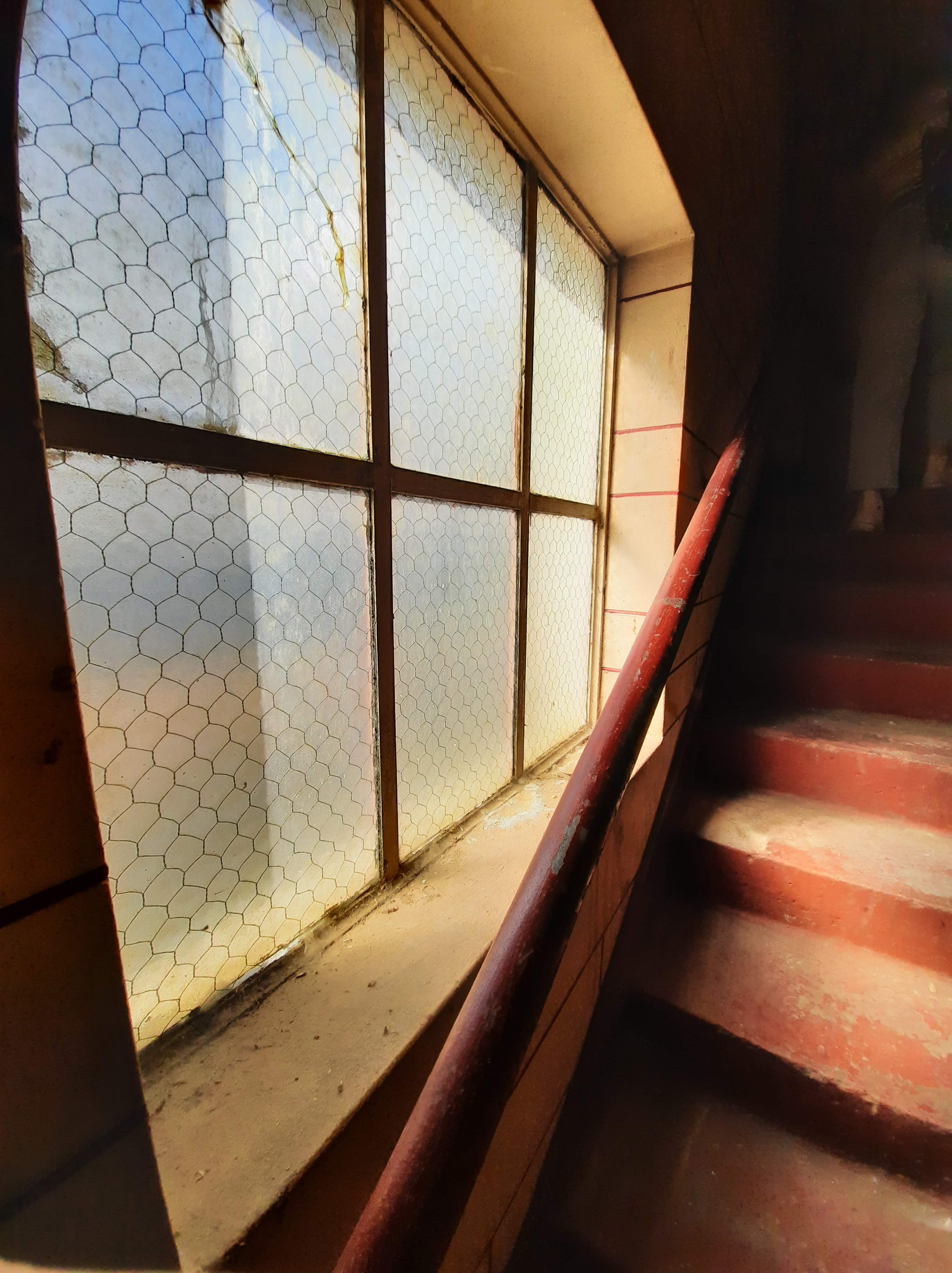
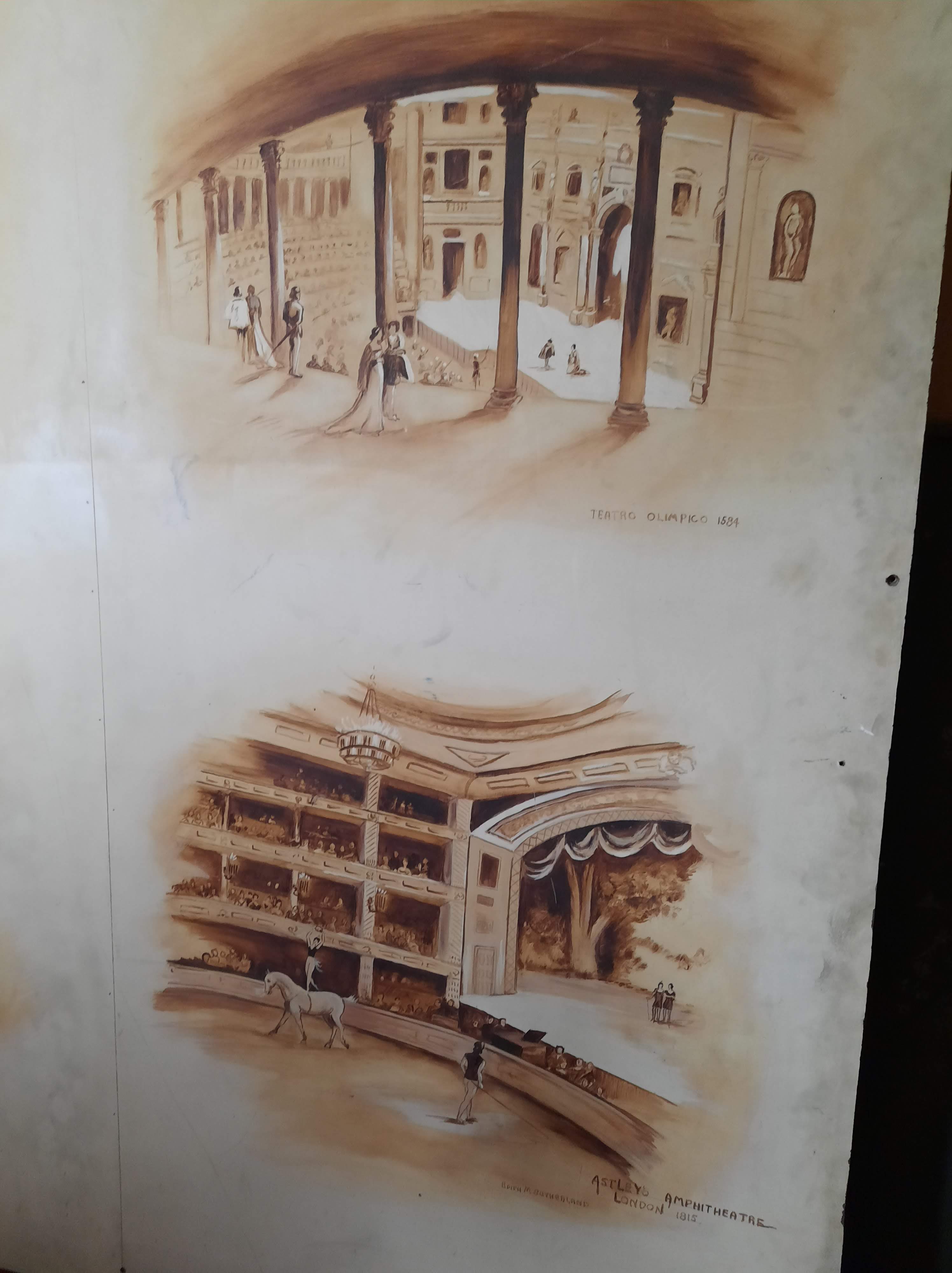
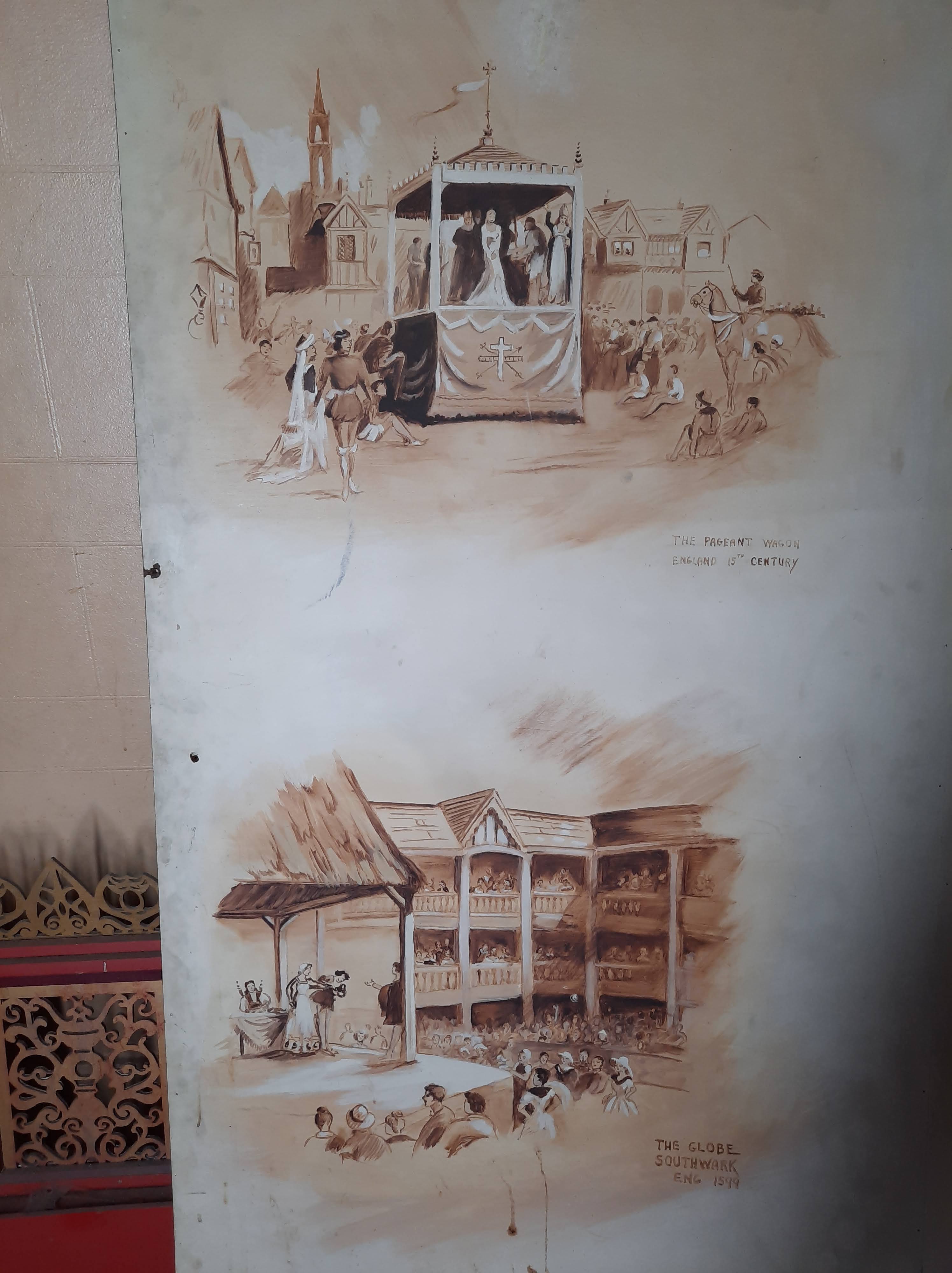
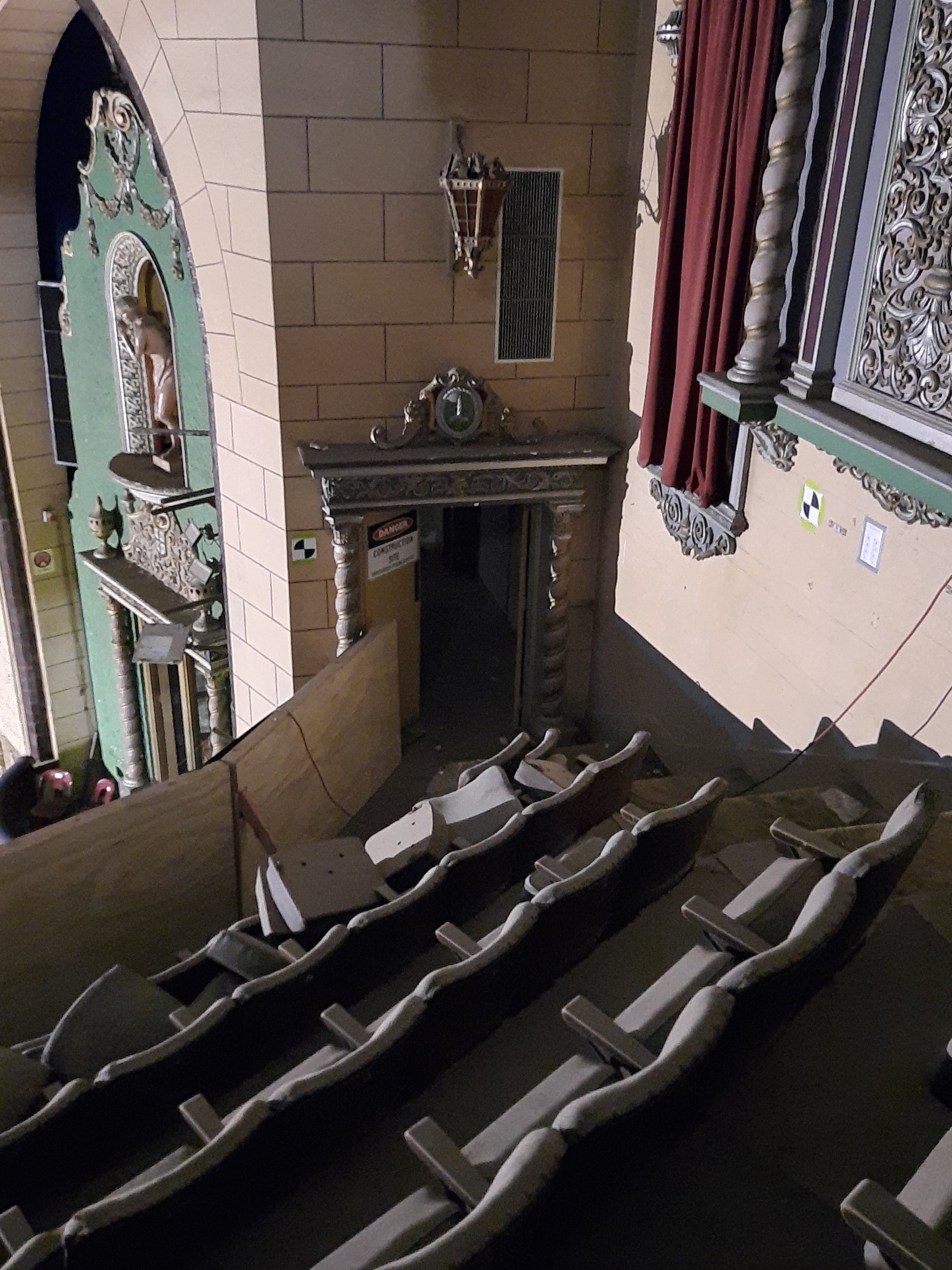
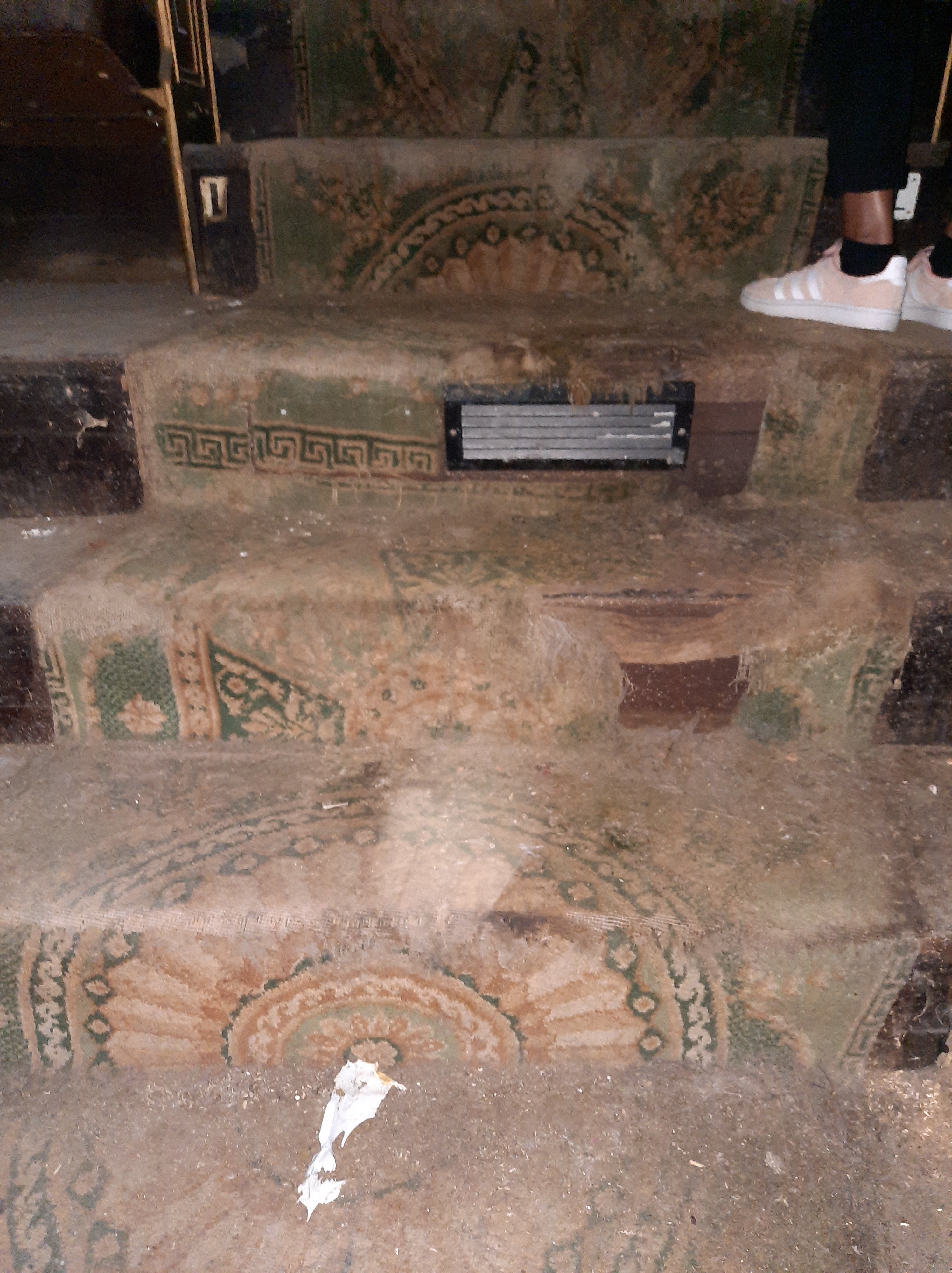
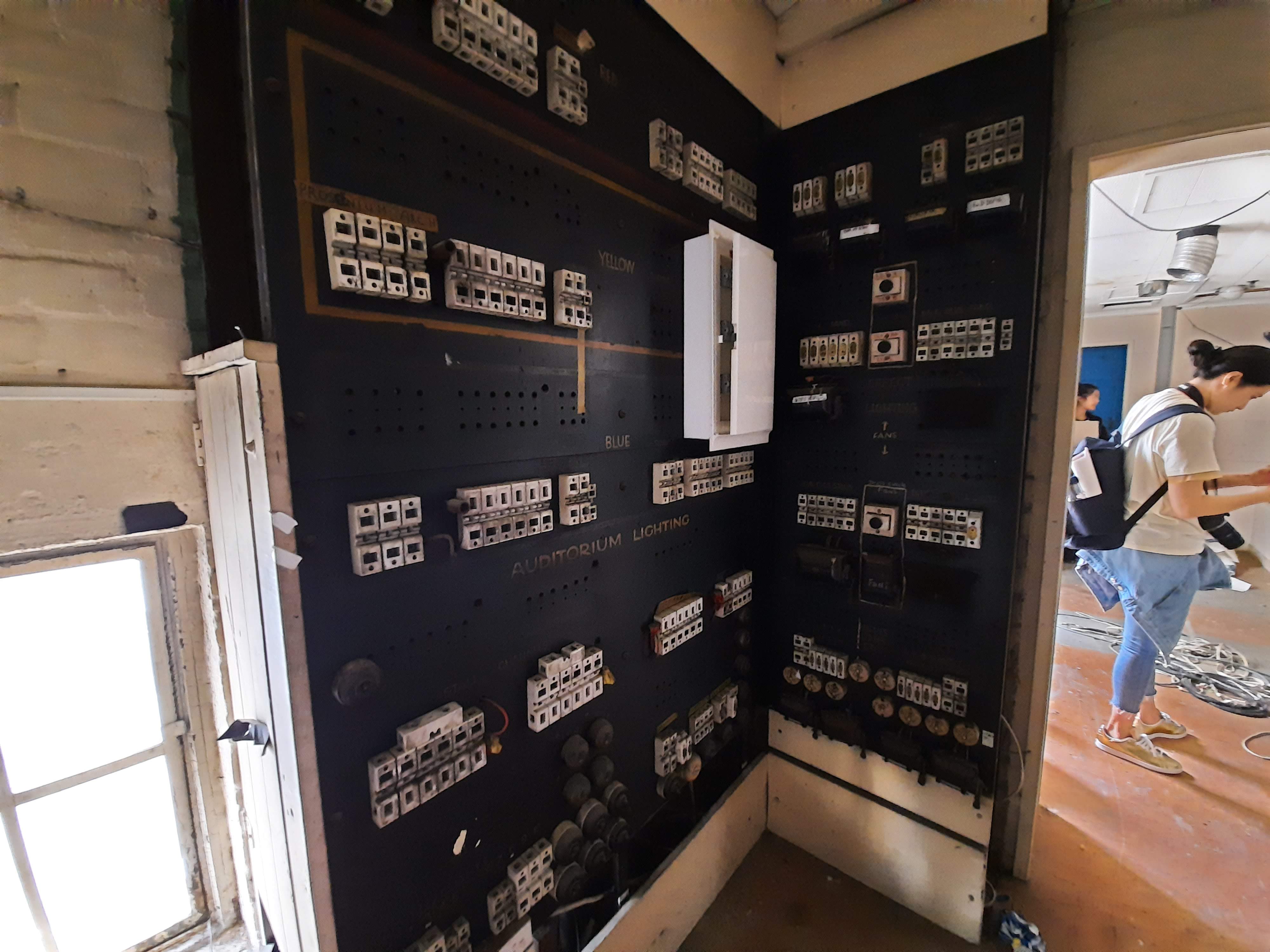
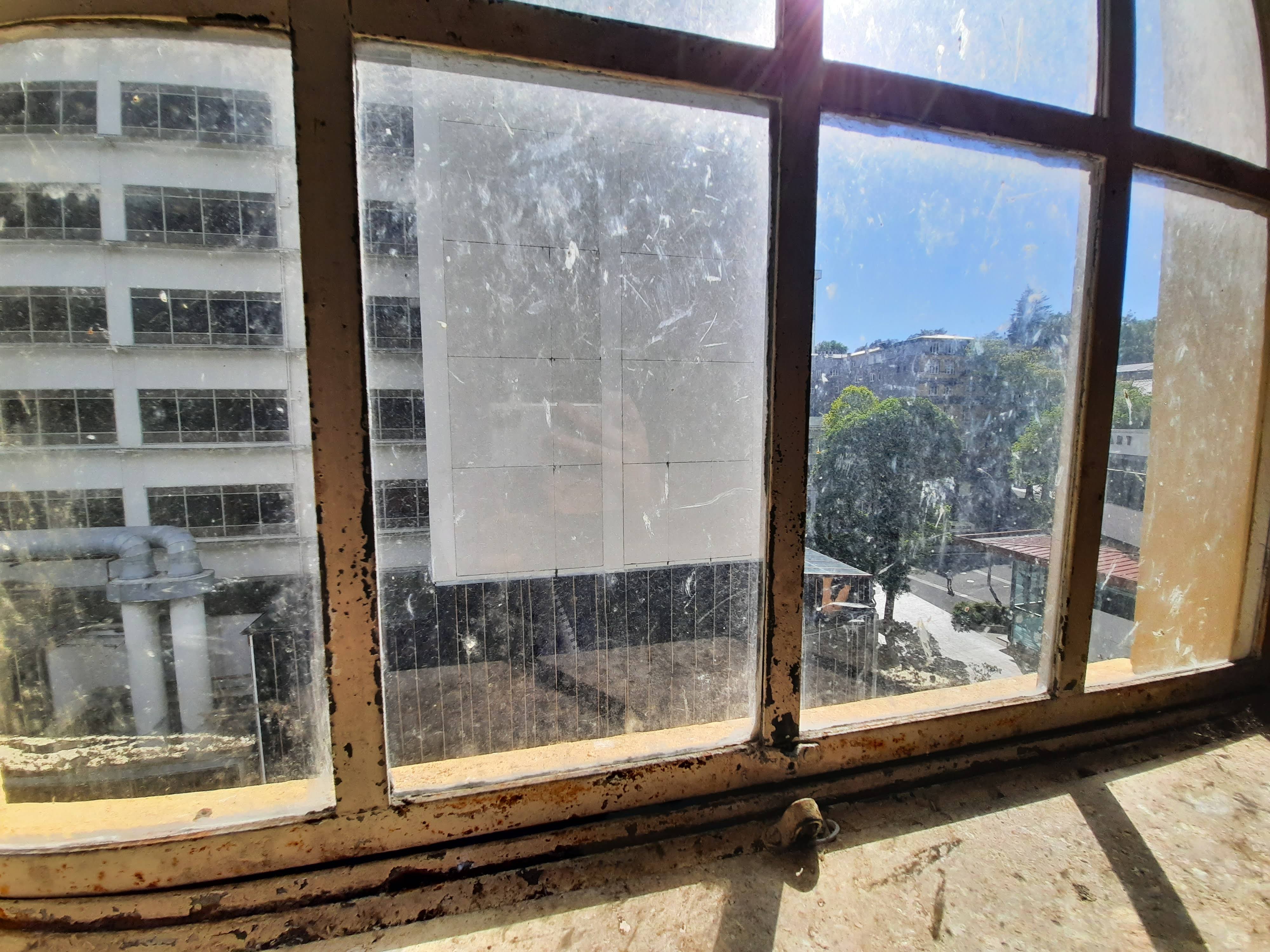
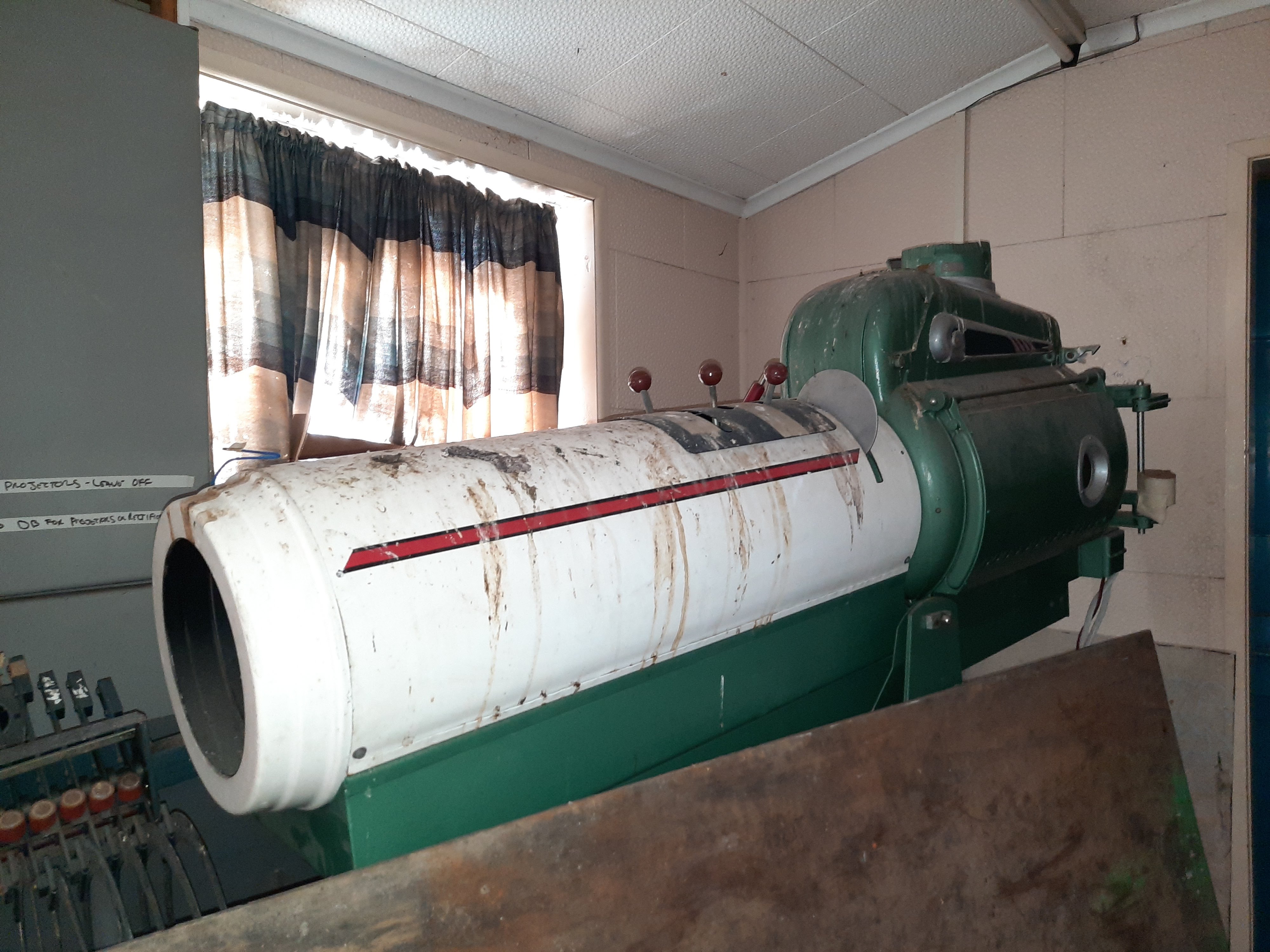
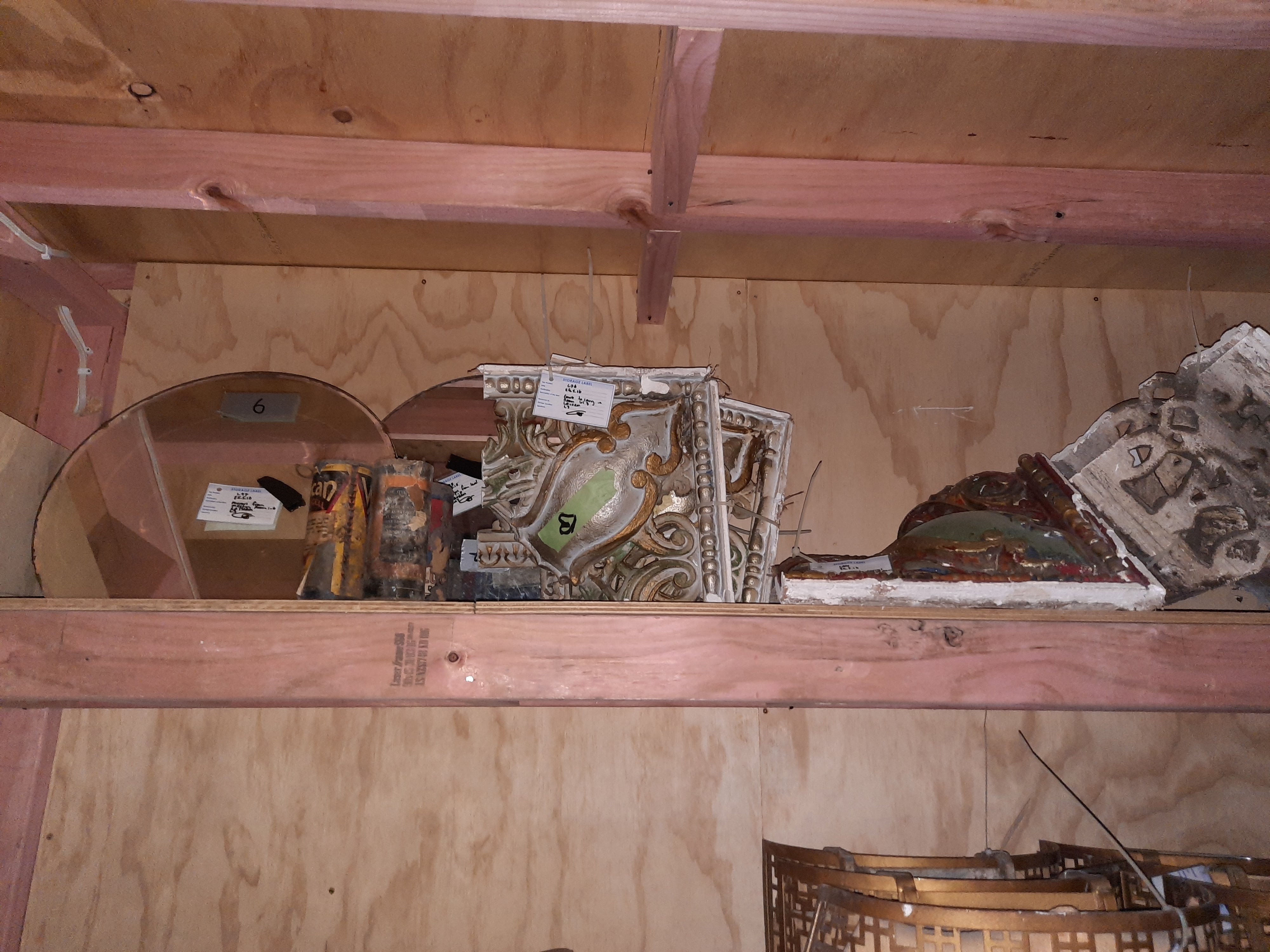
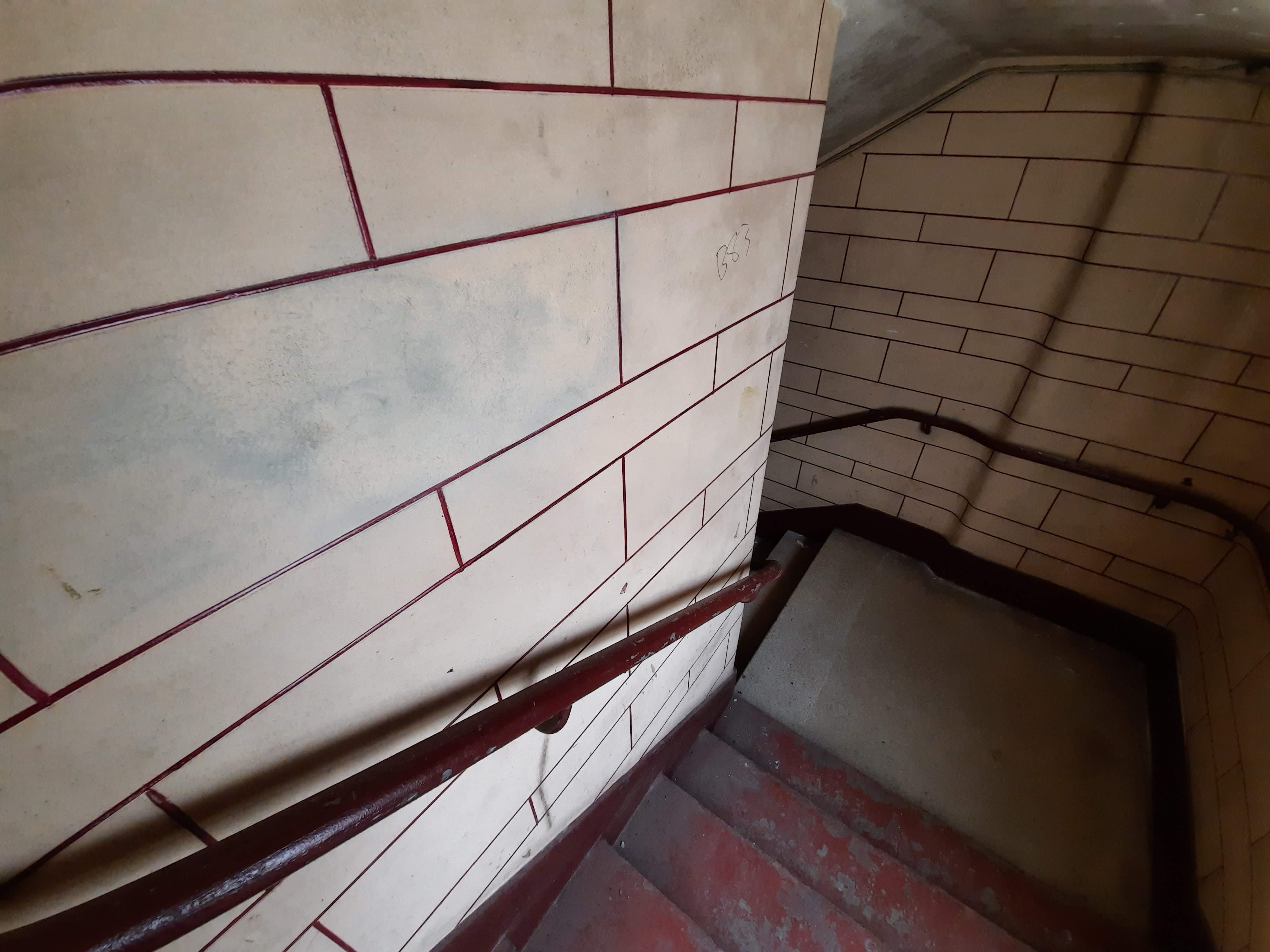
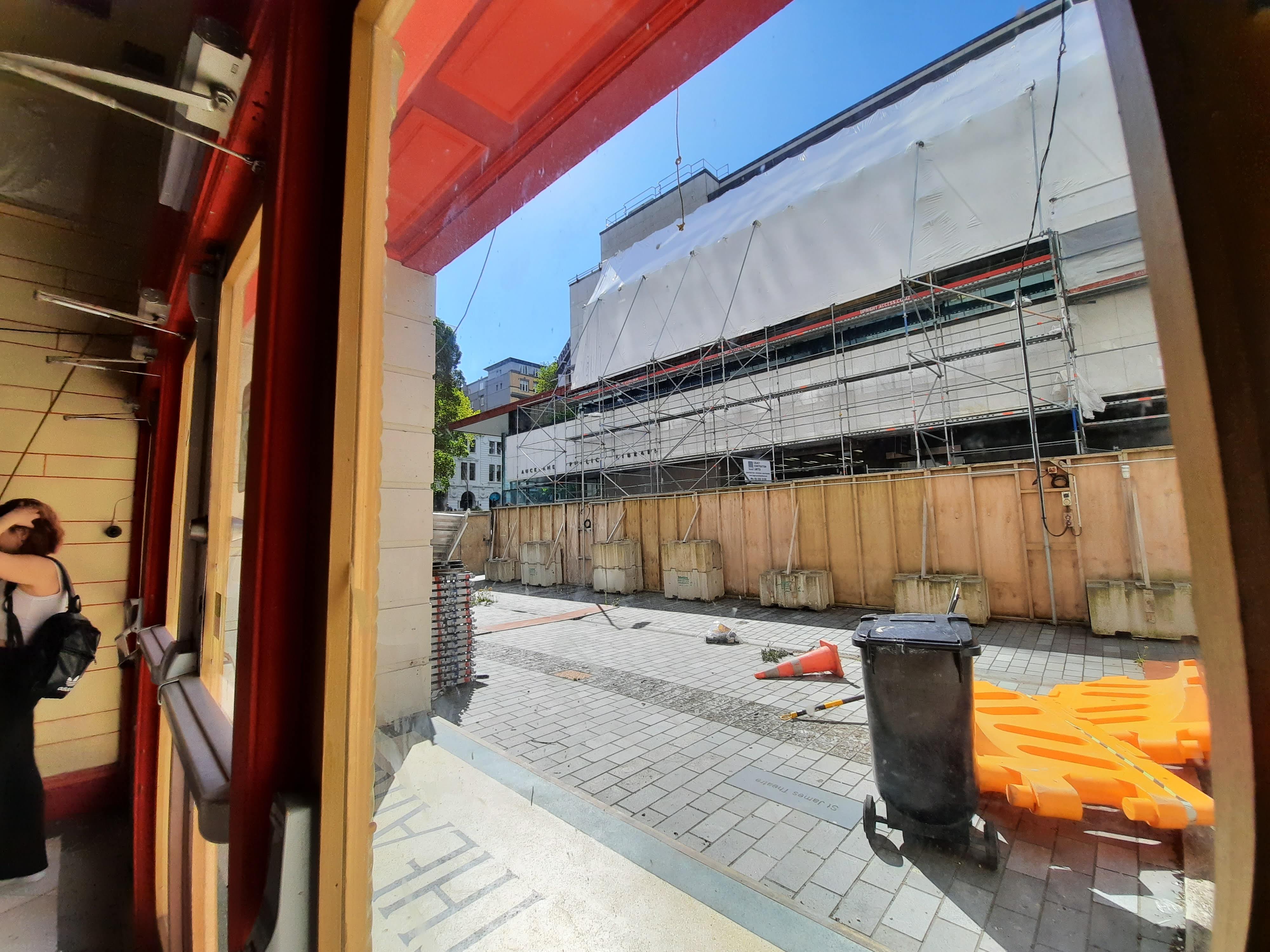
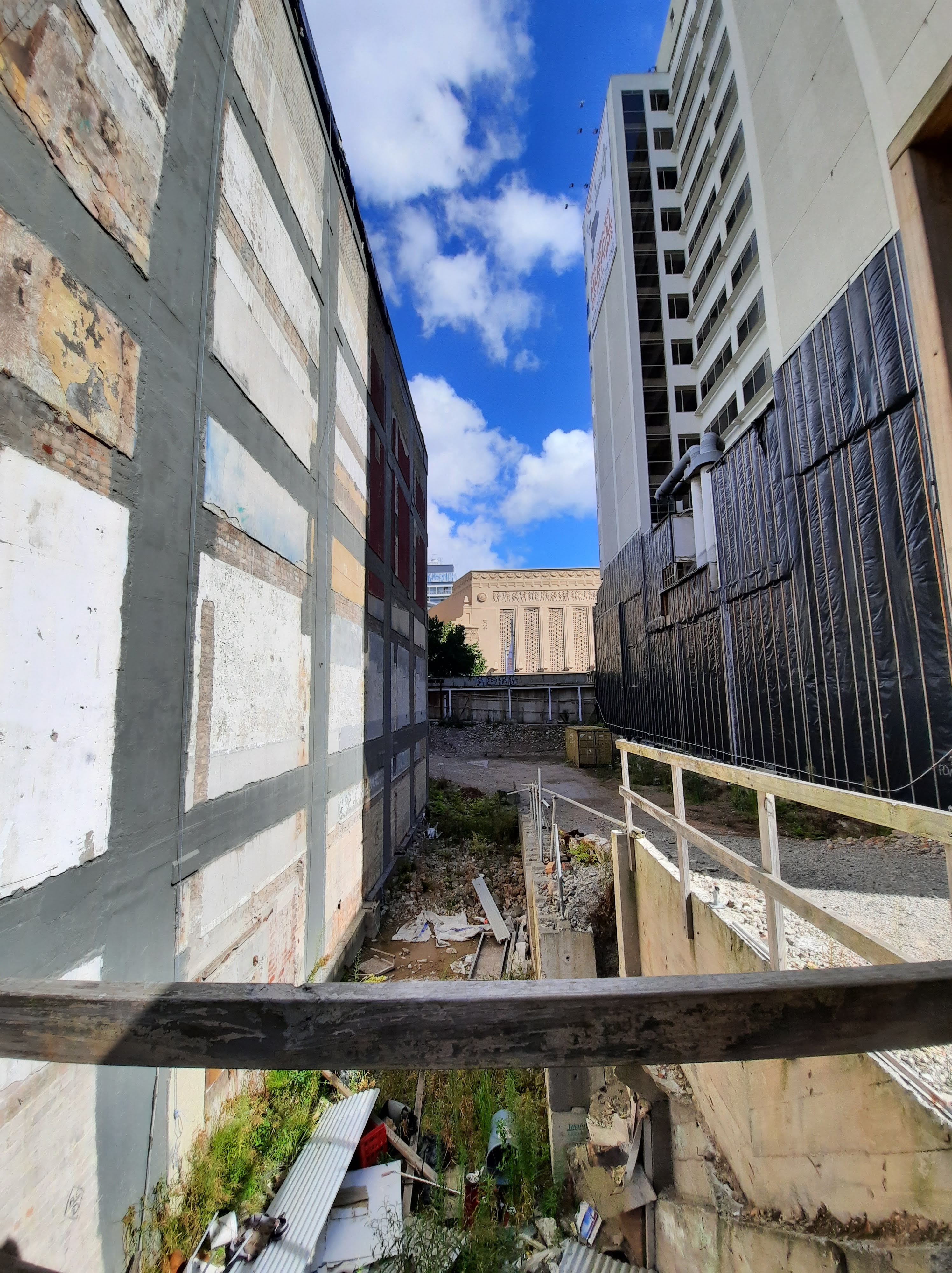
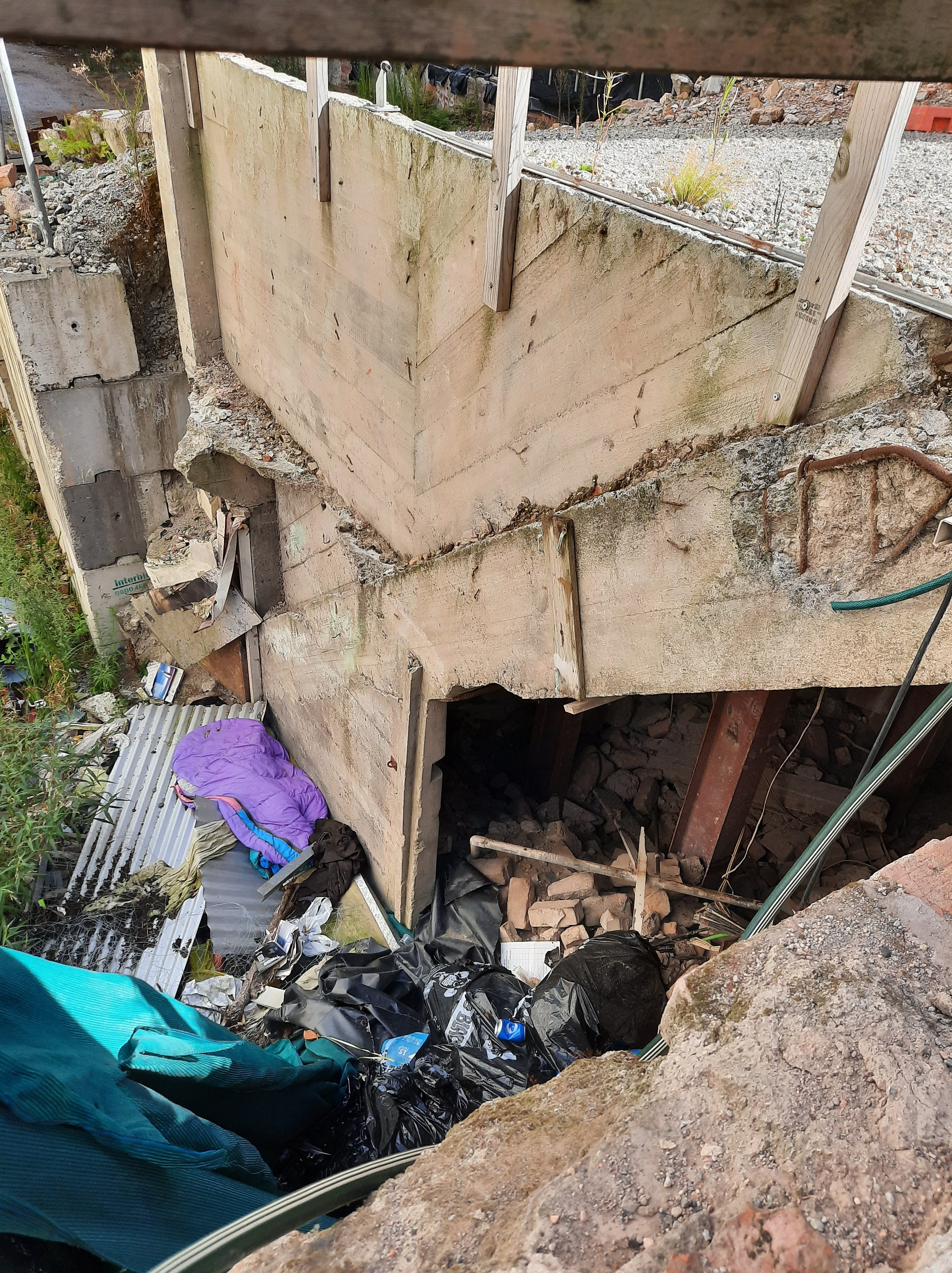
On the Thursday, we were lucky enough to visit the St James Theater and enter the building. Below are some of the photos I took.
I found the tour of the theater very interesting and informative. It was fascinating to see the marks of history within the site as well as those left more recent. It was an odd collision of old and new in a grimey way, not the way you see old villas done up with a touch of modern, but in the combination of the unwanted, derelict and unimportant from different periods of time. The site had an eerie feeling about it. The dark corners, the unknown at the end of the hallway, a sense that everything had been dropped and left abruptly, an impression of mystery.
A motif carried from my observations in my first week during the exploration of the exterior of the site was the need to look up, from a different perspective, notice the happenings of above the head. The whole site included very detailed and beautifully crafted ceiling panels (as shown in the photos above). This made you stare upwards, experience the space from a different angle.
I loved the experience of visiting and exploring the site. Although I can appreciate its importance, I sometimes get a little bored with the history aspect of a site. With this said, I was fascinated and engrossed with the St James Theaters past and its evolution through societal changes.
After the visit to the theater, I created and analysis of colour within the space on a printed plan and section of the building.
Above is a printed plan view of the site. With this plan I communicated the natural light and shadow I experienced in the foyer space. The reason why only half of the foyer space is expressed through this is because currently that is the only part of the foyer that still exists. The section of the foyer leading out on to Queen St was demolished in order to create an apartment complex. Although I am possibly interested in using the whole foyer space for my intervention, I only depicted the colour I experienced in the parts of the foyer I was able to access.
Above is an overlay of butter paper onto the plan. With this layer I wanted to explore the movement that existed within the space when it was used for its built purpose. The foyer space connected Queen St and Lorne St and this allowed people to walk from Queen St through to Lorne St. I mapped the movement of people in the space as I always like to think of people as a part of the space rather than a viewer of the space.
Above is my final layer of butter paper. On this sheet I explored the colour palette of the ceiling panels through a combination of acrylic paints and water. I wanted to explore the colour of ceilings through this because I found this was the most definitive focus on colour in the foyer space. Prior to this exercise I looked into some designer and artist models. One that I am interested in is Georgia O’Keeffe. She is a painter that often uses acrylic on canvas. This is the reason I wanted to experiment with acrylics on butter paper. I also used to love to paint all the time with acrylic paints and ever since the beginning of this project I have been eager to get back into it. Not only am I inspired by O’Keeffe’s softness, form and depth in her work, but I also love the medium that she used.
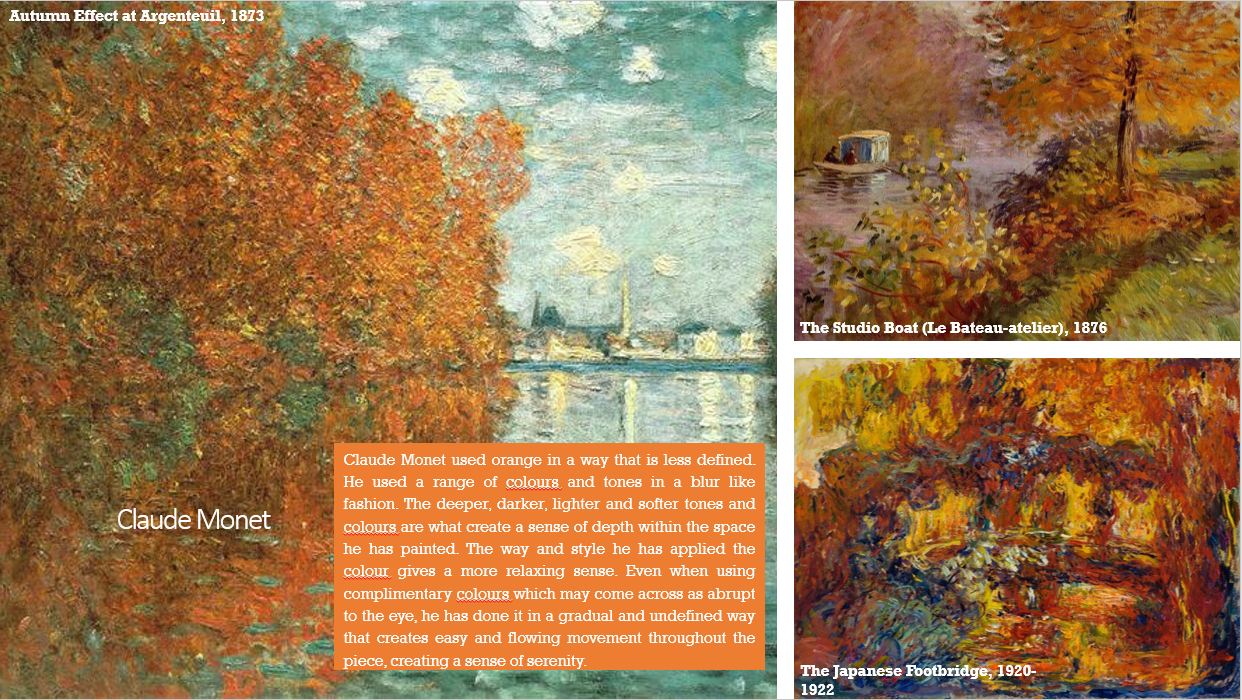
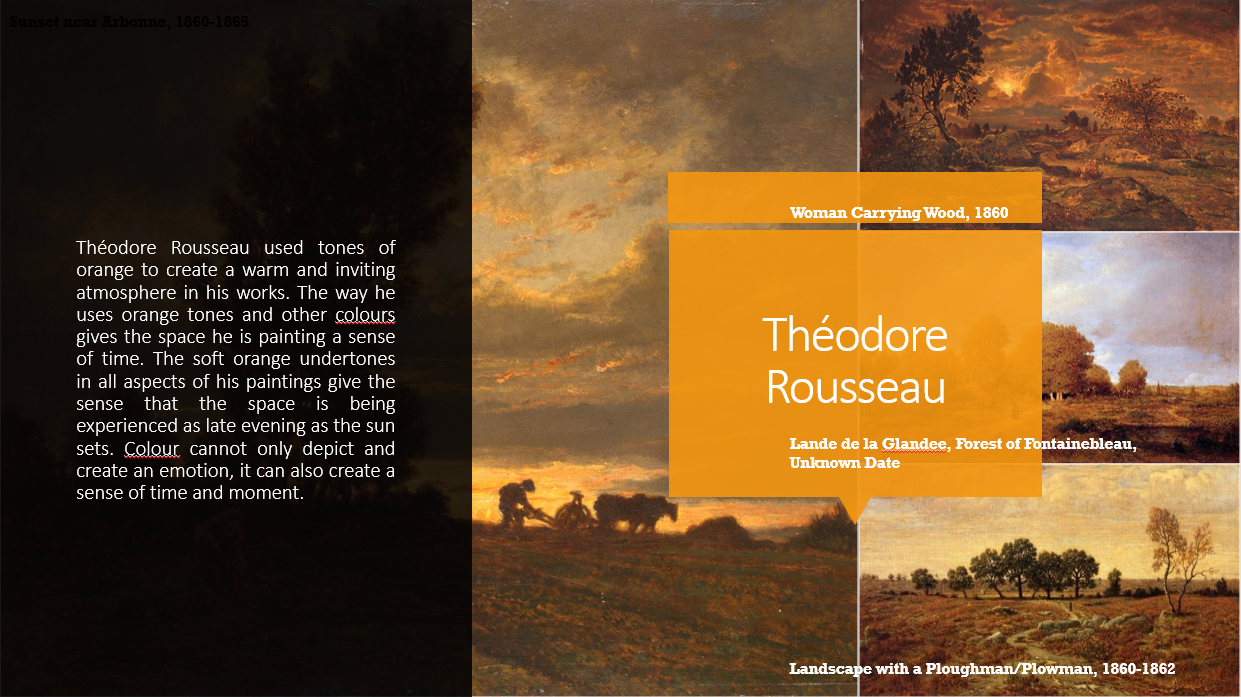
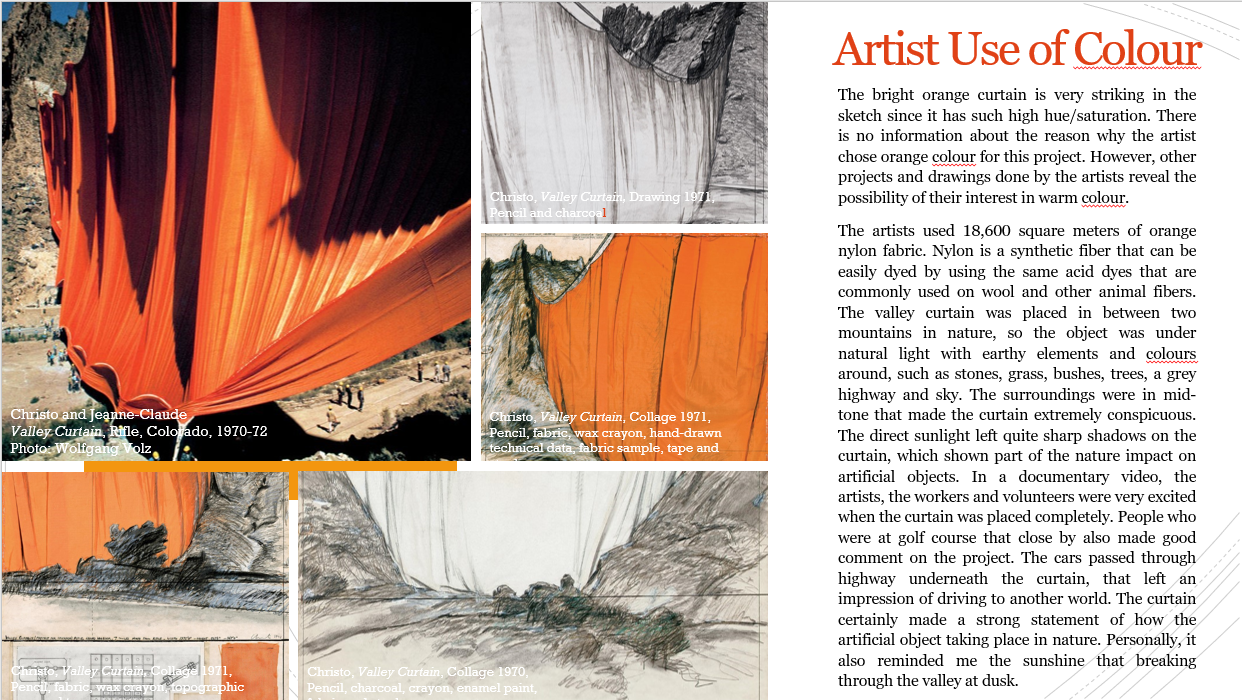
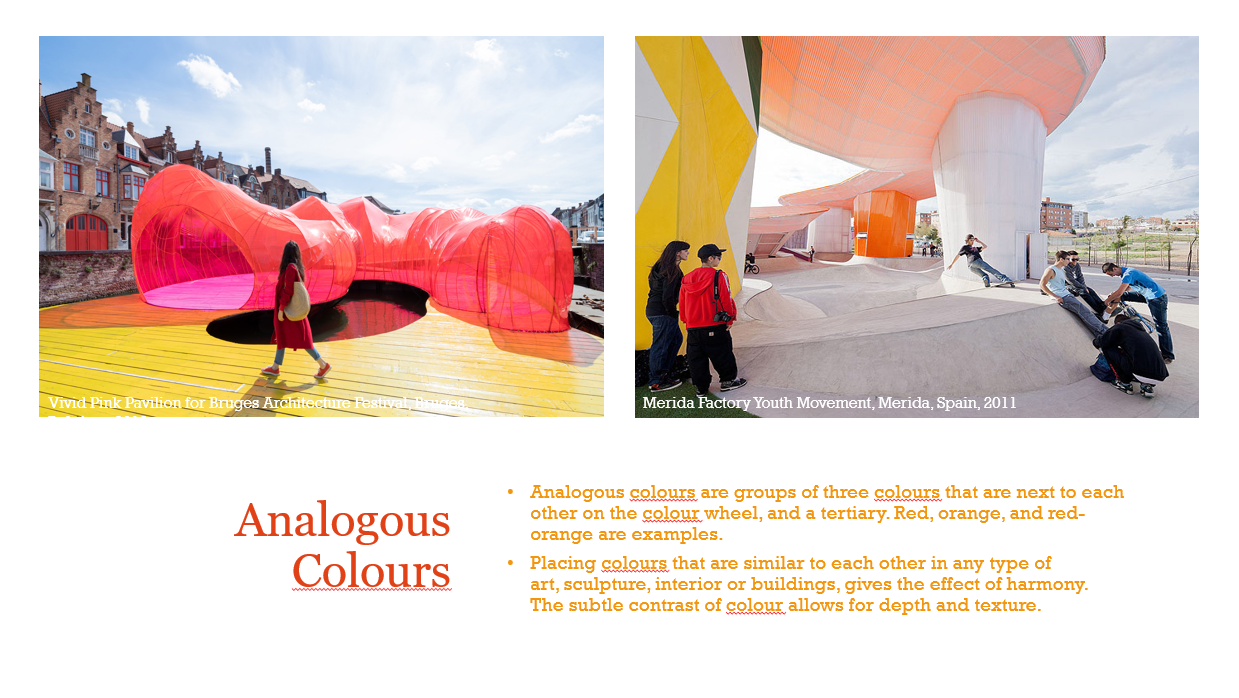
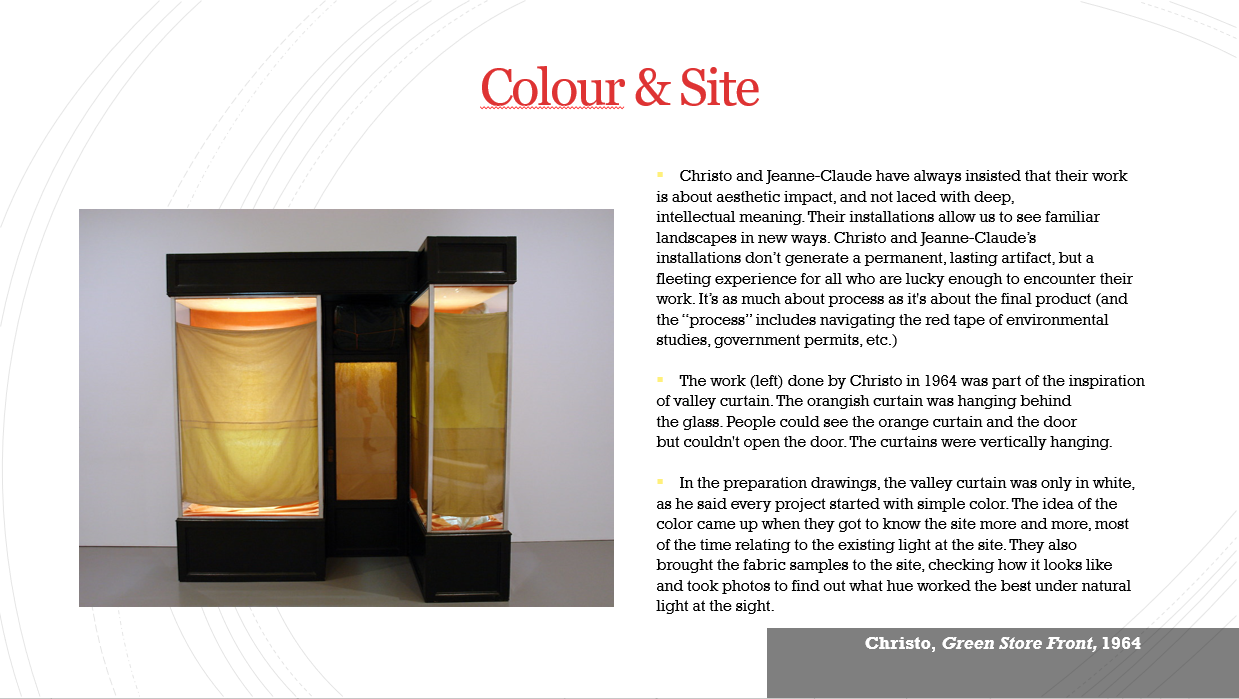
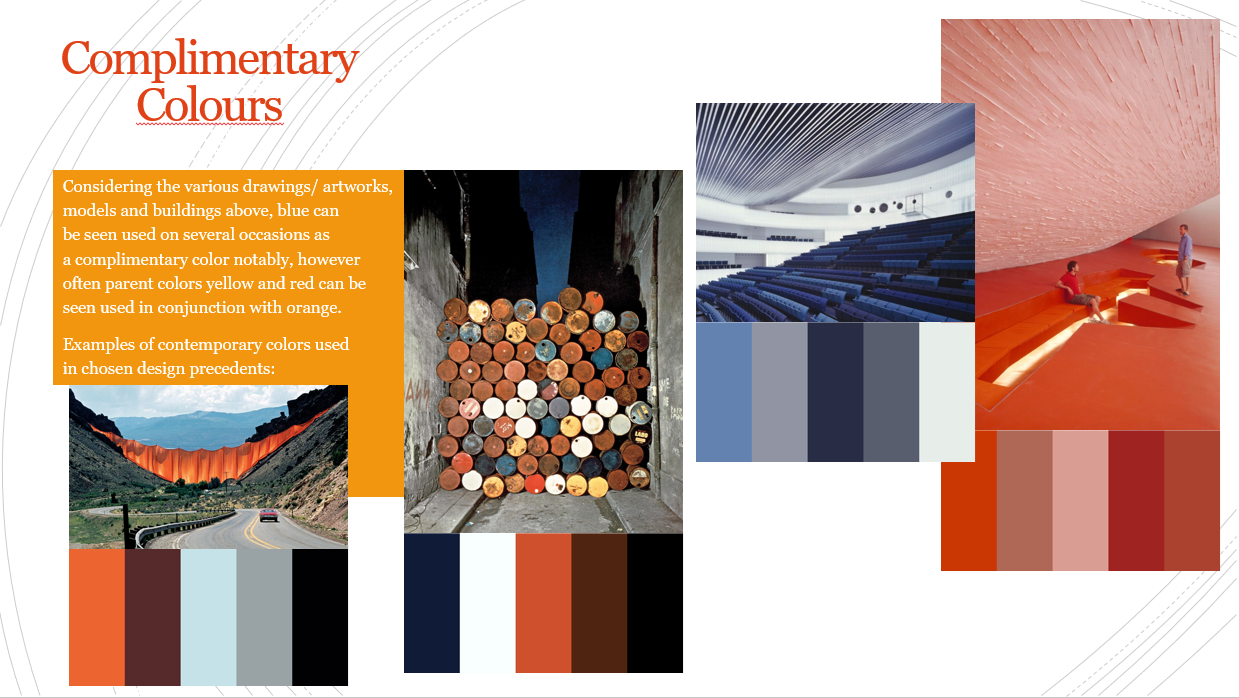
On the Monday we met up and put together the information and put the last finishing details on our presentation. We presented on the Tuesday class. Below is our presentation.






























 Spatial Design by Ciara